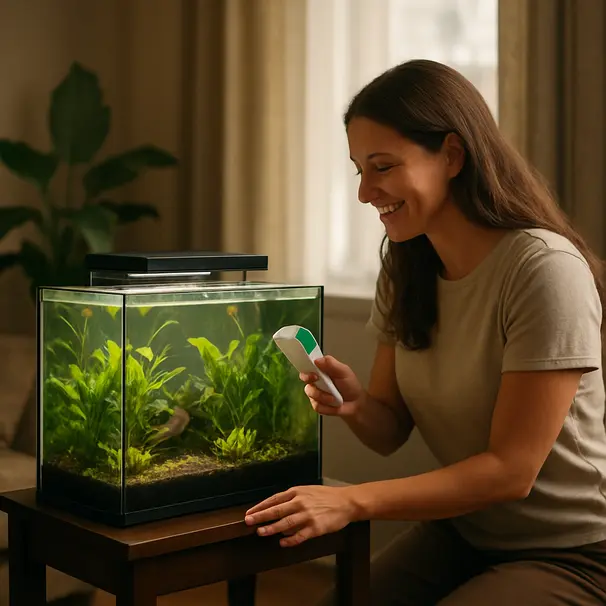
Why routines matter for aquariums
Keeping an aquarium healthy is less about grand gestures and more about steady habits. Fish and other aquatic pets thrive on stable water chemistry, predictable feeding and consistent care. For pet carers and owners who share responsibility, clear routines reduce stress for animals and people. They make problems easier to spot, and they turn aquarium care from an anxiety-producing task into something gentle and manageable.
A routine also builds trust. Fish may not wag tails, but a quiet, steady approach helps them settle. Whether you’re a weekend sitter or the daily keeper of the tank, this guide gathers practical steps, checklists and small rituals that can help your aquatic friends stay vibrant.
Daily checks: quick habits that prevent headaches
Start each day with a few minutes of attention. These small checks can often catch issues early.
- Look at the fish first. Are they active and swimming normally? Watch for odd behavior like gasping at the surface, clamped fins, or lethargy. These can be early warning signs.
- Scan the tank for visible problems. Check for cloudy water, floating debris, unusual film, or damaged plants and decorations.
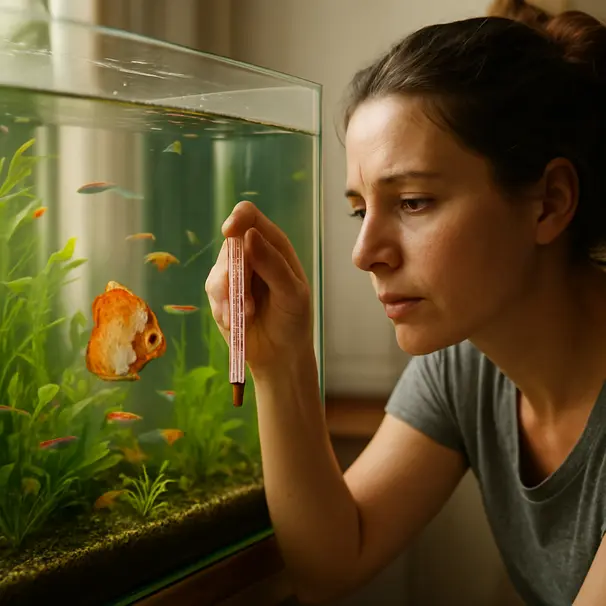
- Check equipment. Make sure the heater, filter and lights are running. A thermometer visible on the outside or a digital controller can help you spot temperature drift quickly.
- Keep a mental or written note. A one-line log helps carers hand over information. Note feeding times, any odd behavior, and whether you topped up water.
Daily feeding routine
- Feed small amounts that fish can consume in two to three minutes. Overfeeding creates waste, clouds water and stresses filtration systems.
- Use a consistent schedule. Fish appreciate predictability. If someone else is the regular feeder, note the timing and portion size.
- Vary food types carefully. Flakes, pellets, frozen or live foods can be alternated a few times a week. Treats are fine, but don’t make them the main diet.
Weekly maintenance: simple tasks that keep the tank balanced
A weekly slot of 20 to 40 minutes maintains most community tanks. The goal is removing excess waste while preserving beneficial bacteria.
- Partial water change. Replace 10 to 25 percent of the tank water weekly. Use dechlorinated water that matches the tank temperature to avoid shocking the fish.
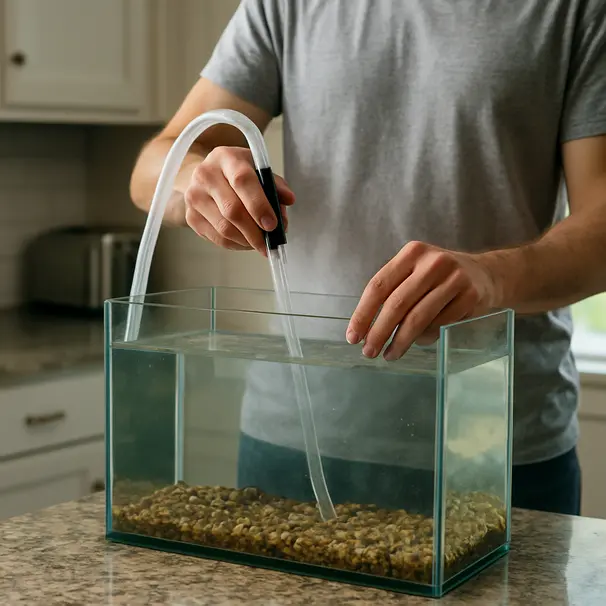
- Vacuum the substrate. Use a gravel siphon to remove uneaten food and waste from the gravel or sand. Focus on the areas where waste accumulates.
- Clean the glass. Algae on the glass can be wiped with an algae scraper or magnetic cleaner. Be gentle with acrylic tanks as they scratch easily.
- Rinse filter media in tank water. Avoid scrubbing filter sponges or biological media with tap water. Rinsing in removed tank water helps keep the beneficial bacteria alive.
- Trim plants and prune decorations. Cut back overgrown plants, remove decaying leaves and tidy up decor so water flow isn’t blocked.
Checklist for carers to leave behind
- Water temperature and when the next water change is due.
- Filter maintenance details and whether any media were replaced.
- What food to use, how much, and feeding times.
- Any ongoing health observations or odd behaviors.
Monthly and seasonal tasks: deeper upkeep
Every month, and seasonally as needed, take on slightly bigger tasks that support long-term stability.
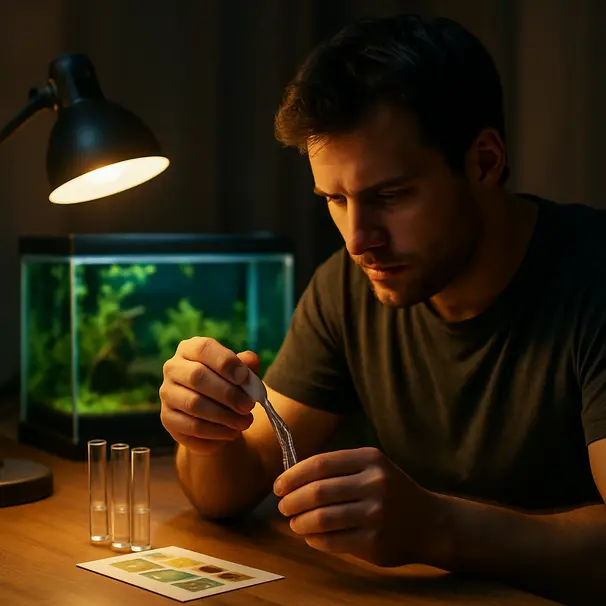
- Test water parameters. Use test kits to check ammonia, nitrite, nitrate and pH. Keep a log so you can see trends. Sudden changes call for investigation.
- Inspect and clean equipment. Filters, heaters and pumps can collect buildup. Unplug equipment before servicing and always follow manufacturer guidance.
- Replace media as recommended. Some chemical filter media like activated carbon or phosphate removers are consumable and should be replaced on the schedule suggested.
- Review stocking levels. Overcrowding stresses fish and the filtration system. If the tank seems continually unstable, reconsider the number or size of residents.
- Deep clean decor carefully. Remove artificial plants and ornaments, scrub them with tank water and rinse thoroughly. Avoid soaps and detergents.
Consider seasonal variations
Temperature and light cycles can shift with the seasons. If you keep your aquarium in a room that changes temperature a lot, consider a more robust heater or moving the tank away from direct sunlight to prevent algae blooms.
Feeding, diets and how carers can follow a plan
Food is love for many pet owners, but too much love can harm the tank. Clear feeding plans help carers avoid accidental overfeeding.
- Establish portions. Decide on a daily portion and break it into two smaller feedings if possible, morning and evening.
- Use timers for automatic feeders. If carers visit on a schedule, an automatic feeder can keep the routine steady. Test it before relying on it during a long absence.
- Rotate food types. Offer a balance of flakes or pellets and at least a couple of days a week with frozen or live food for variety and enrichment.
- Avoid human food. Bread, cheese and other household foods are inappropriate and can pollute the tank quickly.
Feeding when you’re away
- Leave clear instructions. Note portion sizes and any favorite foods.
- Consider frozen food blocks for longer absences. These thaw slowly and release food over time, but they’re not a substitute for daily care.
- Don’t rely solely on supplemental feeds for extended absences. Arrange for a trusted carer to visit for regular checks.
Quarantine and introducing new fish
New fish can carry parasites or bacteria, so a quarantine tank is a small investment that pays off.
- Quarantine for two to four weeks. Keep new arrivals in a separate tank with similar water parameters and observe for disease.
- Treat and observe. Watch for signs of illness, and treat any problems before introducing fish to the main tank.
- Gradual introductions. Match temperature and water chemistry before transfer. A drip acclimation can reduce stress during the move.
Emergency steps and when to call a vet or specialist
Quick responses matter. If you spot severe symptoms like heavy breathing, sudden floatation problems, or rapid deaths, act calmly.
- Check basic parameters quickly. Test for ammonia and nitrite first, as these often rise after deaths or spills.
- Perform an emergency water change. A partial change can reduce toxins and buy time.
- Avoid panicked over-treatment. Adding large doses of medication without diagnosis can make matters worse.
- Contact a fish veterinarian or an experienced aquarist if problems persist. Use the phrase consider consulting a vet in your notes, and share your observations and test results.
What pet carers should bring and record on visits
A standard kit helps carers feel prepared and ensures consistency across visitors.
Bring:
- A small net and a clean bucket reserved for aquarium use only.
- A handheld thermometer or check the tank thermometer.
- Test strips or a drop test kit for quick ammonia and nitrate readings.
- Spare food and instructions on portions.
- A notebook or the tank’s digital log to record checks.
Record:
- Time and amount of feed given.
- Any changes in behavior, water clarity, or equipment function.
- When water top-ups or full changes occurred.
A simple schedule to follow
For owners and carers who appreciate a checklist, here is a reliable cadence.
Daily:
- Visual check, feed appropriate portions, note observations.
Weekly:
- Partial water change, gravel vacuum, filter media rinse, glass algae clean, plant care.
Monthly:
- Full parameter testing, equipment inspection, replace consumable media as needed.
Quarterly or as-needed:
- Deep clean decorations, reassess stocking levels, service pumps or lights if issues arise.
Tips for cleaner water and healthier fish
- Keep up with partial water changes. Small, regular changes beat rare large swaps.
- Avoid overstocking. A crowded tank cycles poorly and makes every other task harder.
- Use a proper filter sized for the tank. Underpowered filtration leaves waste and cloudiness.
- Encourage beneficial bacteria. Avoid sterilizing everything. Biological filtration thrives when you clean gently.
Communication and handoff between owners and carers
Good communication makes shared care work smoothly. A brief handoff message saves time and prevents mistakes.
- Keep a short sheet with essential facts: feeding schedule, water change dates, recent test results, and emergency contacts.
- Share photos or a quick video if you noticed unusual behavior. Visuals help specialists or the owner assess the situation remotely.
- Agree on backup plans. If a carer sees trouble outside their comfort level, they should contact the owner and suggest consulting a professional.
Final thoughts: gentle consistency wins
Aquarium care is a mix of simple rhythms and attentive observation. Establishing daily and weekly habits, setting clear feeding rules, and keeping good records helps fish stay healthy. For pet carers, a consistent routine and a small kit of tools make visits straightforward and reassuring. For owners, building a predictable schedule reduces surprises and keeps your aquatic community thriving.
Treat aquarium care like a slow, steady conversation with your fish. Little adjustments now and then are fine, but steady, gentle care is the kindest thing you can do. Consider consulting a vet or experienced aquarist for persistent problems, and enjoy the calm reward of a healthy tank.