

Aquascaping Tips for Every Pet Carer and Owner: Safe Aquariums
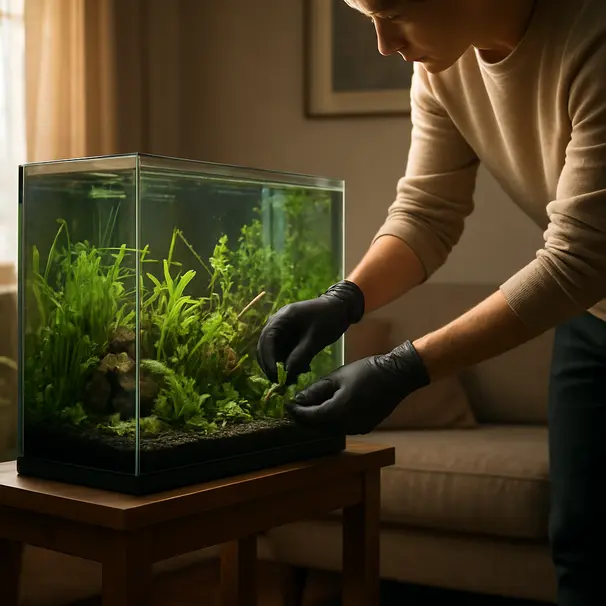
Few things bring calmer smiles than a well-planted aquarium. The soft sway of leaves, a confident school of fish, and clear, healthy water make any visit or shift as a pet carer feel like stepping into a tiny underwater world. This guide is written for pet owners and carers who want aquascapes that look lovely, support aquatic life, and are easy to maintain during daily care or occasional check-ins.
Why good aquascaping matters
A thoughtful aquascape does more than please the eye. Plants and layout can improve water quality, provide hiding places, and reduce stress for fish and invertebrates. For pet carers, a stable setup means fewer emergency calls, clearer instructions for clients, and a happier experience for both animals and people. For owners, it means a tank that stays healthy between professional visits.
Key benefits to aim for:
- Natural hiding spots and swim zones to reduce fish stress.
- Plant growth that helps cycle and buffer waste.
- Layouts that make cleaning and maintenance simple.
Planning before you start saves time later, and it keeps animals safer while you experiment.
Planning a safe aquascape
Start with a quick plan. Think about the species you want to keep, the tank size, and how often a carer will access the aquarium. Small, delicate tanks can be beautiful, but they usually need more attention. Larger systems tolerate mistakes better.
Questions to sketch out:
- Who will feed and maintain the tank, and how often?
- Are there children, other pets, or frequent visitors in the home?
- Do you need easy-access areas for water changes and equipment checks?
Design basics:
- Keep stems and foreground plants where caretakers can reach them without disturbing a whole hardscape.
- Leave open swim areas, especially if fish will school tightly.
- Place filters and heaters so they’re simple to inspect and remove if needed.
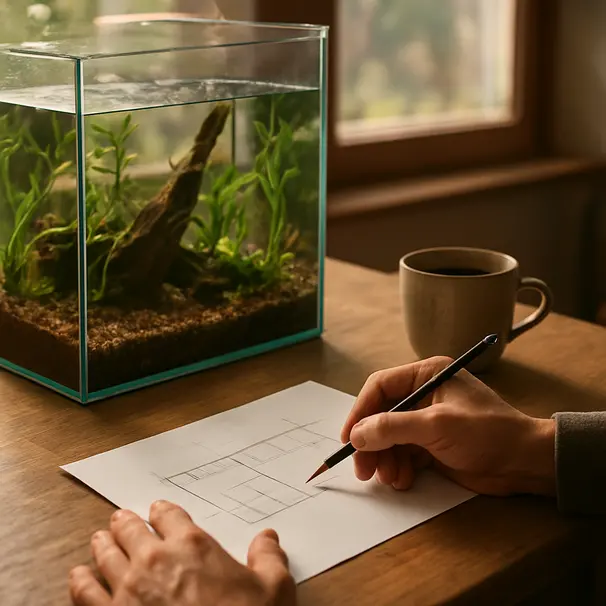
Practical tip: draw a simple floor plan of the tank and mark a few maintenance paths. That helps you avoid creating a beautiful but inaccessible jungle.
Choosing substrate, plants, and hardscape
Substrate and hardscape set the tone for your tank, and they affect water chemistry and plant health. A planted tank for tetras and rasboras will need different choices than one for shrimp or goldfish.
Substrate choices:
- Nutrient substrate: best for rooted plants, may help growth but can alter water chemistry initially.
- Sand: great for shrimp and bottom dwellers, but may compact easily, so consider layering with fine gravel.
- Mixed gravel: a good middle ground for community tanks.
Hardscape ideas:
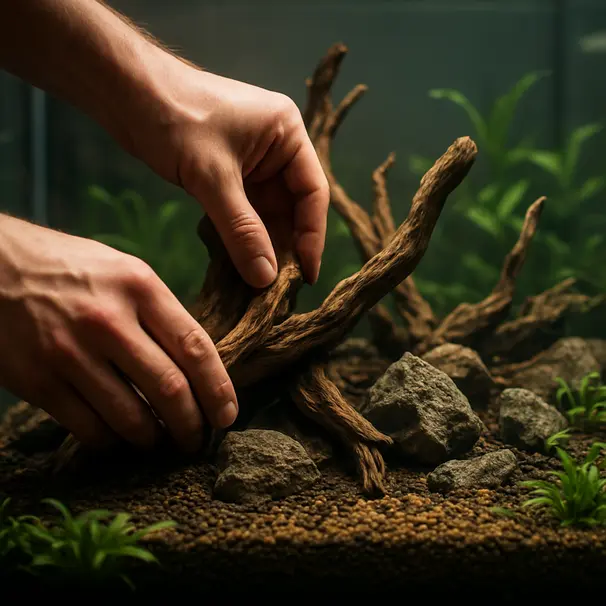
- Driftwood adds natural tannins and texture, but pre-soak pieces to avoid big pH shifts.
- Rocks must be aquarium-safe. Test suspect stones with vinegar, and avoid those that fizz, which may alter water hardness.
Plant picks for reliability:
- Easy foregrounds: dwarf hairgrass, Java moss, and smaller species of Cryptocoryne.
- Mid-ground: Anubias, Java fern, and Vallisneria offer shelter and are less demanding.
- Background: stem plants like Hygrophila or Amazon sword create depth and help nitrate uptake.
Plant safety note: some plants may require fertilizer or CO2 to thrive. If a carer is doing short visits, prioritize hardy species that can tolerate occasional missed dosing.
Fish and invertebrate friendly layouts
Think from the animals’ perspective. Fish need territories, escape routes, and predictable water flow. Shy species appreciate caves and plant cover. Active swimmers need open lanes.
Compatibility checklist:
- Match fish by temperament and size.
- Research temperature and pH ranges that overlap for chosen species.
- Add slow-growing plants or anchored plants if munchers like goldfish live in the tank.
Designing for invertebrates:
- Shrimp and snails enjoy plenty of biofilm and hiding spots. Java moss and leaf litter help create that microhabitat.
- Avoid copper-based medications when caring for tanks with invertebrates, and communicate medication plans clearly with owners.
User-friendly layout tips:
- Place caves and dense planting near the back or sides, so fish can retreat without blocking maintenance access.
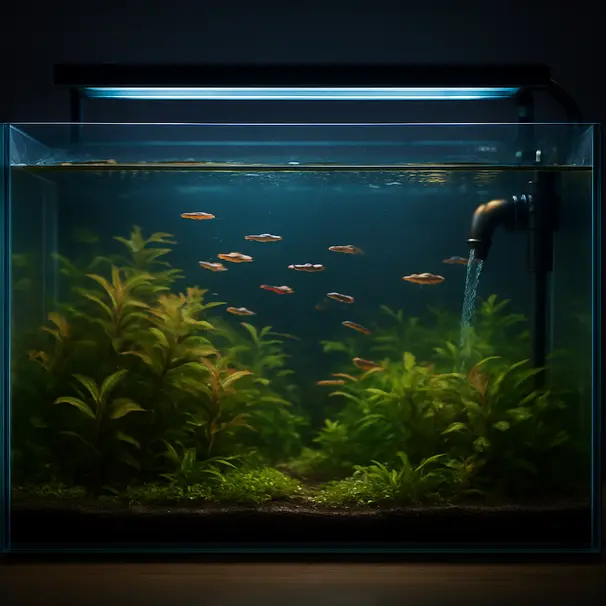
- Leave a clear central swim lane for schooling species, so carers can observe behavior quickly during visits.
Lighting, filtration, and water flow
Lighting makes plants happy but can also encourage algae if it’s too intense or left on too long. Filtration keeps the water clear and biological processes steady. Flow should mimic the species’ natural environment.
Lighting guidelines:
- Use timers to keep a consistent photoperiod, typically 6 to 10 hours depending on plant needs.
- For low-tech tanks with hardy plants, moderate light reduces algae risk and lowers maintenance for carers.
Filtration basics:
- Aim for a filter rated for slightly more than the tank volume, like 4x turnover for many community tanks.
- Choose filters that are easy to open and maintain. Canister filters work well but require more hands-on work than hang-on-back filters.
- Add mechanical, chemical, and biological media where appropriate to keep water clear and stable.
Water flow considerations:
- Avoid strong currents for slow swimmers and bettas; gentle circulation near the surface and moderate flow elsewhere usually works.
- Position powerheads and filter outlets to create subtle circulation rather than harsh currents.
Maintenance note: write simple filter and light care instructions for carers, including how often to rinse media, replace cartridges, and check bulbs or LEDs.
Plant care and regular maintenance
A little routine goes a long way. For pet carers, consistency beats perfection. Short visits can be effective if the tasks are targeted.
Weekly checklist for carers:
- Spot feed fish and observe them for any odd behavior.
- Check temperature, heater placement, and filter flow.
- Remove visible debris, trim fast-growing plants, and siphon the substrate lightly if waste builds up.
Monthly tasks:
- Replace or rinse filter media according to the owner’s plan, using tank water to preserve beneficial bacteria.
- Test water parameters: ammonia, nitrite, nitrate, and pH. Keep a log so owners and carers can spot trends early.
- Deep clean glass, inspect equipment seals, and check for algae hotspots.
Trimming and plant propagation:
- Trim stems before they become unruly. Healthy pruning can encourage fuller growth and stop plants from shading neighbors.
- Stems and runners can make cheap replacements if a plant fails. Share clipping tips with owners so they can propagate between visits.
Safety tip: always unplug electrical equipment before major water work, and never submerge heaters unless they are designed for it.
Safety tips for carers and clients
Keeping aquatic pets safe is about more than chemistry. Look for hazards that might cause spills, shocks, or stress to animals.
Household safety checks:
- Secure lids and lighting so curious pets and children cannot topple them.
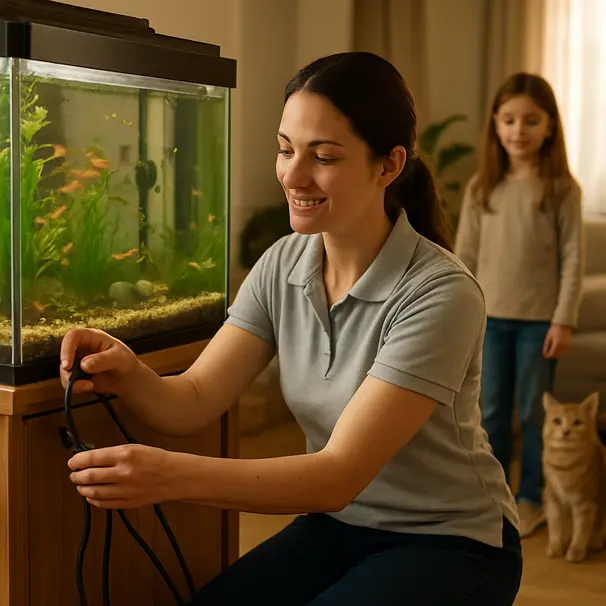
- Keep cords tidy and away from walkways to prevent tripping and sudden pulls on equipment.
- Use drip loops on power cords to keep water from following a path to the outlet.
Health and medication notes:
- If a tank needs treatment, double check compatibility with resident species. Some medications may be harmful to shrimp or snails.
- Encourage owners to share medication schedules and contact details for emergencies.
Emergency preparedness:
- Have a simple kit: a spare heater, net, airline tubing for emergency aeration, and a container for temporary moves.
- For carers visiting multiple homes, keep clear notes on which tanks need what equipment and any quirks of the setup.
Common mistakes and how to fix them
Even experienced carers and owners run into snags. The good news is most problems have practical, gentle fixes.
Algae blooms:
- Often linked to excess light or nutrients. Reduce light hours, remove decaying plant matter, and consider a light trimming of fertilization.
Sudden water parameter swings:
- Avoid large water changes in one go in older, established tanks. Instead, do steady 20 to 30 percent water changes on a schedule.
Plant decline:
- Check for nutrients, light, and CO2 balance. For low-maintenance setups, swap out demanding species for hardy alternatives.
Behavioral issues:
- Aggression can come from crowded tanks or poor hiding spaces. Rehome or adjust stocking levels, rearrange decor for new territories, and add plants to break lines of sight.
Communication and care routines for pet carers
Clear notes and friendly routines make everyone’s life easier. Create a one-page care sheet for each tank with essentials like feeding amounts, equipment model numbers, medication history, and emergency contacts.
What to include on a care sheet:
- Daily and weekly tasks, with checkboxes for carers to tick.
- Preferred products and brand names for filters, fertilizers, and test kits.
- Signs of stress that should prompt a call or photo to the owner.
A friendly handshake with an owner and a quick walk-through of the tank can save confusion later. Keep communication warm and straightforward so owners trust the person caring for their aquatic pets.
Wrapping up and a simple checklist
Aquascaping can be relaxing, rewarding, and surprisingly practical when done with pets in mind. For carers and owners, the goal is a stable, accessible tank where animals can thrive and maintenance is predictable.
Quick checklist to keep nearby:
- Plan layout with maintenance access in mind.
- Choose substrate and plants suited to residents and carer schedules.
- Use reliable, easy-to-service filtration and timed lighting.
- Leave swim lanes and hiding spots for fish and invertebrates.
- Keep a concise care sheet and emergency kit handy.
A well-planned aquascape is a gift to both pets and people. It makes the tank easier to enjoy, easier to maintain, and safer for everyone involved. So take your time, chat with owners, and remember that small, steady improvements often make the biggest difference. Happy planting and caring!