

A warm hello from Floofy to the fish sitter
Taking care of someone else’s fish is a special kind of responsibility. Fish don’t beg for walks or cuddle on your lap. They ask for steady water, consistent routines, and a calm environment. As a pet carer, your goal is simple: keep the tank stable, keep the fish comfortable, and spot problems early.
This guide is practical and friendly. It covers everyday checks, safe cleaning and maintenance, handling and moving tanks, emergency signs, and tips for communicating with owners. If you’re new to aquarium sitting, or you want a checklist to follow, this will help you feel confident.
Quick safety checklist for every visit
- Check water temperature and make sure heaters and thermometers match the owner’s instructions.
- Look for unusual behavior: gasping at the surface, listless swimming, hiding, or clamped fins.
- Inspect equipment: filter running, air stones bubbling, lights working, heaters set correctly.
- Note water clarity and smell. Slight cloudiness can have many causes, but a strong fishy or rotten smell may mean trouble.
- Confirm the lid or cover is secure, especially if there are curious children or pets in the home.
Daily routines and monitoring
A short, consistent routine makes a big difference.
Start with visual checks
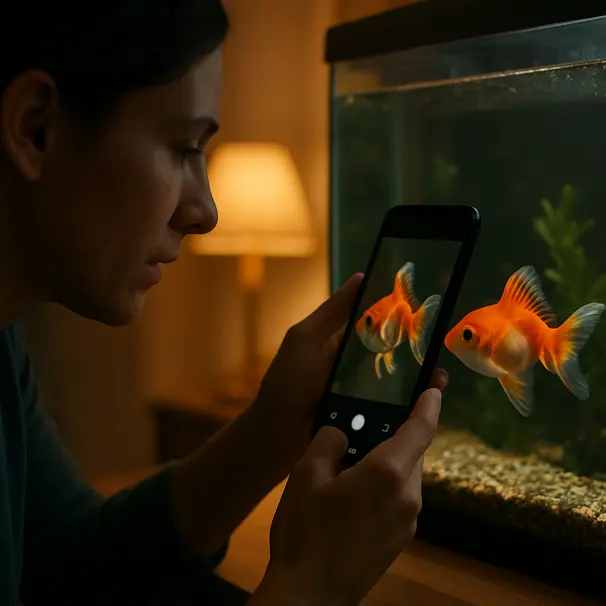
Spend a minute observing the whole tank before you do anything. Watch how the fish swim, where they spend their time, and whether they come to the surface at feeding time. If something seems off, take a photo and note the time. Photographs are a great way to show the owner what you saw.
Temperature and equipment
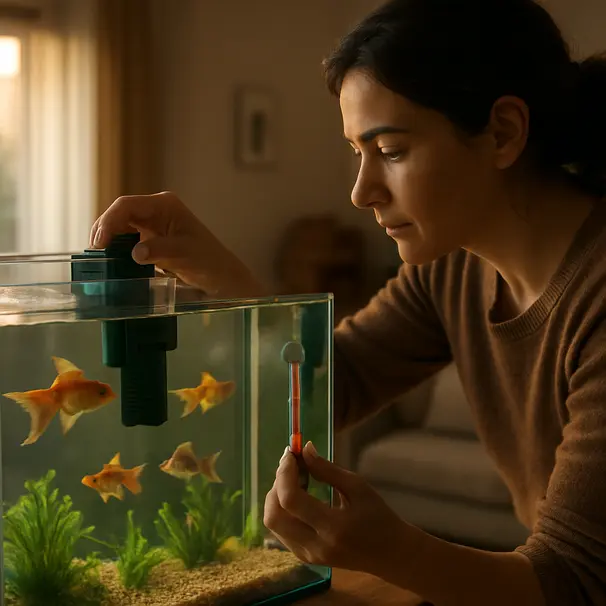
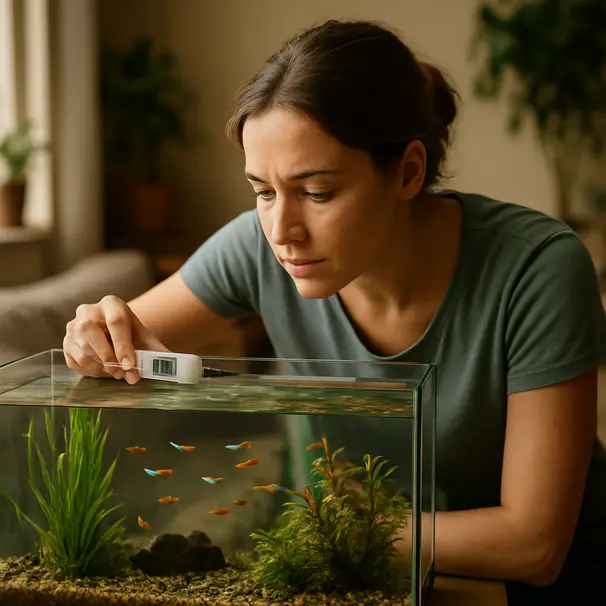
Check the thermometer and heater daily, especially in seasons with wider temperature swings. A one-degree change might not sound like much, but for many tropical fish it can matter. If the tank uses a separate thermometer and heater, verify both show similar readings.
Ensure filters are running and that flow seems normal. A clogged filter may slow water movement. Bubbling air stones and quiet, steady filter sounds are signs that things are working.
Feeding
Follow the owner’s feeding instructions exactly. Overfeeding is one of the most common mistakes. It causes leftover food, cloudy water, and can stress fish. A small pinch or the recommended scoop once or twice a day is often enough. If you’re unsure, underfeed rather than overfeed and message the owner.
Observation log
Keep a short log for each visit: date, time, temperature, what you fed, and any odd behaviors. That record helps you track trends and gives the owner peace of mind.
Water, tests, and why stability matters
Fish thrive when conditions are stable. Sudden changes in temperature, pH, or ammonia levels stress them and can lead to illness.
Simple tests to learn and bring
If the owner leaves test strips or liquid test kits, use them as instructed. Basic checks include: ammonia, nitrite, nitrate, pH, and sometimes hardness. You don’t need a lab, just consistent results.
- Ammonia and nitrite should be near zero in a healthy, cycled tank.
- Nitrate is usually tolerated at low levels but should be monitored.
- pH changes slowly, so a single small shift often isn’t a crisis, but large swings matter.
Always report any abnormal results immediately. Consider taking a photo of the test strip for the owner.
Water top-offs vs water changes
Top-offs replace evaporated water and are usually done with dechlorinated tap water at the same temperature as the tank. Water changes remove dissolved waste and are typically done less frequently.
If an owner has left explicit instructions for a partial water change and supplies, follow them. If they haven’t, avoid doing a full water change without permission. A large, unexpected water change can shock fish.
If you’re asked to perform a water change, match the temperature closely and mix treated water in a separate container before adding it to the tank. Pour gently to avoid disturbing the substrate.
Tank maintenance: filters, gravel, plants, and decoration
A well-maintained tank is a safe tank. Here are practical tips for common maintenance tasks.
Filters and media
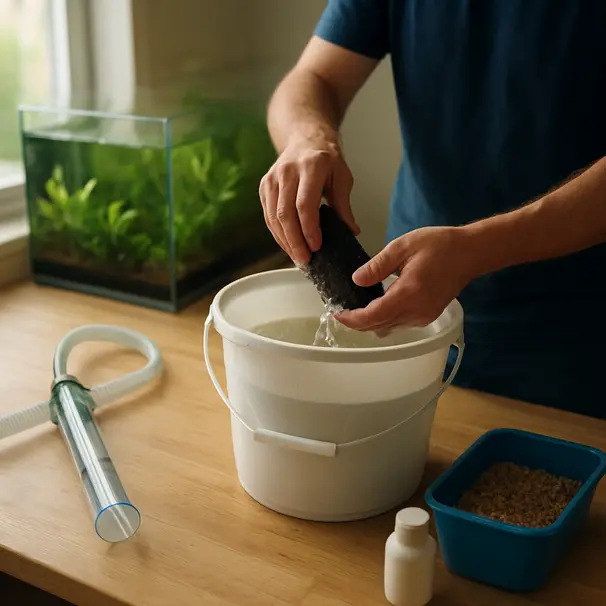
Follow the owner’s guidelines about cleaning filter media. Many filters benefit from rinsing in old tank water rather than tap water to preserve helpful bacteria. Replace carbon or other chemical media on the owner’s schedule, not sooner unless it’s visibly dirty.
Substrate and vacuuming
Gravel vacuuming removes uneaten food and waste. If you’re asked to do this, don’t clean all the gravel at once. Small, regular vacuums are better than one big cleaning. If substrate is living with beneficial bacteria, preserve some during cleaning.
Live plants and decorations
Check plants for decaying leaves and gently remove those if requested. Avoid aggressive pruning unless the owner asked you to. Rinse decorations with tank water if you need to clean them.
Light and algae
Algae growth is natural. If algae become heavy, mention it in your notes and ask the owner how they’d like you to proceed. Many owners reduce light time or use algae scrapers gently. Avoid harsh chemicals unless instructed.
Handling, moving tanks, and safety tips around the house
Moving or handling tanks requires extra care. If an owner needs you to relocate a tank, ask for help and clear instructions. Small bowls and nano tanks may seem easy to lift, but sudden tilts can spill and stress fish.
General safety pointers:
- Use two hands and keep the tank level when lifting.
- Never lift a full tank without help. Water is heavy.
- Secure power cords and avoid using extension cables that can become tripping hazards.
- Keep lids on to prevent curious pets or children from reaching in.
If you must net fish, do it gently and with a soft net. Minimize air exposure and move fish quickly into conditioned water if they need temporary housing.
Feeding schedules, treats, and special diets
Some fish need specialized diets. Always stick to the owner’s feeding plan. If treats are allowed, give them sparingly and follow instructions. If you accidentally overfeed, compensate by skipping the next small portion, but first consult the owner.
Frozen or live foods may need thawing or special handling. Keep these items refrigerated and use clean utensils. Wash your hands before and after handling live food to avoid cross-contamination.
Spotting illness and when to contact a vet or the owner
You’re not expected to diagnose, but you can spot signs that something may be wrong.
Red flags:
- Rapid breathing or gasping at the surface
- Loss of appetite over several feedings
- White spots, ragged fins, discoloration, or sudden lethargy
- Clamped fins and unusual hiding
- Bloating or sores on the body
If you see any of these, take photos and contact the owner right away. Suggesting the owner consult an aquatic-savvy vet is appropriate. Use language like “I noticed X, you may want to consult your vet” rather than making medical claims.
Emergency steps to consider
- Check water temperature and test ammonia/nitrite quickly.
- Do not add medications without owner permission.
- If ammonia or nitrite is dangerously high and owner is unavailable, a partial water change may help reduce toxins, but do this only if you are confident in technique.
Always prefer communication. A quick photo and message can help the owner decide next steps.
Communication and record keeping
Good communication builds trust. Before the first visit, confirm feeding amounts, water change schedules, any medications, and emergency contacts.
On each visit, send a short message: time in, time out, water temperature, feeding summary, and any concerns. Attach photos of the tank and fish to show everything looks normal. If something is wrong, include clear photos and test results if you have them.
A written visit log helps owners feel secure and helps you remember details. Keep notes on the owner’s profile or use a simple notebook.
Extra tips to make your care stand out
- Keep a small kit: thermometer, dechlorinator, a soft net, and a basic test strip if the owner approves.
- Wear clean clothes and wash hands before and after handling tank equipment.
- Avoid strong scents or perfumes near the tank; fish can be sensitive to chemicals.
- If you’re pet sitting for multiple homes, make separate checklists to avoid mixing instructions.
Wrapping up: calm fish, happy owners
Aquarium care is quiet, steady work. Your attention to routine, your notes, and your willingness to communicate make a big difference to fish and owners alike. A composed carer helps keep water stable and stress low, which is what fish need most.
If you ever feel unsure, ask the owner for clarification. They’ll appreciate the care you take. And remember, small consistent actions—regular temperature checks, careful feeding, and clear photos—often prevent the biggest problems.
Happy fish sitting. You’ve got this.