


Best dog cone alternatives for comfort
If your dog has ever come home wearing an Elizabethan collar, you know the mix of relief and guilt that can follow. The cone is effective at keeping dogs from licking or chewing wounds, but it’s often clumsy, noisy, and stressful for both pet and owner. The good news is there are thoughtful, comfortable alternatives you can consider that may help your dog heal more peacefully.
In this guide we’ll walk through practical options, fit and use tips, and simple ways to combine approaches so your dog stays comfortable and safe. Always consider asking your vet for specific advice about your dog’s injury or surgery.
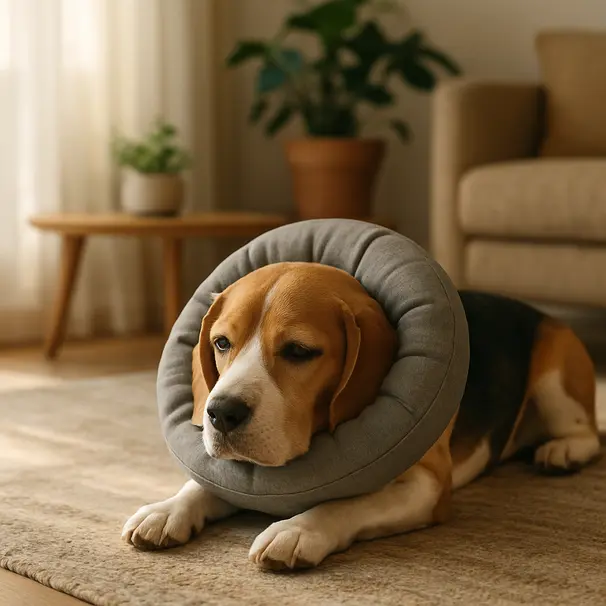
Why look beyond the traditional cone?
The classic plastic cone works, but many dogs hate it. They can have trouble eating, drinking, and navigating the house. Some dogs panic or become withdrawn, and that stress can make recovery harder. Choosing a different option can:
- Reduce anxiety and improve sleep
- Make mealtimes and play easier
- Help wounds stay clean with less distress
That said, every alternative has limits. Some dogs will still manage to reach certain areas, and not every option suits every injury. Keep a close eye on your dog, and pause any approach that seems ineffective or unsafe. If a wound looks worse, if your dog is in pain, or if you’re uncertain, consult your vet.
Soft and padded collars: gentle and practical
Soft collars are made from fabric or padded foam. They sit around the neck and create a barrier that’s less obtrusive than hard plastic.
Pros:
- Comfortable for sleeping and moving around
- Lightweight and quieter than plastic
- Easier on ears and vision for some dogs
Cons:
- Some dogs can still reach paws or hindquarters depending on body shape
- Fabric can become soiled and may need frequent cleaning
Fit and use tips:
- Pick a collar sized for your dog’s neck and body length. If it’s too loose, your dog can wiggle out. If it’s too tight, it will be uncomfortable.
- Check that your dog can drink and pant easily.
- Clean or replace the collar if it gets damp or dirty to avoid irritation.
Soft collars are especially useful for facial wounds, stitches on the chest, or dogs who are very stressed by hard cones. They can be a good first option to try, provided they prevent access to the affected area.
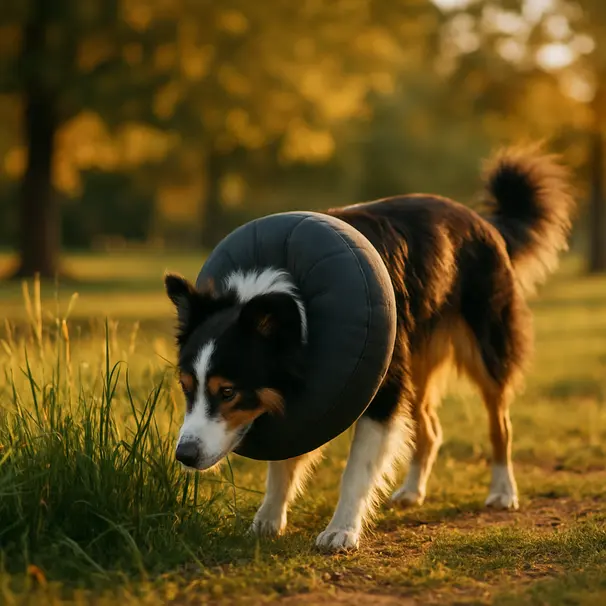
Inflatable collars: cozy and low-stress
Inflatable collars look like travel neck pillows for dogs. They push the head forward a bit and make turning to lick harder.
Pros:
- Comfortable, cushioned feel
- Allows better peripheral vision and easier eating
- Packs away for storage and travel
Cons:
- May not block access to all body parts, especially hindquarters
- Can be punctured or deflated if chewed
When to consider an inflatable collar:
- For dogs with wounds on the head, neck, or shoulders
- For anxious dogs that need a calming, snug option
Practical tips:
- Inspect the collar regularly for leaks or chewing damage.
- Pair with supervision until you’re confident your dog can’t reach the wound.
- Use an inflatable collar with a quick-release clip for fast removal in an emergency.
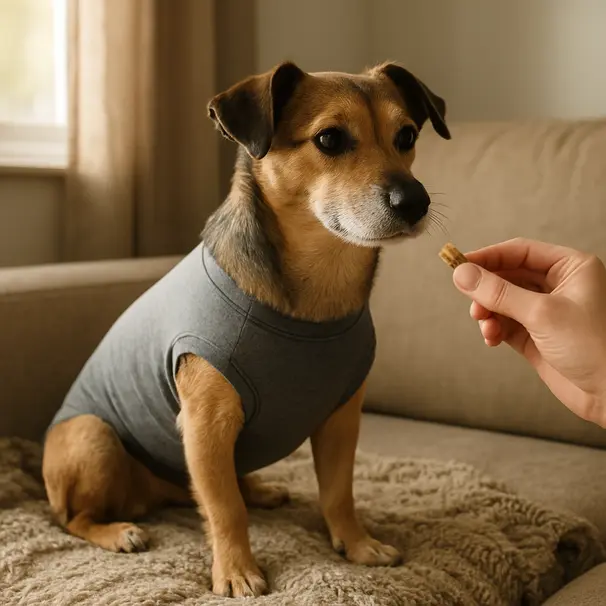
Recovery suits and surgical shirts: body coverage with comfort
Recovery suits are tight-fitting garments that cover wounds, stitches, or bandages. They’re like compression shirts for dogs and are especially helpful for torso and limb wounds.
Why owners like them:
- They keep dogs from licking and scratching large areas
- They’re machine washable and reusable
- Most dogs tolerate clothing better than a cone
Choosing the right suit:
- Measure carefully—comfort depends on a correct fit. Most brands provide measurement charts for chest, neck, and body length.
- Look for breathable, stretch fabric that won’t rub sensitive skin.
- For paw or tail issues, you can combine suits with booties or tail wraps.
Care and hygiene:
- Change suits if they become damp or soiled.
- Give dogs supervised time without the suit so skin can breathe, if your vet agrees.
- If a suit rubs or causes redness, stop using it and consult your vet.
Recovery suits can allow dogs to move freely and play gently while protecting incisions. They also work well for dogs who dislike restricted neck movement.
Neck control collars and inflatable neck braces
Some collars restrict neck movement with a firmer structure than soft collars but without the full cone. These limit how far the dog can turn, which can stop access to some injury sites.
Good for:
- Dogs who need limited neck rotation
- Preventing paw and face reaching in medium-size breeds
Considerations:
- They can feel restrictive, so choose one with soft inner padding.
- These collars may not stop licking of hips or hind legs.
Safety note:
- Ensure the collar allows comfortable breathing, panting, and swallowing. If your dog shows signs of distress, stop use and check with the vet.
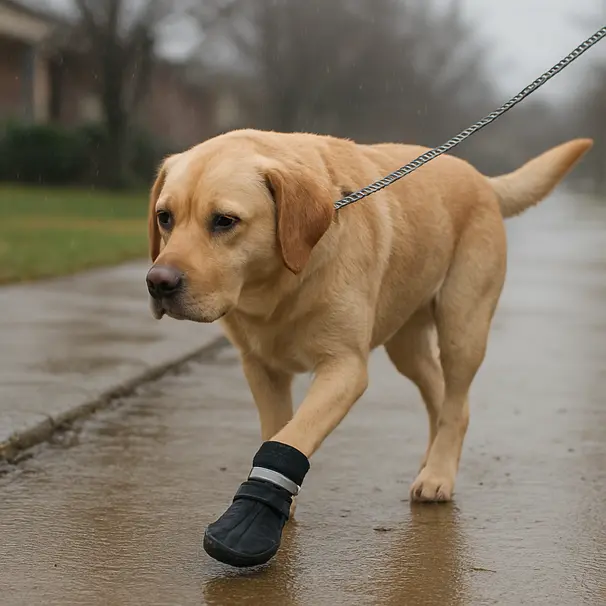
Boots, wraps, and targeted protection for paws and tails
Sometimes the injured spot is small, like a paw pad or the base of the tail. In these cases, a full-body solution is overkill. Targeted protection works well.
Options:
- Waterproof boots or socks with traction
- Adhesive bandages plus a breathable wrap
- Tail caps or tail wraps for injuries near the tail base
Tips for success:
- Make sure boots fit securely but not too tight. Practice at home so your dog gets used to them before an expected recovery period.
- Combine with distraction and treats to create positive associations.
If a bandage gets wet or dirty, replace it quickly. Moist bandages can trap bacteria and may irritate the wound.
Behavioral strategies and enrichment to reduce licking
Physical barriers are only part of the solution. Changing your dog’s environment and routine can reduce obsessive licking or chewing.
Simple strategies:
- Increase gentle exercise and play to burn nervous energy.
- Offer chew-safe toys and food puzzles to focus attention elsewhere.
- Give extra calm cuddle time to reassure anxious dogs.
- Use short crate or quiet room breaks with comforting bedding when needed.
Training tips:
- Use positive reinforcement to reward time spent away from the wound.
- Distract with short sessions of training or sniff games after a vet-approved rest period.
These behavioral tools can make any collar or suit more effective, since a calmer dog is less likely to fixate on a sore spot.
Combining methods: a pragmatic approach
Often the best plan mixes solutions. For example:
- A recovery suit plus short supervised breaks without it
- An inflatable collar for nights and a soft collar for daytime supervised outings
- Targeted bandages for paws, paired with mental enrichment to prevent chewing
Watch how your dog responds. If they’re using their paws to scratch under a suit, or finding a way past a collar, tweak the approach. It’s normal to try a couple of options before finding what works best.
How to choose the right alternative for your dog
Ask yourself:
- Where is the wound or incision?
- How mobile and active is my dog?
- Does my dog tolerate clothing or collars?
- How closely can I supervise recovery?
Practical checklist:
- Read product reviews from other owners with similar dogs.
- Measure carefully and follow sizing charts.
- Start with short trials at home and increase use gradually.
- Keep contact details for your vet handy if problems arise.
Always consider the nature of the injury. Some wounds will still need a rigid cone for guaranteed protection. Your vet can advise on which alternatives are appropriate for your dog’s specific situation.
Quick fitting and safety tips
- Double-check that any collar or suit allows normal breathing and prevents gagging.
- Ensure you can slip two fingers under a collar for a comfortable fit.
- Watch for red marks or chafing and adjust or remove the device if they appear.
- Keep water and food accessible, or remove the device briefly for meals if your vet recommends.
- Supervise your dog closely during the first day of using a new alternative.
If your dog is a determined licker or chewer, consider combining physical barriers with behavior modification strategies and more frequent monitoring.
When to call the vet
Consider contacting your veterinarian if you notice any of the following:
- Increased redness, swelling, or discharge around a wound
- Signs of pain that don’t improve
- A device that causes breathing difficulty or seems to worsen anxiety
- Your dog manages to reach the wound despite alternative measures
A quick vet check can prevent small issues from becoming bigger ones. It’s a sensible part of any recovery plan.
Final thoughts: comfort, safety, and patience
Choosing an alternative to the cone is about balancing protection with your dog’s comfort. Soft collars, inflatable options, recovery suits, and targeted protection each have a place. The best choice depends on the location of the injury, your dog’s temperament, and your ability to supervise.
Be patient. Dogs can take a few days to accept a new routine. With thoughtful selection, proper fit, and a little enrichment, many pups heal more peacefully and owners feel better about their care choices.
If you’re unsure, reach out to your vet or a trusted pet carer for personalized guidance. A combination of practical gear and calm attention often makes recovery feel more like a cozy break than a punishment.
Helpful checklist before you leave the house with your recovering dog:
- Collar or suit fits and is clean
- Wound dressing is dry and secure
- You have a plan for supervised rest and enrichment
- Emergency contacts and vet instructions are accessible
Caring for a recovering dog can be a tender time. With the right tools and a bit of trial and error, you’ll find a solution that keeps your dog safe and comfortable while they mend.