

Best dog training leads and collars reviewed
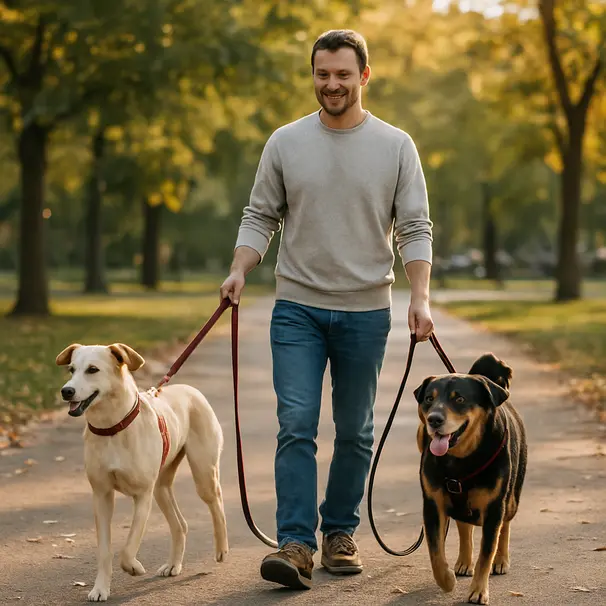
Choosing the right lead and collar can feel a little like shopping for shoes: comfy for your dog, secure for you, and suited to the day’s plans. In this guide I’ll walk you through the most useful types of leads and collars, share top picks for different needs, and offer simple yet effective tips to introduce new gear without drama.
Dogs and people are unique, and so are their walks. Some pups are pullers, some are shy, and some need a gentle reminder to come back. With the right gear and a bit of positive training, you can make walks safer, calmer, and a lot more fun.
Quick overview: what matters most
- Fit, comfort and adjustment. A snug fit stops slipping, but you should be able to fit two fingers under a collar or harness strap.
- Material and durability. Strong webbing, solid stitching and corrosion-resistant hardware will last through mud and rain.
- Purpose. Is it for daily walks, recall practice, agility or behaviour management? Pick gear for the job.
- Safety features. Reflective stitching, breakaway elements for certain environments, and quick-release buckles make life easier.
Types of training leads and when to use them
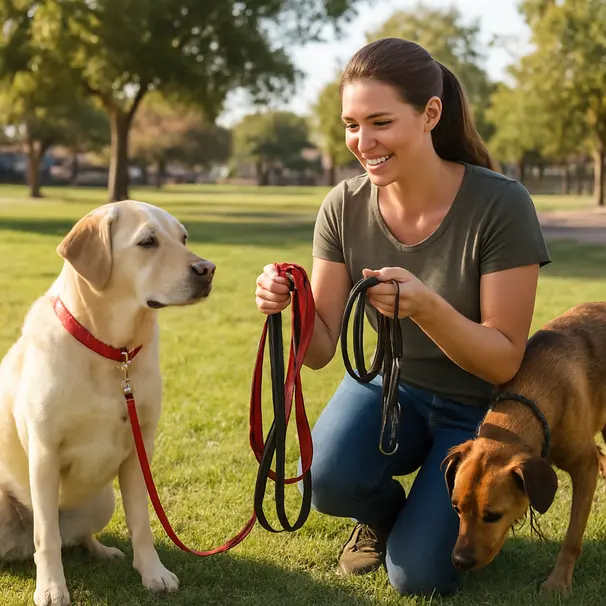
Leads are more than a length of rope. Different shapes and materials suit different training goals.
Standard flat lead
A classic nylon or leather lead, usually 4–6 feet long. Great for everyday walking and basic manners work. Leather feels nicer in wet weather and softens with use. Nylon is affordable and easy to clean.
Pros: straightforward, versatile. Cons: less control with strong pullers.
Training lead (thin, strong)
Often a thinner, stronger webbing used during focused training sessions. They’re easier to fold and flick when delivering quick cues. Trainers sometimes prefer these for clarity during heel and recall practice.
Pros: precise handling, lightweight. Cons: can be harsh if used with heavy pulling.
Long line (10–30 metres)
A long line gives your dog freedom while keeping you connected. It’s excellent for recall training, scent work, or off-leash practice in safe areas.
Pros: freedom + control, builds reliable recall. Cons: can tangle, needs open space and attention.
Retractable leads
They let the dog explore farther without changing the grip. They’re fine for confident, well-mannered dogs in safe spaces.
Pros: freedom in urban parks. Cons: poor for training recall, dangerous around cyclists or in tight spaces. They can encourage pulling for some dogs.
Slip leads and choke chains
A slip lead tightens when pulled. Choke and prong collars were historically common but need careful, experienced handling. Many trainers prefer alternatives that communicate without causing pain.
Consider professional guidance for any aversive tools. Positive, reward-based methods can help most dogs learn reliably with less risk of stress.
Types of collars and harnesses
Collars and harnesses affect comfort and control. Choosing the right one depends on your dog’s neck, respiratory health, and behaviour.
Flat collars
Simple, everyday collars with ID tags. They’re comfortable and practical, but not ideal for dogs who pull hard.
Martingale collars
Also called limited-slip collars, these tighten slightly to prevent slipping without choking. Many owners of sighthounds find martingales a safe choice.
Pros: secure for escape artists. Cons: must be fitted correctly to avoid discomfort.
Headcollars
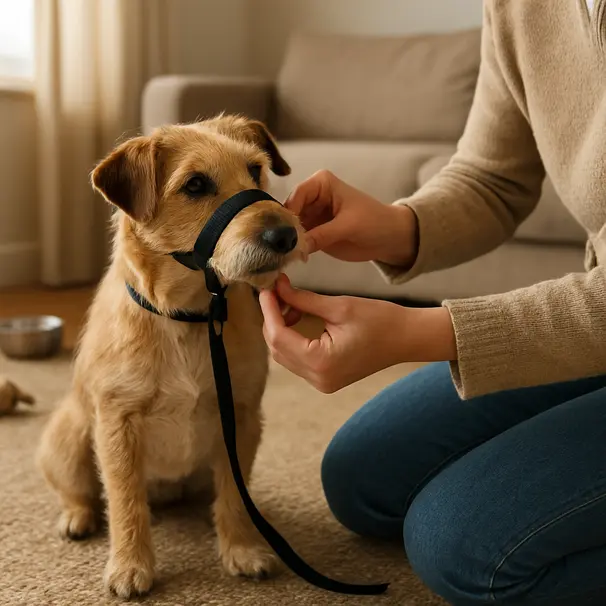
Headcollars gently steer the head and can reduce pulling. They take time to introduce and some dogs dislike having their head handled.
Pros: clear steering, helpful for large, strong dogs. Cons: needs patience to fit and introduce.
Harnesses
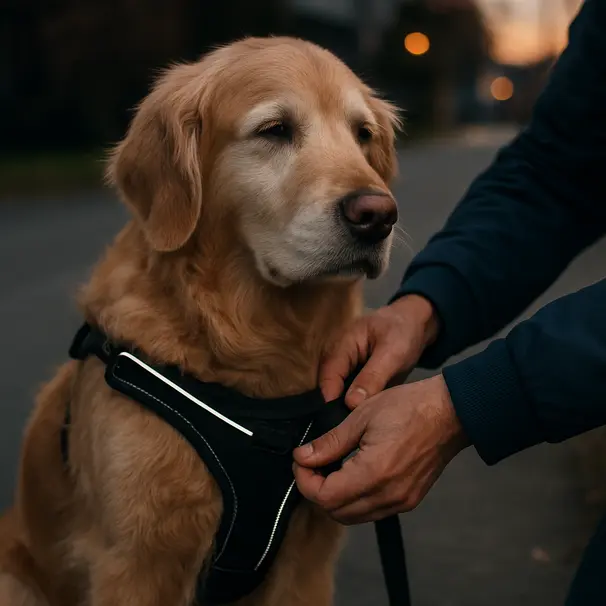
Harnesses distribute pressure away from the neck. Front-clip harnesses help reduce pulling, while rear-clip harnesses are comfy for relaxed walking. For dogs with neck or trachea issues, harnesses may be a safer option. Consider consulting a vet if your dog has respiratory or neck concerns.
Pros: comfort, control without neck strain. Cons: poorly fitted harnesses can rub or allow wriggling free.
Our top picks: reliable gear for different goals
I’ve grouped favourites by purpose. These picks reflect durability, comfort and real-world usefulness for pet owners and carers.
- Best everyday lead — 6-foot flat nylon or leather lead
- Why: Sturdy, easy to handle, great for daily use.
- Good for: puppy training, family walks, carers with different dogs.
- Look for: reinforced stitching, solid clip, comfortable width.
- Best training lead — 1/2–5/8" strong webbing, 4–6 feet
- Why: Lightweight and precise for heel and recall work.
- Good for: focused sessions, classes, clicker training.
- Look for: comfortable handle, secure clip.
- Best long line — 10–30 metre biothane or nylon line
- Why: Lets dogs practise recall safely at a distance.
- Good for: field training, shy dogs building confidence.
- Look for: tangle-resistant material, accessible storage on walks.
- Best martingale collar — limited-slip soft nylon or cotton blend
- Why: Helps prevent escapes without harsh pressure.
- Good for: sighthounds and dogs who back out of flat collars.
- Look for: correct sizing guides and comfortable width.
- Best headcollar — soft padded noseband with quick-release fitting
- Why: Better steering with minimal force once introduced gently.
- Good for: large, strong pullers when paired with reward training.
- Tip: spend time pairing the headcollar with treats before full use.
- Best everyday harness — padded, adjustable front-clip harness
- Why: Comfortable for longer walks and reduces neck pressure.
- Good for: older dogs, dogs with neck issues, carers doing longer walks.
- Look for: multiple adjustment points and reflective panels.
- Retractable lead — choose cautiously
- Why: convenient, but use only where hazards are low.
- Good for: experienced owners in open parks.
- Tip: keep a standard lead for busy streets or training sessions.
How to introduce a new lead or collar
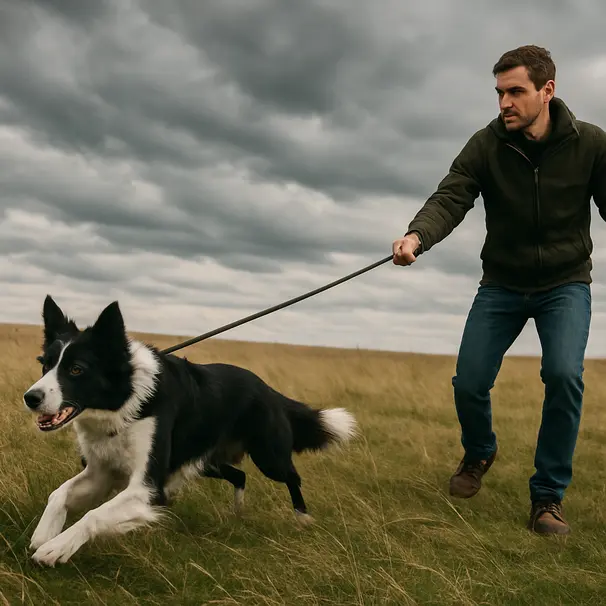
A calm, step-by-step approach saves everyone stress. Dogs learn fastest when they feel safe and rewarded.
- Let your dog sniff and explore the new gear. Hold it, drop treats near it, and make it part of normal life.
- Practice short wearing sessions indoors. Clip the lead on and give treats for calm behaviour. Keep sessions brief and positive.
- Add movement slowly. Walk a few steps, praise, then return inside. Gradually lengthen the walk time.
- Pair the new collar or harness with rewarding experiences, like playtime or a favourite walk route.
- For headcollars and martingales, fit carefully. Ensure the device sits correctly and doesn’t rub. Reward tolerance before practising control cues.
If your dog shows persistent stress, pause and consult a trainer who uses force-free methods. Sometimes a different style or fit is all you need.
Training drills to use with your new lead
- Short recall games: use a long line, call your dog back with a happy voice, reward generously. Repeat in low-distraction spaces.
- Heel practice: take 5–10 minute sessions focusing on steps and praise. Use high-value treats and gradually increase expectations.
- Leave-it and focus: with your dog on a short lead, practice redirecting attention to you with treats.
- Loose-leash walking: stop when the dog pulls and resume when the leash relaxes, rewarding calm pacing.
Keep sessions short and frequent. Success comes from clarity, consistency, and fun.
Safety, fit and maintenance
- Check hardware every few weeks. Rusty clips or frayed webbing need replacing.
- Clean materials according to manufacturer instructions. Leather benefits from conditioning, while nylon can usually be machine-washed inside a pillowcase.
- Inspect for chafing. Harness straps that rub can cause sore spots. Adjust or try padding if needed.
- Reflective or light-up options increase visibility for early morning or late evening walks.
- For dogs with a history of neck injury, respiratory issues or collapsing trachea, consider a harness and consult your vet for tailored guidance.
Tips for carers and multi-dog walks
- Have a standard protocol: which lead and collar each dog uses, where treats are kept, and how to handle greetings.
- Use two hands when managing a reactive dog: one on the lead, the other on a second anchor point, like a harness handle.
- For group walks, shorter leads keep dogs close and manageable. Long lines are great for training segments away from the group.
- Label leads with owner contact details if multiple carers share equipment.
Final thoughts
Gear is only part of the story. The best lead and collar support your training plan and suit your dog’s body. Pick well-made, comfortable equipment, introduce it gently, and reward good behaviour. If you’re ever unsure about fit or behaviour changes, talk with a trainer or vet who can offer personalised advice.
If you’d like help trying different leads and collars, Floofy’s community of trusted carers can bring dogs on short trial walks. Seeing how your dog moves and behaves in real life often makes the right choice clear.
Happy walking, and may your next stroll be full of good sniffing and calm returns.