

Introduction
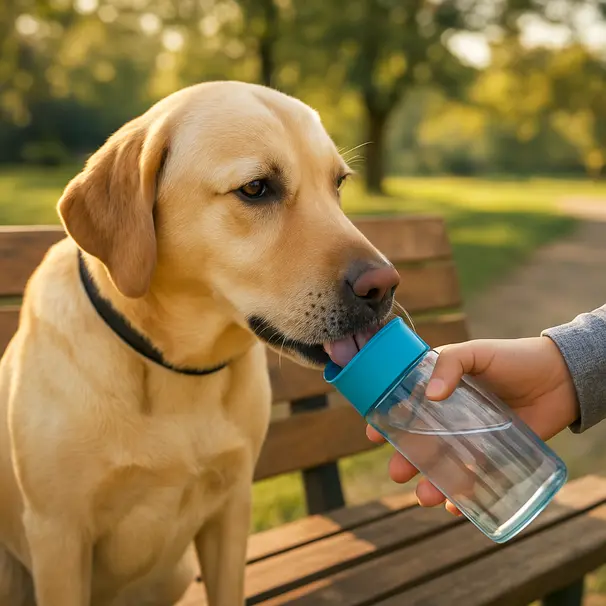
Packing the right water bottle for your dog can turn a sticky, thirsty moment into a calm, happy one. Whether you’ve got a short city walk, a long hike, or a road trip with a nervous passenger, a good dog water bottle keeps hydration simple, tidy, and stress-free. This guide covers the most useful styles, what to look for, and friendly tips for using and cleaning bottles while you travel.
Why a good dog water bottle matters
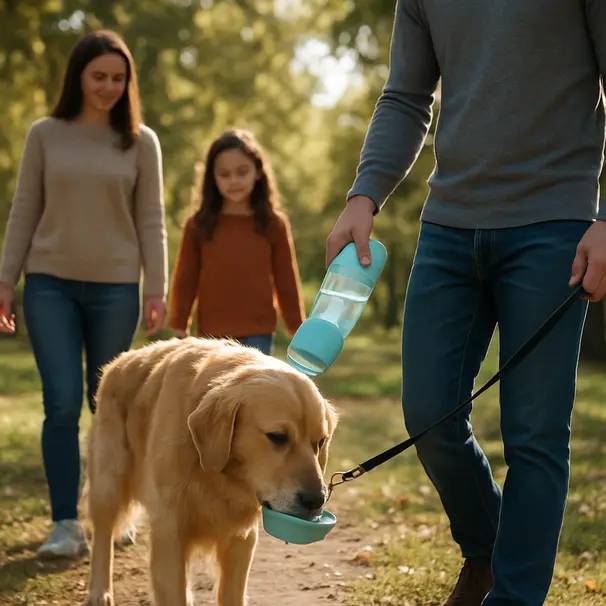
Dogs can get thirsty quickly on warm days or after play. A travel-friendly water bottle gives you a safe, convenient way to offer water without carrying a separate bowl and a mess of spilled water. For pet carers, having a reliable bottle means consistency when looking after other people’s pups, and it shows owners you’re thoughtful and prepared.
A few gentle reminders:
- Offer water often on hot days or after exercise. It may help prevent overheating and discomfort.
- If your dog has a medical condition or special hydration needs, consider checking with a vet for tailored advice.
Types of dog water bottles and how they work
There isn’t a single perfect bottle. Different designs suit different dogs and travel styles. Below are common types, with what each dog owner or carer might like about them.
1. Bottles with built-in bowls
These have a flip-up or attached trough that catches water from the bottle, creating a small bowl. You press a button or squeeze to fill the bowl, then let your dog drink.
Pros:
- One-piece solution, no separate bowl to carry.
- Good for medium and large dogs who prefer drinking from a surface.
- Often simple to operate with one hand.
Cons:
- May be heavier than simple squeeze bottles.
- Some designs can drip if not closed properly.
2. Squeeze bottles with nozzle
These are like big sports bottles. You squeeze to push water through a short nozzle. Many work well for small dogs or quick sips.
Pros:
- Lightweight and compact.
- Fast to use for short walks.
Cons:
- Less comfortable for dogs who prefer to lap from a bowl.
- Can spill if squeezed too hard.
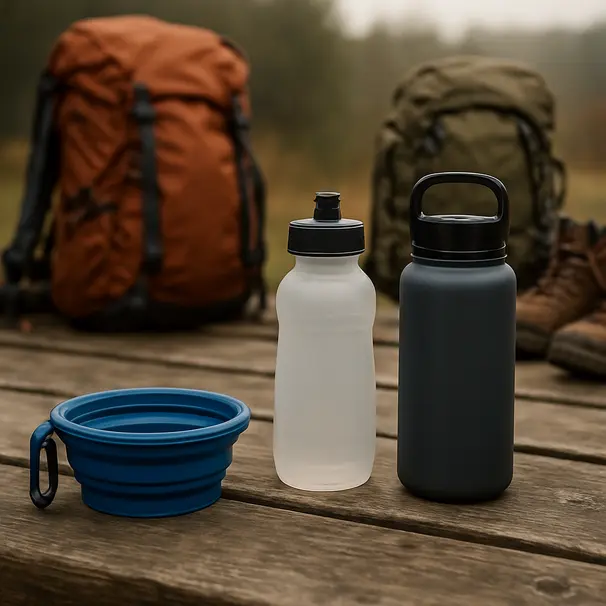
3. Foldable silicone bowls paired with regular bottles
You carry a regular water bottle plus a collapsible silicone bowl. Tip water into the bowl when needed.
Pros:
- Very compact when stored.
- Great for groups: one bowl can serve two dogs.
Cons:
- Requires two items: bottle plus bowl.
- Bowls can get dirty and need drying.
4. Filtered bottles
These include a water filter for outdoors or travel where tap water may be questionable. They look like human hiking bottles but are handy if you’re refilling from natural sources.
Pros:
- Useful on long hikes or when refills are uncertain.
- Often sturdy and reusable.
Cons:
- Heavier, and filters need replacement.
- Not essential for short outings.
5. Insulated bottles and thermal options
Insulation helps keep water cool on hot days. Some have a separate bowl or are designed to hold ice packs.
Pros:
- Keeps water pleasant on long summer days.
- Reduces risk of warm, stale water for picky dogs.
Cons:
- Bulkier and sometimes more expensive.
How to choose the best bottle: a practical checklist
Think about your dog’s size, your travel habits, and how you like to carry things. Here’s a checklist to help you pick.
- Capacity: Bigger dogs and longer outings need larger volumes. For short walks, 250–500 ml may be enough, but for hikes or hot days you might want 1 liter or more.
- One-handed use: If you often hold leashes or bags, choose a bottle you can open and serve with one hand.
- Leakproof design: Look for secure lids, solid seals, and tested leakproof claims. A small leak can soak a bag and ruin supplies.
- Material: Stainless steel is durable and resists odors. BPA-free plastic and silicone are lighter and often budget-friendly.
- Ease of cleaning: Bottles with wide mouths or removable parts are easier to wash. Dishwasher-safe is a bonus.
- Weight and size: Consider how much extra weight you want to carry, especially for long hikes.
- Clip and attachment options: Carabiner loops, straps, or seat clips help attach bottles to backpacks or crates.
- Filtration: If you refill from streams or uncertain sources, a filtered bottle may help, but remember filters require maintenance.
- Insulation: If you live in a hot climate, insulated bottles can keep water cool for longer.
Think about your dog’s drinking style
Some dogs prefer lapping from a flat surface, others will accept water streamed from a nozzle. If possible, try a few styles to see what your dog prefers. Pet carers should ask owners about a dog’s habits before trips.
Practical travel tips for offering water
A bottle is only part of good hydration. These small habits can make a big difference on the road.
- Offer water early and often. Small frequent sips are easier on many dogs than a big gulp.
- Don’t force a thirsty dog to drink quickly. Calmly present water and let them choose.
- On hot days, offer water before leaving an air-conditioned car. Dogs can feel overwhelmed by sudden heat.
- Freeze part of a bottle for a long drive. As the ice melts slowly, your pup can sip cool water and the bottle stays chilled.
- Keep a spare bottle or a larger jug in the car for refills during long trips.
- If you use bottled or filtered water in new places, let your dog sniff before drinking; new smells can be unsettling.
- For pet carers, write quick notes for owners about how much the dog drank and when.
Remember: signs of dehydration can include dry gums, lethargy, or reduced skin elasticity. These signs may call for a vet visit, so consider contacting a vet if you’re unsure or if symptoms persist.
Cleaning and maintenance
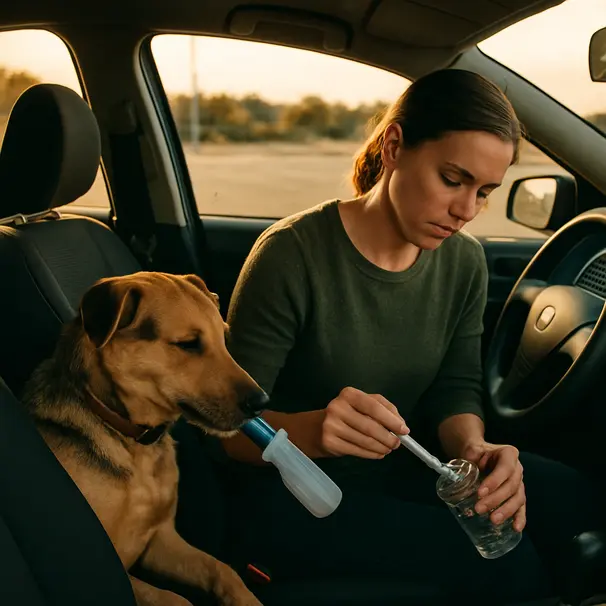
A clean bottle prevents odors and bacteria buildup. Here are easy care tips that make cleanup simple while traveling.
- Disassemble regularly. Remove seals and small parts to clean hidden crevices.
- Use hot, soapy water after each day of heavy use. For stubborn smells, let a mix of baking soda and water soak overnight.
- Check manufacturer instructions for dishwasher safety. Many plastic and silicone parts are dishwasher-safe on the top rack.
- Replace filters as recommended for filtered bottles. A tired filter won’t work well and may hold odors.
- Inspect seals and valves regularly. Replace worn pieces to keep bottles leakproof.
- Air dry completely before packing to avoid mildew.
If you’re unsure about cleaning or notice unusual smells, consider replacing the bottle or its parts. A clean bottle keeps drinking pleasant for your dog.
Quick product categories and who they suit
- Compact squeeze bottles: Great for quick city walks and small dogs.
- Built-in bowl bottles: Best for dogs who prefer lapping or for carers managing multiple pups.
- Collapsible bowl systems: Ideal for hikers who want light, packable gear.
- Filtered bottles: Useful for backpacking or rural travel where water sources vary.
- Insulated bottles: Recommended for hot weather and long drives.
Think about how much you’ll use the bottle, and pick one that fits your routine. You don’t need the fanciest model to do a great job.
FAQs
Q: How often should I offer my dog water on a walk?
A: Offer water every 20–30 minutes on long or vigorous outings, and more often on hot days. Short neighborhood walks may only need a quick sip before and after. Adjust to your dog’s size, age, and activity level.
Q: Can I use regular human water bottles for dogs?
A: You can, but human bottles may be awkward for dogs to drink from. Consider a simple adapter or a collapsible bowl to make it easier.
Q: Is filtered water necessary?
A: Filtered water can help when refilling from streams or uncertain sources, but it’s usually unnecessary for city tap water. If your dog has a sensitive stomach, consult your vet.
Q: My dog refuses to drink from a new bottle. Any tips?
A: Try offering familiar water first, let the dog sniff the bottle, and be patient. Some dogs take time to accept new drinking setups. Reward calm interest with praise or a tiny treat.
Final thoughts and quick checklist
A good travel water bottle is one of those small purchases that pays off in calm, clean, hydrated adventures. Pick a bottle that matches your travel style, your dog’s preferences, and your cleaning routine. Keep backups, offer water often, and write brief notes if you’re a carer looking after others’ pets.
Quick checklist before you go:
- Bottle is clean and leakproof.
- Capacity suits trip length and dog size.
- One-handed operation if you need it.
- Spare water or larger container in the car.
- Cleaning supplies packed, or paper towels and a small bottle brush.
Happy travels, and remember that small comforts like cool, fresh water make big differences for our dogs. If you have a picky drinker or a dog with special needs, consider checking with a vet for the best hydration strategy.