

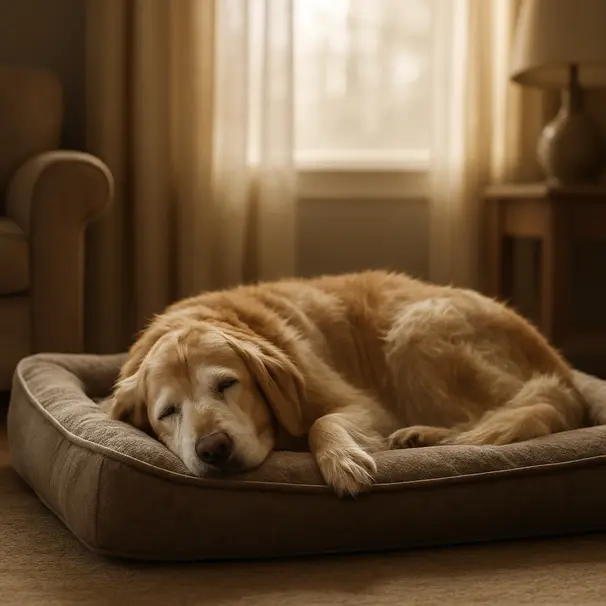
Gentle sleep for tired joints
As dogs age, naps take on new importance. Joints that used to handle playdates and long walks may ask for kinder treatment. An orthopaedic bed can offer relief by supporting hips, shoulders, and spine, so your older dog can settle more easily and wake up a little perkier.
This guide walks you through what to look for, the best types of orthopaedic beds, practical placement and care tips, and a few budget-friendly ideas. I’ll keep things simple and warm, like a chat with a friend who can’t stop fussing over their own senior pup.
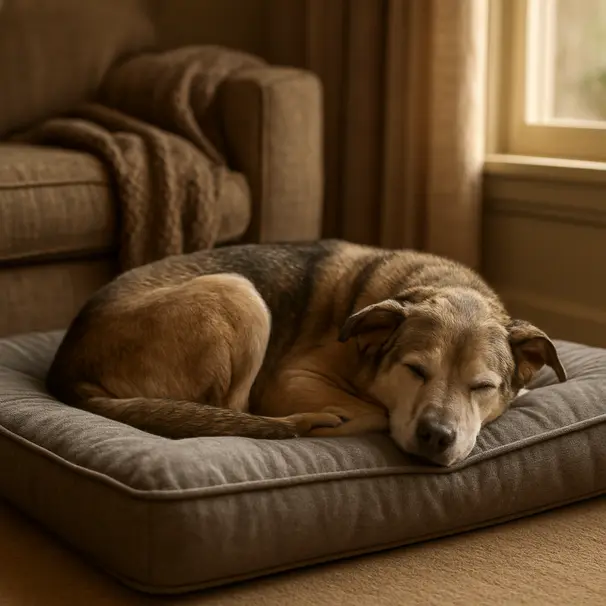
Why older dogs benefit from orthopaedic beds
Age brings normal wear and tear. Conditions like arthritis, hip dysplasia, and general stiffness may make flat, thin beds less comfortable. Orthopaedic beds can help by offering even support and relieving pressure points. That said, beds aren’t a cure. They can help your dog feel more comfortable, but consider them one useful part of a broader care plan.
Signs your dog may benefit from a better bed:
- Slower to get up in the morning or after resting.
- Choosing hard floors over their current mattress.
- Stiffness after naps, especially in hips or shoulders.
- Restlessness or trouble finding a comfortable position.
If you notice significant mobility changes, you might want to consult your vet for a full check-up and tailored advice.
What to look for in an orthopaedic bed
Choosing a bed is partly about features and partly about your dog’s personal needs. Here are the essentials to consider.
Support and foam types
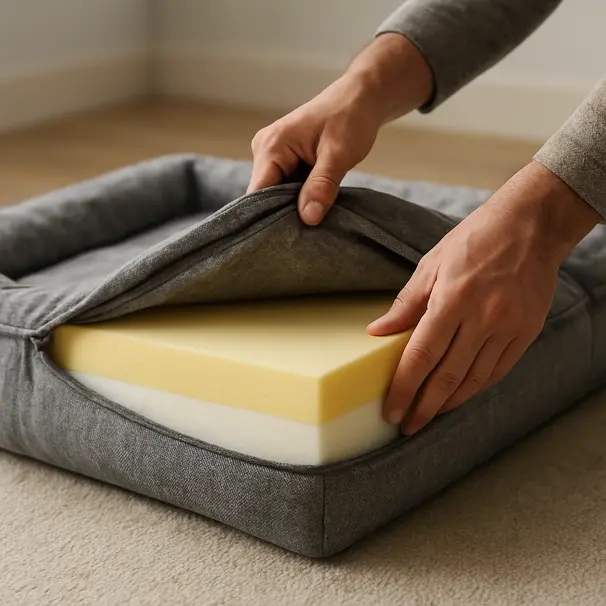
Memory foam is popular because it contours to the body, which can reduce pressure points. High-density memory foam usually provides firmer support and lasts longer. Egg-crate and convoluted foam can add cushioning, but check the overall density.
Some beds use layered foam: a firm base for support, topped with softer memory foam. For very large or heavy dogs, firmer, high-density foam helps prevent sagging.
Size and shape
Measure your dog from nose to base of tail while they’re stretched out and add a bit of extra room. If your pup likes to curl up, a round or donut bed with bolsters may feel cozier. For dogs who sprawl, choose a rectangular bed with a flat sleeping area wide enough for full extension.
Bolsters and edges
Bolsters can offer neck and head support and create a safe, den-like feeling. Some older dogs like to rest their chin on a raised edge. Others prefer a flat surface, especially if they have trouble climbing in or out.
Non-slip base and low entry
Look for a non-slip bottom so the bed stays put, especially on hardwood or tile. A low entry or ramp-friendly bed helps dogs with limited mobility climb in without strain.
Covers and washability
Senior dogs can have accidents or be drooly. A removable, machine-washable cover is a must for hygiene. Waterproof liners underneath the foam add protection and extend the bed’s life.
Breathability and temperature
Memory foam can hold heat. If your dog runs warm, seek gels or ventilated foam, or breathable covers. Some beds include cooling gel layers; others pair well with a thin cooling mat.
Durability and warranty
A good orthopaedic bed is an investment. Check the foam density, cover quality, and warranty. Higher-quality foam keeps its shape longer, which means lasting support.
Top orthopaedic beds to consider
Here are several popular approaches and specific styles to help you start your search. These examples show the range from budget-friendly to splurge-worthy options.
1. Classic memory foam mattress
Why it’s good: Thick memory foam layers conform to the body, offering consistent pressure relief. Many are rectangular and come in large sizes for big breeds.
Best for: Dogs that like to stretch out or need firm, even support.
Quick tip: Pair with a waterproof liner if your dog has incontinence issues.
2. Donut-style bolster bed with orthopaedic foam
Why it’s good: Raised sides create a sense of security and give head and neck support. The central sleeping area often uses softer, supportive foam.
Best for: Dogs that curl up and enjoy resting against a cushion.
Quick tip: Choose a low rim if your dog has trouble climbing.
3. Elevated cot with orthopaedic padding
Why it’s good: Keeps dogs off cold floors, offers airflow underneath, and reduces pressure if topped with a thin memory foam layer.
Best for: Dogs that sleep hot or for outdoor-covered spaces.
Quick tip: Make sure the padding is replaceable and washable.
4. Bolstered sofa-style bed
Why it’s good: Mimics a couch with higher sides and a supportive base. Great for dogs who like to sprawl against a side.
Best for: Pets who enjoy a softer feel with side support.
Quick tip: Measure carefully so your dog can fully stretch.
5. Waterproof, washable orthopaedic bed
Why it’s good: Built for easy cleaning with a removable cover and waterproof inner lining. Practical for dogs with accidents.
Best for: Older dogs with incontinence or drooling issues.
Quick tip: Choose a cover material that still feels soft and breathable.
6. Heated orthopaedic bed pad
Why it’s good: Gentle warmth can comfort stiff joints and soothe aches. Often used as an add-on rather than the main mattress.
Best for: Dogs that enjoy warmth, especially during colder months.
Quick tip: Use on low settings and supervise at first. Follow safety instructions carefully.
Choosing a bed for specific needs
Different conditions and personalities need different solutions.
- Arthritis and stiffness: Prioritise memory foam with good contouring and a medium-firm base. A slightly elevated headrest can help with neck comfort.
- Hip dysplasia: A wide, flat memory foam mattress helps distribute weight and reduce pressure on hips.
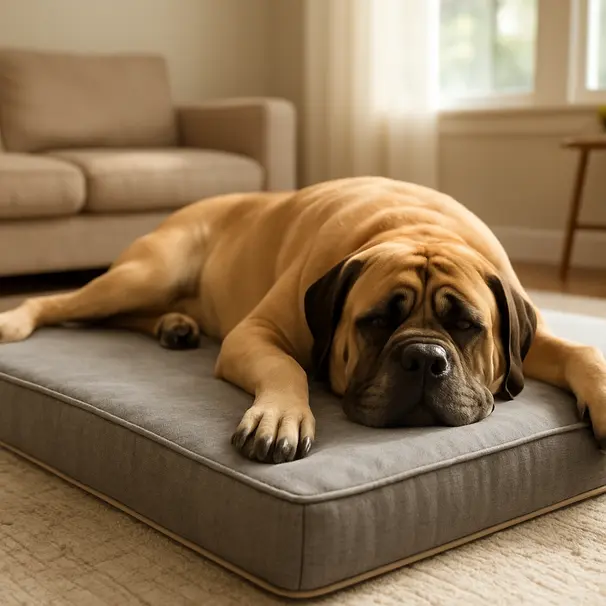
- Large or giant breeds: Choose high-density foam with a thicker base to prevent sagging. Bigger sizes ensure full extension.
- Small or toy breeds: Softer, lower beds or padded bolsters can feel safe and snug.
- Dogs with mobility issues: Low-entry beds or beds paired with a short ramp reduce strain.
Placement matters too. Keep the bed in a warm, quiet corner away from drafts, but not isolated from family life. Dogs are social animals. A spot where they can see you, without being in a high-traffic corridor, often works best.
Caring for the bed
A bed that’s well cared for lasts longer and stays hygienic.
- Use a waterproof liner under the foam to protect against accidents.
- Wash covers regularly according to instructions, and air-dry when recommended to preserve fabric.
- Spot-clean stains promptly with pet-safe cleaners.
- Rotate the mattress occasionally if you notice indentations.
- Replace foam when it becomes compressed and loses support, usually after 2–4 years depending on quality.
If the cover labels say “avoid dryer,” follow that advice. Heat can warp foam or shrink covers.
Budget and DIY options
You don’t have to empty the savings jar to improve your dog’s sleep. Budget ideas:
- Use a thick human memory foam mattress topper inside a durable cover.
- Add a waterproof liner beneath an existing soft bed.
- Layer blankets and a thick yoga mat for temporary support.
DIY can work well short-term, but high-density foam made for pets typically holds up better long term.
When to ask the vet
A better bed can ease discomfort, but it’s not a substitute for medical advice. Consider a vet visit if your dog:
- Shows sudden changes in mobility or pain.
- Stops using their bed entirely.
- Has swelling, severe limping, or marked behavioral changes.
Your vet may suggest pain management, physiotherapy, supplements, or diagnostic scans. A bed may be one helpful part of a coordinated care plan.
Quick checklist before you buy
- Size: Can your dog fully stretch out? Add a little extra room.
- Height: Is the entry low enough for your dog to climb in easily?
- Foam: Is it high-density, enough for your dog’s weight?
- Cover: Removable, machine-washable, and ideally water-resistant.
- Base: Non-slip for safety on smooth floors.
- Warranty and replacement policy.
Final tips and a little encouragement
Try a few things if you can. Many sellers offer trial periods or returns. Watch how your dog uses the bed for a week or two. They may need a little time to adjust to a new mattress, but improvements in getting up, settling, or fewer restless nights can be rewarding to see.
Choosing an orthopaedic bed is a loving act. It’s a small change that can give your older dog more comfortable days and calmer nights. If you’re unsure which model to pick, chat with fellow pet carers on Floofy for first-hand experiences, or ask your vet for tailored guidance.
Your senior dog has probably been at your side through a lot. Treating them to a supportive, comfy bed is one of those simple pleasures that can brighten their golden years.
Happy snoozing to your floofy friend!