

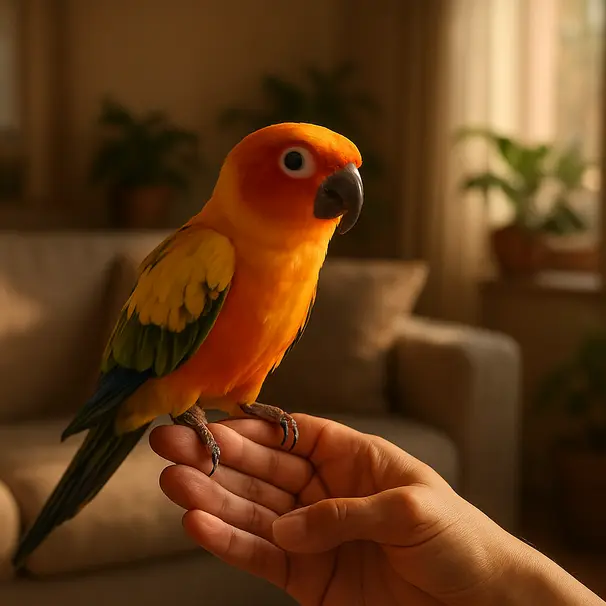
Welcome to Feathered Friend Time
Birds are bright, curious companions. They notice small changes in your voice, your scent, and the little rituals of everyday life. For bird owners and pet carers, deepening the bond with a feathered friend is about creating consistent, gentle routines, offering interesting enrichment, and learning how to read their body language. This post offers practical steps, playful ideas, and safety tips you can use today.
Understanding Bird Behavior
Before you try new tricks or extra cuddle time, it helps to understand why birds behave the way they do. A parrot’s loud call may be excitement or a request for attention. A cockatiel’s fluffing might mean contentment or temperature discomfort. Watching, listening, and keeping notes will help you spot patterns.
Signs to watch for:
- Bright, alert eyes and an upright stance, these usually mean the bird is curious and receptive.
- Ruffled feathers and avoidance can signal stress.
- Repetitive vocalizations may be boredom or a bid for interaction.
Approach slowly, speak softly, and let the bird come to you. Not all birds are lap birds, and that’s okay. Some prefer side-by-side companionship, joining you while you read, or riding on a perch beside a window.
Building Trust: Step-by-Step for Owners and Carers
Trust grows from predictability. Both pet owners and carers can use the same framework to build confidence and closeness.
Set the Stage
Consistency matters. Try to maintain similar feeding times, a familiar handling routine, and the same basic phrases for greetings. Birds thrive on pattern, and a predictable day helps them relax.
Go Slow
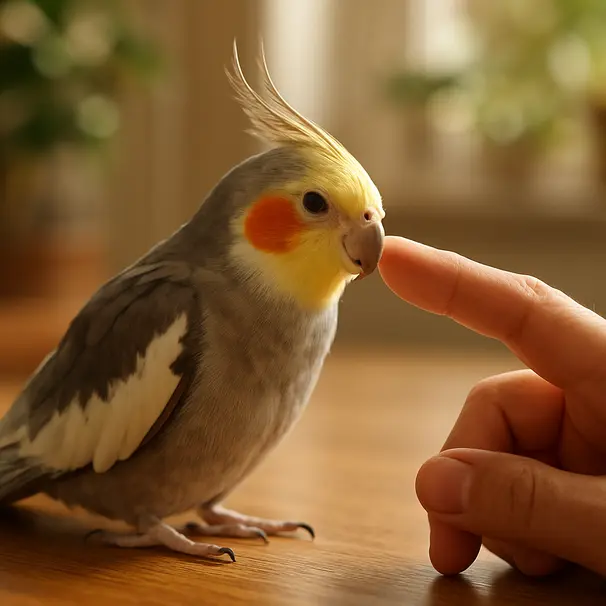
Let introductions be gentle. Offer a finger or perch and wait. If the bird retreats, step back and try again later. Slow progress beats a rushed interaction that sets you back two steps.
Use High-Value Rewards
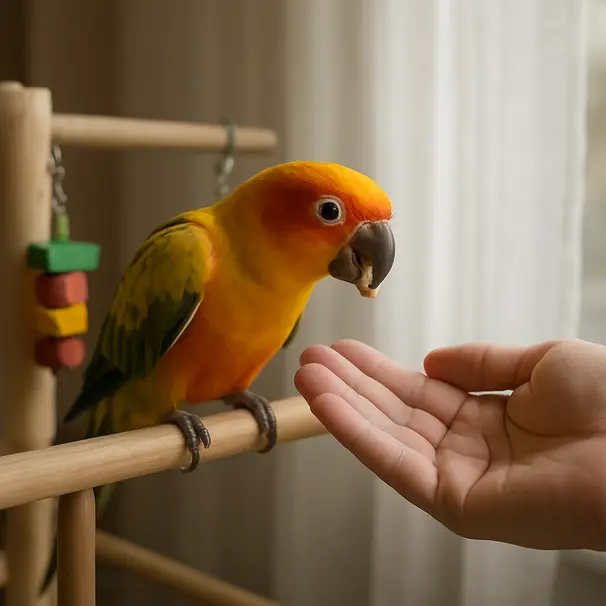
Small, favorite treats can help create positive associations. Millet, a bit of fresh fruit, or special seed mixes given sparingly can work well. Offer the treat with an open hand, and let the bird decide how close to come.
Read and Respect Boundaries
Wing and tail flicks, a sideways stance, or a beak point are communication tools. Accept a soft warning. If a bird bites or lunges, pause and try again later, perhaps changing your approach.
Daily Interaction Routines That Build Bonding
Short, frequent sessions are better than long, unpredictable ones. Try a few focused interactions each day, such as:
- Morning hello: Offer a perch and low-volume greetings as you start your day.
- Midday enrichment: Rotate toys or introduce simple foraging games.
- Evening wind-down: Quiet time near soft lighting can be reassuring.
Keep sessions to around 10 to 20 minutes, depending on the bird’s energy. End on a positive note. That way the bird looks forward to the next visit.
Simple Interaction Ideas
- Target training with a chopstick or dowel, rewarding touches with tiny treats.
- Foraging puzzles, like hiding a favorite seed in safe, destructible paper.
- Gentle head rubs for species that enjoy them, offered slowly and only after they show comfort.
Training Basics That Strengthen Relationships
Training is a conversation. It builds confidence for the bird and clarity for the person.
- Use short cues, paired with rewards. Repeat calmly.
- Break behaviors into tiny steps, and praise each small win.
- Avoid punishment. It damages trust and can make fearful behaviors worse.
Common, practical commands to teach:
- “Step up” onto a hand or perch, useful for safe handling.
- “Target” to guide movement during cage cleaning or vet trips.
- Stationing on a perch for travel crate introduction.
Training sessions are also a chance for carers to get to know a bird’s personality. Keep notes on what worked and what didn’t.
Enrichment: Keep the Mind Busy
A bored bird can develop unwanted behaviors. Enrichment can help prevent this, and it’s a fun way to bond.
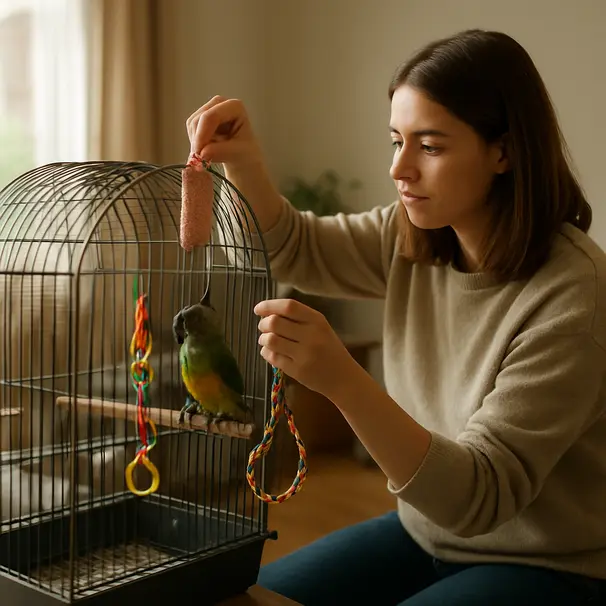
- Rotate toys weekly, include chewable, puzzle, and swing types.
- Offer supervised out-of-cage time in a bird-safe room.
- Introduce new textures like safe branches or paper for shredding.
For carers, a quick enrichment checklist before a visit can keep things fresh: a new foraging spot, a different perch layout, or a short song session with the owner’s permission.
Handling, Safety, and Comfort
Proper handling keeps both bird and human safe. Use calm movements, low voices, and consider the bird’s comfort zone.
- Approach from the side, not from above, to avoid startling the bird.
- Support their feet when asking them to step up, and avoid squeezing.
- Keep nails trimmed safely, and consult a groomer or vet if you’re unsure.
When transporting a bird, use a secure, ventilated carrier. Help the bird acclimate by leaving the carrier open in the living space ahead of a trip, and place a familiar towel or toy inside.
Safety notes for carers: always confirm household rules with the owner. Ask about toxic plants, non-stick cookware, and whether other pets may be present. A short checklist prevents accidents.
Socializing Multiple Birds or Introducing a New Carer
If you manage more than one bird, introductions should be gradual. Start with visual contact across cages, progress to supervised time together, and always watch for dominance or stress signs.
When a new carer steps in, a slow handover helps. Owners can share the bird’s favorite treats, calming phrases, and any sensitivities. Carers should mirror the owner’s routines as much as possible during visits.
Travel, Visits, and Bird Care Tips for Carers
Pet carers often need to adapt to different homes quickly. Here are practical steps for success:
- Do a walkthrough with the owner, noting escape risks like open windows and ceiling fans.
- Ask about preferred handling cues and a list of treats that are safe and favored.
- Keep interactions short initially, gradually increasing time as the bird shows comfort.
Bring a small kit: a towel for safe handling, a handful of the bird’s treats, a perch that can clip in a carrier, and a notebook for observations. Leave the owner a short update about mood, appetite, and any notable behavior.
When to Check With a Vet
Sometimes behavior changes are signs of a health issue. If a bird shows lasting appetite change, unusual droppings, labored breathing, persistent fluffed feathers, or sudden behavioral shifts, consider advising the owner to consult their avian vet. Use gentle language: suggest they consider a vet visit, and offer to help monitor or transport the bird if the owner wants that support.
Avoid making medical claims. Instead, note observations and recommend professional advice when something seems off.
A Short Checklist for Owners and Carers
- Keep routines predictable, and note any changes.
- Offer short, frequent interaction sessions every day.
- Use high-value treats sparingly to reinforce positive behavior.
- Rotate enrichment toys to prevent boredom.
- Confirm house rules and safety hazards before visits.
- Record behavior notes and share them with the owner or the next carer.
Closing Thoughts: Patience and Play
Bonding with a bird is a rewarding, sometimes slow, process. Celebrate small steps. A bird stepping onto a new hand, staying calm during a training cue, or choosing to sit near you are all signs of trust. Whether you’re the owner, or you’re caring for someone else’s feathered family member, bringing patience, curiosity, and a few thoughtful routines will build a gentle, lasting friendship.
Keep a sense of humor. Birds are often playful, occasionally dramatic, and always full of personality. The work you put into bonding can yield years of lively companionship and a confident, content bird.
Thank you for caring, and for choosing thoughtful interactions. Your feathered friend notices the little things, and so do you.