

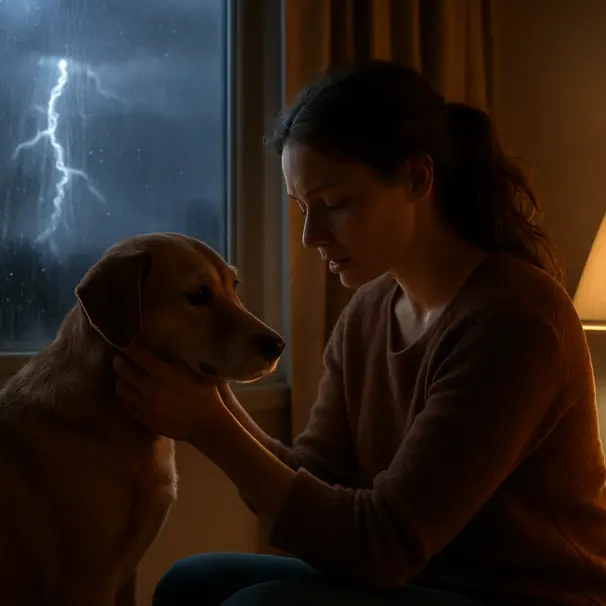
Calming dogs during thunder and storms
Thunderstorms can turn a relaxed afternoon into a flurry of pacing, shaking, and worried eyes. If your dog dreads the rumble of thunder, you’re not alone. Many dogs hear, feel, and react to storms in ways that make owners want to help right away. This article walks you through friendly, practical steps to support your dog during a storm and build longer-term resilience.
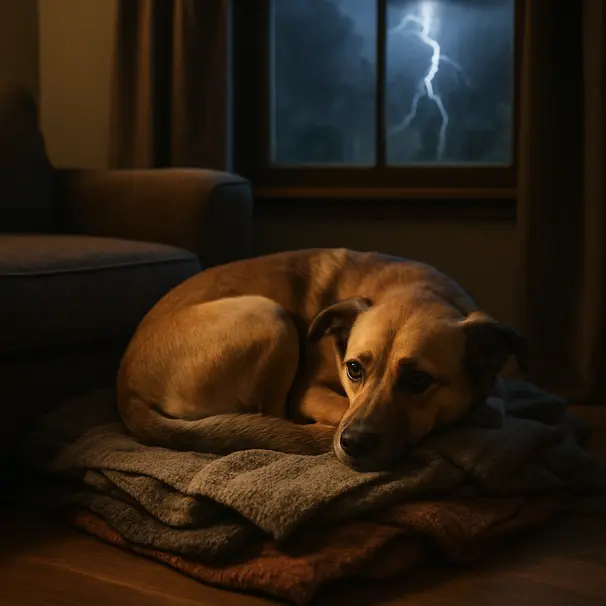
Why thunder can feel terrifying to dogs
Dogs perceive the world differently. Their hearing is far more sensitive than ours, and the low-frequency rumbles can be uncomfortable. Changes in air pressure, flashes of lightning, and the unfamiliar rhythm of a storm may add to the fear. For some dogs, an isolated scary experience tied to a storm becomes a learned fear that resurfaces whenever clouds gather.
Understanding the cause doesn’t erase the worry, but it helps shape what you do next. The goal is to reduce immediate distress and to gently build trust and confidence over time.
Spotting the signs of storm anxiety
Dogs don’t all react the same way. Watch for these common signs, and remember each dog is an individual:
- Trembling or panting more than usual
- Hiding, clinging, or following you constantly
- Pacing, restlessness, or trying to escape
- Whining, barking, or howling
- Drooling, yawning, or lip licking as stress signals
- Destructive behaviour or house-soiling
If your dog shows intense or escalating responses, make a note of what happens and how long it lasts. That information can be useful if you consult a vet or animal behaviourist.
Immediate steps to calm your dog during a storm
When thunder starts and your dog is anxious, these simple actions can help right away.
- Stay calm yourself. Dogs pick up on your energy, so speak softly and move slowly.
- Offer a safe, familiar space. A favourite crate, a tucked-away corner, or a bedroom with the door closed can feel more secure.
- Bring comfort items. Blankets, an item with your scent, and favourite toys may help.
- Reduce startling noises. Close windows, draw curtains, and turn on gentle background noise to mask thunder.
- Offer gentle touch if your dog seeks it. Stroking or leaning in can be calming for many dogs. If your dog avoids contact, respect their space.
If your dog seems to settle when you’re nearby, stay close but avoid over-exciting them. Soft, quiet reassurance often works better than exaggerated attempts to soothe.
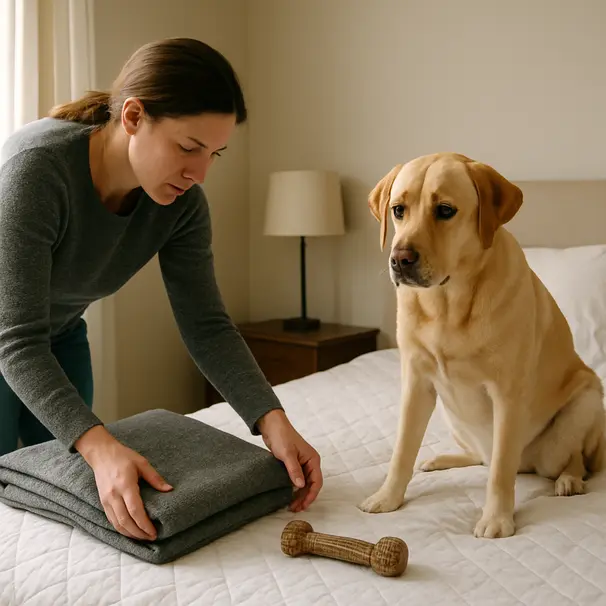
Creating a storm-safe den at home
A consistent safe space can make storms far easier to handle. Think of this like a small, cozy den that your dog can choose to use. Here are things to include.
- Location: pick an interior room without large windows, or an area that limits thunder visibility and wind noise.
- Bedding: provide a thick, comfortable bed or crate padding. Layer blankets to make it warmer and more secure.
- Familiar smells: place an unwashed t-shirt or blanket with your scent inside.
- Soft lighting: a low lamp or a nightlight keeps the space from feeling ominous.
- Background sound: play calming music or low-volume white noise. There are playlists made specifically for dogs.
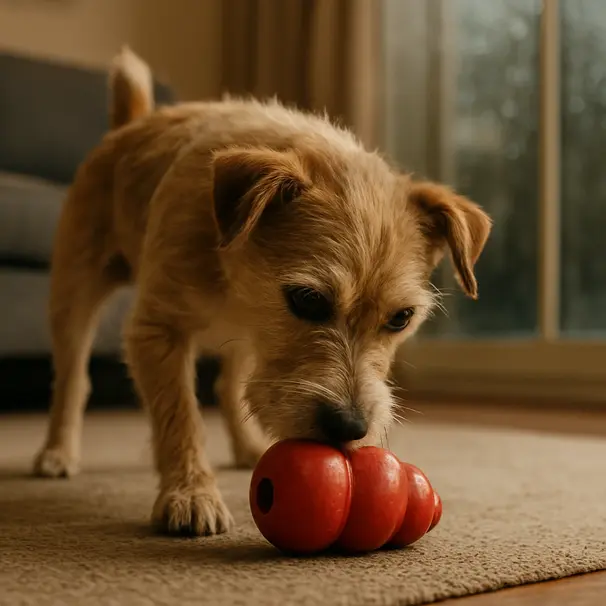
- Treats and toys: keep high-value chews, puzzle toys, or stuffed Kongs available for positive distraction.
Introduce this den during calm moments. Toss treats and praise when your dog explores it so they build a positive connection before a storm occurs.
Practical tools that can help
There are several non-invasive tools you can consider. Each dog responds differently, so try things one at a time to see what helps.
- Thundershirts or snug wraps. A gentle, even pressure can be reassuring for many dogs, similar to swaddling an infant. They may help reduce shaking and pacing.
- Calming music or white-noise machines. Masking sudden sounds with a steady background can reduce startle responses.
- Aromatherapy and pheromone diffusers. Products with dog-appealing pheromones may calm some dogs. Consider them as a mild aid, and consult your vet if you’re unsure.
- Interactive feeders and puzzles. Working for a reward redirects energy and keeps the mind busy.
If you try a new product during a storm, don’t force it. Introduce it slowly and pair it with treats or calm praise so your dog accepts it willingly.
Short-term comforts and distractions
Quick distractions can buy you time during a storm. Use activities that match your dog’s personality and energy level.
- Food puzzles and long-lasting chews for dogs that are food motivated.
- Gentle massage or brushing for dogs that enjoy touch.
- Low-key play, like hide-and-seek with treats, if your dog can play without becoming more anxious.
- A calm tethering to you, if your dog feels safer lying beside you.
Avoid scolding or forcing your dog to face the noise. Extra attention during a storm is fine. It’s a myth that comforting a scared dog will reinforce fear. Comforting reassures them in a moment of stress.
Building long-term resilience: gentle desensitization
If storms cause frequent distress, consider a gradual training plan to reduce sensitivity. This takes time and patience, but many dogs improve with steady, positive work.
A basic approach looks like this:
- Play recorded storm sounds at a very low volume while your dog is relaxed or engaged in a favourite activity. Keep sessions short and positive.
- Gradually increase volume over weeks, only moving up when your dog stays calm. Pair the sounds with treats and enjoyable activities.
- Teach an easy cue for a safe behaviour, such as “go to bed” or “settle.” Reward calm responses during low-volume sessions.
- Over time, the cue and the positive pairing can help your dog choose calm even when real storms occur.
This is a slow process. If you feel stuck or your dog’s reactions are severe, a certified animal behaviourist can tailor a plan and guide you through tricky parts.
When to consider veterinary or professional help
If your dog’s fear is intense, worsening, or causing safety concerns, consider professional support. A few reasons to seek help include:
- Self-injury, like breaking through doors or cages
- Severe, long-lasting panic that doesn’t improve with home strategies
- New or sudden extreme reactions that start later in life
A vet can rule out medical contributors, and may discuss behavioural aids or medications that can make training possible. A certified behaviourist can offer personalized desensitization programs. These professionals can work alongside you, not in place of your care.
Always discuss medical options with your veterinarian first, and consider behaviour modification as a complementary path.
Tips for pet carers and sitters
If you’re caring for someone else’s dog during storm season, your approach matters. Keep communication open with the owner, follow any established routines, and share what worked during a storm.
- Ask about the dog’s safe space, favourite treats, and calming cues.
- Keep the environment familiar and reduce sudden changes.
- Use gentle, consistent energy. Don’t chase a dog around or use loud voices.
- Offer enrichment activities well before storms are predicted, and prepare the safe space in advance.
A calm, prepared carer can make a big difference. Small, thoughtful actions often have the best impact.
What not to do
Some well-meaning responses can accidentally make things worse. Try to avoid these:
- Forcing a dog into a space they clearly dislike
- Loud, frantic comforting that raises excitement
- Punishing or scolding fearful behaviour
- Rushing training too quickly without gradual progression
Kind, patient support is almost always better than dramatic interventions. Let your dog guide how much help they want.
Simple storm-day checklist
Before clouds roll in, prepare with a short checklist:
- Bring bedding and toys to the safe space
- Charge your phone and keep contact info handy
- Have chews and puzzle toys ready
- Close windows and draw curtains early
- Set up calming sound or music
- Put on a thundershirt or wrap early if your dog accepts it
A little planning makes the moment feel less urgent, and your dog will benefit from your steady presence.
Final thoughts
Helping a dog through thunder is a mix of immediate comforts and calm, consistent long-term work. With patience, a few practical tools, and sometimes professional support, many dogs can feel safer during storms. Remember, small wins count. Celebrate the moments your dog chooses the den, takes a chew, or relaxes beside you. Those are the steps toward a calmer future.
If anxiety around storms is severe, consider talking with your vet or a certified behaviourist. They can help you find options that match your dog’s needs and temperament. You don’t have to do this alone, and every bit of support helps your fluffy friend feel more secure.
- The Floofy team