


Can dogs eat cauliflower?
Short answer, yes. Cauliflower can be a safe, crunchy treat for many dogs, but it’s best given thoughtfully. This guide walks you through the benefits, risks, preparation tips, and practical serving ideas. If you share food with dogs, you’ll want clear, simple guidance so treats stay tasty and safe.
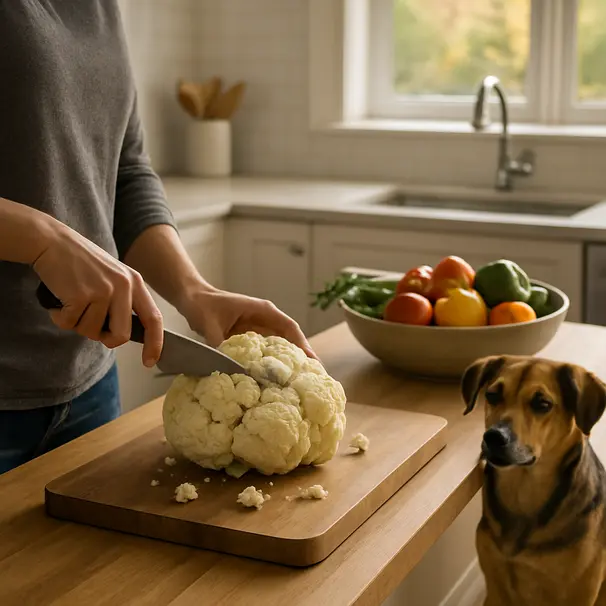
Why owners and carers ask about cauliflower
It’s easy to see why cauliflower pops up during dog snacking conversations. It’s low in calories, looks like a vegetable snack you might share, and many people have leftovers. Pet carers on Floofy often get asked whether a floret is okay during walks or cuddle sessions. The good news is that with a few precautions, cauliflower can be included occasionally in a dog’s diet.
Nutritional snapshot — what cauliflower brings
Cauliflower is mostly water and fibre, and it contains small amounts of vitamins and minerals. It may provide:
- Fibre, which can help with digestion in moderation.
- Vitamin C and some B vitamins, in small amounts.
- Antioxidant compounds, which may support general health.
Keep in mind, these are supportive nutrients. Cauliflower should not replace balanced dog food. Consider it an occasional supplement or treat, not a staple.
Benefits of feeding cauliflower to dogs
- Low calorie treat: A good option if you’re trimming treats from a high-calorie snack stash.
- Crunchy texture: Many dogs enjoy the texture, and it can give a satisfying chew without added fat.
- Versatility: You can offer it raw, steamed, or lightly cooked. Each method affects digestibility differently.
These benefits can make cauliflower a handy option for training or rewarding good behaviour, as long as portions are sensible.

Risks and things to consider
While cauliflower is generally safe, there are a few risks to consider so you can avoid a messy or uncomfortable situation.
- Gas and bloating. Cruciferous vegetables like cauliflower can lead to increased gas for some dogs. Start with a tiny piece to see how your dog handles it.
- Choking hazard. Large florets or hard chunks can be a choking risk, especially for small dogs or dogs that gulp. Cut into small, bite-sized pieces.
- Digestive upset. Diarrhoea or vomiting may occur if a dog eats too much at once. If you notice persistent symptoms, consult a vet.
- Individual sensitivities. Some dogs may be sensitive or allergic to new foods. Watch for itching, swelling, or unusual behaviour.
- Thyroid concern caution. Cauliflower is a member of the brassica family, which contains compounds that can affect thyroid function in very large amounts. This is unlikely from occasional feeding, but if your dog has a thyroid condition, check with your vet first.
Raw vs cooked: which is better?
- Raw: Crunchy and low calorie, raw cauliflower may be fine for many dogs. However, raw cruciferous vegetables can be harder to digest and may cause more gas.
- Cooked: Steaming or boiling until tender can make cauliflower easier on the stomach. Avoid added salt, butter, oil, or seasonings. Plain, cooked pieces are gentler and easier to chew.
Consider your dog’s age and digestive sensitivity. Puppies and senior dogs may do better with cooked, soft pieces.
How to prepare cauliflower safely
- Wash thoroughly. Rinse under cool water to remove dirt and pesticides.
- Cut into small, manageable pieces. Aim for bite-sized florets or finely chopped cauliflower for small dogs.
- Steam or boil for tenderness if your dog has a sensitive stomach.
- Avoid seasonings. No garlic, onion, salt, butter, or sauces. These can be harmful or upsetting.
- Cool before serving. Hot food can burn their mouth.
Simple serving idea: steam a few florets, mash lightly, and mix a small spoonful into their regular food as a treat.
Portion guidelines and frequency
There’s no one-size-fits-all rule, but these gentle suggestions can help keep cauliflower as a safe occasional treat.
- Small dogs (under 10 kg): 1–2 small florets or a tablespoon of cooked, chopped cauliflower.
- Medium dogs (10–25 kg): 2–4 small florets or a few tablespoons of cooked cauliflower.
- Large dogs (over 25 kg): Up to a quarter cup of cooked cauliflower occasionally.
Treats should generally make up no more than 10% of a dog’s daily calories. Use cauliflower as an occasional complement to their balanced diet, not a replacement.
Watching for signs of intolerance or allergy
After trying cauliflower for the first time, monitor your dog for 24–48 hours. Common signs to watch for:
- Mild gas or bloating.
- Loose stool or diarrhoea.
- Vomiting.
- Excessive scratching, facial swelling, or hives, which could indicate an allergic reaction.
If you see severe symptoms, especially difficulty breathing, collapse, or continuous vomiting, seek emergency veterinary care right away.
Practical tips for carers on Floofy
If you’re a pet carer looking after someone else’s dog, follow these friendly steps:
- Always ask the owner before offering any human food, even vegetables.
- Check for known allergies, medical conditions, or special diets.
- Offer only small amounts the owner approves, and note what you gave and when.
- Use cauliflower as a training reward sparingly. Dry kibble or owner-approved treats are often better for training sessions.
Communication keeps trust strong between carers and owners, and it keeps dogs healthy and happy.
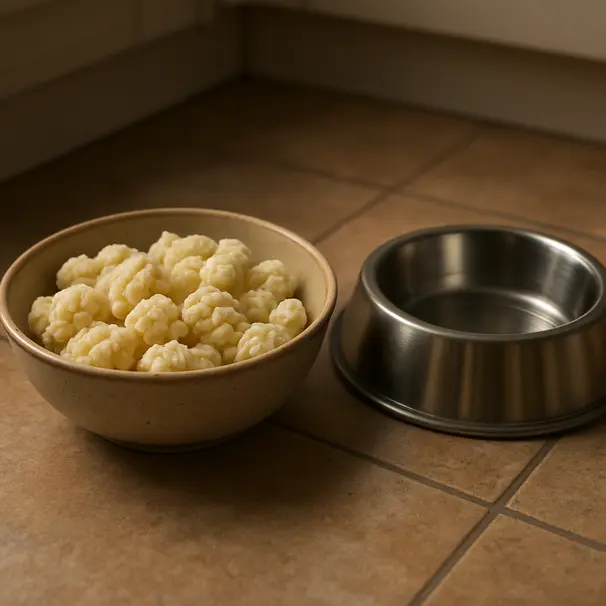
Simple cauliflower snack ideas
- Plain steamed florets: Mild and easy to digest.
- Frozen cauliflower bits: Try freezing small florets for a crunchy cold treat on a warm day. Supervise while they eat frozen pieces.
- Mixed veggie mash: A small spoon of cooked cauliflower mixed with cooked carrot or pumpkin, unseasoned, can be a tasty topper.
Avoid recipes that include onions, garlic, chives, or heavy fats.
Storage and leftovers
- Refrigerate cooked cauliflower in an airtight container for up to 3 days.
- Discard any cauliflower that smells off or looks slimy.
- Do not leave small pieces unattended where a dog could overeat a large quantity. Portion control helps prevent digestive upsets.
Special cases — puppies, seniors, and dogs with health issues
- Puppies: Their systems are still developing, and they can be more sensitive to new foods. Offer only tiny amounts and stick to cooked, soft pieces.
- Senior dogs: May benefit from softer textures but could have slower digestion. Steamed cauliflower may be a gentler option.
- Dogs with thyroid conditions or digestive disorders: Check with your vet before introducing cauliflower. Mention that cauliflower is in the brassica family, and large amounts may be unadvisable.
When in doubt, a quick chat with the owner and a vet can prevent surprises.
Final checklist before offering cauliflower
- Owner permission confirmed.
- No known allergies or medical restrictions.
- Cauliflower washed and prepared plain.
- Pieces small enough to avoid choking.
- Start with a tiny amount and observe.
If you’re caring for a dog and unsure about a food, choose a safe commercial treat instead. It’s always okay to skip sharing human food.
Wrap-up: a friendly perspective
Cauliflower can be a pleasant, low-calorie snack for many dogs, and it’s a handy option for carers who want to share a healthy little nibble. Keep portions small, prepare it plain, and watch for signs of intolerance. Communication and caution are your best friends here, and a little cauliflower can make a nice, occasional treat.
Remember to consult a vet if your dog has health issues, or if you notice worrying symptoms after trying a new food. Sharing food with our dogs is one of those small, joyful moments of pet ownership, and with a bit of care, cauliflower can join that list safely.