


Can dogs eat cherries? A friendly guide for curious pet owners
Cherries look like a sweet, colorful treat. If your dog gives you those big, hopeful eyes while you’re snacking, it’s tempting to share. But are cherries safe for dogs? The short answer is: sometimes, with a lot of caution. This article walks through the risks, safe serving ideas, and what to do if your dog manages to steal a handful.
Quick takeaway
- Flesh of ripe, pitted cherries may be eaten in very small amounts by some dogs.
- Cherry pits, stems, and leaves can be dangerous and should be avoided.
- Watch for choking or digestive upset, and consider contacting your vet if your dog eats pits or shows symptoms.

What’s risky about cherries: pits, cyanide, and choking
Cherries are made up of three parts: the fleshy fruit you eat, the hard pit in the middle, and a small stem with a bit of leaf. Each part matters for dog safety.
Pits: The most immediate concern is the pit. It’s hard and round, and can be a choking hazard, especially for small dogs. If swallowed whole, a pit can also lodge in the throat or cause a blockage further down the gut. That kind of obstruction can be serious and may require veterinary care.
Cyanogenic compounds: The pit, and to some extent the leaves and stems, contain compounds that can break down into cyanide. Cyanide is a toxic substance for mammals. The amount in a single cherry pit is usually small, but multiple pits or chewing that releases the inner material may increase risk. Use words like “may” and “consider” when thinking about toxicity. If a dog chews many pits or eats a lot of plant material, contact a vet.
Stomach upset: The sweet flesh of cherries is high in sugar and fiber. A small taste might cause no harm, but eating too many can lead to diarrhea, vomiting, or an upset stomach, especially for dogs with sensitive digestive systems.
Pesticide residues: Like many fruits, cherries can carry pesticide residues. Washing fruit and removing parts you won’t feed helps reduce that risk.
Understanding these risks helps you make safer choices about sharing cherries with your dog.
Which dogs are at higher risk?
Some dogs may be able to handle a tiny amount of cherry flesh without issue. Others are more vulnerable:
- Small breeds and toy dogs, because of the choking and obstruction risk from pits.
- Young puppies, with smaller throats and less tolerant digestion.
- Dogs with a history of pancreatitis or sensitive stomachs, where high sugar can be a problem.
- Dogs that tend to gulp food without chewing, increasing the chance they’ll swallow pits whole.
If you care for other people’s dogs as a pet carer, it’s safest to assume you should not feed cherries unless the owner gives explicit permission and confirms the dog’s health history.
How many cherries could be dangerous?
There’s no exact number that’s safe for every dog. Factors include the dog’s weight, whether the pits were swallowed, and how many cherries or pits were consumed. A single bite of cherry flesh is unlikely to cause cyanide poisoning, but multiple pits or chewed pits could increase risk. Because of these variables, it’s better to err on the side of caution.
If your dog ate only a small amount of pitted cherry flesh, monitor them for a day. If they swallowed pits, chewed pits, or show worrying signs, call your vet for tailored advice.
Safe ways to offer cherries, if you choose to
If you decide to give your dog cherry flesh, do so mindfully and rarely. Here are practical steps to reduce risk:
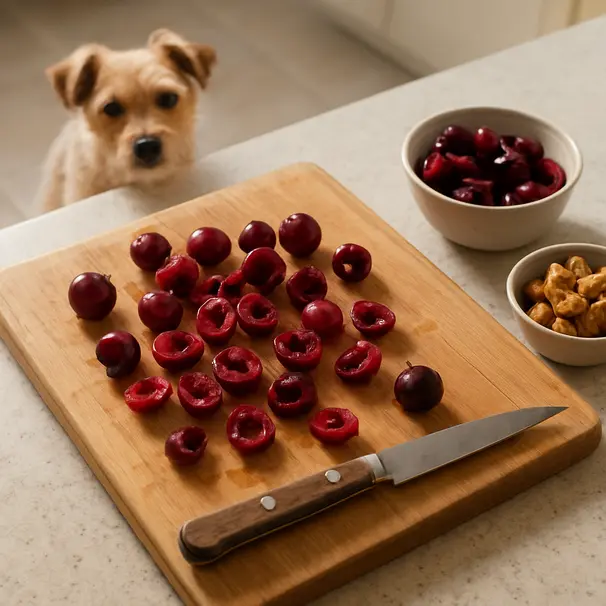
- Remove pits, stems, and leaves completely. Double‑check each cherry.
- Slice the fruit into small pieces to reduce choking risk.
- Offer only a tiny amount as an occasional treat, not a regular snack.
- Start with a tiny sample and watch for digestive changes over 24 hours.
- Prefer fresh, ripe cherries over canned cherries in syrup, which are high in sugar and additives.
- Wash the cherries to remove surface pesticides.
A safe serving for a medium dog might be one or two small pitted pieces, offered infrequently. For smaller dogs, skip cherries altogether or reduce the amount even more.
What to do if your dog eats cherry pits or a lot of cherries
If you see your dog swallow a pit, stay calm and consider these steps:
- Note how many pits or cherries were eaten and whether the dog chewed them.
- If the dog seems to choke or struggle to breathe, seek emergency veterinary care immediately.
- Watch for signs of gastrointestinal upset: vomiting, diarrhea, lack of appetite, drooling, or abdominal pain.
- Watch for signs that could suggest cyanide exposure, such as difficulty breathing, bright red gums, or collapse. These signs are serious and require immediate veterinary attention.
- Call your regular vet or an emergency line and describe the situation. They may ask for the dog’s weight and how many pits were eaten to decide next steps.
Do not try to induce vomiting at home unless a vet advises it. In some situations, inducing vomiting can cause more harm, especially if the dog is already distressed or having trouble breathing.
How vets might respond
A veterinarian may suggest monitoring at home if only a small amount of cherry flesh was eaten and no pits. If pits were swallowed, the vet may recommend observation for signs of obstruction. For concerns about cyanide toxicity or if the dog shows serious symptoms, the vet may provide supportive care and monitoring. Always follow professional veterinary guidance.
Prevention: smart storage and training tips
The simplest way to avoid problems is prevention:
- Keep cherries out of reach in sealed containers. Dogs are great at finding dropped fruit.
- When eating cherries, place pits and stems in a closed trash can or compost bin out of reach.
- Use training to manage begging. Practice ’leave it’ and ‘place’ cues so your dog learns not to grab snacks from the table.
- If you’re a pet carer, ask owners about fruit rules and stick to them. It’s better to decline a treat than risk a health issue.
Alternatives that are safer and still delicious
If you want to share fresh fruit with your dog, consider safer options:
- Blueberries: small, low-calorie, and often a canine favorite.
- Sliced apple (without seeds or core): a crunchy, refreshing treat.
- Banana in tiny amounts: high in sugar, so offer sparingly.
Always remove seeds, pits, and cores from any fruit before sharing.
Practical tips for pet carers and sitters
As someone caring for other people’s pets, set clear expectations:
- Ask owners if their dog has eaten cherries before and whether they approve of fruit treats.
- Keep your own snacks secure, and never feed table scraps without permission.
- If a dog grabs a cherry, stay calm. Note what happened and call the owner and a vet if you’re worried.
Clear communication keeps both dogs and owners comfortable.

Common questions from owners
Can canned cherries or cherries in syrup be given to dogs?
No. Canned cherries and cherries in syrup have added sugar and sometimes preservatives that aren’t healthy for dogs. Syrup can cause stomach upset and long‑term issues if offered regularly.
What about sour cherries or more exotic varieties?
Sour cherries have the same basic risks as sweet cherries regarding pits and plant material. Exotic varieties don’t change the need to remove pits and stems, and they may have different pesticide considerations.
Could a small taste of cherry be a choking hazard?
Any small fruit can be a choking hazard, especially for tiny dogs. Remove pits and slice the fruit into small pieces to reduce risk.
When to call a vet: red flags to watch for
Contact a veterinarian right away if, after eating cherries or pits, your dog shows:
- Trouble breathing or persistent coughing
- Repeated vomiting or severe diarrhea
- Unusual drooling, weakness, or collapsing
- Distended abdomen or signs of pain
Even mild symptoms that persist should prompt a call to your vet. It’s better to get reassurance early than to wait.
Final thoughts: cherries and canine companionship
Cherries can look harmless and appealing, but the combination of pits, potential cyanogenic compounds, and choking risk makes them a fruit to treat with caution around dogs. A tiny taste of pitted, clean cherry flesh may not harm many dogs, but it’s rarely worth the risk for smaller breeds or dogs with medical conditions. As pet owners and carers, keeping our furry friends safe often means choosing simpler, safer treats.
If you ever feel unsure, consider calling your vet. They can give advice tailored to your dog’s size, health, and the exact circumstances. And when you want to share a special snack, try dog‑friendly fruits like blueberries or a single apple slice instead. That way, you get the joy of sharing a treat, and your pup stays happy and healthy.
Thanks for reading. If you’re a Floofy carer or pet owner, remember to log any accidental snacks in your notes and keep a quick line of communication open with owners. Little choices can make a big difference for the pets we love.