
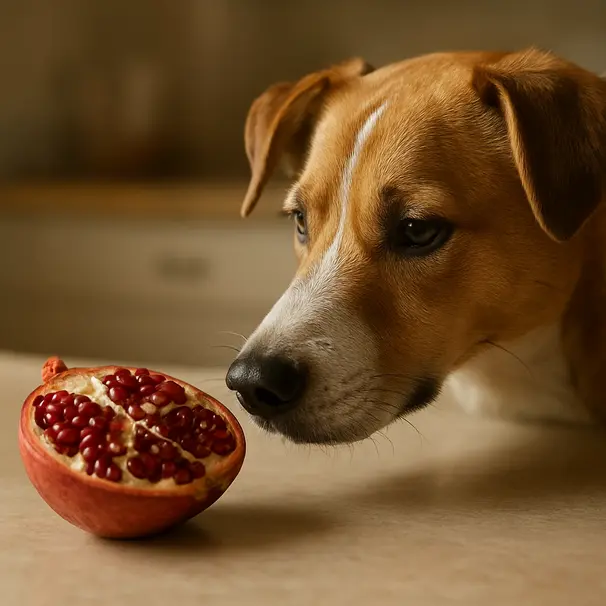
Can dogs eat pomegranate? A quick, friendly answer
If your dog gives you the “please share” look while you’re enjoying pomegranate, you’re not alone. Short answer: pomegranate arils, the little jewel-like seeds, are not a common toxic food for dogs. That said, there are a few safety points to consider, and the full answer depends on how the fruit is prepared and how much your dog eats.
What is pomegranate, and what’s inside those arils?
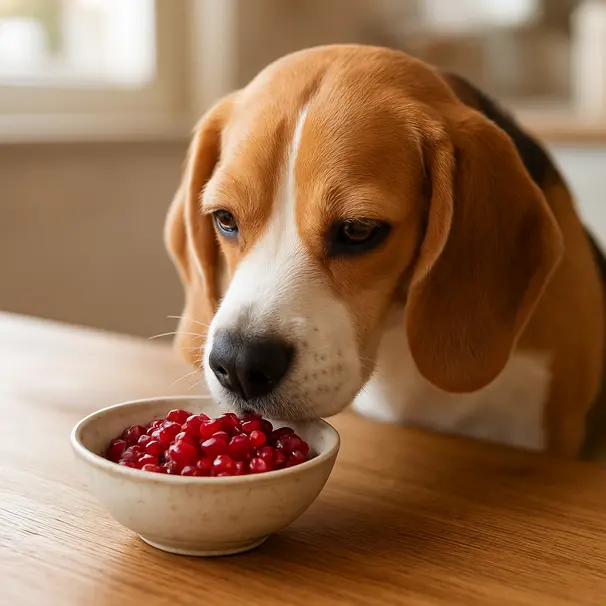
Pomegranate is a fruit made up of sugar-filled arils, a white pith, and a tough outer rind. The arils are the edible bits most people eat. They’re juicy and tart, packed with natural sugars, fibre, and antioxidants. For humans, those antioxidants are talked about a lot. For dogs, the nutritional story may be different.
- Arils: juicy seed sacs, sweet and tart.
- Seeds: tiny, crunchy seeds live inside each aril. Dogs may eat the whole aril, including the seed.
- Pith and rind: bitter, fibrous, and generally best avoided.
Understanding these parts helps you decide what, if anything, you want to share with your dog.
Potential benefits to consider
There’s a reason people love pomegranate. For dogs, the potential positives are modest and should be weighed against the downsides.
- Antioxidants: pomegranate contains antioxidants that may help neutralise free radicals. In dogs, this may be a supporting dietary component rather than a cure or therapy.
- Fibre: small amounts of fibre can support digestion for some dogs.
- Hydration and flavour: the arils are juicy and can be a hydrating, low-calorie snack in tiny amounts.
Use cautious language with health claims. Think of pomegranate as an occasional curiosity snack, not a superfood treatment.
Risks and why you should be careful
Pomegranate isn’t a typical poisonous food like chocolate or xylitol, but a few risks deserve attention.
- Seeds and obstruction: the tiny seeds inside arils are usually chewed or passed, but if a dog eats large amounts, there’s a small risk of gastrointestinal blockage, especially in small breeds or dogs that tend to gulp things down.
- High sugar: arils contain natural sugars. Too many can contribute to weight gain or upset stomach in sensitive dogs.
- Acidity and stomach upset: the tartness may irritate a dog’s stomach, causing vomiting or diarrhoea if offered in excess.
- Rind and pith toxicity risk: the white pith and the outer rind are bitter and fibrous. They may cause vomiting or intestinal upset, and the rind could pose an obstruction hazard.
- Allergic reactions: some dogs may be sensitive to new fruits. Watch for itching, hives, swelling, or breathing issues.
If your dog is on a special diet, diabetic, or has a history of pancreatitis, even small amounts of new treat foods should be discussed with a vet.

How to offer pomegranate more safely
If you decide to share a tiny taste, here are practical steps to reduce risk and keep the moment happy.
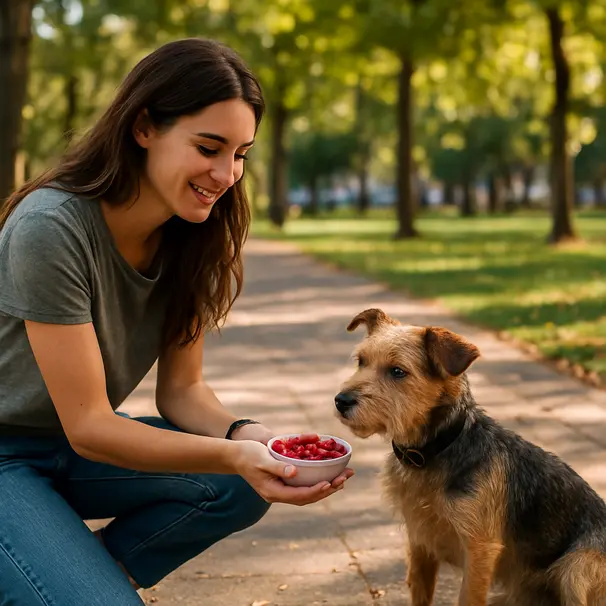
- Only give arils: remove the rind and pith completely. Offer the juicy arils only.
- Small portions: a teaspoon for a small dog, a tablespoon for larger dogs, and only occasionally. Treats should be less than 10 percent of daily calories.
- Chop or mash for tiny pups: if your dog is very small or tends to gulp, mash arils or mix a few into their regular food so they can’t swallow them whole.
- Watch for added ingredients: never give pomegranate products with xylitol, chocolate, or added sugars and flavourings.
- Avoid fruit juice concentrates: these are high in sugar, and a concentrated sip may cause rapid stomach upset.
Think of pomegranate as an occasional, supervised tasting rather than a regular treat.
Practical serving ideas and recipes
If you want to make pomegranate part of a safe treat routine, try gentle, low-risk options.
- Tiny aril mix: mix a tablespoon of arils into a small portion of plain, unsweetened yogurt. Offer as a frozen or chilled spoonful on hot days.
- Training token: use a few mashed arils in combination with low-calorie kibble during a short training session. Keep quantities tiny.
- Enrichment bowl: hide a few arils around a sniffing mat with other pet-safe treats to make a fun scavenger hunt. Keep the arils portion controlled.
Always monitor your dog the first few times you offer something new.
Signs pomegranate didn’t agree with your dog
After a new treat, look for common signs of digestive upset or allergic reaction.
- Mild stomach upset: soft stool, loose stool, or mild vomiting may show that the amount was too much or that the acidity bothered your dog.
- Allergic signs: itching, swelling around the face, hives, or breathing changes should be taken seriously.
- Lethargy or pain: if your dog seems unusually tired, hunched, or uncomfortable, consider urgent advice.
If you see repeated vomiting, bloody diarrhoea, severe swelling, or difficulty breathing, contact a veterinarian right away.
What to do if your dog eats a lot of pomegranate
If your pup raids a whole pomegranate or finishes off the rind, here are steps to consider.
- Stay calm and estimate how much was eaten. Small nibbling often needs no action beyond observation.
- Remove any remaining fruit and prevent further access.
- Offer a small amount of water, but don’t force it.
- Monitor for symptoms for the next 12 to 24 hours, including vomiting, diarrhoea, discomfort, or changes in behaviour.
- Call your vet if your dog is small and ate a lot, or if you notice severe symptoms. Your vet can help you decide whether to bring your dog in or manage at home.
Your vet may ask about the amount eaten, your dog’s size, age, and medical history, so have that information handy.
Special considerations for puppies, seniors, and dogs with conditions
Some dogs are more vulnerable to new foods.
- Puppies: their digestive systems are still developing, and they may be more likely to get an upset stomach. Keep portions extremely small and rare.
- Senior dogs: older dogs may have dental issues or slower digestion, which could increase the risk of obstruction or intolerance.
- Dogs with diabetes or pancreatitis: high-sugar or fatty treats should be avoided. Check with your vet first.
When in doubt, consider skipping the pomegranate and choosing a safer, vet-approved snack.
Tips for pet carers and sitters
If you’re caring for someone else’s dog, follow these simple rules to keep trust and safety intact.
- Ask the owner first: confirm whether the dog has had pomegranate before and whether the owner is comfortable with you offering it.
- Stick to the owner’s portion rules and treat policy.
- Offer only supervised, tiny samples if the owner approves.
- Watch for delayed reactions and report back to the owner quickly if anything changes.
Communication is everything when you care for someone else’s pet.
Conclusion: share with care
Pomegranate arils are not a typical dog toxin, and small, occasional tastes may be fine for many dogs. However, the seeds, rind, acidity, and sugar all create potential downsides. If you want to share a bit, remove the rind and pith, keep portions tiny, and watch your dog afterward. For puppies, seniors, or dogs with health issues, check with a vet first.
Quick FAQs for busy pet owners
Can dogs choke on pomegranate seeds?
Small quantities of arils are unlikely to choke most dogs. If your dog tends to gulp or inhale treats, mash the arils or skip them.
Is pomegranate juice safe for dogs?
Not recommended. Juice is concentrated sugar and lacks fibre. It can cause stomach upset or contribute to weight issues.
What if my dog has eaten the rind?
Monitor closely. The rind can cause stomach upset or obstruction in large amounts. Call your vet if vomiting, persistent diarrhoea, or signs of pain occur.
How often can I give pomegranate?
Treats should be occasional. Think of pomegranate as an infrequent novelty snack, not a daily addition.
If you have any doubts, consider contacting your veterinarian for personalised advice.
Final note from a vet-friendly perspective
Sharing food feels like bonding, and a tiny, supervised taste of pomegranate may be a lovely moment. Keep it safe and small, and treat your dog’s health as the priority. When in doubt, check in with a vet, especially for dogs with existing health concerns. Happy snacking, and may your pup’s curiosity always be rewarded with care.