


Can dogs eat rice? The short answer and why it matters
Yes, many dogs can eat rice, and it’s a common ingredient in home-prepared meals and bland-diet recommendations. But like any human food, there are right and wrong ways to serve rice. A thoughtful approach can help you use rice as a gentle option for tummy issues, a bland base for a simple meal, or an occasional carbohydrate boost.

Is rice safe for dogs?
Plain, cooked rice is generally safe for most dogs. White and brown rice are both digestible by dogs, and rice doesn’t contain the same allergens that some other grains can have. That said, safety depends on how the rice is prepared and what it’s mixed with. Avoid adding spices, onions, garlic, butter, or sauces — these can upset your dog or be toxic.
Consider your dog’s individual health. Dogs with specific dietary restrictions, pancreatitis, or chronic illnesses may need tighter control of fats and carbohydrates. When in doubt, consult your vet before introducing rice into a regular feeding plan.
When rice may be helpful
- Digestive upsets: Plain, well-cooked rice can help firm up loose stools when paired with a bland protein like boiled chicken. It may help firm stool by providing easily digestible carbohydrates.
- Transitioning foods: Mixing a small amount of rice into new kibble can help dogs adjust to a diet change more gradually.
- Calorie needs: For underweight dogs or active working breeds, rice can add calories in a simple, digestible form.
Remember, rice is a supportive food, not a medicine. Always use it thoughtfully and observe how your dog responds.
Benefits and limitations of rice for dogs
Rice is popular because it’s inexpensive, familiar, and easy to prepare. It offers quick energy, is hypoallergenic for many dogs, and can be soothing when a dog has a mild stomach ache. But there are limitations:
- Brown rice has more fiber and nutrients, but it can be harder to digest for some dogs.
- Relying on rice for long-term feeding can mean missing essential nutrients your dog needs from balanced commercial diets.
- Overfeeding rice can contribute to weight gain because it’s calorie-dense.
Use rice as part of a balanced approach rather than the mainstay of a dog’s diet.
Types of rice and which to pick
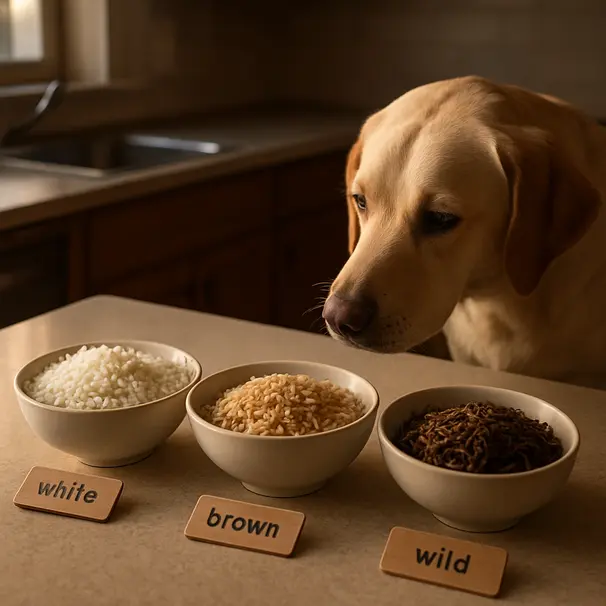
Not all rice is the same. Here’s a quick guide to common options:
- White rice: The most digestible. Starchy and low in fiber, it’s usually recommended for dogs with upset stomachs.
- Brown rice: More fiber, vitamins, and minerals. Good for dogs that tolerate grains and need more long-term nutrition, but might be rougher on a sensitive stomach.
- Jasmine or basmati: Aromatic white rices that are similar to plain white rice in digestibility. Avoid heavily seasoned boxed varieties.
- Wild rice: Technically not rice but a grass seed. It’s higher in protein and fiber and less commonly used for dogs. Use sparingly and monitor tolerance.
If your dog has no history of grain sensitivities and digests food normally, brown rice can be a healthier occasional option. For short-term stomach support, stick with plain white rice.
How to prepare rice safely for dogs
Keep preparation simple and predictable. Follow these tips:
- Rinse the rice before cooking to remove excess starch.
- Cook rice fully with plenty of water, no salt. Avoid chicken or beef broths that might contain onion or garlic.
- Don’t add butter, oils, or seasonings. Plain is best.
- Cool rice to a safe temperature before serving.
- Store cooked rice in the fridge and use within 3–4 days, or freeze portions for later.
If you’re mixing rice with a protein, choose lean, unseasoned sources like boiled chicken breast or plain canned tuna in water. Mash or shred the protein to make it easy to eat and digest.
Simple boiling method
- Add one part rice to two parts water in a saucepan.2. Bring to a boil, then reduce heat and simmer until tender (about 15–20 minutes for white; longer for brown).3. Fluff with a fork, cool, and portion.
This yields soft, digestible rice that’s gentle on a dog’s stomach.
Portion sizes and frequency
Portions depend on your dog’s size, activity level, and overall diet. A few practical guidelines:
- Treats and additions should make up less than 10% of daily calories. If rice is a treat or topper, keep servings small.
- For a bland diet during a tummy upset, a common ratio is about two-thirds rice to one-third protein by volume, fed in small, frequent meals.
- For healthy dogs, a small scoop of rice mixed into meals once a day is usually fine. Large or repeated servings can contribute to excess calories.
When adding rice to a complete commercial diet, reduce the kibble proportion slightly to avoid overfeeding. Consulting a vet or pet nutritionist helps create an exact feeding plan.
Foods and add-ins to avoid
Some human foods are harmful to dogs and should never be mixed with rice:
- Onions and garlic: Both raw and cooked forms can be toxic.
- Seasoned or fatty sauces: High fat can trigger pancreatitis in susceptible dogs.
- Salt and bouillon: Too much sodium isn’t healthy.
- Uncooked rice: Avoid feeding raw rice — it’s hard to digest and can expand.
Stick with plain rice and plain lean protein for a safe, bland meal.
Puppies, adults, and senior dogs: different needs
- Puppies: They need nutrient-dense, balanced diets formulated for growth. Rice can be an occasional top-up, but it shouldn’t replace puppy-formulated food. Always check with your vet if you’re supplementing a puppy’s meals.
- Adult dogs: Healthy adult dogs can handle small amounts of rice mixed with their regular food. Use it as a topper or occasional carbohydrate source.
- Senior dogs: Rice can be gentle on older dogs with some dental or digestive sensitivity. Brown rice’s extra fiber might help with regularity, but introduce slowly.
Tailor rice use to life stage and health status, and monitor weight and stool quality after adding rice.
Allergies and food sensitivities
True rice allergies in dogs are uncommon, but food sensitivities do happen. Signs to watch for include persistent itching, chronic ear infections, loose stools, or changes in coat condition. If you suspect a food sensitivity:
- Remove new foods and reintroduce them slowly to isolate the cause.
- Consult your vet about an elimination diet or testing.
If rice seems to trigger discomfort, stop feeding it and seek veterinary advice.
How to introduce rice to your dog
Introduce new foods gradually: start with a teaspoon mixed into a regular meal and watch how your dog handles it over 24–48 hours. Look for digestion changes, energy levels, and behavior. If all is well, you can slowly increase the portion.
Keep feeding routines consistent. Dogs thrive on predictability, and sudden dietary changes can cause stomach upset.
Easy, safe rice recipes for dogs
Here are a few simple, vet-friendly ideas to get you started. All recipes use plain, fully cooked rice and lean proteins.
- Chicken and rice (for upset stomachs): Mix two parts plain white rice with one part shredded boiled chicken. Serve warm in small amounts, 3–4 meals a day until stools improve.
- Veg + rice mix (occasional treat): Combine white or brown rice with plain steamed carrots and green beans, finely chopped. Mix with a small amount of cooked lean beef or turkey, ensuring everything is unseasoned.
- Breakfast bowl for active dogs: Add a spoonful of cooked rice to kibble for extra energy before a long walk or training session. Keep portions small and balanced.
Always avoid added seasonings and keep everything plain.

Practical tips for pet carers and sitters
If you’re caring for someone else’s dog, check the owner’s instructions before offering rice. Ask about portion sizes, known sensitivities, and any ongoing digestive issues. When in doubt, follow the owner’s feeding plan or decline to add new foods.
Label any stored cooked rice and communicate clearly about how much and when it was given. Small notes like these keep pets safe and owners trusting.
When to see the vet
If your dog has persistent vomiting, severe diarrhea, blood in stool, lethargy, or signs of dehydration, seek veterinary care promptly. Rice can help with mild digestive upset, but it’s not a cure for serious illness.
Also consult your vet before making long-term dietary changes, especially for dogs with chronic conditions like diabetes, pancreatitis, or obesity. A professional can help craft a feeding plan that meets nutritional needs.
Quick checklist: serving rice safely
- Use plain, fully cooked rice only.
- Avoid butter, seasonings, onions, garlic, and excess salt.
- Start with small portions and watch your dog’s response.
- Use white rice for short-term bland diets, consider brown rice for occasional fiber when tolerated.
- Store properly and label leftovers.
- Check with the owner if you’re a pet carer, and ask the vet for persistent problems.
Final thoughts
Rice can be a helpful, gentle food for many dogs when used thoughtfully. It’s not a miracle fix, but it can comfort an upset stomach, assist in food transitions, and add a little variety to meals. Keep things simple, watch how your dog responds, and reach out to your vet when questions or concerns pop up.
Feeding is one of the sweetest ways we look after our dogs. A bowl of plain, properly prepared rice, offered with care and attention, can be one small act of comfort in their day. Happy feeding!