

Cat scooting: what it looks like and why it matters
If you’ve ever seen your cat dragging their bottom across the carpet or lawn, you’re not alone. Scooting is a vivid, hard-to-ignore behavior. It can look funny, but it also tells you that your cat is uncomfortable. Most of the time it points to an irritation around the rear end, and with a little patience you can often figure out what’s going on.
This guide walks through common causes, how to check your cat safely at home, practical things you can try, and when a vet visit is a good idea. The aim is to help you take calm, sensible steps and keep your cat comfortable.
What exactly is scooting?
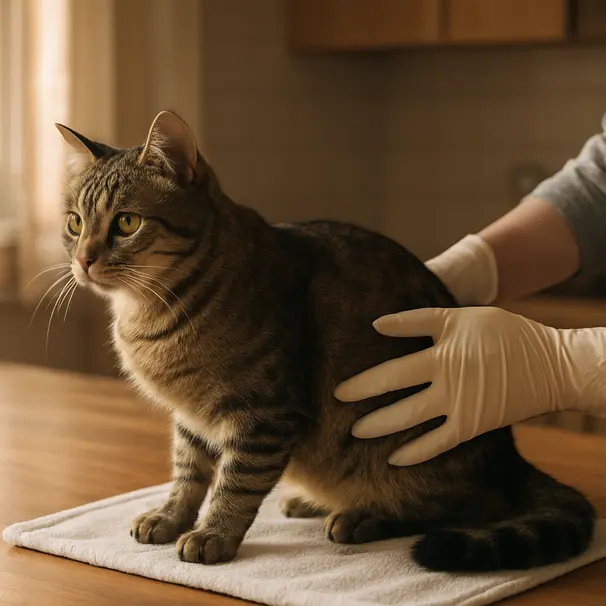
Scooting is when a cat drags its hind end along the ground, usually in short, sudden moves. You might also notice:
- Excessive licking of the rear end
- Scooting combined with vocalising or restlessness
- Redness, swelling, or an unpleasant smell
- Straining or discomfort when using the litter tray
Some cats do it occasionally and then stop. Others repeat the behaviour because the underlying issue isn’t fixed. Observing frequency and any extra signs will help you decide your next step.
Common causes of scooting
Here are the most typical reasons cats scoot, listed from frequent to less common. Keep in mind that a single cat might have more than one issue at the same time.
Anal gland problems
Cats have small anal sacs that sit at the 4 o’clock and 8 o’clock positions around the anus. These sacs can become impacted or infected, and that pressure and discomfort often leads to scooting. Signs may include licking the area, scooting, and a strong, fishy smell.
Parasites
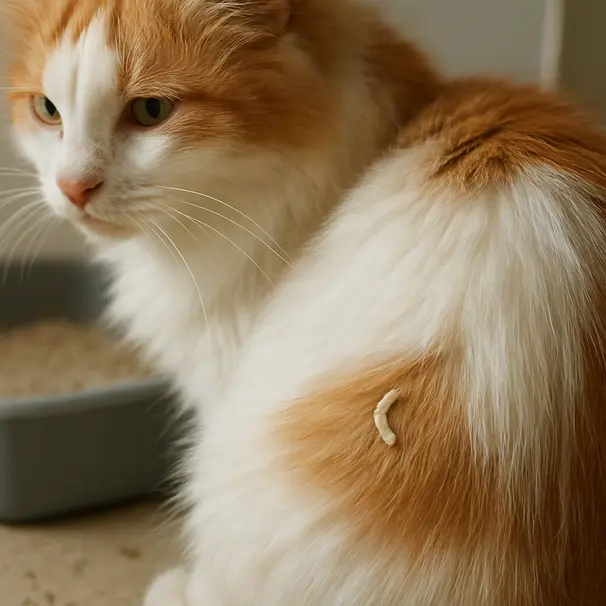
Tapeworm segments can look like tiny white grains around the tail or in the litter box, and they can make a cat itchy around the rear end. Other intestinal parasites may cause irritation too. Regular parasite prevention can help reduce this risk.
Dirty or matted fur
If a cat’s fur is long or if feces gets stuck in the coat, that can cause irritation and drive scooting. Older or overweight cats may struggle to groom themselves properly.
Skin irritation and allergies
Local skin problems, flea allergy, contact allergies, or dermatitis can cause pruritus around the tail and rear. You might also spot red, inflamed skin or hair loss.
Constipation or diarrhoea
Straining to pass hard stools can make a cat uncomfortable and encourage them to drag their bottom. Conversely, loose stools can cause irritation.
Anal tumours or polyps
Less commonly, growths around the anal area can cause discomfort. These are more likely in older cats and usually need a vet to diagnose.
Behavioural reasons
On rare occasions, some cats may lick or scoot because of stress or anxiety, particularly if there is no obvious physical cause.
How to check your cat safely at home
Before anything else, make sure you approach your cat calmly. If your cat seems in pain, hisses, or growls when you touch their rear, stop and seek veterinary advice. Safety for you and your cat matters.
Steps to examine at home:
- Find a quiet, well-lit spot where your cat feels comfortable. Use gentle praise and treats.
- Look at the tail base, perianal area, and the fur close to the anus. Are there trapped faeces, redness, swelling, or any discharge?
- Smell briefly from a safe distance. A very strong, fishy smell may point to impacted anal sacs.
- Part the fur with gloved fingers or a clean tissue to check for tapeworm segments. These look like grains of rice and may wiggle.
- Observe your cat using the litter tray, if possible. Note any straining, blood, or unusually loose stools.
If you find anything alarming, such as bleeding, a lump, a strong foul smell, or signs of severe pain, contact your vet promptly.
Simple home care you can try
These steps may help in mild cases and while you arrange professional care. Always consider seeking veterinary advice if you are unsure.
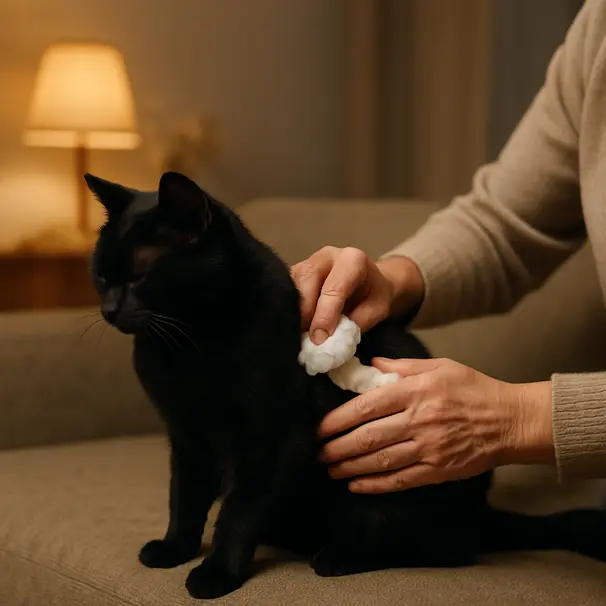
- Keep the area clean: Gently wipe around the rear with a warm, damp cloth. Use mild, unscented pet wipes if needed. Be gentle and stop if your cat resists.
- Trim matted fur: Carefully trim fur around the anal area if it’s tangled with faeces. If you’re not confident, a professional groomer or vet groom service can help.
- Parasite prevention: Use monthly flea and worm preventatives as recommended by your vet. Regular treatments may reduce parasite-related scooting.
- Diet adjustments: If constipation or loose stools seem to be the problem, consider a gradual dietary change to a higher-fibre food, or add a small amount of plain canned pumpkin, after checking with your vet. Fibre can help firm up stools and make passing them easier.
- Encourage exercise and weight management: Overweight cats may struggle with grooming and elimination. Gentle play and portion control can help.
Home care can ease mild problems, but it may not solve infections or impacted anal glands.
What your vet may do and why a visit matters
A vet visit can identify the root cause and stop discomfort quickly. Treatments your vet may recommend include:
- Anal sac expression, sometimes with local cleaning. This can relieve the pressure and discomfort right away.
- Antibiotics or anti-inflammatory medication, if there is an infection or significant inflammation.
- Deworming medication, if tapeworms or other parasites are found.
- Diagnostics like a stool test, skin scrape, or blood work, to rule out underlying disease.
- Surgery, in rare cases, if tumours or chronic anal sac disease are present.
Using cautious language: these are the kinds of steps a vet may suggest. The exact plan will depend on the diagnosis and your cat’s overall health.
When to contact the vet urgently
Make an urgent appointment if you notice:
- Severe pain or vocalisation when touching the rear
- Excessive bleeding or a sudden new lump near the anus
- Repeated scooting despite basic home care
- Signs of systemic illness, like vomiting, lethargy, loss of appetite, or fever
If your cat is in clear distress, it’s better to seek veterinary help sooner rather than later. Quick treatment can prevent complications.
Prevention tips to keep your cat comfortable
Many causes of scooting are preventable with simple routines:
- Keep up with worming and flea treatments as advised by your vet.
- Maintain regular grooming, especially for long-haired cats.
- Monitor weight and adjust feeding to prevent obesity.
- Check your cat’s rear periodically, so you spot changes early.
- Provide a balanced diet and fresh water to support healthy stools.
Small, consistent habits can reduce the chance of recurrence and help you catch problems early.
Caring for senior or special-needs cats
Older, arthritic, or overweight cats may have more trouble grooming and managing their hygiene. For these felines:
- Gentle, regular assisted grooming may be necessary.
- Consider shorter fur trims to make cleaning easier.
- Work with your vet on pain management, mobility aids, and weight control if needed.
A little extra help goes a long way in keeping seniors comfortable.
Practical tips for pet carers and sitters
If you’re a pet carer noticing scooting in a client’s cat, be calm and professional. Here’s how to support the situation:
- Document what you observe, including frequency, stool appearance, and any other symptoms.
- Try gentle cleaning and removing debris if the cat will allow it.
- Contact the owner promptly with clear notes and any photos if appropriate.
- Encourage the owner to seek veterinary advice if the behaviour persists or the cat looks unwell.
Clients appreciate carers who act thoughtfully and communicate clearly.
Final thoughts and next steps
Scooting is a common behaviour that usually points to irritation around the rear end. Many times it can be managed with simple cleaning, parasite prevention, and a vet visit if needed. If you’ve checked the basics and your cat is still scooting, please arrange a veterinary consultation. A professional exam can provide reassurance and targeted treatment.
Watching your cat closely and taking small, kind actions will help your pet feel better faster. If you need to find a trusted carer or need help arranging a vet visit, Floofy connects you with local, caring professionals who understand these issues and can offer support.
If you’d like, here are a few quick reminders:
- Observe, don’t panic. Note changes and frequency.
- Try gentle cleaning and check for tapeworm segments.
- Keep parasite prevention up to date.
- Contact a vet for severe symptoms or if problems persist.
Your cat trusts you to notice when something’s off. With a little attention and care, most causes of scooting can be resolved, and your feline friend will be back to graceful, dignified lounging in no time.