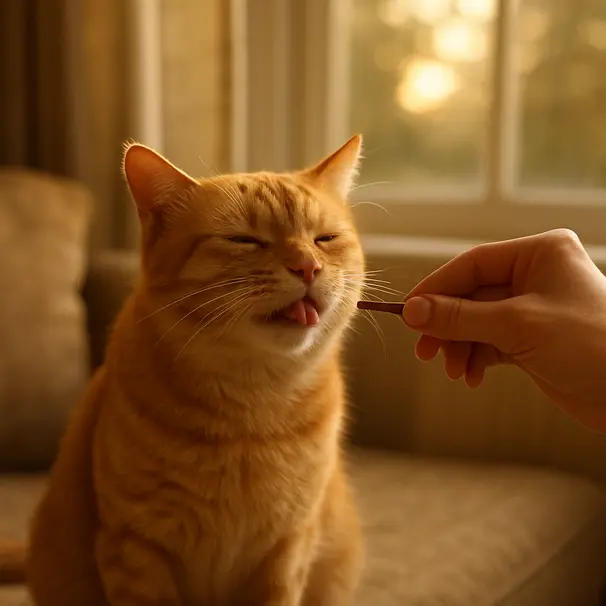
Cats are funny. They make funny faces. They make funny noises. But can they actually…
Liam·
4 June 2026
7 min read
Introduction: That little comedian on your lap
Cats pull faces, make odd noises and behave in ways that feel delightfully mysterious. One moment they’re all purrs and squinty eyes, the next they’re baring teeth in a weird grimace or chattering at a bird outside. It’s easy to laugh and think of them as tiny comedians. But what do those faces and noises really mean? Can cats actually understand us, be trained or become better social companions? This guide walks through practical, warm, real-world answers for pet owners and carers alike, with hands-on tips you can try tonight.A curious cat explores scents and shows a Flehmen face.A curious cat explores scents and shows a Flehmen face.
Why cats make funny faces
Cat faces can be playful, expressive or purpose-driven. Some of the common facial gestures you’ll see are short and meaningful:
Flehmen response — The curled-lip expression some cats make when sniffing new smells. It helps scent molecules reach a special organ in the roof of the mouth. It looks odd but it’s just them investigating. - Nose quiver — A little tremble around the whisker pad when a cat is excited or detecting a new scent. It can be a sign of focused curiosity. - Slow blink — That gentlest “I trust you” look. You can return it to help build a bond. - Open-mouth grimace — Sometimes tied to stress, pain, or the Flehmen response. If it’s persistent or paired with other odd behaviours, consider checking with a vet.
These faces aren’t just random. They’re communication shortcuts. Learning a few common ones makes you a better observer and lets you respond in ways that help the cat feel safe.
Why cats make weird noises
Cats have a surprisingly wide vocal range. Meows, trills, chirps and purrs each carry a different tone:
Meow — Mostly directed at humans. Cats often meow to ask for attention, food or to greet you. - Trill or chirp — Friendly greetings, often used by mother cats with kittens and carried into adulthood as a happy hello. - Chattering — That frustrated, rapid jaw movement when watching prey. It may be excitement mixed with a little frustration. - Purr — Comfort and contentment are common reasons, though purring can also appear when a cat is anxious or unwell. If you’re unsure, pairing purring with body language helps interpretation.
Listening and matching sounds with body language will give you a clearer decoding key. That way a meow becomes “I’m hungry” or “look at this bug” instead of mysterious background noise.Window watching keeps indoor cats happily entertained at dusk.Window watching keeps indoor cats happily entertained at dusk.
Can cats actually understand us?
Short answer: yes, to an extent. Cats learn patterns, tone of voice and routines. They may recognize their name, respond to familiar words like “treat” or “dinner,” and pick up on your moods through posture and timing.
Important practical points:
They tune to tone more than exact words — a warm, rhythmic voice often invites approach, while harsh tones can cause avoidance. - Repeatable cues work best. If you always call them with the same two-syllable sound and offer a reward, they learn to respond. - Context matters. A cat might ignore the same command in a stressful situation but respond calmly at home.
So while cats may not understand language like humans, they’re sensitive communicators who can learn to respond reliably when training is consistent and pleasant.
Training cats: practical and fun
Training a cat is absolutely possible and can deepen your bond. The golden rules are short sessions, high-value rewards and consistency.
Getting started
Use tiny rewards — small bits of wet food, soft treats or a dab of tuna. Food that’s special will speed learning. - Short sessions — 2 to 5 minutes, two or three times a day, keeps things fun rather than stressful. - Clicker or word marker — A clicker or a consistent short word like “yes” helps mark the exact moment the behaviour happens.
Simple tricks to try
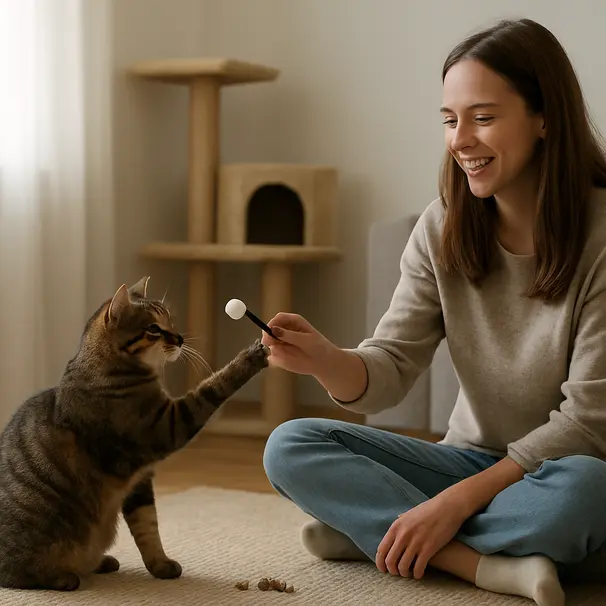
Come on name — Say their name, show a treat, click or mark when they move toward you and reward. - Sit — Lure their rear down with a treat moved up slightly; mark and reward when they sit. - Targeting — Teach them to touch a target (your hand or a stick). This is useful for moving them gently or teaching more complex behaviours.
Training builds confidence and mental stimulation. For carers, leaving a brief training note and a small stash of treats can keep progress steady between owners.Short training sessions make cats confident and curious.Short training sessions make cats confident and curious.
Enrichment: keeping clever cats busy
Bored cats invent trouble. Enrichment’s the antidote, and it can be inexpensive and creative.
Toys and play
Interactive wand toys mimic prey and encourage jumping and stalking. - Puzzle feeders and food-dispensing toys extend mealtime into a foraging challenge. - Rotate toys weekly to keep novelty high.
Environment and vertical space
Window perches give hours of bird-watching entertainment. - Cat trees and shelves add vertical territory and restful high spots. - Boxes, paper bags and safe hiding spots satisfy curiosity and security needs.
Small changes can have a big impact. If you’re using a carer through a pet-care platform, share where toys and perches live and offer quick notes on play preferences.
Safe socialisation and introductions
Meeting new people, pets or carers can be stressful for some cats. Gentle introductions reduce fear and build trust.
Keep initial visits short and calm, with the cat choosing proximity. - Ask carers to avoid looming over the cat, and to sit or crouch low to appear less threatening. - Offer the cat a familiar blanket or carrier so new scents are less alarming.
Carers who respect the cat’s pace tend to have better experiences and happier handovers with owners.
When to consult a vet or behaviourist
Some behaviours need professional attention. Consider a check-in when changes appear suddenly or persist:
Marked loss of appetite or weight loss. - Sudden aggression, avoidance, or changes in litter box habits. - Persistent open-mouth breathing, constant drooling or repeated grimacing.
A vet can rule out medical issues. A behaviourist may help with training plans for challenging behaviours. Use cautious language and consider a professional referral if you suspect anything concerning.
Bringing a carer into the routine
Hiring a trusted carer through a platform can be a relief, but preparation helps make the visit smooth for both cat and carer.
Practical checklist for owners
Leave a clear feeding schedule and portion measurements. - Note any medical needs, favourite hiding spots and the cat’s favourite treats or toys. - Provide emergency contacts, vet details and preferred handling techniques.
Tips for carers
Respect the cat’s space at first and let them come out of hiding. - Use quiet greetings and offer a familiar snack if allowed. - Report any small changes you notice; early observations help owners catch issues sooner.
Good communication between owner and carer builds trust and keeps routines steady. A short handover message after each visit is a small habit that goes a long way.A carer checks the feeding plan while meeting a shy cat.A carer checks the feeding plan while meeting a shy cat.
Common myths and friendly reality checks
There are lots of myths floating around, so here are a few to clear up:
Myth: Cats don’t bond with humans. Reality: Cats form strong attachments, though they often show affection differently than dogs. - Myth: Cats only meow at humans. Reality: While meows are mostly human-directed, cats also use other sounds for feline communication. - Myth: Purring always means contentment. Reality: Purring often signals comfort, but it can appear in stressful situations too.
Understanding those nuances helps you respond with empathy and meet your cat’s needs more effectively.
Quick checklist for happier cats and smoother care visits
Keep feeding and play schedules consistent. - Rotate toys and provide vertical spaces. - Share clear written notes with carers about routines and red flags. - Use short training sessions to build positive cues. - Ask carers to send photos or quick updates after visits.
Final thoughts: enjoy the mystery
Cats will always surprise us with faces and noises that make us smile. The good news is that with a bit of observation, consistent routines and thoughtful enrichment, those quirky behaviours become part of a deeper relationship. Pet carers play an important part by respecting the cat’s comfort, following routines and communicating clearly with owners. If you’re ever unsure about a behaviour or a sudden change, consider consulting your vet for peace of mind.
Most of all, enjoy those small, funny moments. They’re the little threads that stitch you into a cat’s life.
Share
Cats are funny. They make funny faces. They make funny noises. But can they actually…
Floofy uses cookies and similar technologies to personalise content, measure ads, analyse traffic, and provide you with the best possible experience. Some cookies are essential for the site to function and cannot be turned off. By accepting, you agree to our
Cookie Policy. You can update your preferences at any time.
Cookie Settings
When you visit Floofy, we may store or access information on your browser, often through cookies. This data helps us provide a smoother, more tailored experience based on your preferences or device settings. While the information doesn’t usually identify you personally, it enhances your time with us. We respect your privacy choices, so feel free to manage your cookie preferences by exploring each category. Keep in mind, however, that limiting certain cookies may affect the performance of the site and the services we can deliver.
Cookie Policy