

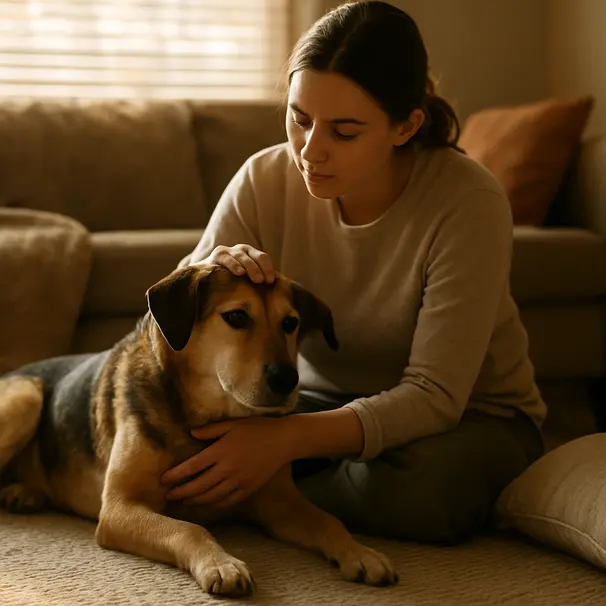
Comforting your dog: calm & caring tips
Every dog has their own little worries, from thunder to separation or new people in the house. As a pet owner or carer, your calm presence matters more than you might think. This guide is full of warm, practical steps you can use today to help a worried dog relax, plus longer-term habits that build confidence.
Why comfort matters
Dogs read the world through scent, body language, and routine. When something feels off, their brain flags risk. Comfort helps lower that alarm, so your dog can settle and learn that a scary thing won’t always mean danger. These ideas may help reduce stress and improve trust over time. If worry seems intense or sudden, consider checking in with a vet or a certified behaviourist.
Learn to read your dog’s signals
Dogs rarely say “I’m stressed” directly. They give signals. Learning those makes your responses smarter and kinder.
Common calming signals
- Yawning, lip licking, or turning the head away.
- Slow or lowered body movements.
- Whale eye, where you see the whites of the eyes.
- Pacing, panting without heat, or repeated yawns.
These signs can mean mild stress, but the context matters. A dog panting after play is different from panting in a quiet room.
Watch the whole picture
Read signals alongside the environment. Is the noise level up? Are there new people or animals? Has the routine changed? Your dog’s posture, tail position, and ear placement together tell the story. Respond gently rather than reacting dramatically. Calm responses help dogs feel safer.
Quick calming techniques you can try now
When you notice stress, choose gentle, predictable actions. Small, consistent changes are often more effective than big gestures.
Create immediate low-stress space
- Offer a quiet room away from the noise, with the door slightly ajar so your dog doesn’t feel trapped.
- Add a familiar blanket or a worn T-shirt that smells like you.
- Lower bright lights and reduce loud sounds. Soft music or white noise may help.
Use your voice and movement mindfully
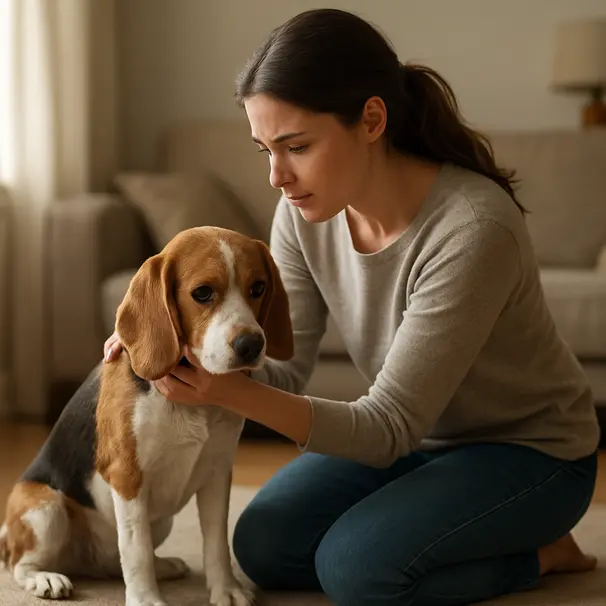
Speak softly and move slowly. Sudden noises or fast motions can escalate anxiety. Kneel or sit at a slight angle rather than looming over the dog. Let them approach you if they want to.
Calming touch and massage
Some dogs enjoy gentle stroking along the chest or a slow massage behind the ears. Avoid forcing contact. If your dog leans into you, that’s a good sign. If they pull away, respect their space and try again later.
Safe toys and enrichment
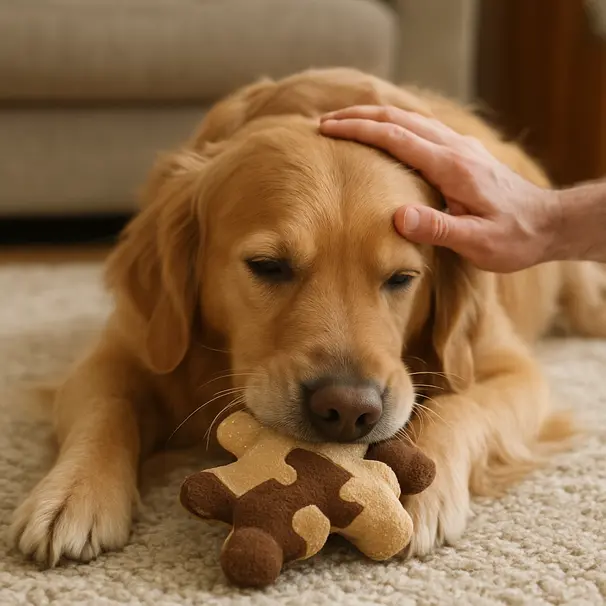
Offer a favourite chew toy, a stuffed food puzzle, or a lick mat with a small amount of soft food. These activities can help redirect focus and slow breathing. Start with short sessions, especially if your dog is new to enrichment toys.
Creating a calming environment at home
A peaceful home is one of the best gifts you can give a nervous dog. Small changes add up faster than you might expect.
Designate a comfort corner
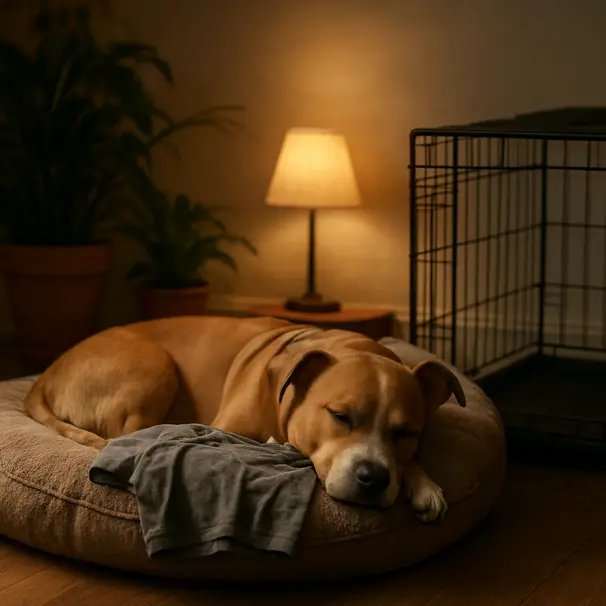
Choose a quiet spot with low foot traffic. A cosy bed, a crate with the door open if your dog is crate-trained, and soft bedding create a reliable sanctuary. Rotate comfort items so the space remains special.
Control the senses
- Sound: Use soft playlists made for dogs, or a fan for steady white noise.
- Smell: Consider dog-safe calming sprays or diffusers that use pheromone-like scents. These may help some dogs, though reactions can vary.
- Light: Keep rooms gently lit during storms or fireworks. Harsh, flashing lights can increase arousal.
Remember, every dog is different. Try one change at a time and note what seems to help.
Building long-term resilience
Daily habits and training are the foundation of a confident dog. Think of comfort as a muscle you can strengthen with routine and positive experiences.
Predictable routines
Consistent feeding times, regular walks, and predictable play sessions reduce uncertainty. Dogs thrive on rhythm. When they know what to expect, they can relax more easily.
Gradual desensitisation
For specific fears, such as thunderstorms or vacuum cleaners, consider gradual, positive exposure. Play low-level recordings of the sound while doing something pleasant, like giving treats or playing a calm game. Slowly increase intensity across many sessions, watching for stress signals. This approach may help dogs learn the sound is not a threat, but it takes patience and careful pacing.
Positive reinforcement training
Teach basic cues like “sit,” “leave it,” and “go to mat.” These give your dog options to make good choices and feel in control. Use high-value treats or favourite toys, and keep sessions short and upbeat. Over time, training builds trust and focus under pressure.
Exercise for body and mind
Regular walks, play, and puzzle toys help burn off nervous energy and strengthen your bond. Balance is key. Too little stimulation can increase anxiety, while too much late in the day might make settling harder. Notice your dog’s best rhythm and aim for consistency.
Comforting during specific stressful events
Some triggers need tailored approaches. Here are ideas for common situations.
Thunderstorms and fireworks
- Create a safe den with familiar bedding and soft noise.
- Try swapping a meal or a high-value treat during the event to create a positive association.
- Consider a snug-fitting jacket or calming vest for some dogs. These can provide gentle pressure that many dogs find soothing.
- If your dog’s response is severe, speak with your vet; they may suggest additional support.
Vet visits and grooming
- Make visits positive by offering treats and short, friendly interactions at the clinic when no procedures happen.
- Let your dog explore the carrier or grooming area at home first, with treats and praise.
- Practice handling exercises in small, calm sessions at home so touch feels normal.
Separation anxiety
- Gradually build alone time with very short departures and low-key returns.
- Leave special toys or puzzles that only appear when you go out.
- Avoid making a big fuss when leaving or returning. Calm greetings help lower expectation of intense reunions.
- If separation anxiety is severe, consult a behaviourist or vet for tailored strategies.
When to seek professional help
If your dog’s anxiety is intense, worsening, or causing harm, professional support is a good idea. Signs include constant pacing, destructive behaviour, excessive vocalising, or loss of appetite.
Speak with a trusted vet first. They can rule out medical causes and may suggest working with a certified animal behaviourist. These professionals can create a step-by-step plan, which may include training, environmental changes, and sometimes short-term medical support. Always consider a vet consult rather than internet-only solutions for severe cases.
Practical checklist: calming quick wins
- Create a quiet den with favourite bedding.
- Keep departures and returns low-key.
- Offer a puzzle toy for distractions.
- Use gentle touch and a calm voice.
- Keep routines predictable.
- Practice short handling sessions daily.
- Try soft music or white noise.
- Observe and record trigger patterns.
Small, steady changes often help more than big, sudden interventions. Keep notes on what works and what doesn’t, so you can refine your approach.
Tips for pet carers and sitters
If you’re caring for someone else’s dog, start by asking the owner about routines, favourite treats, and calming cues. Keep introductions slow. Allow the dog to approach you, and match their energy level. Consistency with the owner’s instructions helps the dog trust you quickly. Offer to send short updates; that reassurance helps owners feel confident and dogs feel supported.
Closing thoughts
Comforting a dog is a gentle practice that blends observation, kindness, and small changes. You don’t need perfect solutions. A quiet corner, a soft voice, and predictable routines can make a big difference. Be patient, celebrate progress, and seek help if fear seems overwhelming. With time and consistency, most dogs learn to relax more often, and your calm presence will be a big part of that journey.