


Gentle guide to common cat skin issues
Every cat deserves soft, healthy skin and a coat that invites cuddles. Skin problems are one of the most common reasons cat owners visit the vet. Some are minor and temporary, others need professional care. This guide walks you through common feline skin issues, practical steps you can take at home, and clear signs that mean it’s time to contact your vet. It’s written for pet owners and carers who want realistic, friendly advice, with an emphasis on gentle care and prevention.
Quick checklist: When to get help
- Open sores, bleeding, or spreading hair loss.
- Intense scratching, chewing, or frequent grooming that won’t stop.
- Pus, crusting, or a foul smell around the skin.
- Sudden changes in behavior, appetite, or energy.
- Any lump, thickening, or persistent redness.
If you spot these, consider contacting a vet promptly. Even if the issue seems mild, early assessment may help prevent complications.
Common cat skin problems (and what to look for)
Below are frequently seen issues, with simple descriptions and things you may try at home. Remember that these are general notes, not diagnoses. Consult a veterinarian for tailored advice.
Flea allergy and fleas
What it looks like: Small black specks in fur, intense itching, hair thinning especially at the base of the tail, tiny bite marks. Why it happens: Many cats are sensitive to flea saliva. Even a few fleas can cause major irritation. What can help: Regular flea preventives recommended by your vet may help control outbreaks. Grooming with a fine-toothed flea comb can remove fleas and droppings, and bathing a tolerant cat with a mild shampoo can soothe skin. Clean bedding and vacuum regularly, and treat the indoor environment. When to call the vet: If your cat has open wounds, heavy infestations, or an allergic reaction causing severe hair loss.
Ringworm (fungal infection)
What it looks like: Circular patches of hair loss with scaly or crusty skin. Sometimes red or inflamed. Why it happens: A fungal organism, not a worm, causes this contagious skin infection. It can spread between animals and people. What can help: Isolate affected pets to limit spread. Clean surfaces and bedding. Topical antifungal creams or medicated baths may help, but these often need vet confirmation and prescription. When to call the vet: Always, because diagnosis and a treatment plan help protect your household and other pets.
Allergic dermatitis (environmental and contact allergies)
What it looks like: Red, itchy patches, often on the face, paws, belly, or armpits. Sometimes chronic and scabby. Why it happens: Pollen, dust mites, mold, or certain fabrics and cleaners may trigger reactions. What can help: Identify and reduce exposure where possible, switch laundry detergent, or change bedding materials. Antihistamines or topical therapies may be suggested by your vet to manage symptoms. When to call the vet: If irritation is severe, persistent, or causing secondary infections.
Food allergies
What it looks like: Itchy face and ears, recurrent skin infections, or chronic ear problems. Digestive symptoms may or may not be present. Why it happens: An immune response to a dietary ingredient. What can help: Feeding novel protein or hypoallergenic diets under veterinary guidance may help determine triggers. Don’t start an elimination diet without vet advice. When to call the vet: If skin symptoms persist despite simple measures, or if your cat seems unwell.
Bacterial infections and hot spots
What it looks like: Red, moist patches that can be painful, often with pus or scabs. Hot spots in cats are less common than in dogs, but can occur after persistent grooming. Why it happens: Often secondary to other issues like allergies, flea bites, or wounds. What can help: Keep the area clean and dry, try to prevent further licking, and consult a vet for appropriate antibiotics or topical treatments. When to call the vet: If lesions appear infected, or if your cat is in pain.
Mange and mites
What it looks like: Patchy hair loss, intense scratching, crusting or scaling. Some mites cause very visible thinning. Why it happens: Tiny parasitic mites live on or in the skin. What can help: Many mite conditions respond well to prescribed treatments. Avoid over-the-counter products not recommended by a vet. When to call the vet: Any suspicion of mites should prompt a vet visit for diagnosis and safe treatment.
Feline acne and chin dermatitis
What it looks like: Blackheads and pimples on the chin and lip area, sometimes resulting in swollen or infected spots. Why it happens: Often related to bacteria, poor grooming, or plastic bowls. Stress and hormonal changes may play a role. What can help: Switch to stainless steel or ceramic bowls, clean food dishes regularly, and use vet-recommended topical cleansers if needed. When to call the vet: If acne becomes inflamed, painful, or recurrent.

Practical treatment options and at-home care
These steps can help many cats feel better, but they may not replace veterinary treatment.
Cleaning and gentle care
- Use lukewarm water and a mild, cat-safe shampoo for messy areas, if your cat tolerates bathing. Pat dry gently.
- Remove crusts carefully after softening with a warm, damp cloth.
- Keep bedding clean and dry. Wash with pet-safe detergent.
Parasite control
- Use vet-recommended flea and tick preventives regularly. Over-the-counter products for other species can be dangerous to cats.
- Treat the indoor environment with vacuuming and washing fabrics, following product guidance.
Nutrition and supplements
- A balanced diet supports skin and coat health. Discuss high-quality diets with your vet.
- Omega-3 fatty acids may help improve coat condition and reduce inflammation, but discuss dosage with a veterinarian.
Topical and wound care
- Small superficial wounds can be cleaned with saline and kept dry. Avoid human antiseptics without vet approval.
- For itchy spots, cold compresses may help reduce inflammation temporarily.
Reduce stress and environmental triggers
- Provide quiet hiding spots, playtime, and consistent routines. Stress can worsen skin problems.
- Try removing potential contact irritants like scented detergents or sprays.
Medication and prescription treatments
- Many skin problems respond to prescription topical or oral medications. These should be used under veterinary direction.
- Never give human medications without explicit vet approval.
Grooming tips that can help prevent skin problems
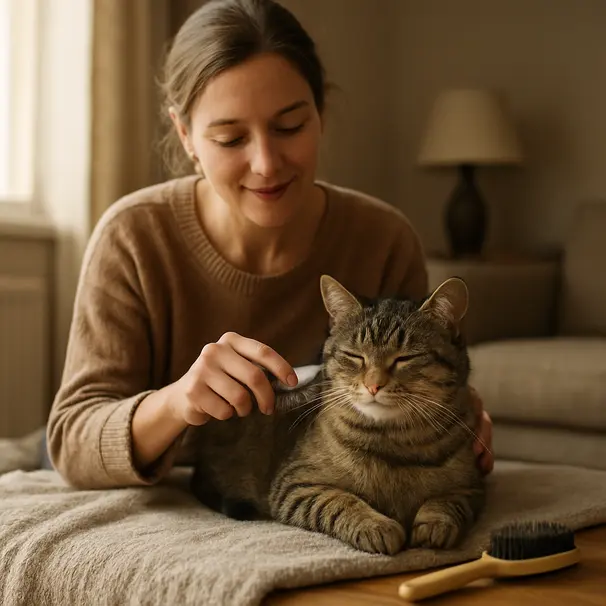
- Brush regularly to remove loose hair and distribute natural oils, using a tool suited to your cat’s coat.
- Check the skin during grooming sessions. Look for redness, flakes, bumps, or tiny black specks.
- Keep claws trimmed to reduce self-trauma from scratching.
- Introduce grooming slowly if your cat is nervous. Reward calm behavior with treats and praise.
Working with pet carers and sitters
- Share detailed notes about your cat’s skin history, current medications, and allergen triggers.
- Show carers how to spot early signs and how to gently check for fleas or lesions.
- Provide emergency contact details for your vet and a preferred nearby clinic.
Medication administration tips
- Hide pills in small, safe treats or use a pill pocket if your vet approves.
- For topical ointments, distract your cat with food or play so they’re less likely to lick the area immediately.
- If you struggle to medicate your cat, ask your vet or a trusted carer to demonstrate techniques.
Prevention and long-term care
- Routine flea prevention, good nutrition, and regular grooming are simple habits that can reduce many skin issues.
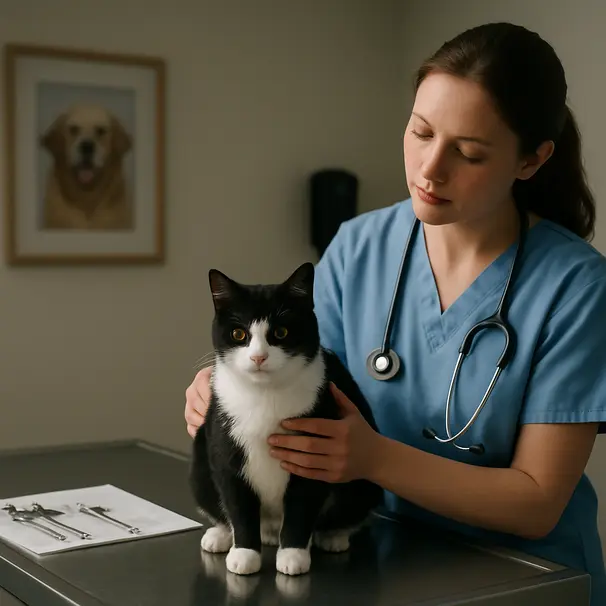
- Keep up with annual vet checks. A yearly skin and coat inspection can spot problems early.
- Address underlying conditions like dental disease, hormonal problems, or parasites—these can all affect the skin.
FAQs from owners and carers
Q: Can I bathe my cat for dry skin? A: Occasional gentle bathing with a cat-safe shampoo may help, but avoid frequent washing which can strip natural oils. Consider moisturizing products approved by your vet.
Q: Are plastic bowls bad for cats? A: Plastic can cause contact dermatitis in some cats and may harbour bacteria. Ceramic or stainless steel bowls are usually better.
Q: How long to wait after starting treatment to see improvement? A: This varies. Flea control or parasite treatments may show improvement within days, while allergic conditions might take weeks with consistent treatment.
When to escalate care
If symptoms worsen, spread rapidly, or your cat’s behavior and appetite change, contact your vet sooner rather than later. Persistent redness, discharge, severe itch, or sores deserve professional attention. If you’re unsure, a quick message or phone call to your vet can provide reassurance.
Final thoughts for caring humans
Skin problems can make cats miserable, and they’re stressful for owners too. Small changes—clean bedding, a vet-recommended flea preventive, swapping plastic bowls—can make a big difference. Trust your instincts. If something feels off, reach out to your vet or a trusted Floofy carer. With gentle care and timely help, many skin issues can be managed effectively, and your cat can get back to being the soft, content companion you love.
Helpful note: Keep a simple skin journal. Track symptoms, treatments, and any environmental changes. This can be invaluable when talking to your vet or a carer.
Thanks for caring for your cat’s skin. A little attention and the right support go a long way toward keeping purrs coming.