


Introduction
Good food matters. For dogs, nutrition shapes energy, coat, digestion, and mood. This guide walks through the essentials of dog nutrition in a warm, practical way, with tips for everyday feeding, special life stages, treats, and working smoothly with carers. Think of it as a friendly map you can refer to when planning meals or asking a sitter about your dog’s routine.

The building blocks: what a balanced diet includes
Dogs need a mix of nutrients to thrive. Below are the key components and what each one does.
Protein
Protein supplies amino acids that support muscles, immune health, and coat quality. High-quality meat, fish, or plant proteins can be part of a diet. Puppies typically need more protein than seniors, and active dogs may benefit from slightly higher levels.
Fats
Fats are concentrated energy. They help absorb fat-soluble vitamins and contribute to skin and coat health. Omega-3 and omega-6 fatty acids may support healthy skin and a shiny coat.
Carbohydrates and fiber
Carbs provide energy and fiber supports digestion. Whole grains, root vegetables, and legumes can be good carbohydrate sources. Some dogs do well with grain-free recipes, while others tolerate grains fine. Fiber can also help with stool quality.
Vitamins and minerals
Vitamins and minerals keep bones, nerves, and metabolism functioning. Commercial complete diets are formulated to include these, while homemade meals may need supplementation. Consider consulting a vet before changing supplement routines.
Water
Plain, fresh water must always be available. Hydration helps digestion, circulation, and temperature regulation. Encourage water intake after walks and play.
Choosing the right type of food
Kibble, wet food, raw diets, and homemade meals each have pros and cons. Here are practical notes to help you choose.
Dry kibble
Pros: convenient, helps keep teeth cleaner through chewing, usually cost-effective. Cons: some dogs find kibble less palatable, and quality varies across brands. Look for named protein sources and avoid mysterious “meat meal” listings when possible.
Canned or wet food
Pros: high moisture content, often tastier for picky eaters. Cons: more expensive per meal, and some wet foods are high in calories. Mixing wet and dry can balance texture and palatability.
Raw and fresh-prepared diets
Some owners prefer raw or freshly prepared meals for perceived naturalness. Raw diets can be lively and appealing to dogs, but they may carry bacterial risk and need careful balancing. If you consider raw or homemade meals, work with a qualified veterinary nutritionist to ensure nutritional completeness.
Homemade diets
Preparing meals at home can bring great satisfaction and control. Homemade diets may need supplements to meet all nutrient targets. A vet can help design recipes that avoid deficiencies or excesses.
Reading pet food labels like a pro
Labels can be confusing. Focus on these key points:
- First ingredients: the first few ingredients are the main sources of nutrients. Named proteins are preferable.
- Guaranteed analysis: shows crude protein, fat, fiber, and moisture percentages. Use these to compare products.
- AAFCO statement: in the U.S., AAFCO feeding trial or nutrient profile statements can indicate a food is formulated to meet certain life stage needs.
- Calorie content: check kcal per cup or can so you can portion correctly.
If the label reads oddly vague, or if ingredient sources are unclear, you may want a second option.
How much to feed: portioning basics
Portioning depends on weight, age, activity level, and metabolism. Follow the feeding guideline on the food as a starting point, then adjust by watching your dog.
Practical steps:
- Start with the recommended portion for your dog’s weight.
- Weigh your dog monthly so you can spot slow changes.
- Use body condition: you should be able to feel ribs with a light fat covering and see a waist when viewed from above.
- Increase portions for growth, pregnancy, or heavy exercise. Reduce food for sedentary or older dogs.
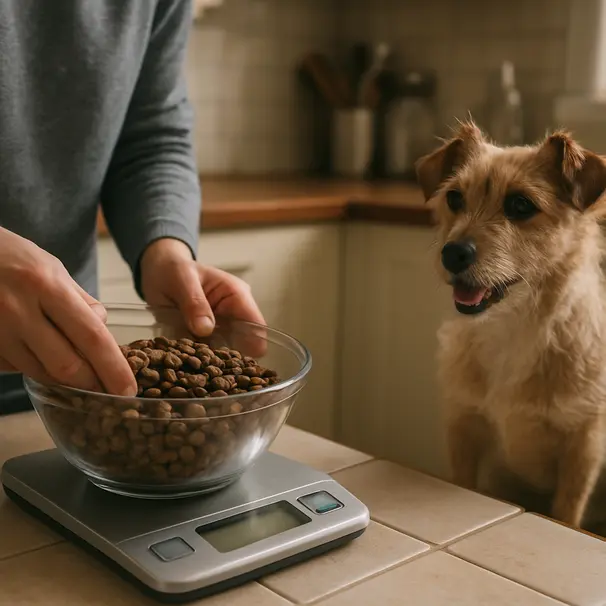
Portion tools: measuring cups are fine for kibble, but a kitchen scale is more accurate. Treats count. Keep treats under 10% of daily calories for most dogs.
Feeding schedules: consistency matters
A predictable routine helps digestion and behavior.
- Puppies: feed three to four small meals per day to support steady growth.
- Adults: two meals a day is typical. Splitting food reduces hunger and can help prevent gulping.
- Seniors: many older dogs do well with two meals, but smaller portions can help with digestion.
If you have a sitter or carer, write a clear feeding plan: timing, portions, type of food, and any calories from treats or toppers. A short note about how your dog behaves around food helps too.
Treats, toppers, and extras: moderation and safety
Treats are part of life. Use them for training and enrichment, but keep an eye on quantity.
- Choose low-calorie treats for frequent rewards.
- Freeze vegetables like green beans or carrot sticks for crunchy, low-calorie snacks.
- Avoid toxic foods: chocolate, onions, garlic, grapes, raisins, xylitol-sweetened items, and certain nuts can be dangerous.
- Limit table scraps. Rich human foods can cause upset stomachs and contribute to weight gain.
If you give toppers like bone broth or yoghurt, account for those calories and check for added salt or ingredients that might upset a dog’s stomach.
Special life stages and conditions
Different stages call for different approaches.
Puppies
Puppy formulas have extra calories, protein, and nutrients for growth. Feed on a schedule and adjust portions as they grow. Early socialization around feeding can prevent resource guarding.
Adult maintenance
Aim for a stable weight and consistent energy. Monitor coat, stool, and mood as clues to nutrition quality.
Seniors
Older dogs may slow down and need fewer calories or more digestible protein. Dental issues may make wet or softened food easier. Consider joint-supporting nutrients like glucosamine if recommended by your vet.
Overweight and underweight dogs
Weight changes can indicate diet or medical issues. Small, gradual adjustments to portions and activity usually help. Before making large changes, consider a vet visit to rule out underlying causes.
Allergies and sensitivities
Food allergies often show up as itchy skin, chronic ear issues, or digestive upset. An elimination diet can help identify triggers, but it’s best done under veterinary guidance. Consider limited-ingredient diets for testing, and keep a feeding journal to track reactions.
Food safety and storage
Proper storage keeps food fresh and reduces spoilage.
- Store kibble in a cool, dry place in an airtight container.
- Refrigerate opened wet food and use it within a day or two.
- Discard stale or rancid food.
- If you prepare homemade meals, follow safe cooking and storage practices to avoid bacterial growth.
Working with carers and sitters
Clear communication makes feeding stress-free for everyone.
Provide carers with:
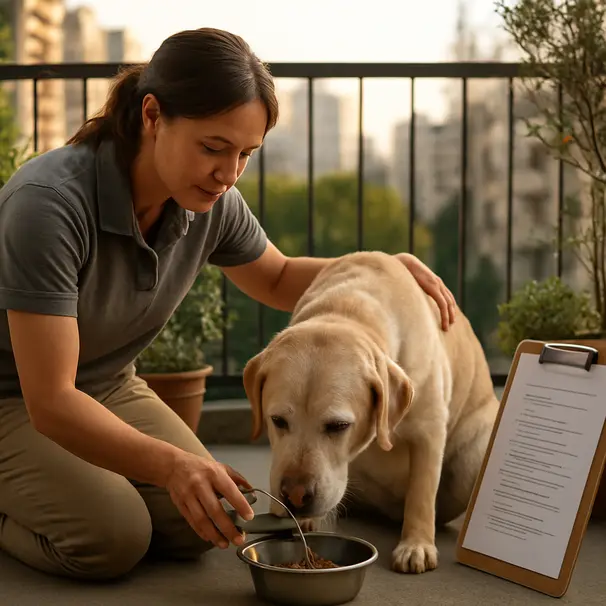
- A written feeding schedule and exact portions.
- The food container clearly labeled with instructions and a measure.
- A list of treats and any foods to avoid.
- Notes on how your dog eats: slow, fast, anxious, or needs separate space from other pets.
A short practice session with a sitter can help them learn your dog’s routine and cues.
When to ask a vet
If you notice sudden weight loss, persistent vomiting or diarrhea, ongoing itching, changes in appetite, or other concerning signs, consult a vet. For major diet changes, special health conditions, or homemade diets, consider veterinary advice or a veterinary nutritionist to avoid gaps in nutrition.
Sample feeding checklist for pet owners
- Weigh your dog monthly and record it.
- Measure food with a scale or cup.
- Keep treats under 10% of daily calories.
- Provide fresh water at all times.
- Label containers with feeding instructions for carers.
- Note any changes in stool, coat, or energy and share them with your vet.
Quick FAQs
- How fast can I change food? Gradual switches over 7 to 10 days usually help avoid tummy upset.
- Can dogs have human food? Some is okay in small amounts. Avoid toxic foods and high-fat scraps.
- Are supplements necessary? Many commercial diets are complete. Supplements may help in special cases after vet advice.
Final thoughts
Feeding is one of the kindest things we do for our dogs. Small, consistent choices add up to big health benefits. Keep mealtimes calm, stay observant, and communicate clearly with carers. If you ever feel unsure, a vet can help tailor a plan to your dog’s unique needs. Happy feeding, and give your pup an extra belly rub from us.