


Complete lizard care guide for pet carers and reptile owners
Lizards are fascinating, often surprisingly personable pets. They come in many shapes and temperaments, from the sun-loving bearded dragon to the night-active leopard gecko. For pet owners and carers, good lizard care is a mixture of thoughtful habitat design, reliable daily routines, and gentle handling. This guide covers practical steps to give a lizard a comfortable, healthy life, and to help pet carers feel confident during visits or sitterships.

Choosing the right species and knowing personalities
Different species have different needs, and picking the right lizard makes daily care easier and more enjoyable for everyone. Consider these common pet lizards:
- Bearded dragons: social, daytime active, enjoy gentle handling.
- Leopard geckos: nocturnal, relatively small, can be shy but bond with gentle handling.
- Crested geckos: climb well, avoid intense heat, can be more hands-off.
- Blue-tongue skinks: ground-dwelling, omnivorous, often friendly.
If you’re a pet carer meeting a new lizard, ask the owner about personality, feeding preferences, and how the lizard typically reacts to handling. Small differences in temperament change how you approach handling and enrichment.
Enclosure basics: space, layout, safety
A good enclosure keeps a lizard comfortable and safe. Prioritise space appropriate to species size and activity level.
- Size: adult bearded dragons usually need roomy enclosures, while smaller species like leopard geckos can live happily in smaller tanks. Ask the owner for exact dimensions.
- Substrate: safe options include reptile carpet, paper towels, or tile for many species. Loose substrates can be risky for young reptiles, consider avoiding sand or loose wood chips for burrowers that may ingest them. Owners may have a preferred substrate.
- Hides: provide at least two hides, one on the warm side and one on the cool side. No matter the species, hides help lizards feel secure.
- Climbing and décor: branches, rocks, and plants can enrich an enclosure. Make sure everything is secured so nothing falls during activity.
Placement matters. Enclosures should be in a low-traffic area away from drafts and direct sunlight on the glass, which can overheat a tank.
Heating, lighting, and thermoregulation
Lizards rely on their environment to regulate body temperature. Good heating and lighting let them thermoregulate naturally.
- Temperature gradient: aim for a warm basking area and a cooler retreat. For many daytime species, basking spots range from around 95 to 105°F, and a cool side may be 75 to 85°F. No single rule fits all species, so check the owner’s care notes.
- Heat sources: ceramic heat emitters, basking bulbs, or under-tank heaters can be used, depending on the species. Avoid hot surfaces a lizard could burn on, and use thermometers at both warm and cool ends.
- Lighting: UVB light can help some species synthesize vitamin D3, which may support calcium metabolism. UVB bulbs should be replaced according to manufacturer guidelines, since intensity drops over time.
- Night temperatures: many tropical lizards tolerate small night drops. Sudden, large temperature drops may cause stress.
Consider carrying a portable thermometer if you’re a mobile carer so you can check temps during visits. Note and report any unusual fluctuations to the owner.
Substrate and hygiene
A clean enclosure helps prevent stress and health problems. Establish a simple cleaning routine.
- Daily: spot-clean droppings, uneaten food, and soiled substrate. Replace water and check heating and lighting.
- Weekly: change substrate in smaller areas, clean and sanitise food bowls and decorative items.
- Monthly: a deeper clean with safe reptile cleaners or diluted bleach solutions can help manage bacteria. Rinse thoroughly and allow everything to dry before returning items to the enclosure.
Use gloves for cleaning if possible, and wash hands thoroughly afterwards. Record cleaning activities for the owner.
Diet and feeding routines
Diet varies a lot between species, so get clear instructions from the owner before offering food.
- Insectivores: feed gut-loaded insects like crickets, dubia roaches, or mealworms. Dust with calcium powder as advised. Offer appropriately sized prey to prevent choking.
- Omnivores: many bearded dragons enjoy a mix of vegetables, leafy greens, and insects. Offer a varied diet.
- Frugivores and nectivores: species like some crested geckos may eat specially formulated fruit-based diets or prepared powdered mixes.
Feeding tips for carers:
- Follow the owner’s schedule and portion sizes exactly.
- Remove uneaten live prey after a short period to avoid stress or injury to the lizard.
- Offer water daily. Some species prefer drinking droplets or humidity. Mist the enclosure if the owner requests it.
If you notice refusal to eat for more than a couple of days, or visible weight loss, notify the owner and suggest a vet consult.

Handling and social comfort
Many lizards tolerate handling if introduced slowly. Respect their signals and work at the lizard’s pace.
- Approach calmly and from the side rather than from above, which can be perceived as predatory.
- Support the body fully, especially larger species. Keep movements slow and steady.
- Limit handling sessions to short periods if the lizard is shy or new to you.
- Watch for signs of stress: darkened colours in some species, hissing, rapid tail waving, or attempts to flee.
If handling is part of your carer duties, ask the owner for their preferred routines. Some lizards do better with minimal handling and more environmental enrichment.
Enrichment and mental stimulation
Lizards benefit from stimulation that encourages natural behaviours. Enrichment can be simple and inexpensive.
- Hide variations: rotate hides and branch placements occasionally to create novelty.
- Feeding puzzles: scatter food or use feeder tongs to encourage hunting behaviours for insectivores.
- Sensory changes: safe live plants or small changes in décor can spark exploration, but avoid anything toxic.
Always supervise new enrichment items for safety. Keep a note of what works for each lizard so the owner knows what to repeat.
Health monitoring and recognising warning signs
You can help keep a lizard healthy by observing daily behaviours and noting anything unusual.
Look for:
- Changes in appetite or weight.
- Lethargy, unusual hiding, or inability to thermoregulate.
- Abnormal droppings or lack of droppings.
- Visible injuries, swelling, or discharges from the eyes, nose, or mouth.
- Frequent shedding problems; retained shed around toes or tail tips may need attention.
If you see worrying signs, contact the owner quickly and recommend a vet visit. Use careful, non-alarming language. Mention when the sign first appeared, any recent changes in husbandry, and the lizard’s behaviour.
Travel, sitting, and handovers for carers
Trust and clear communication make pet-sitting less stressful for lizards and owners.
- Meet the owner beforehand when possible, or have a detailed care sheet. Ask about schedules, feeding, lighting timers, and emergency contacts.
- During handover: check that the enclosure doors lock, heating and lighting are working, and that spare bulbs and batteries are accessible.
- If you move a lizard, keep the carrier secure, warm, and quiet. Limit transport time, and let the lizard settle before offering food.
- Leave a note for the owner about any deviations from routine and a short daily log of feedings, cleaning, and handling.
Consider offering photo updates. Images of a relaxed lizard can reassure an owner while you are caring for their pet.
Common species notes and quick tips
- Bearded dragons: enjoy a varied diet and interaction. They may benefit from daily supervised time outside the enclosure under a UVB lamp and close supervision.
- Leopard geckos: prefer low humidity and need humid hides for shedding. They are crepuscular so may be most active in morning and evening.
- Crested geckos: avoid bright basking lights, and provide vertical space for climbing. They may enjoy being cradled gently rather than full handling.
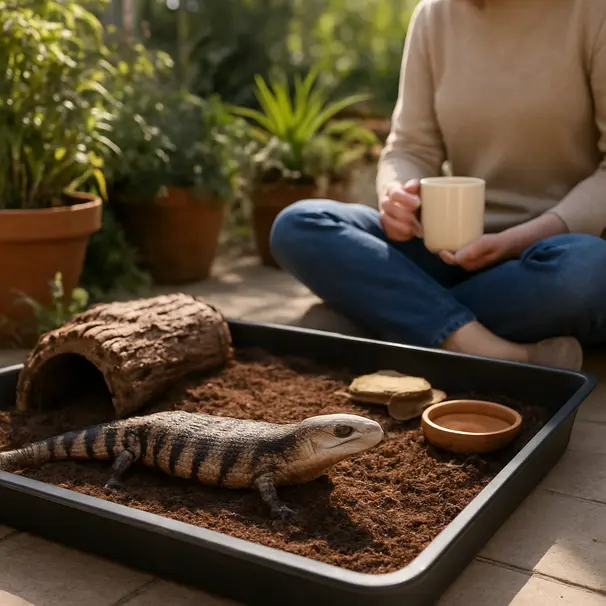
- Blue-tongue skinks: robust eaters, appreciate hiding spots and shallow pools for soaking.
These are starting points, and owners should give you species-specific instructions.
Working with a vet and emergency planning
Encourage owners to have a reptile-savvy vet identified. For carers, know the vet’s contact information and the nearest emergency clinic. In an emergency, stay calm, keep the lizard warm, and transport it in a secure carrier. Document what you saw and any changes you made during care.
Use phrasing like consider and may when discussing health. Avoid definitive medical claims, and recommend a vet consult for concerns.
Record keeping and communication
Good records help everyone. Keep a simple log including:
- Daily feedings and amounts.
- Temperature and humidity readings.
- Cleaning actions and any enrichment provided.
- Notable behaviours or health observations.
Send the owner a short summary after each visit. Clear notes build trust and help spot trends early.
Final checklist for pet carers
- Confirm species, daily schedule, and emergency contacts.
- Check heating, lighting, and timers before leaving.
- Follow the owner’s feeding plan exactly.
- Spot-clean and refresh water daily.
- Note and report unusual behaviour or appetite changes.
- Keep updates brief and reassuring for the owner.
Being a lizard carer means pairing patience with observation. These animals respond well to consistent routines, thoughtful environments, and gentle handling. Over time, you may notice subtle personality cues and favourite places in the enclosure. That’s when the real fun begins.
Closing thoughts
Lizards make rewarding companions for careful owners and carers. With clear instructions, an eye for detail, and a few practical habits, you can keep a reptile comfortable and thriving. If anything ever seems off, encourage a vet consult promptly. And for pet owners, when you’re choosing a carer, look for someone who asks good questions, makes notes, and sends photos. That combination of care and communication helps your scaly friend feel safe and settled.
If you’re on Floofy and ready to find or become a trusted reptile carer, use this guide to start conversations and build routines that work for both people and lizards.