

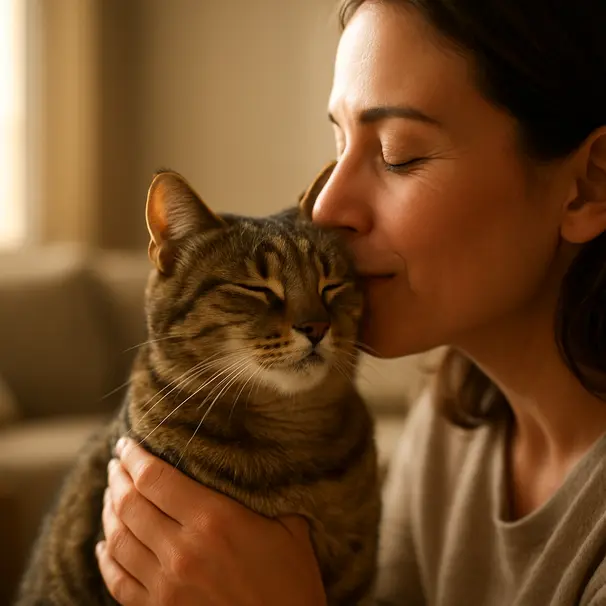
Do cats like kisses, or do they just tolerate them?
If you love cats, you’ve probably leaned in for a smooch and been met with a slow blink, a purr, or an unimpressed ear flick. It’s natural to want to show affection in the same way we do with people. The question is, do cats actually like kisses, or do they put up with them because they trust us? Let’s unpack feline cues, the science and instincts behind their reactions, and how pet owners and carers can show love in ways cats appreciate.
A quick look at feline faces and instincts
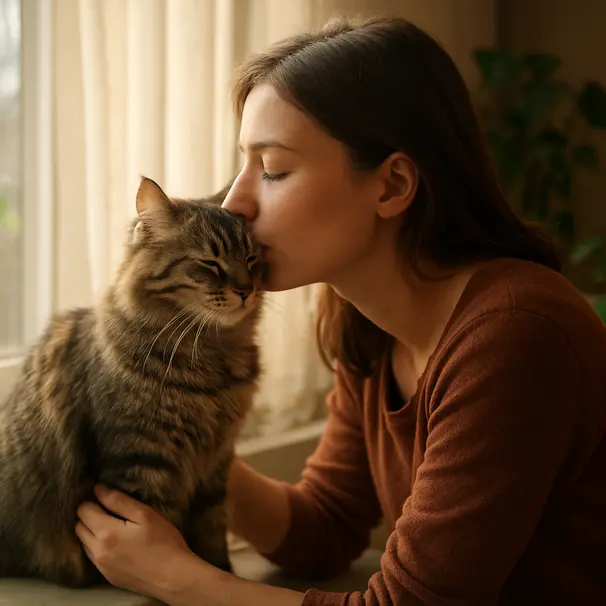
Cats are not small humans, even if we treat them like family members. Their social signals and communication evolved differently from ours. While humans often use kissing to bond, cats rely on scent, posture, touch, and vocal signals. A cat’s mouth and face are packed with scent glands, so pressing those areas to your face can be meaningful or confusing depending on the cat.
Kissing, as we do it, may feel odd to some cats. It can be interpreted as a neutral event, a calming gesture, or an invasion of personal space. Some cats are surprisingly tolerant, especially if they were socialized to human faces as kittens. Others might be uncomfortable but allow it due to trust.
Why some cats seem to enjoy kisses
There are a few reasons a cat may welcome a gentle kiss.
- Familiar scent sharing, not face smooches: Cats use scent to mark family. If a cat presses its head to you before you kiss it, that contact and shared scent can feel bonding. Your kiss may simply be part of an already positive exchange.
- Relaxed body language: If a cat is sleepy, purring, kneading, and leaning in, they may be comfortable with close contact. In those moments, a soft kiss often feels like an extra cuddle.
- Positive associations: Cats who grew up around patient, gentle human kisses may associate the action with treats, petting, or playtime, which can make them more accepting.
Still, acceptance is not the same as enthusiasm. A cat that tolerates a kiss might not solicit it.
Signs your cat likes or tolerates kisses
Reading your cat’s body language is the best way to know what they feel.
- Comfortable signs: slow blinking, relaxed whiskers, soft purring, gently curling tail tip, leaning into you, and relaxed ears. If these appear before and after a kiss, your cat likely enjoys the closeness.
- Tolerating signs: a still body, neutral tail, or minimal reaction can mean your cat is indifferent but trusts you enough to stay put.
- Discomfort signs: flattened ears, sudden tail flicking, wide eyes, stiff body, backing away, growling, hissing, or swatting. These are clear cues to stop immediately and give space.
If in doubt, pause and let the cat make the next move. Cats communicate clearly when they want more contact or less.
Why some cats dislike kisses
Kisses can trigger discomfort for several reasons.
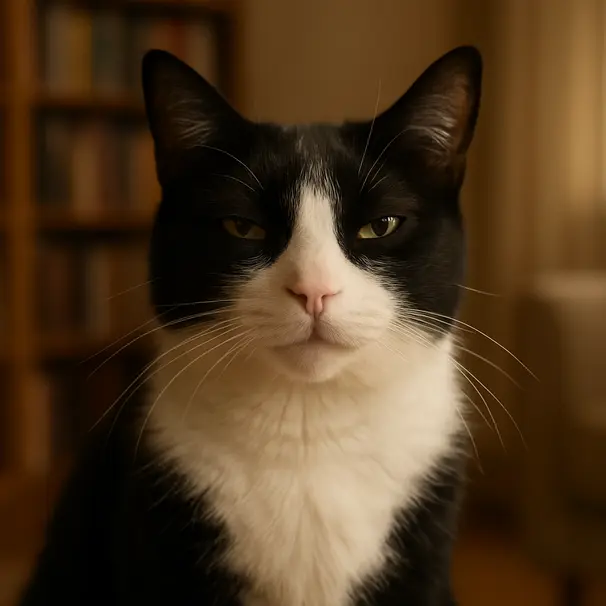
- Personal space and sensitivity: The face is sensitive territory for cats. Direct contact to the nose or forehead can feel intrusive.
- Lack of socialization: Cats who weren’t gently handled around the face as kittens may not find that level of closeness comfortable.
- Instinctive caution: A sudden lean-in to the muzzle can mimic aggressive or predatory face-to-face behavior in the feline world, which might be unsettling.
- Health or pain: A cat in discomfort may be less tolerant of any contact. If your normally affectionate cat starts avoiding kisses or face touches, consider a vet check.
Use gentle observation. If your cat’s tolerance shifts, it may signal discomfort that deserves attention.
Safe ways to show affection that most cats enjoy
If you want to express love without risking stress, try these alternatives.
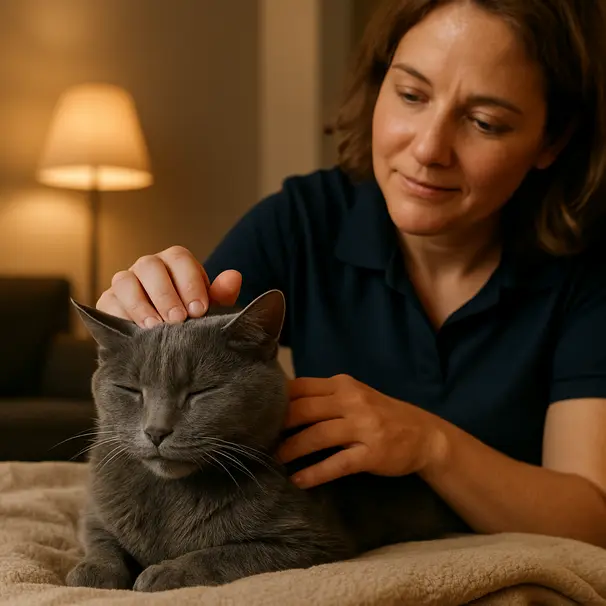
- Head bunts and chin rubs: Many cats love you rubbing the base of their ears, under the chin, and the top of the head.
- Slow blinking back: Slow blink at your cat and see if they return it. It’s a feline way of saying you’re relaxed and not a threat.
- Soft pets along the spine: Light stroking from head to tail is usually welcome. Avoid the belly unless you know your cat loves belly rubs.
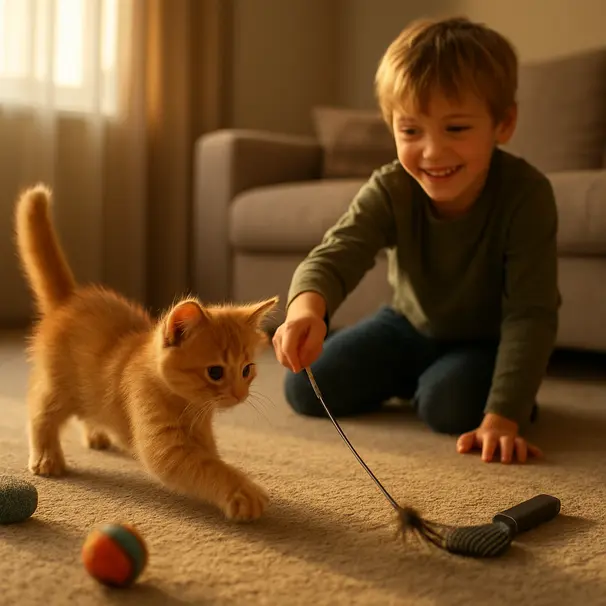
- Playtime and interactive toys: A short play session with a wand toy or laser can create a joyful bond.
- Grooming: Brushing or gentle strokes can mimic social grooming and build trust.
These acts respect feline communication and often mean more to cats than a human-style kiss.
How to approach kisses gently and respectfully
If you want to try kissing your cat, do it in a way that prioritizes comfort.
- Watch for invitation signals like head bunts, purring, relaxed posture, and slow blinking.
- Move slowly and speak softly to keep things calm.
- Aim for the top of the head or cheek, not directly into the nose or mouth.
- Keep it brief. A single soft kiss and then a pause gives your cat a chance to respond.
- If your cat leans away or shows any discomfort, stop and give space.
Think of kisses as an optional extra, not a requirement. A respectful approach strengthens trust.
Teaching kids and new carers about cat-friendly affection
If you’re a pet owner or a carer on Floofy, teaching other people how to show gentle love matters.
- Model proper behavior: Demonstrate slow, calm movements and show how to read a cat’s face.
- Set simple rules: No grabbing, no forcing face-to-face contact, and always let the cat choose to approach.
- Offer alternatives: Teach kids to place a hand for the cat to sniff, or to stroke the cat’s head or back instead of kissing.
- Supervise initial interactions: Especially for shy cats or young children, supervision keeps everyone safe and comfortable.
Clear communication between owners and carers about a cat’s preferences helps maintain consistent and respectful care.
Special situations: kittens, seniors, and shy cats
- Kittens: Early gentle handling that includes face and head contact may increase their comfort with kisses later in life. But always be gentle and let the kitten guide the pace.
- Senior cats: Older cats may have pain from arthritis or dental issues and become less tolerant of face touching. Consider slower, softer interactions and consult a vet if behavior changes.
- Shy or rescue cats: Many rescued cats need time to build trust. Focus on predictable routines, food-based positive reinforcement, and short, calm interactions that let them control closeness.
In these cases, patience and respect are the best ways to build a loving relationship.
When to consult a veterinarian or behaviourist
If your cat suddenly starts avoiding kisses or any form of touch that used to be fine, consider a checkup. Changes in tolerance can sometimes signal pain, dental problems, or other health issues. For persistent fear or aggressive responses, a certified cat behaviourist can offer tailored strategies to reduce stress and rebuild trust. Use cautious language like may, consider, or can help when thinking about behavior and health.
For professional pet carers on Floofy: respecting boundaries and communicating preferences
As a carer, you’re a guest in a cat’s life. Consistently respect their signals and follow owner instructions.
- Ask owners about specific preferences before visits. Is face contact okay? Does the cat like chin rubs?
- Prioritize the cat’s choices during interaction. If the cat moves away, let them go without trying to coax them back.
- Keep your own greeting style calm and neutral. Your energy influences how the cat responds.
- Report any changes in behavior to the owner promptly. Noting reduced tolerance for touch can help owners identify potential issues early.
Professional care is about reliability, empathy, and safe affection.
A few practical do’s and don’ts for cat kisses
Do:
- Watch the cat’s body language and respect boundaries.
- Offer alternatives like head scratches, slow blinks, and play.
- Teach children calm, gentle ways to greet cats.
- Consider health checks if tolerance changes suddenly.
Don’t:
- Force face contact or hold a cat down for a kiss.
- Mistake tolerance for enthusiasm. A neutral cat isn’t necessarily asking for more.
- Ignore signs of stress like hissing or swatting.
Simple awareness keeps interactions safe and affectionate.
Final thoughts: love on the cat’s terms
Kissing a cat can be sweet and comforting for the person, and for some cats it’s a pleasant gesture too. However, many cats simply tolerate kisses or prefer different kinds of affection. The most meaningful gift you can give any cat is attention that respects their signals and builds trust over time. That might be a head bunt, a slow blink, playtime, or a quiet lap while they nap.
If you’re a pet owner or a carer on Floofy, the heart of good care is listening to the cat. Let them lead the way. A respectful, patient approach can turn a tolerant relationship into a truly affectionate one.
- Quick checklist: Watch, wait, and offer alternatives. If your cat chooses to move closer, a gentle kiss might be welcomed. If not, there are many other loving ways to connect.
Thanks for caring enough to ask. Your cat notices the thoughtfulness, even if their response is a dignified blink and a royal nose turn.