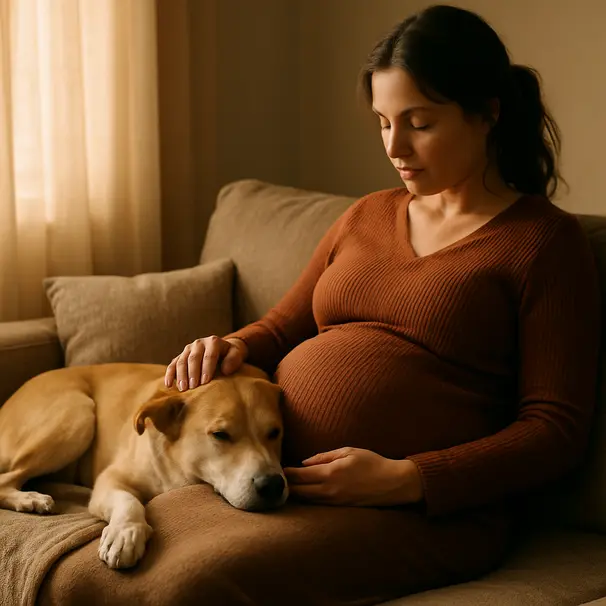
Many pet owners swear their dog knew before anyone else. That warm nuzzle at your belly, the sudden protectiveness, or the way your dog seems extra attentive—these moments make you wonder if dogs can actually sense pregnancy. The short answer is: maybe. Dogs are highly tuned to scent and subtle changes in human behaviour, and that means they can pick up on things we barely notice.A tender moment between owner and attentive dog.A tender moment between owner and attentive dog.
What Dogs Might Notice First
Dogs experience the world differently from us. Their sense of smell is far richer, and they read body language and routines closely. During early pregnancy, a combination of factors may change how they respond to you:
Scent changes: Hormonal shifts may alter your natural scent. Dogs may detect those tiny changes long before you show. - Routine and energy shifts: Pregnancy often brings tiredness, different activity levels, or altered feeding and movement patterns. Dogs notice when their human is moving differently or resting more. - Emotional changes: Your mood and stress levels can change, even subtly. Dogs are sensitive to tone of voice and posture and may respond by becoming more clingy or protective. - Physical cues over time: As pregnancy progresses, dogs can see changes like a growing belly or changes in the way you sit, walk, or hold yourself.
Why scent matters
It’s tempting to call it a sixth sense, but for dogs it’s mostly about smell. A pregnant person may emit different pheromones and hormones that alter their scent profile. Even a small change can be very obvious to a dog. That’s not magic, it’s biology—dogs are simply excellent at detecting chemical cues.
Behavioural Signs That Your Dog Might Be Reacting to Pregnancy
Every dog is an individual, so watch for subtle or dramatic behaviour changes. Common responses include:
Increased affection: Following you more, wanting to sleep nearby, or nudging your hands or belly. - Protective behaviours: Standing between you and others, alert barking, or more watchfulness during walks. - Anxiety or clinginess: Restlessness, whining, or shadowing you around the house. - Changes in appetite or energy: Eating less, being less playful, or conversely becoming more restless. - Avoidance: Some dogs may withdraw or avoid being near you if they feel unsure about the changes.
If your dog shows extreme behaviour shifts—aggression, intense anxiety, or destructive behaviours—consider reaching out to a vet or a qualified behaviourist. These signs may need professional help.Dogs pick up subtle scent changes on walks.Dogs pick up subtle scent changes on walks.
How to Prepare Your Dog for a New Baby
Preparation is key. The arrival of a baby brings new sounds, smells, equipment, and routines. Making gradual adjustments well before the due date helps your dog adapt with less stress.
Practical steps to take now
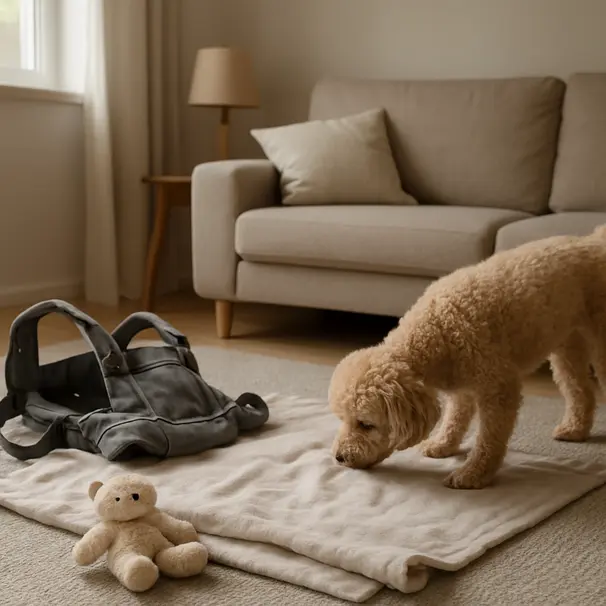
Create boundaries: Practice using baby gates and setting up the nursery as a no-dog zone to get your dog used to new limits. - Introduce new sounds: Play recordings of baby noises at low volume, rewarding calm behaviour and slowly increasing volume as your dog stays relaxed. - Bring new items home early: Let your dog sniff the baby’s blanket, clothes, or lotions so new scents become familiar before the baby arrives. - Maintain routines: Try to keep feeding, walking, and playtime consistent. Consistency helps reduce anxiety and gives your dog predictability. - Practice handling changes: Practice carrying a doll, placing it in a car seat, or using a stroller while continuing to reward calm behaviour. - Train or reinforce key commands: Focus on basic cues like sit, place, go to bed, and leave it. Reliable recall and settling behaviours are especially useful around a baby.
Socialisation and supervised introductions
When the baby arrives, every first meeting should be calm and controlled. Keep the dog on a leash if necessary, allow them to sniff from a safe distance, and reward relaxed behaviour. Never force an interaction and watch for signs of stress like lip-licking, yawning, or a tucked tail. If your dog shows discomfort, step back and try again later.Introducing new baby items slowly helps dogs adapt.Introducing new baby items slowly helps dogs adapt.
Tips for Pet Carers and Sitters Working with Pregnant Clients
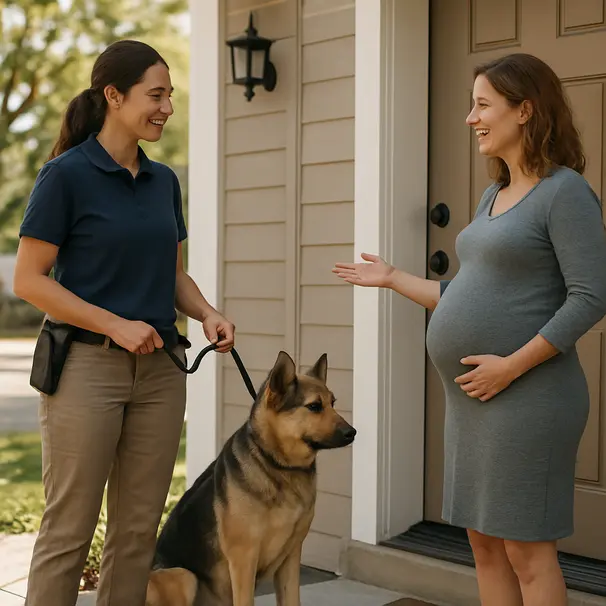
If you’re a pet carer, the client’s pregnancy adds a few new considerations to your routine. Clear communication and gentle procedures help everyone feel secure.
Ask about medical needs: Check if the client has restrictions on lifting or bending and adapt how you handle pets accordingly. - Plan walks and lifts: Offer to do the heavy lifting tasks like carrying food and water bowls or helping with crate placement if the client prefers. - Be mindful of hygiene: Pregnant clients may appreciate extra care with cleaning and handling pet waste. Offer to disinfect pet areas if requested. - Introductory visits: If the carer will be bringing the dog to new environments, do a slow, calm introduction and communicate any behavioural changes you notice. - Emergency contacts: Make sure you have up-to-date emergency contacts, including the client’s partner and their preferred vet.
Common Myths and Misunderstandings
A few stories circulate among pet lovers, and it helps to separate myth from likely reality.
Myth: Dogs know exactly when a pregnancy starts: Likely false. Dogs may notice gradual changes, but there’s no evidence they can read a pregnancy test or know precise timing. - Myth: All dogs become gentle and protective: While many do, others may become anxious or indifferent. Breed, temperament, history, and training shape responses. - Myth: Dogs sense pregnancy only through smell: Smell is important, but behavioural changes, routine shifts, and visual cues all play a role.
When to Ask for Professional Help
Most dogs will adapt with patience and preparation. However, seek professional help if you notice worrying signs:
Sudden aggression or increased guarding around the pregnant person or their items - Long-lasting separation anxiety that makes daily life difficult - Severe destructive behaviour or loss of appetite - Fear-based behaviours that don’t improve
Talk to your vet first for possible medical causes, then consider a certified dog behaviourist for training and tailored plans. If you’re a pet carer, document any concerning incidents and share them promptly with the owner.Carers supporting families with calm dog introductions.Carers supporting families with calm dog introductions.
Practical Checklist Before Baby Arrives
Use this checklist to help your dog feel ready for the family change:
Introduce baby gear and sounds gradually - Start short sessions of place training and calm settling - Keep regular exercise to manage energy and reduce anxiety - Establish a safe retreat space for the dog where they won’t be disturbed - Practice leash manners around strollers and new furniture - Involve the dog in positive routines like reward-based calm interactions near baby items - Arrange for dog-walking help for early postpartum days when routines shift
Bringing the Baby Home: A Gentle Plan
Plan a calm introduction day. Before the baby comes out into the home, let the dog sniff a blanket or clothing item that’s been near the baby. When the baby is present, keep the first greeting brief and quiet. Have a trusted person handle the dog if needed while the parents focus on the newborn. Reward calm behaviour with gentle praise and treats to build positive associations.
Remember safety and respect
Never leave a baby alone with a dog. Teach children how to approach and touch dogs gently as they grow. Boundaries protect both the baby and the pet and make life easier for busy new parents.
Final Thoughts
Dogs may pick up on pregnancy through scent, behaviour, and routine changes, and many will respond with curiosity, affection, or protectiveness. Preparation, consistent routines, and gentle introductions give your dog the best chance to adjust smoothly. If you’re a pet carer working with pregnant clients, clear communication and thoughtful practices make your care invaluable during this life change.
Above all, be patient with your dog and yourself. A little planning and compassion go a long way toward a happy, safe transition for the whole family. Consider consulting your vet or a certified behaviourist for help with big behaviour shifts, and don’t hesitate to ask trusted carers for extra support in those early weeks after your baby arrives.
Floofy uses cookies and similar technologies to personalise content, measure ads, analyse traffic, and provide you with the best possible experience. Some cookies are essential for the site to function and cannot be turned off. By accepting, you agree to our
Cookie Policy. You can update your preferences at any time.
Cookie Settings
When you visit Floofy, we may store or access information on your browser, often through cookies. This data helps us provide a smoother, more tailored experience based on your preferences or device settings. While the information doesn’t usually identify you personally, it enhances your time with us. We respect your privacy choices, so feel free to manage your cookie preferences by exploring each category. Keep in mind, however, that limiting certain cookies may affect the performance of the site and the services we can deliver.
Cookie Policy