

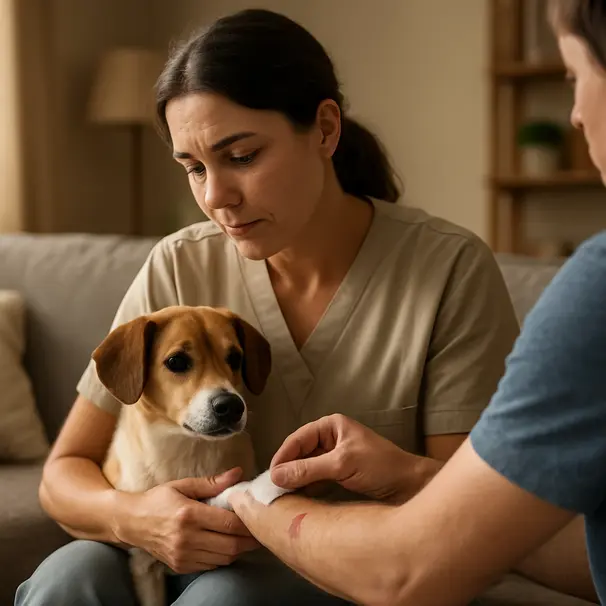
Quick note before we begin
Dog bites are upsetting, but staying calm makes a huge difference. This article is written for pet owners and carers who need clear, practical steps to act fast, keep people safe, and protect the dog involved. Consider this a friendly checklist you can follow while you get help.
First priorities: safety and getting calm
When a bite happens the first concerns are safety and stabilising the situation.
- Move carefully. If the dog is still near the person, gently separate them using a barrier like a towel, blanket, or a chair, rather than hands.
- Protect the person. If someone is bleeding, have them sit or lie down. Keep them warm and reassured.
- Give the dog space. A frightened or stressed dog may bite again. Put the dog in a quiet room or secure crate if you can do so calmly and safely.
Pause and breathe. Quick, calm decisions help you avoid making the situation worse.
Assess the wound: what to look for
After everyone is safe, take a clear look at the bite.
- Superficial scratches or punctures. Small nips that only affect the top layer of skin.
- Deep puncture wounds. These look like small holes and may gape or bleed significantly.
- Crushing or tearing wounds. These are irregular, jagged, or deep.
- Areas near joints, hands, face, or mouth. Wounds here may need special attention.
If the wound is small and the person is calm, you can begin basic first aid. If there is heavy bleeding, deep tissue damage, visible bone, or the person is fainting or unresponsive, call emergency services right away.
Basic first aid for the bitten person
Use gentle, simple steps. Avoid making medical promises, and consider getting professional care.
- Wash your hands if possible. Use gloves if available.
- Rinse the wound under running water for several minutes. This can help clear dirt and bacteria.
- Gently clean around the wound with mild soap, but avoid forcing soap deeply into a puncture.
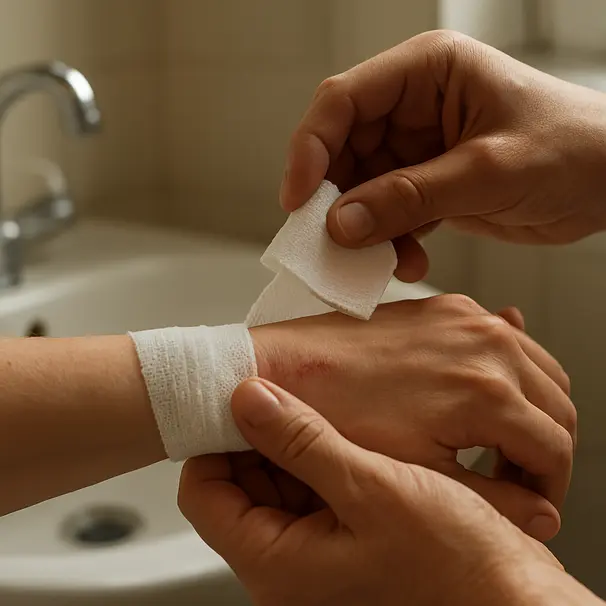
- Apply gentle pressure with a clean cloth or sterile gauze to stop bleeding. Hold until bleeding slows.
- If bleeding is controlled and the wound is minor, cover with a sterile dressing or clean bandage.
- If swelling, redness, worsening pain, or signs of infection develop, consider contacting a healthcare provider.
Remember, puncture wounds can trap bacteria deep inside. Even a small-looking puncture may need professional assessment.
When to call a doctor or emergency services
Consider seeking urgent medical care if any of the following apply:
- Heavy or uncontrollable bleeding.
- Deep wounds, gaping edges, or exposed tissue.
- The bite is on the face, hands, feet, or near a joint.
- The person has signs of infection, such as fever, spreading redness, warmth, or increasing pain.
- The victim has medical conditions that affect healing, like diabetes, or is on blood thinners.
- The person has not had a tetanus booster in the past 5 to 10 years. Consider assessing tetanus status and vaccination with a medical professional.
If in doubt, contact a healthcare professional. Triage nurses or urgent care clinics can often advise whether an in-person visit is necessary.
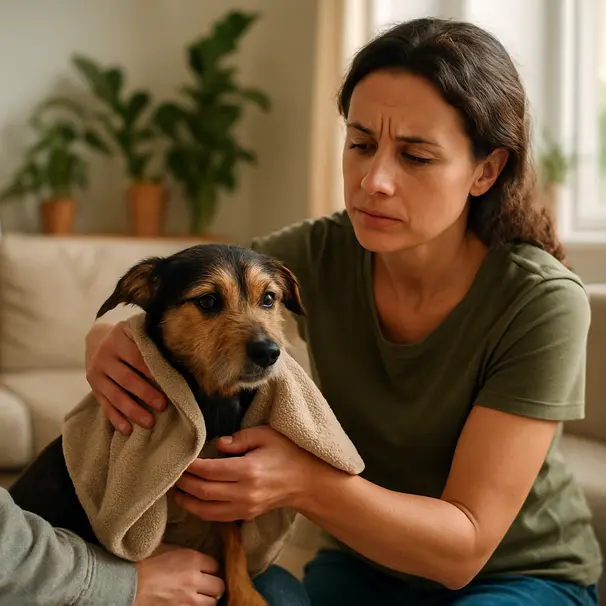
First aid for the dog
Dogs can be injured during a bite incident too, either from other dogs or from struggling. Check the dog calmly after the person is safe.
- Look for bleeding, limping, broken fur, or obvious wounds.
- If the dog is calm and allows it, apply gentle pressure to stop bleeding with a clean cloth.
- Avoid using human medications on dogs without vet advice. Some topical antiseptics may be okay, but consider contacting your vet for safe options.
- If the dog is injured, painful, or behaving unusually, consider calling your vet for guidance. They can help decide if an exam or immediate treatment is needed.
Always approach a dog that has bitten or been bitten with caution. Injured dogs may snap out of fear.
What not to do
A few things can make matters worse, so avoid them.
- Don’t slap or punish the dog. That may increase fear and lead to more bites.
- Don’t try to pry the dog’s mouth open with your hands. Use a barrier to separate people from the dog.
- Don’t apply home remedies like alcohol, hydrogen peroxide, or human painkillers to a dog without veterinary advice. Some can be harmful.
- Don’t downplay a puncture wound on a person. Punctures can become infected without obvious early signs.
Reporting the bite and documenting details
Keeping records is helpful for health care and for responsible pet care follow up.
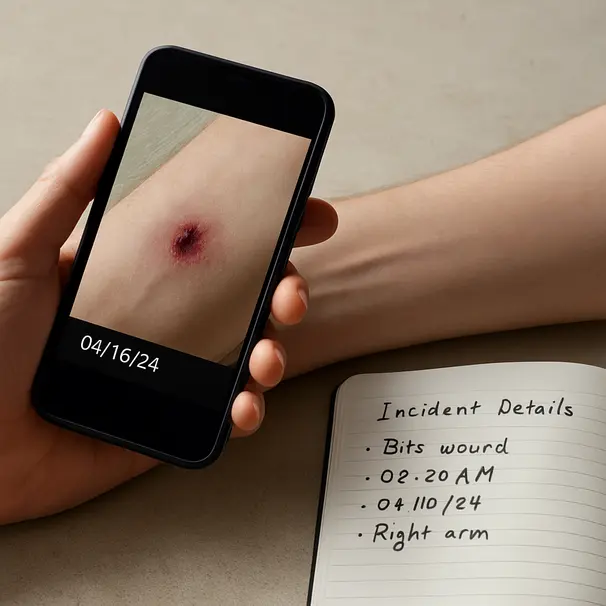
- Record the time, location, and circumstances of the bite. Note what triggered the interaction, and what both the dog and person were doing.
- If the dog belongs to someone else, exchange contact and vaccination information. Ask about rabies vaccination status calmly and politely.
- Take photos of the wound on the person, and any injuries to the dog. Date-stamped pictures can be helpful if medical care or official reporting is needed.
- Depending on local laws, you may need to report a bite to animal control. Check local requirements and follow them.
Rabies considerations
Rabies is rare in many areas, but exposure is taken seriously. Consider these steps:
- If the biting animal’s rabies vaccination status is unknown, contact local public health or animal control for guidance.
- If the biting animal is available for observation and up-to-date on rabies shots, they may be observed for signs of illness by a vet or public health official.
- If rabies exposure is suspected, health authorities may recommend a post-exposure plan. Follow their guidance and talk to a medical professional.
When in doubt, reach out to public health or your vet for next steps.
Calming and supporting the person involved
Bites are stressful for people, especially children.
- Reassure the person and explain what you are doing in a calm voice.
- For children, encourage them to take slow breaths. Offer comfort without forcing conversation about the event until they are ready.
- If emotional shock seems present, keep the person warm and still until help arrives.
Consider following up with gentle support, and encourage professional care if the person shows prolonged anxiety or fear after the incident.
Addressing the dog’s behaviour afterwards
Understanding why the bite happened is essential for preventing repeat incidents.
- Look for triggers like resource guarding, fear, pain, or sudden movements. A bite is often communication that something felt unsafe.
- Consider a veterinary check to rule out pain or illness that may have contributed to the behaviour.
- Work with a qualified positive-reinforcement trainer or a certified behaviourist to create a plan. Avoid punishment-based approaches, as these can increase fear and aggression.
- Manage the environment. Use gates, leashes, or separate spaces during stressful moments, such as when visitors arrive or during feeding.
Document behavioural changes and any medical findings. A combined approach of medical check and behaviour support can help prevent future bites.

Preventive habits for owners and carers
Small habits reduce risk and build trust.
- Socialise dogs gently and at their pace, exposing them to new people and situations gradually.
- Teach and reinforce clear cues, such as waiting calmly for food or doors to open.
- Supervise interactions between dogs and children closely. Teach children to be calm and to avoid direct face contact, rough play, or waking a sleeping dog.
- Keep regular vet checkups. Pain or sudden illness can change a dog’s behaviour quickly.
- If you are a carer, ask pet owners about any known triggers, medical issues, or calming strategies before a walk or visit.
Aftercare and watching for infection
After initial care, watch the wound closely.
- Signs like increasing redness, warmth, swelling, pus, fever, or worsening pain may indicate infection and can be reasons to contact a healthcare provider.
- For the dog, watch for limping, hiding, loss of appetite, or changes in behaviour. Contact your vet if you notice anything worrying.
- Follow any medical or veterinary instructions for wound care, medications, or follow-up appointments.
A note for pet carers and sitters
If you care for other people’s pets, being prepared keeps everyone safer.
- Carry a basic pet-first-aid kit, including gloves, gauze, a towel, and contact numbers for local vets.
- Ask about the dog’s triggers, medical history, and emergency contacts during onboarding.
- If a bite happens while you are caring for a dog, notify the owner quickly, document the event, and seek appropriate medical or veterinary help.
Final reassurance
A bite is frightening, but prompt, calm action protects everyone involved and helps the dog too. Clean and assess wounds, seek professional care when needed, document what happened, and follow up with behaviour and veterinary support.
If you ever feel unsure, call your vet or local health services. They can help you decide the safest next steps. You are not alone, and taking careful, compassionate action now can prevent future incidents.
Quick checklist to keep handy
- Ensure immediate safety for person and dog.
- Assess wound type and bleeding.
- Clean and bandage minor wounds, seek urgent care for serious injuries.
- Contact vet for injured dogs and a doctor for concerning human wounds.
- Document the incident and collect vaccination info if possible.
- Consider behaviour support and environmental management to prevent repeat bites.
Stay safe, and thanks for doing the right thing for both people and pets. Caring calmly makes all the difference.