

Why brushing matters
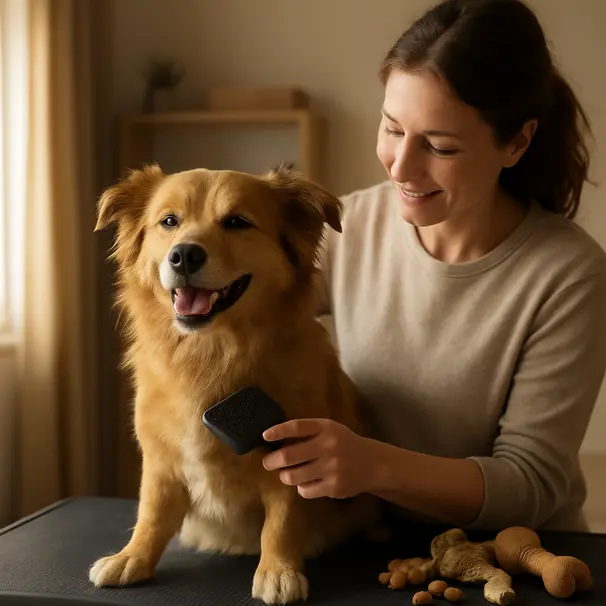
Brushing is more than a cosmetic task. It keeps your dog comfortable, reduces loose hair around the house, helps spot skin issues early, and strengthens the bond between you and your dog. Groomers often say a short, consistent session beats an occasional marathon. Small, regular care can prevent mats, calm itching, and make bath time faster.
What groomers recommend: the basics
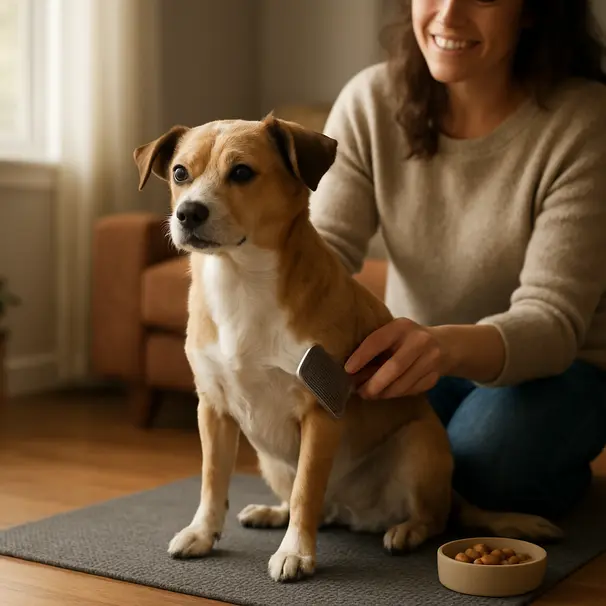
Start with a calm space. Light, familiar music or a soft voice can make a big difference. Have treats ready, and choose a non-slip surface if you’re working indoors. For most dogs, aim for 5 to 15 minutes a day or every other day depending on their coat. Short, positive sessions help your dog accept brushing as part of routine life.
Tools matter. A good toolkit often includes:
- A slicker brush for tangles and surface hair
- A bristle brush for short coats and shine
- A comb for checking undercoats and finishing
- A dematting tool or rake for heavy undercoats
- Treats and a towel or mat for cleanup
Groomers also suggest keeping nails trimmed and ears checked in the same session. That way your dog gets used to gentle handling all over.
Match the tool to the coat type
Dogs’ coats come in so many shapes and textures. Using the right tool saves time and keeps the coat healthy.
Short-haired breeds
Short coats like Beagles, Boxers, and Dobermans benefit from a rubber curry brush or bristle brush. These tools remove loose hair and distribute natural oils, leaving the coat glossy. Brush gently in the direction of hair growth.
Double-coated breeds
Breeds such as Siberian Huskies, Golden Retrievers, and Pomeranians have an undercoat that sheds seasonally. Use an undercoat rake, a slicker brush, and then a wide-tooth comb to remove loose underfur. Work in sections so you don’t miss spots, and be gentle near the skin to avoid irritation.
Long, silky coats
For breeds like Shih Tzus, Afghan Hounds, and Collies, a pin brush or a slicker brush plus a finishing comb usually works best. Hold the fur close to the skin with one hand while brushing with the other to minimize pulling. Regular brushing prevents mats from forming in the first place.
Curly or woolly coats
Poodles, Bichon Frises, and similar dogs need a slicker brush and a comb to keep curls separated and tidy. These coats can mat close to the skin, so consistent, frequent grooming is helpful.

Gentle technique, step by step
A relaxed technique keeps brushing positive. Here’s an easy routine most groomers follow:
- Let your dog sniff the brush and reward calm behavior.
- Start with short strokes on a forgiving area, like the back. Praise and give a treat.
- Work in small sections, moving towards the chest, legs, tail, and belly.
- Use a comb after brushing to find any missed tangles.
- If your dog flinches, pause and comfort them, then return to a different spot.
Key tips: brush in the direction of hair growth, support loose skin to reduce tugging, and keep sessions upbeat. Always end on a positive note, even if it’s a one-minute cuddle.
Dealing with mats like a groomer
Mats are the most stressful part of home grooming for many owners, but groomers have calm ways to handle them.
First, try preventive care. Frequent brushing and checking behind ears, under legs, and around collars can stop mats from forming. If you find a small mat, hold the fur close to the skin and use a dematting comb or slicker to tease it out gently. Start at the loose end and work toward the skin in short steps.
For stubborn mats, groomers may use thinning shears or carefully clip the area. If mats are very tight or near the skin, consider a professional. Cutting a mat incorrectly can nick skin or create a sore that takes weeks to heal.
If your dog has sensitive skin or old, large mats, consider consulting a groomer before attempting removal at home. They can show you safe handling and tools, and sometimes a professional session is the kinder option.
Training puppies and anxious dogs
Puppies learn quickly. Start gently and keep sessions playful.
- Introduce the brush early and let the puppy explore it.
- Pair brushing with treats, play, or a favorite toy.
- Keep sessions very short at first, then slowly increase time.
- Use soft praise and a calm voice.
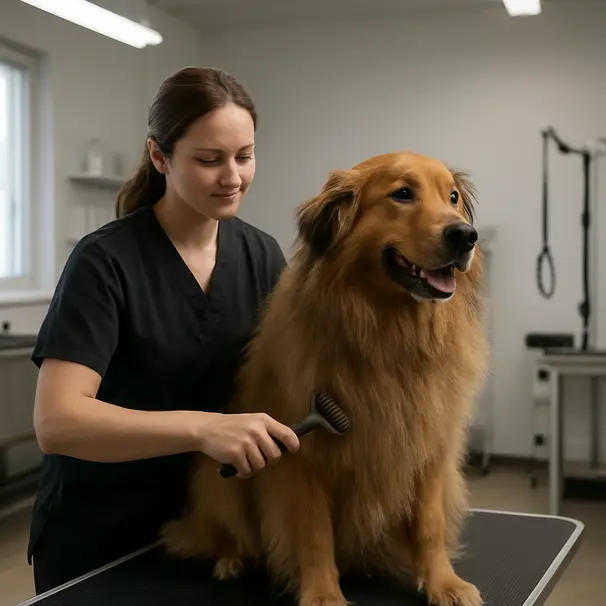
For anxious or fearful dogs, patience and small steps work best. A groomer might recommend counter-conditioning techniques, where the brush is associated with something the dog loves. If fear is extreme, ask a groomer or behaviorist for guidance, or consider a professional groomer who handles anxious pets frequently.
Scalp, skin and safety checks
Every brushing session is an opportunity to check your dog’s health.
Look for:
- Redness, bumps, or scabs
- Fleas, ticks, or excessive scratching
- Dry, flaky skin or oily patches
- Unusual lumps or bumps
If you spot anything worrying, consider consulting your vet. Brushing can help you catch problems early, but avoid diagnosing conditions yourself. If your dog seems in pain while being touched, stop and check for sensitivity or hidden injuries.
Bathing and brushing: timing matters
For many dogs, brush before a bath. Brushing removes loose hair and tangles so shampoo can reach the skin. For curly or woolly coats, a quick detangling before shampoo prevents mats from tightening in wet hair.
After a bath, towel dry and use a low-heat blow dryer at a safe distance for thicker coats, while continuing to brush gently to avoid tangles as the coat dries. Some groomers recommend waiting until the coat is mostly dry to finish with a slicker or comb for best results.
Product pointers without product hype
Groomers use many products, but you don’t need a long list. Stick to basic, well-reviewed brushes and a gentle, dog-formulated shampoo. Avoid human products. If you’re considering leave-in conditioners or detanglers, choose ones labeled for dogs and introduce them gradually.
If your dog has a skin condition, a vet-recommended shampoo may help. Talk to a groomer or vet for advice tailored to your dog’s needs.
When to call a pro or a vet
Call a professional groomer if:
- You find large, close-to-skin mats
- Your dog is very uncomfortable or resistant during grooming
- You need a breed-specific trim or clippers
Call a vet if:
- Brushing reveals bleeding, deep sores, or raw skin
- You find a rapidly growing lump
- Your dog suddenly shows pain or lethargy during handling
Groomers and vets often work together. A good groomer will refer you to a vet if they spot something concerning.
Quick grooming checklist for busy carers
- Brush scheduled: daily, every other day, or twice weekly by coat type
- Tools: slicker, bristle brush, comb, dematter, treats
- Calm space: towel, non-slip mat, and water nearby
- Check ears, paws, and skin while you brush
- Reward at the end of each session
FAQs groomers hear a lot
Q: How long should a brushing session be? A: Short and frequent usually wins. Start with five minutes and build up.
Q: How often should I bathe my dog? A: Groomers often suggest bathing every 4 to 8 weeks for many dogs, but coat type, activity level, and skin condition matter. Talk to your groomer or vet for specifics.
Q: Are electric de-shedding tools safe at home? A: They can be, if used gently and by someone comfortable with the tool. If you’re unsure, ask a groomer for a demo.
A final note from groomers: patience and praise
Brushing should feel like a small gift you give your dog. Make it predictable, make it kind, and celebrate the little wins. If your dog fidgets, stay calm and try again later. If you’re a pet carer on Floofy, communicate with the owner about tools, frequency, and any skin concerns. A shared plan keeps your dog comfortable and makes grooming a joint success.
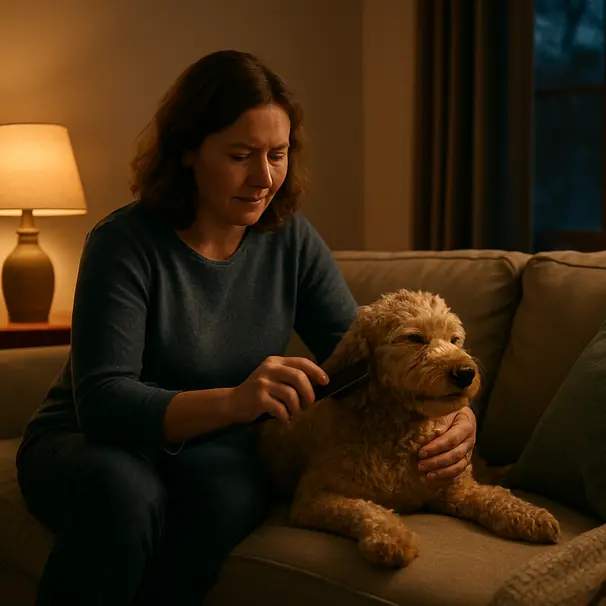
Grooming is part technique, part trust. With the right tools, gentle hands, and a bit of patience, brushing can become a soothing ritual for both of you. If you’re ever unsure, reach out to a professional groomer or your vet for personalized advice.