

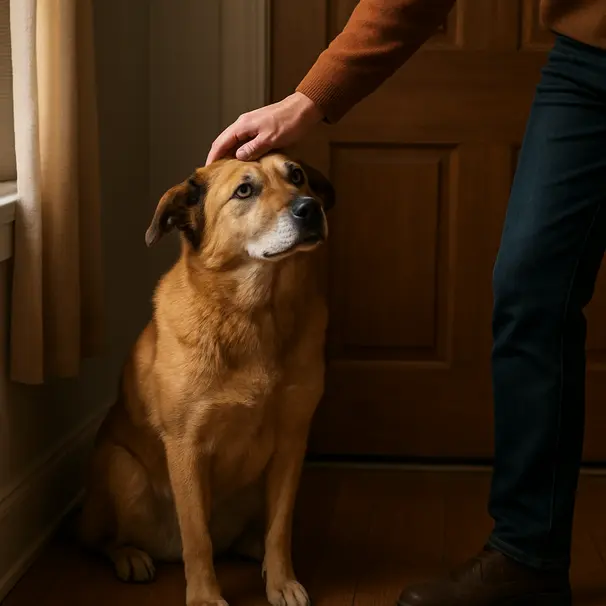
Why Does My Dog Jump on People?
If your dog jumps on you or anyone who enters the house, you’re not alone. It’s a common behavior, often linked to emotion, seeking attention, or a habit acquired as a puppy. Some dogs greet this way, others seek contact or play, and in some cases it can hide anxiety or poor socialization. Understanding the cause helps you choose the right tools to change the habit.
Also consider sudden changes: if a dog that didn’t jump before starts doing so, it might be helpful to talk to a veterinarian to rule out health issues that increase irritability or hyperactivity.
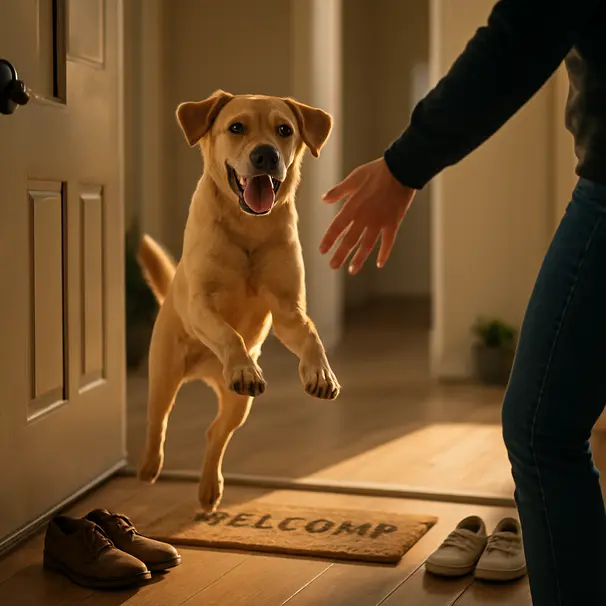
What to Avoid When Your Dog Jumps
Before implementing new techniques, it’s important to know what to avoid. Don’t use physical punishment, push aggressively, or yell. These behaviors can increase anxiety or excitement, making the situation worse. Don’t reward jumping with attention, even negative: the dog often interprets any reaction as success.
Don’t contradict multiple family members: if some ignore the behavior and others reinforce it, the dog will receive mixed signals. Consistency is key.
Practical and Positive Strategies to Stop Jumping
The good news is that with patience and simple strategies you can make great progress. Here you’ll find practical methods, easy to incorporate into your daily routine.
1) Ignore the Jump Until Calm
When the dog jumps, turn away and ignore. No eye contact, no words, no touch. Stay still until all four paws are on the ground. As soon as it’s calm, reward with soft praise or a snack. This teaches that standing with all paws on the ground brings positive attention.
2) Teach the ‘Sit’ Command as an Alternative
The ‘sit’ is a great ally. Request a sit before opening the door, before petting, or when guests arrive. Reward the correct behavior immediately. Train it in small blocks, ten repetitions a day, using snacks and praise, until sitting becomes the automatic response to greeting.
3) Use Environmental Management
Train your dog with a door in between, a gate, or a leash to maintain control during visits. This isn’t a long-term solution on its own, but it helps keep calm and repeat exercises safely until it learns.
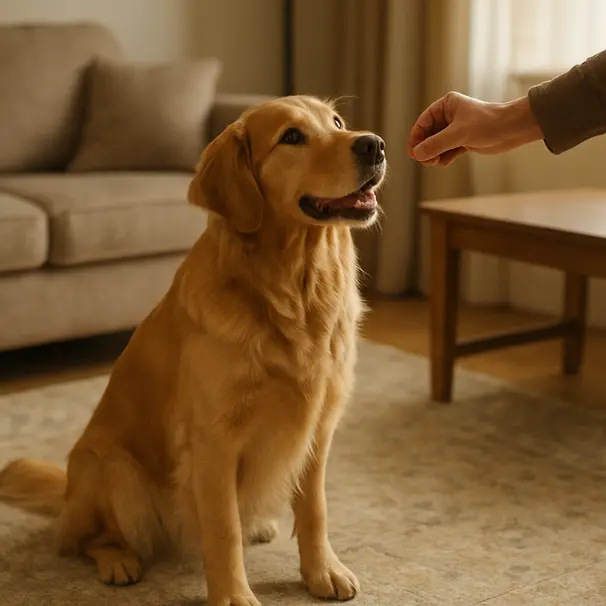
Step-by-Step Exercises for Daily Practice
Here you’ll find concrete exercises easy to incorporate into short, repeated sessions, ideal for puppies and adults.
Exercise A: Ignore and Reward
- Ask a friend to approach the dog calmly. 2) If the dog jumps, the person turns away and ignores until it returns to the ground. 3) As soon as it’s on the ground and calm, the person offers a reward and praise. 4) Repeat 8-12 times per session, 2-3 times a day.
Exercise B: ‘Sit’ Command at the Door
- Before opening the door, ask for a sit. 2) If the dog stays seated, open and reward with a brief game or a pet. 3) If it gets up, calmly close and try again. This teaches that doors only open if behavior is correct.
Exercise C: Alternative Contact
Train an alternative behavior like ‘paw’ or ’nose touch’ on a hand. When the guest enters, request the alternative and reward immediately. Working on a substitute gesture helps channel energy into something acceptable.
Session Duration and Frequency
Short and consistent sessions work best. Think 5-10 minutes per session, 2-4 times a day. It’s important to always end with something positive, even if small, so the dog stays motivated.
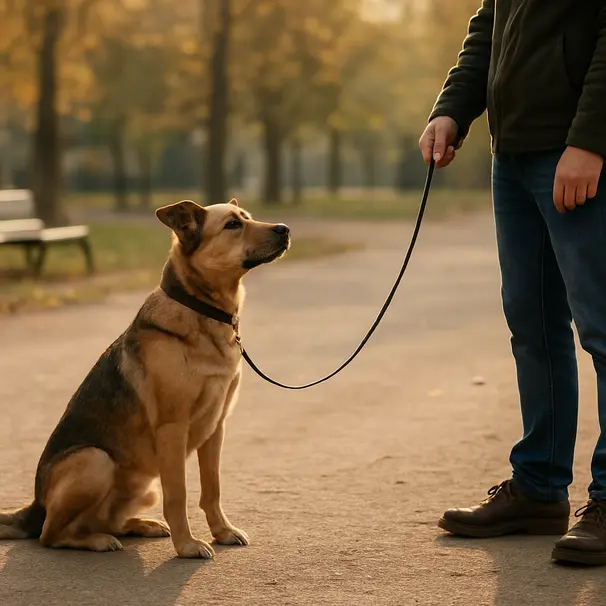
Adapting the Method to Puppies and Adult Dogs
Puppies learn quickly but have little self-control. With them, increase session frequency and use small, appetizing snacks. Do many positive repetitions and be lenient in the first months.
Adult dogs may have established habits. Here persistence pays off: more repetitions, more environmental management, and if necessary, professional help. Even older dogs can learn to greet without jumping, but require longer timeframes.
Common Mistakes and How to Correct Them
A frequent mistake is unknowingly rewarding jumping with immediate petting or attention. Another is using methods that are too harsh, increasing stress and confusion. If you notice regressions related to stress, routine changes, or new family members, return to simpler sessions and increase rewards for correct behaviors.
When to Ask for Help from a Pet Carer or Trainer
If after weeks you see no improvement, or if jumping is accompanied by aggression or anxiety, consider a professional trainer. An experienced pet carer can help with targeted training sessions at home, and can show all family members how to be consistent. On Floofy you can find experienced people for socialization sessions and guided practice.
Practical Tips for Owners and Pet Carers
- Be consistent: every family member must apply the same rules.
- Use immediate rewards: treats, calm voice praise, or a brief game.
- Keep energy low during greetings to reduce excitement.
- Schedule physical exercise before social interaction moments.
- Document progress: brief notes help you see improvements over time.
Routines and Activities to Reduce the Urge to Jump
Many dogs jump because they have excess energy or stress. Providing regular walks, search games, scent exercises, and mental training sessions can decrease the urge to jump. Even brief games, like fetch or food puzzles, can be helpful before social encounters.
How to Manage Visits and Meetings with Strangers
Before guests arrive, have your dog take a walk or play session to lower excitement levels. Tell guests to enter slowly and ignore the dog if it jumps. Alternatively, use a separate area until the dog calms down and demonstrates the ability to respect the required behavior.
Signs You’re Making Progress
Positive signs are frequent responses to the sit command, longer periods of self-control, and the dog’s ability to remain calm in the presence of previously exciting stimuli. Even small improvements like a decrease in jump intensity are good signs. Celebrate successes and keep expectations realistic.
Final Tips and Conclusion
Correcting jumping requires time, patience, and consistency. Use positive techniques, manage the environment, and practice short exercises every day. Remember that every dog is different, and small steps go a long way. If you need help, find a pet carer on Floofy for practical sessions at home: sometimes having an experienced hand nearby speeds up progress.
If you feel frustrated, take a breath and return to the basics: ignore the jump, reward four paws on the ground, teach an alternative like sit. With love and practice, even the most enthusiastic jumps can transform into polite and serene greetings.
Happy training, and remember to enjoy the carefree moments with your four-legged friend while you work together to improve every day.