


Dog sitting & boarding explained
Leaving your dog with someone else can feel like handing over a piece of your heart. It helps to understand the main options, what to expect, and how to prepare so both you and your dog enjoy a calmer, safer break. This guide breaks down dog sitting and boarding in practical, friendly terms, and gives you checklists you can use the next time travel, work, or life calls.

What are dog sitting and boarding?
Dog sitting usually means a carer comes to your home, or occasionally your dog stays in the sitter’s home, and provides care that mirrors everyday life. Visits can be short check-ins, hourly stays, or overnight stays in a home. Sitting is great for dogs who prefer their usual environment or who do best with a familiar routine.
Boarding refers to a facility or a carer who takes multiple dogs into one location, often a kennel, small home-based boarding business, or a dedicated pet hotel. Facilities vary a lot. Some focus on comfort and enrichment, while others prioritize exercise and social time. Boarding can be ideal for social dogs who thrive with lots of activity, or for owners who need guaranteed, full-time supervision.
Key differences at a glance
- Location: Sitters often come to your home, boarding happens at a facility or a sitter’s home with multiple dogs.
- Routine: Sitting can keep your dog in familiar spaces. Boarding usually introduces a new routine and social setting.
- Supervision: Boarding often provides consistent staff coverage. Sitting can be one-on-one or shared among carers.
- Cost: Prices depend on services, duration, and location. Boarding may be cheaper per day for basic care but extra for add-ons.
Which option fits your dog?
Think about your dog’s personality, health, and training. Here are some scenarios to guide you:
- Anxious, elderly, or house-trained dogs may relax best at home with a sitter. Familiar scents and items can reduce stress.
- Highly social, energetic dogs who like other dogs might enjoy a boarding environment with lots of playtime.
- Dogs on medication or special diets need carers who can follow instructions precisely. Both sitters and boarding facilities can do this, but confirm experience first.
- Puppies that are still house-training might do better with a sitter to maintain consistency.
Take time to match care to temperament, not just convenience.
How to choose a trustworthy carer or facility
Finding the right person feels like a small relationship search. Trust and competence matter. Here’s how to narrow choices:
Ask the right questions
- What experience do you have with dogs of similar size, age, and behavior?
- Are you insured and bonded? Do you have certifications in pet first aid?
- How many dogs do you care for at once, and how is supervision handled overnight?
- Can you provide references from past clients?
- What are your emergency procedures and vet contacts?
Inspect the environment
For in-home sitters, check that the space is secure, free of hazards, and that the dog will have a comfortable, quiet sleep area. For boarding, tour the facility. Look for clean runs, safe fencing, shaded outdoor areas, and separate sections for small or shy dogs.
Meet-and-greets are essential
Arrange a short introduction before booking. Watch how the carer interacts with your dog. Does your dog show relaxed body language or signs of stress? A friendly vibe is a good sign. If you can’t visit, request a video call or ask for recent photos from previous bookings.

Safety and health checks
Safety should never be assumed. Confirm these details before your first booking:
- Vaccinations: Ask which vaccines the facility or sitter requires for other dogs in their care. Many require core vaccines and sometimes Bordetella.
- Flea and tick prevention: Check policies to avoid introducing pests.
- Vet agreements: Make sure the carer will take your dog to your vet or an emergency clinic and has permission to authorize treatment.
- Medication handling: Provide clear written instructions and a schedule. If injections are needed, confirm the sitter’s experience.
Consider leaving a medical summary with the carer. Use calm language and highlight anything unusual about your dog’s needs so it’s easy to follow under pressure.
Preparing your dog for a successful stay
Preparation helps reduce separation stress and sets everyone up for a smoother experience.
Two weeks before
- Start short practice sessions with the sitter or brief trial days at the boarding location.
- Refresh basic training. Reinforce cues like sit, stay, come, and the place to rest.
- Check behavior issues. If your dog is reactive or fearful, work on gradual exposure or consider professional help.
One week before
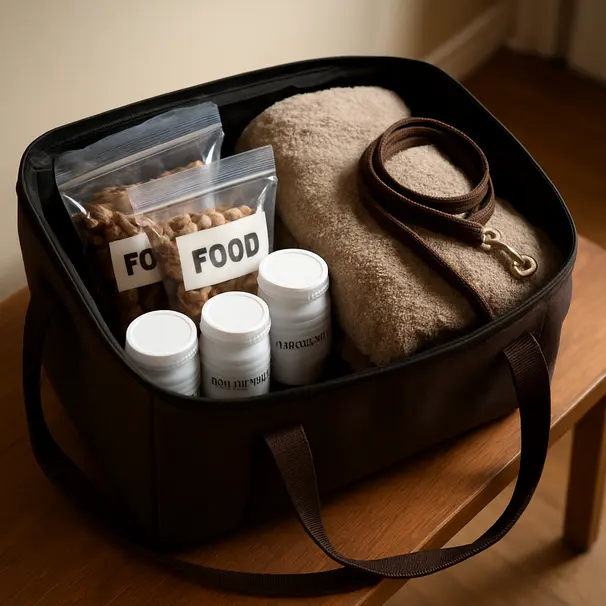
- Pack a familiar blanket and a few non-destructible toys. Familiar scents soothe dogs.
- Prepare food in labeled bags with feeding times and portions.
- Share your vet contact, emergency contacts, and important routines.
The day you leave
- Exercise your dog before departing so they’re tired and ready to relax.
- Keep goodbyes brief. Long, emotional farewells can heighten anxiety.
- Leave a favorite item with your scent to comfort them.
What to expect during the stay
Clear communication keeps surprises low. Ask how the sitter or facility will update you. Common options include: daily photos, brief texts, or longer check-in calls. If you find yourself needing more reassurance, ask for extra photo updates, but try to balance your own peace of mind with your dog’s routine.
Watch for these signs after the stay to gauge how it went:
- Normal appetite and energy indicate comfort.
- Signs of stress can include withdrawn behavior, excessive panting, or changes in elimination. Most signs resolve quickly, but consult your vet if they persist.
Cost factors and budgeting
Prices vary regionally and by service level. Typical factors that affect cost:
- Duration and timing: Holiday periods often cost more.
- Services: Walks, training, grooming, or medication add to the base fee.
- Location: Urban areas may be pricier.
- Group vs private care: One-on-one sitting can cost more than group boarding.
Always ask for a full quote in writing. Clarify cancellation policies and any extra fees for late pickups, added walks, or emergencies.
Special situations and sensible choices
- Multi-dog households: Check whether sitters accept multiple dogs and if there is a multi-dog surcharge.
- Dogs with separation anxiety: A slow reintroduction, trial stays, and a predictable routine can help. Consider daytime check-ins or consistent overnight sittings.
- Reactive dogs: One-on-one sitting may be safer than group boarding. Ask carers about experience with training plans and management techniques.
Bringing your dog back home: settling in
Give your dog space to readjust. Keep the first day calm, with familiar routines and extra affection. Expect a bit of clinginess or tiredness after an active boarding stay. If issues last more than a few days, speak to your vet or a behavior professional.
Quick checklists you can use
For choosing a sitter or facility
- References and reviews checked
- Proof of insurance and first aid
- Clear emergency plan and vet contacts
- Vaccination and parasite prevention policy confirmed
- Meet-and-greet scheduled
What to pack for your dog
- Food labeled with feeding instructions
- Medication and administration notes
- Collar with ID tag and a backup microchip number
- Favorite bed, blanket, and a small selection of toys
- Recent photo and a short personality note for the carer

Final tips from fellow dog lovers
- Book early for holiday travel. Good carers fill up fast.
- Trust your instincts. If something feels off during a meet-and-greet, keep looking.
- Build a relationship with one or two carers. Familiar faces make future departures easier.
- Consider a trial night away before a long trip. It’s the best way to learn what works.
Leaving your dog in someone else’s care can be an emotional step. With the right questions, a little preparation, and clear communication, most transfers go smoothly. The best outcome is a relaxed dog and a relaxed owner. You deserve peace of mind while you’re away, and your dog deserves care that keeps them safe and happy.
If you want a printable checklist or a short script of questions to ask a sitter, Floofy has templates to help you prepare. Happy travels, and give your dog an extra hug from all of us at Floofy.