

Quick note before we start
Cat urine smell can be stubborn and upsetting. You’re not alone if you’ve walked into a room and felt that sharp, sour tang. The good news is that with the right detective work and cleaning steps, you can find the source and get rid of the odor for good. This guide is written with real homes, busy schedules, and curious kitties in mind.
First: find the source
A lot of times the hardest part isn’t cleaning, it’s locating where the urine is hiding. Cats are small and nimble; they find odd nooks and leave tiny deposits that soak into fibers.
Where cats tend to go
- Soft, absorbent spots: rugs, sofas, cushions, mattresses and pet beds. These trap smell.
- Edges and corners: carpet seams, under baseboards, behind furniture.
- Vertical surfaces: low-painted walls and baseboards, especially if a cat sprayed.
- Outdoor entry points: door mats or near doors where indoor/outdoor cats pause.
Tools that help
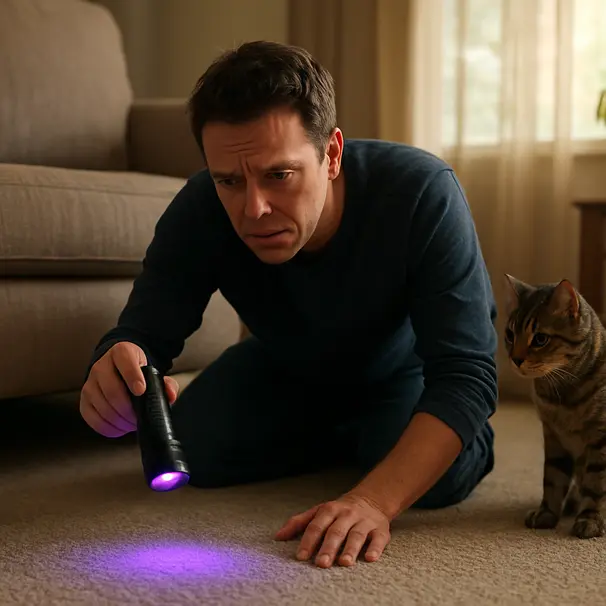
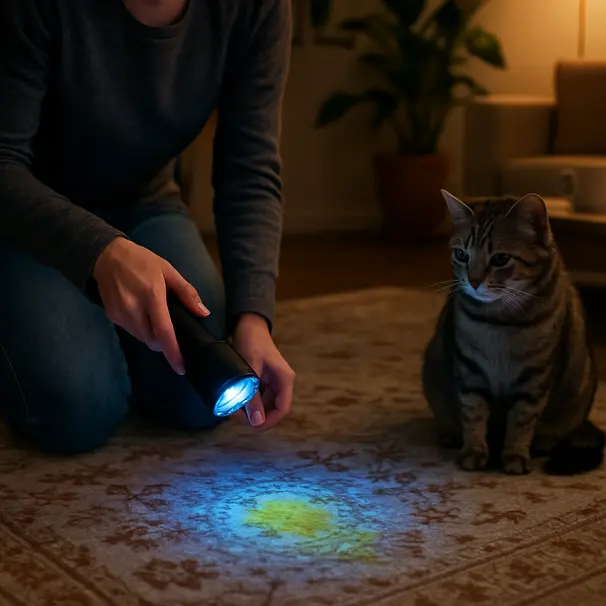
- UV (black) light: a quick, inexpensive way to spot dried urine at night or in a dim room. Move slowly and look for yellow-green stains.
- Your nose: it’s not as fanciful as it sounds. Get down to sniff around baseboards and cushions.
- Paper towels and clean finger: press lightly to test for dampness in suspicious areas, then smell the towel after a few minutes.
Why the smell is so strong
Cat urine contains proteins and crystals that bond to fabrics and finishes. When they dry, they can remain trapped and create a lingering scent that seems worse over time. That’s why surface cleaning alone often won’t work. You need to actually break down the molecules that cause the odor, so they can be removed rather than masked.
Clean vs neutralize: pick the right approach
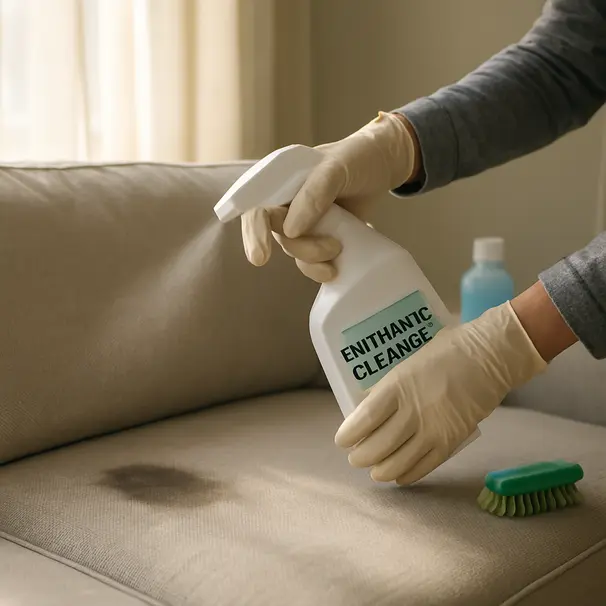
There’s a difference between getting something to look clean and actually removing the smell. Products that just mask odors tend to fail, because the underlying proteins stay behind. Enzymatic cleaners are your best bet. They contain biological enzymes that break down urine components into tiny parts that wash away.
What to avoid
- Ammonia-based cleaners: they can smell similar to urine and may encourage a cat to re-mark. Avoid them on urine spots.
- Straight bleach on fabrics: it can set colors and damage fibers, and it won’t neutralize urine molecules properly.
- Heavy scrubbing: this pushes urine deeper into padding or upholstery.
Step-by-step cleaning for common surfaces
Below are practical routines you can follow for different materials. Test any cleaner on a hidden spot first.
Hard floors (tile, vinyl, sealed wood)
- Blot up any fresh urine with paper towels.
- Mix a mild detergent solution and wipe the area, then rinse with clean water.
- Apply an enzymatic cleaner according to manufacturer instructions, let it sit long enough to work, then dry thoroughly.
- If odor persists, repeat. For sealed wood, pull up a grout line or seam and let it dry well to prevent trapping moisture.
Carpets and rugs
- Blot fresh spots immediately, pressing down gently to absorb without rubbing.
- Sprinkle baking soda over the dry area and let it sit 15–30 minutes to absorb odors, then vacuum.
- Apply an enzymatic cleaner, saturating the spot so enzymes reach the padding beneath. Follow product timing.
- For deep stains or old odors, consider a rental carpet extractor using an enzymatic solution or hire a pro. Padding may need replacing if the smell is embedded.
Upholstery and cushions
- Blot with paper towels to absorb as much as possible.
- Use a spray enzymatic cleaner—do not over-saturate fragile cushions. Work from the outside toward the center.
- After treatment, prop cushions to dry fully in a warm, ventilated area.
- If the cushion has removable covers, wash according to care labels after enzyme treatment.
Mattresses and beds
- Blot any wetness immediately.
- Sprinkle baking soda, let it sit for several hours, then vacuum.
- Use an enzymatic spray; for deep permeation, lift the mattress if possible to treat the underside and seams.
- If the mattress still smells after multiple treatments, consider replacing it. Mattresses trap moisture and molecules deep inside.
Painted walls and baseboards
- Wipe with a mild soap and water mixture, then rinse.
- Use enzymatic cleaner on the affected area and allow to dry.
- If paint has absorbed odors and cleaning doesn’t help, repainting with an odor-blocking primer may be necessary.
Homemade solutions: what can help and what to avoid
If you prefer DIY while waiting for an enzymatic cleaner, a diluted white vinegar solution (one part vinegar to three parts water) can help neutralize smell temporarily. Vinegar may help break down odors on non-delicate surfaces, but it won’t fully remove urine proteins.
A few cautions
- Don’t mix vinegar with bleach or hydrogen peroxide.
- Hydrogen peroxide mixed with baking soda and a few drops of dish soap can remove stains, but test for colorfastness first and use sparingly.
- Enzymatic cleaners remain the gold standard for actually removing urine odor, so use them as soon as you can.
Deep cleaning and when to hire a pro
If the smell persists after careful cleaning, or the affected area is large, professional help may save time and heartache. Pros can:
- Use industrial enzymatic treatments and hot water extraction designed for pet odors.
- Replace carpet padding and treat subflooring if needed.
- Safely clean mattresses or advise on replacement.
A professional is also a good choice for antique rugs, delicate upholstery, or when you need a thorough treatment before putting a home on the market.
Preventing repeat marking
Cleaning is only half the battle. Cats may return to the same spot if they can still smell themselves, or if the reason they peed there hasn’t been addressed.
Medical check first If your cat starts peeing outside the litter box suddenly, consider a vet visit. Urinary tract infections, crystals, and pain may cause a cat to avoid the box. I’m not a vet, but a check-up can rule out health causes.
Litter box basics
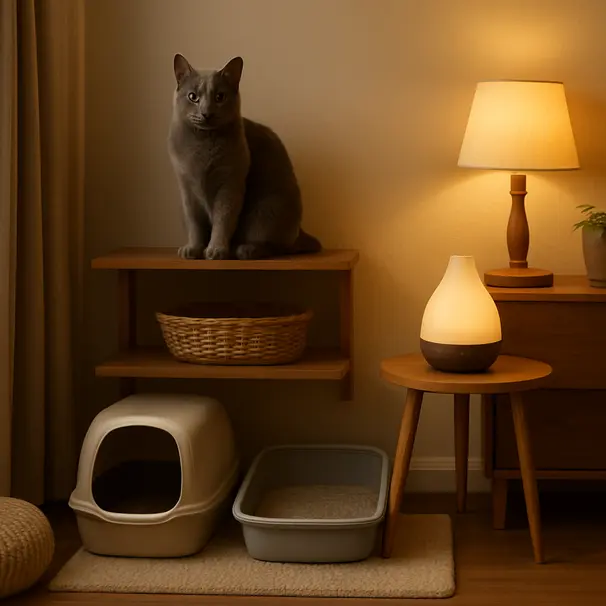
- Keep at least one box per cat, plus one extra. Cats appreciate options.
- Place boxes in quiet, accessible locations. Avoid noisy appliances and busy hallways.
- Scoop daily and do a full clean weekly.
- Try different litter textures and depths if your cat seems picky.
- Open litter boxes can be easier for many cats; hooded boxes hide smells but may be rejected by nervous cats.
Environmental and behavioral tips
- Enrich the home with vertical spaces, window perches, scratching posts and playtime. A busy, engaged cat is less likely to mark out of boredom.
- Reduce stressors: new pets, changes in routine, or neighborhood animals outside a window can trigger marking.
- Use pheromone diffusers like Feliway in rooms where marking happens, they can help some cats feel calmer.
- If marking is territorial, create positive associations with the room: treats, play sessions, and rewards.
Multi-cat households Keep resources spread out: multiple litter boxes, feeding stations, and resting spots. Competition or tension between cats is a common reason for marking.
Quick checklist for urgent odor removal
- Find the spot with a UV light or smell test.
- Blot, don’t rub, any fresh urine.
- Use an enzymatic cleaner and follow instructions.
- Allow surfaces to dry completely.
- Repeat treatment if necessary, and vacuum baking soda after it’s left long enough.
- If the smell lingers, consider professional cleaning or replacing padding.
A few practical product tips
- Look for pet-specific enzymatic cleaners with positive reviews for urine removal.
- Avoid products marketed as “odor neutralizers” that are just fragrances.
- For carpet extractors, use solutions compatible with enzymes to maintain effectiveness.
When the smell keeps coming back
If cleaned areas still smell or your cat goes back to the same place, do these checks:
- Is there a medical issue? Book a vet appointment.
- Is the litter box clean and appealing? Adjust location, style or litter.
- Are there stressors you can reduce? Consider environmental changes or calming tools.
- Could another cat be triggering marking? Try separation and gradual re-introduction.
Final thoughts
Removing cat urine smell fast is doable with calm detective work, enzyme-based cleaning, and small changes to your cat’s routine. The process can be a bit of trial and error, and that’s okay. Be patient, follow up treatments, and give your cat positive signals about where to go.
If you ever feel overwhelmed, a trusted pet carer from Floofy can help with clean-up, litter box maintenance, or behavioural observation. Sometimes a fresh set of hands and eyes is exactly what both you and your cat need.
Take a deep breath, grab an enzymatic cleaner, and know that this is one of those home problems that gets better with each careful step.