

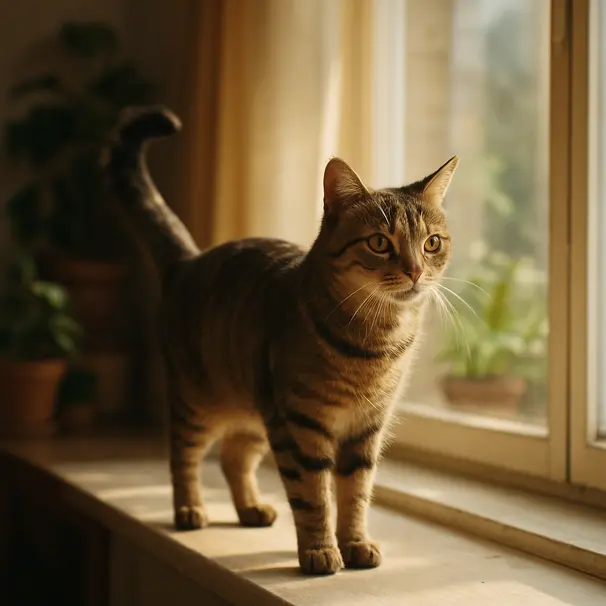
Introduction: Your cat’s tail is talking
If you’ve watched a cat for more than five minutes, you know the tail can be the most dramatic part of them. It can sweep like a conductor’s baton, puff up like a dandelion, or twitch in ways that make you wonder what just happened. The good news is tails are an honest, readable part of feline body language. In this guide we’ll translate common tail positions into everyday advice for owners and carers. You’ll learn how to spot playful signals, detect stress early, and respond in ways that help your cat feel safer and happier.
We wrote this for real people who live with cats and for carers who look after them. Expect practical tips, clear signs to watch for, and friendly reminders about safety and when to ask a vet for help.
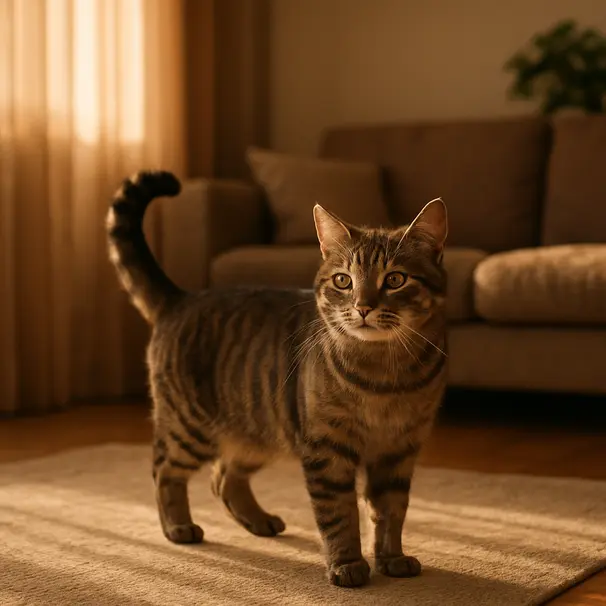
A confident cat greets with a high, curved tail.
Why the tail matters
Unlike dogs, who rely heavily on facial expressions and barks, cats communicate a lot with the rear end. The tail adds nuance to posture and vocalisation. A tail held high can be an invitation, while a tucked tail often means fear. Learning these signals helps you avoid misunderstandings, reduce stress during visits from carers, and support better interactions when strangers or new pets are around.
Basic tail positions and what they commonly mean
Below are the core tail positions you’ll see most often, with simple guidance on how to respond. Remember, context matters: look at the ears, eyes, pupils, and overall body posture too.
Tail held high, tip slightly curved
Meaning: Confident, friendly, happy. This is often a relaxed greeting posture. The cat feels secure and open to interaction.
What to do: Approach calmly, talk softly, and offer a gentle pet if the cat seeks contact. If you’re a carer meeting this cat, a high tail is a green light for friendly interaction.
Vertical tail with a quivering tip
Meaning: Often excitement or marking-like greeting. Some cats quiver when a beloved person returns home.
What to do: Allow the cat to lead. This quiver is generally positive, so enjoy the enthusiasm but avoid overwhelming the cat with sudden movements.
Tail wrapped around the body or another cat
Meaning: Contentment or social bonding. A tail curled around a human’s leg can be a sign of affection.
What to do: Return the gentle energy with calm interaction. Carers should recognize this as a sign the cat is comfortable around people present.
Tail twitching at the tip
Meaning: Mild interest or concentration. You might see this when a cat watches birds through a window or focuses on a toy.
What to do: This is a great time for play. Offer a wand toy and let the cat stalk and pounce. Keep sessions short and fun to prevent overstimulation.
Low tail, tucked under the body
Meaning: Fearful, anxious, or unsure. The cat is trying to make itself small and less noticeable.
What to do: Give space and avoid forcing interaction. Speak softly and provide an escape route or high perch. If you are a carer, document the behaviour and note triggers for the owner.
Tail puffed up and bristled
Meaning: The cat feels threatened or defensive. Puffing increases apparent size to warn off a threat.
What to do: Back off immediately and remove potential stressors. Do not try to pick the cat up. Allow the cat to calm down in a quiet area. If puffing persists alongside other worrying signs, consider consulting a vet or behaviourist.
Tail thrashing or lashing
Meaning: Irritation, overstimulation, or focused hunting mode. Sudden whipping motion can precede a swat.
What to do: Stop petting or play before it escalates. Give the cat space and redirect energy to a toy. For carers, take notes on what preceded the lash to help owners understand triggers.
Tail flicking while moving
Meaning: Determination or focused movement. You might see this when a cat navigates a narrow path or stalks prey.
What to do: No action needed. Observe and appreciate the cat’s concentration. If you’re moving the cat between spaces, be gentle and patient.
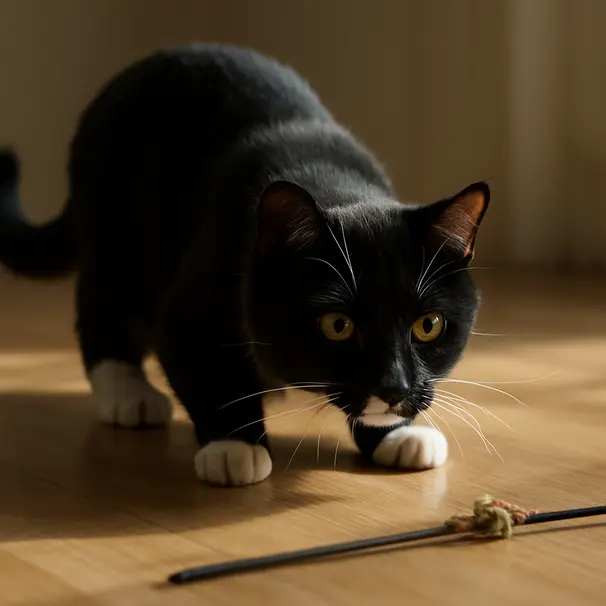
Playful stalking shows a twitching tail tip.
Tail talk during play and affection
Play changes everything about tail language. A playful cat often combines a high tail, tip twitch, and relaxed body. Fast flicks or sudden pounces mean the cat is in active hunting mode rather than annoyed. Learning the difference helps you keep play positive.
Look for the following during play: crouched posture with tail low but tip twitching means stalking. Exaggerated pounces and a high, quivering tail on approach often mean eagerness. If the tail suddenly thrashes, that’s a cue to wind down the session.
Practical play tips:
- Keep play sessions short and finish on a positive note.
- Use wand toys so the cat can target safely and avoid hands as direct prey.
- Rotate toys to prevent boredom and keep tail movements enriching.
Signs of stress, fear and aggression
Tails are a strong indicator of a negative emotional state. Watch for tucked tails, bristled fur, a rigid, low-held tail, and rapid lashings combined with flattened ears or wide pupils. These patterns can signal fear or readiness to defend.
How carers should respond:
- Stop any interaction immediately and allow the cat to retreat.
- Remove other pets from the area if possible.
- Avoid eye contact and sudden movements.
- Offer a safe hiding spot or elevate the cat to a high perch.
If a cat injures another pet or person, seek veterinary care for injuries. For frequent aggression, consider consulting a vet or an animal behaviourist, as medical or environmental factors may be contributing.
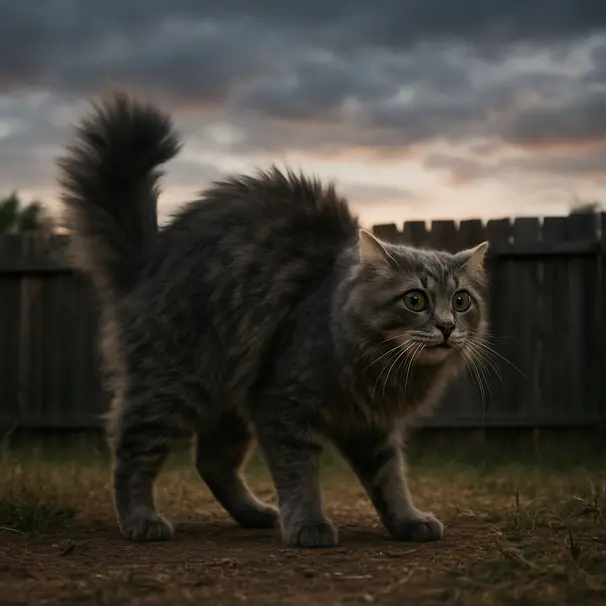
A stressed cat puffs its tail to look larger.
Tail clues to health problems
Some tail movements may hint at discomfort or pain. Repetitive tail dragging, a tail held unusually limp for a prolonged time, or reluctance to move the tail could indicate injury. Sudden changes in tail carriage after a fall or traumatic event may also warrant attention.
What to consider:
- Does the cat avoid being touched near the tail or lower back?
- Is there swelling, obvious pain, or changes in grooming habits?
These signs do not diagnose a condition. Consider a veterinary check if you notice persistent or sudden unusual tail behaviour. A vet can rule out injury, nerve damage, or other medical causes.
Practical tips for owners and carers
Here are concrete steps to make tail-reading part of your routine caregiving practice.
- Observe for five minutes a day. Pick moments like breakfast or playtime and note tail positions alongside ear and eye cues.
- Keep a simple log. Short notes like ‘high tail, relaxed ears, purring’ help spot trends over weeks.
- Respect the cat’s exit routes and safe spaces. A cat with a tucked tail needs clear paths to escape stressors.
- Communicate with team carers. If you leave notes about tail signals the cat showed, incoming carers can adapt their approach.
- Use positive redirection. If a tail thashes in play, switch to a quieter toy and praise calm behaviour.
Introducing new carers
If you use a pet care service, set expectations. Tell carers about your cat’s tail cues and preferred approach. A note like ‘If her tail tucks, give her space and use treats to reintroduce yourself’ can make visits smoother.
Travel and carrier tips
A tucked or tightly wrapped tail in a carrier suggests fear. Line carriers with a favorite blanket and add a calming pheromone spray before travel. Allow the cat time to re-acclimate after arrival and let them step out when they feel ready.
Quick cheat sheet for common tail signals
- High, tip curved: Friendly, confident.
- High, quivering tip: Excitement or greeting.
- Wrapped around you: Affection, trust.
- Tip twitching: Focused interest or light irritation.
- Tail tucked: Fear or submission.
- Puffed tail: Defensive, frightened.
- Lashing tail: Anger, overstimulation, or strong focus.
When to seek professional help
If tail-related behaviours are new, severe, or accompanied by other worrying signs like hiding, loss of appetite, or aggression, consider a vet visit. Avoid making medical assumptions. A professional can help rule out pain, neurological issues, or underlying illness. Behaviourists can help when patterns are persistent and impacting quality of life.
Final thoughts: Read the whole cat
Tails are a fantastic shorthand, but they are part of a bigger conversation. Use tail signals as an entry point to understanding your cat’s emotional state. Combine what the tail says with the ears, eyes, and the cat’s recent routine to build a fuller picture.
Most of all, be patient. Cats have subtle ways of communicating and they appreciate gentle, respectful responses. When carers and owners share observations and respond thoughtfully, cats feel safer and happier. If you need extra help, connect with a trusted carer or behaviour professional through Floofy to get personalized support. Happy tail watching.

Calm recovery after vet visit, tail relaxed again.