

Introduction
Cats speak in a language of subtle signals, small movements and scent. For pet carers and owners, learning to read those cues is like learning a quiet, beautiful dialect. With a little patience and observation you can make everyday life gentler and more enjoyable for your cat, and calmer for you.
This post covers the most useful ways cats communicate, from posture and tails to purrs and scent marking. You’ll find practical tips for carers who look after other people’s pets, and reminders for owners who want consistent care across homes. Keep a soft tone, move slowly, and consider each cat as an individual with unique preferences.
Reading Body Language: The Basics
Cats use their whole body to show how they feel. Watch the ears, tail, eyes and overall posture to understand mood and intent.
Ears
- Forward and relaxed: curious or content.
- Slightly turned or twitching: listening, mildly alert.
- Flattened against the head: fear, anger or strong irritation.
Tip for carers: if a cat flattens its ears when you approach, give them space and try again later with a calm voice.
Eyes and pupils
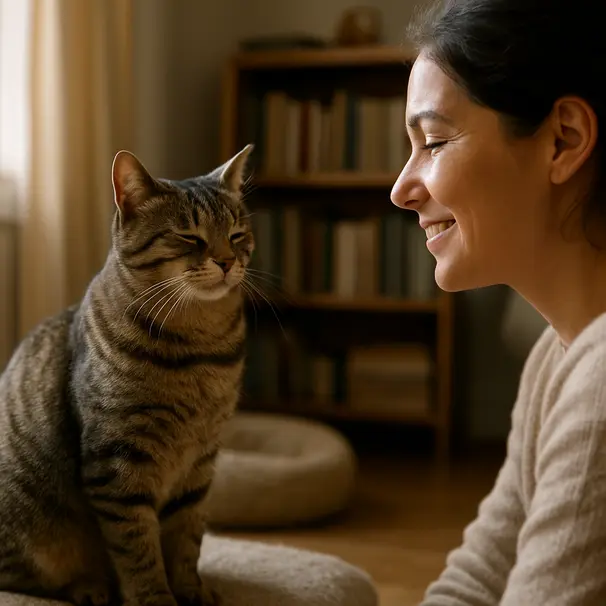
- Slow blink: trust and comfort. Slow-blink back to say “I’m friendly.”
- Narrowed eyes: relaxed or sleepy, sometimes content.
- Wide eyes with dilated pupils: excitement, fear, or surprise. Context matters.
Tail signals
- Upright tail with a small curl: friendly greeting.
- Tail twitching at the tip: focused, maybe playful or interested.
- Thrashing or puffed tail: agitation or fear.
Posture and movement
- Relaxed body, loose limbs: comfortable.
- Crouched low with ears back: fearful or defensive.
- Sideways posture with hackles up: strong defensive posture, may escalate.
Observe clusters of signals rather than single cues. A relaxed tail but tense ears might mean the cat is unsure, not wholly comfortable.
Vocal signals: What different sounds often mean
Cats have a surprisingly wide vocal palette. Vocalizations vary by individual and breed, but there are common patterns to notice.
Meows
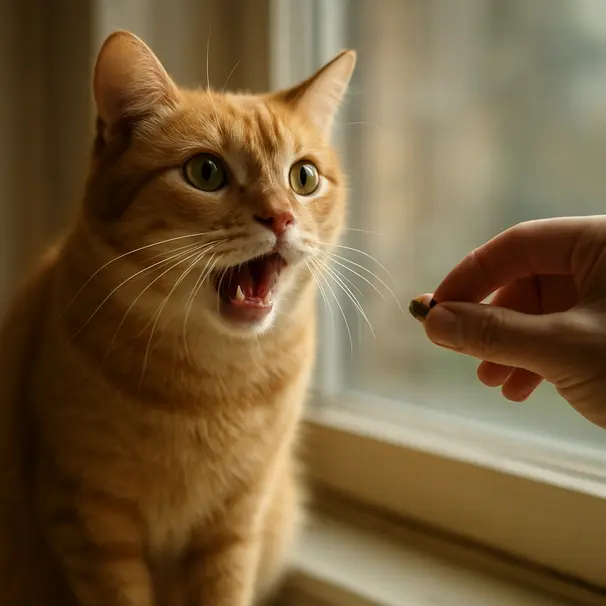
Meows are largely directed at humans. Short, high meows can mean “hello” or attention seeking. Repeated, persistent meowing might indicate hunger, anxiety or a medical issue, especially in older cats. If meowing is new or excessive, consider a vet check.
Purring
Purring often signals contentment, but cats may also purr when stressed, injured or anxious. Purring can have a self-soothing function. If you notice purring paired with hiding, loss of appetite or other changes, keep an eye on health and consult a vet if needed.
Hisses and growls
Hissing and growling are clear warnings. They indicate a cat feels threatened or needs space. Back away slowly, avoid direct eye contact, and let the cat set the pace for any next interaction.
Chirps and trills
Many cats use these sounds as friendly attention-getters, often when they want you to follow them or look at something interesting.
Scent and marking: the invisible conversation
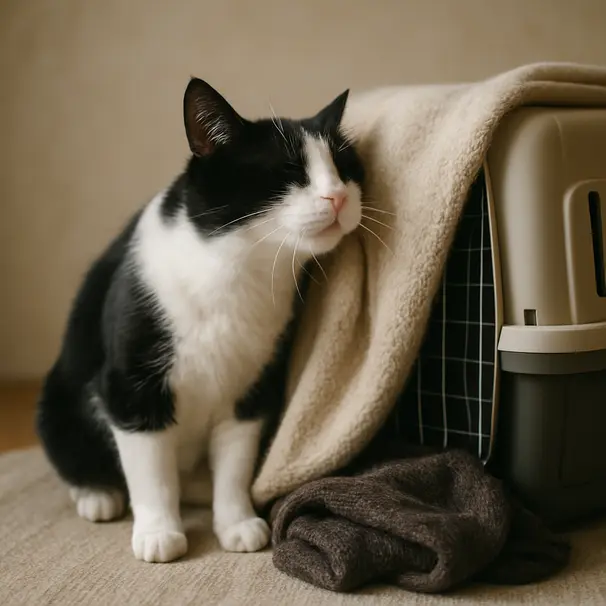
Scent is a major part of cat communication. They leave messages with urine marking, but also with rubs and cheek head-butting called bunting.
- Cheek rubbing deposits facial pheromones, marking people and objects as safe. When a cat rubs a carrier or a carer’s hand, they’re claiming familiarity.
- Spraying or inappropriate urination can signal stress, territory issues, or medical problems. This behavior may need environmental changes or veterinary input.
Practical scent tips
- For carers staying in a client’s home, keep your scent neutral at first. Let the cat initiate bunting rather than forcing contact.
- Use soft, familiar-scented blankets when transporting a cat. A cloth with the owner’s scent can calm a nervous pet.
Social behaviour and bonding
Cats are often misunderstood as solitary, but many are highly social with people and other animals. Social cats show relaxed grooming, sleeping near companions, and inviting play.
- Mutual grooming between cats is a strong bond signal.
- Offering the belly is not always an invitation for belly rubs. It can be a vulnerable position that shows trust, but some cats won’t tolerate touch there.
For carers meeting a new cat
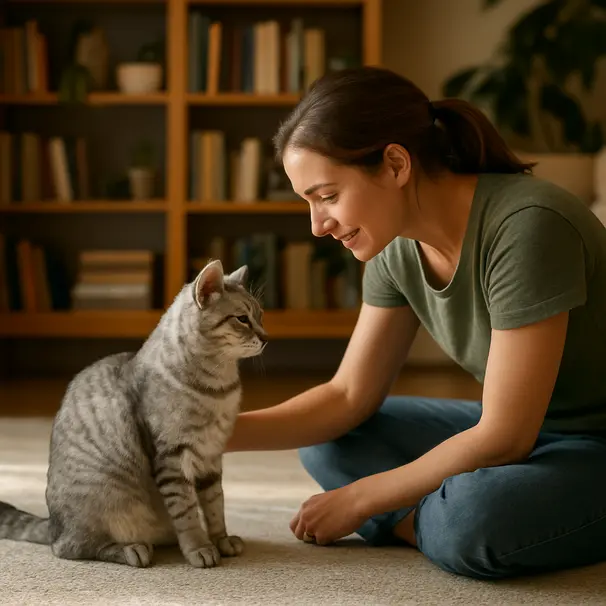
- Let the cat approach you. Squat down to seem smaller and less intimidating.
- Offer a finger for sniffing rather than reaching over the cat.
- Respect the cat’s boundaries. If they walk away, try again later.
Stress signals and how to reduce them
Cats show stress in many subtle ways: hiding, reduced appetite, overgrooming, sudden litter box changes, or increased vocalisation.
Ways carers can help reduce stress
- Keep routines consistent, including feeding times and where litter boxes are placed.
- Provide vertical spaces like shelves or cat trees. Cats often feel safer above ground level.
- Offer hiding boxes and quiet zones away from busy household areas.
If a stressed cat shows sudden behaviour changes, consider suggesting a vet visit. Stress can be linked to medical issues and a professional can help identify causes.
Gentle handling and introductions: Practical steps for carers
Whether you’re a regular walker or watching a cat for a week, small habits make a big difference.
First 10 minutes in a new home
- Let the cat approach you, do not chase.
- Sit quietly and allow sniffing. Keep your hands low and slow.
- Offer a tasty treat on the floor to build positive association.
Picking up a cat safely
- Only pick up if the cat is comfortable. Support both chest and hindquarters.
- Keep movements slow, and hold the cat close to your body to reassure them.
- Avoid sudden turns or lifting above shoulder height.
Grooming and handling
- Brush on a regular but gentle schedule. Many cats enjoy short grooming sessions.
- Watch for signs of discomfort like tail flicking or ear flattening. Stop if the cat becomes tense.

Play and enrichment: Communicate with action
Play is a conversation in motion. It helps with bonding and lets cats express natural behaviours like stalking and pouncing.
- Use wand toys to keep your hands safely out of reach.
- Offer puzzle feeders to encourage foraging behaviours, which can reduce boredom.
- Vary play sessions—short bursts of activity several times a day mimic hunting patterns.
For carers in a client’s home, ask about favourite toys and play preferences. Some cats prefer slow, teasing play; others like fast, chase-based games.
Common problem behaviours and gentle solutions
Some behaviours are frustrating, but they usually have a reason. Try to diagnose the cause before reacting.
- Scratching furniture: provide multiple scratching posts, encourage use with catnip and praise.
- Avoiding the litter box: check box cleanliness, location, type of litter, and health. If the change is sudden, suggest a vet visit.
- Aggression toward people or other pets: slow, controlled introductions and interactive play can help. If aggression continues, a behaviourist may be needed.
Avoid punishment. Punishing a cat often increases fear and can worsen problems. Positive reinforcement, gradual desensitisation and environmental enrichment are better long-term strategies.
Notes for pet owners working with carers
Consistency is key. Cats thrive on predictable routines and familiar scents.
- Leave clear notes about feeding times, favourite toys, and medical quirks.
- Show carers where safe hiding spots and preferred sleeping areas are.
- Consider meeting the carer together before relying on them, so the cat can learn the new person in a low-pressure setting.
When to seek professional help
If you notice sudden behaviour changes, persistent hiding, loss of appetite, or inappropriate elimination, consider a vet check. For ongoing behaviour challenges, a qualified feline behaviourist can help create a tailored plan. Always choose professionals who use reward-based methods.
Quick reference: Read a few common signals
- Slow blink: friendly, try slow-blinking back.
- Tail high: greeting and confidence.
- Flattened ears and hiss: give space immediately.
- Repetitive meowing: could be attention, hunger, or medical needs.
Final tips for carers and owners
- Move calmly, speak softly, and let cats set the pace.
- Keep interactions short and positive during first meetings.
- Use scent and familiar objects to reduce stress during travel.
- Communicate clearly with owners about routines and any changes you observe.
Cats are endlessly expressive, even when they seem quiet. The more you watch and respond kindly, the stronger your relationship will become. With awareness, patience and a few practical habits, carers and owners can give cats the secure, affectionate lives they love.
If ever in doubt about a cat’s health or safety, consider contacting a veterinarian for advice.