

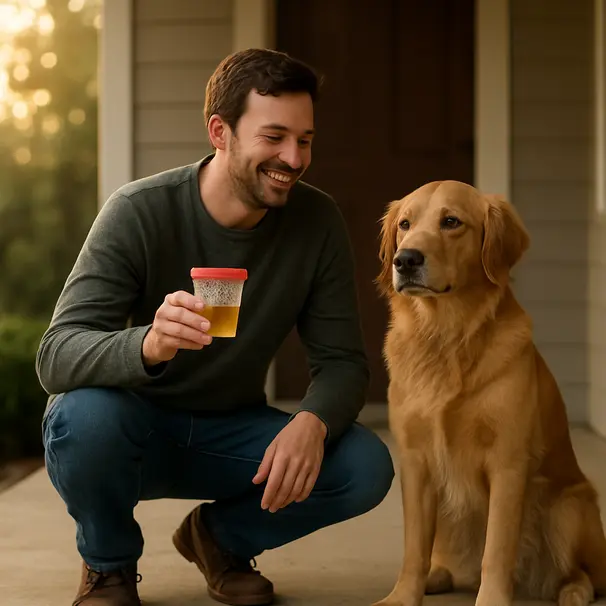
A friendly start
Collecting a urine sample from your dog doesn’t need to be stressful. With a calm voice, a few supplies, and some patience, you can get a sample that may help your vet check for infection, crystals, or other concerns. This article walks you through practical, step-by-step methods, plus gentle ways to keep your dog relaxed and cooperative.
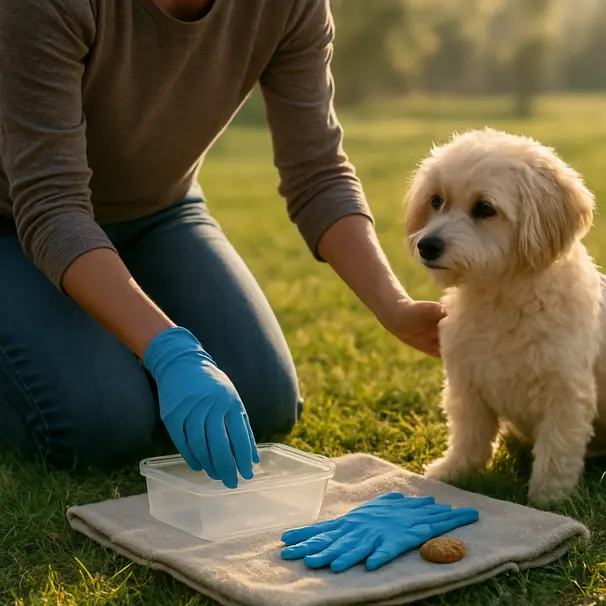
Why your vet might ask for a urine sample
Vets ask for urine samples for many reasons, and having a clean sample can speed up diagnosis. A urine test can give clues about urinary tract infections, kidney function, hydration, and certain metabolic issues. I always say a small sample can provide big answers, and bringing one in can sometimes save a return visit.
Things to keep in mind, gently: a vet will interpret results alongside your dog’s history, physical exam and possibly other tests. If your vet requests a sample, consider doing it at home if you can. It often helps to collect the sample as close to the appointment as possible, usually within a few hours.
What you’ll need
Gathering supplies beforehand makes the whole process smoother. Here are the essentials:
- Sterile urine container from your vet, if available. If not, a clean wide-mouthed container will work temporarily.
- Disposable gloves, to keep things hygienic.
- Plastic cling film or a shallow ladle for tricky dogs.
- Paper towels and some treats for positive reinforcement.
- A small cooler bag or insulated container, or a sealed zip-top bag to transport the sample.
- Pen and a note with your dog’s name, the time of collection, and any medications your dog is on.
If your vet provided a special kit, follow their instructions first. Sterile containers are best, because they reduce contamination risk.
Before you start: a short prep routine
Take a few minutes to set the scene. Dogs pick up on our energy, so a calm approach helps.
- Choose a quiet time, away from other pets.
- Wear clothes you don’t mind getting messy.
- Keep treats handy, preferably small, soft ones that are quick to eat.
- Keep the container covered until you need it, to avoid dust or insects getting in.
If your dog is nervous outside, consider collecting indoors on a pee pad. If your dog usually urinates outdoors, plan for a spot where they feel comfortable and you can move quickly.
Method 1: The catch-in-a-container technique (for cooperative dogs)
This is the easiest method when your dog lifts a leg or squats reliably and lets you approach.
- Put on gloves and remove the container lid. Hold the container with your thumb on the bottom and fingers supporting the side.
- Ask your dog to go to their usual spot. Keep voice gentle and encouraging.
- When your dog begins to urinate, gently bring the container under the stream to catch mid-flow urine. Aim to catch a midstream sample rather than the first drop, if possible.
- Fill about one third to half of the container. Avoid touching the inside of the lid or rim.
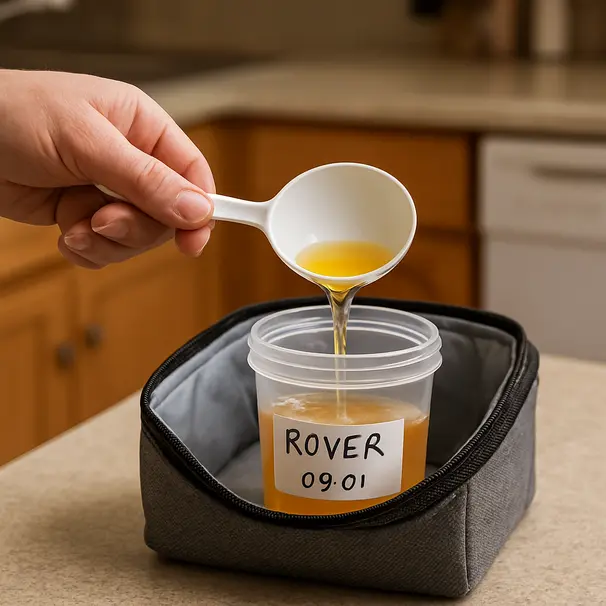
- Close the lid securely, wipe any outer spills with a paper towel, and place the container in the cooler bag or zip-top bag. Label with the time and your dog’s name.
This method works well for dogs who are used to being handled during walks. If your dog is quick or shy, try another method below.
Method 2: Using a ladle or disposable tray (good for small dogs or shy pets)
A ladle, a disposable aluminum pie tin, or a clean plastic tray can make catching urine easier for dogs that squat close to the ground.
- Have the ladle or tray ready and covered with cling film if you prefer. Cling film makes pouring into the sterile container simpler.
- When your dog begins to urinate, slide the ladle or tray beneath them to catch the flow. Try to collect midstream.
- Pour the urine into the sterile container without touching the rim. If you used cling film, lift the film and pour carefully.
- Secure the lid and label the sample.
This approach reduces the need to get the container directly under the dog, which some pups find intimidating.
Method 3: Pee pad or indoor collection (for apartment dogs)
If your dog uses pee pads or has an indoor bathroom routine, you can still collect a sample.
- Place a clean pee pad in a quiet area. If you can encourage your dog to use it, great.
- As soon as your dog urinates, tilt the pad so the urine pools in one corner. Use a disposable syringe without a needle, or a small ladle, to draw off the urine.
- Transfer the urine into the sterile container, seal and label.
Collecting from a pad may introduce contaminants, so tell your vet how the sample was collected. They may still find the information helpful.
Special tips for male dogs
Male dogs that lift a leg can be a bit more challenging because the stream can be higher and quicker.
- Have the container or ladle at hand and ready before you arrive at the spot.
- If your dog lifts his leg unpredictably, practice a gentle cue like “go potty” while holding the container at a comfortable height.
- For small males, holding a shallow container close to the ground may still work. Keep movement slow and steady.
Special tips for female dogs
Female dogs who squat are usually easier to catch midstream.
- A ladle or tray often fits neatly under the belly to catch the stream.
- If your dog is shy, ask a trusted friend or carer to help keep her calm while you collect.
Transfer and transport: getting the sample to the clinic
How you store and move the sample matters.
- If the sample will be used within a couple of hours, keep it cool but not frozen. A small cooler bag or insulated box with an ice pack wrapped in a towel works well.
- If there will be a longer delay, refrigerate the sample as soon as possible. Do not freeze it unless the lab has given specific guidance.
- Deliver the sample to the veterinary clinic as soon as you can, ideally within four hours.
- Always label the container with your dog’s name, the time collected, and any medications your dog takes.
Handling a nervous or wriggly dog
If your dog becomes anxious, stop and take a breath. A tense dog is less likely to urinate on cue.
- Use a calm voice and offer treats, praise and petting.
- Try short practice trips outside without pressuring them to go. Reward for any sniffing or relaxing.
- Recruit a helper: one person can soothe your dog while the other collects the sample.
- If your dog totally refuses, don’t force it. Tell your vet. They may be able to collect a sample at the clinic, sometimes by gentle bladder expression or with guidance for a home attempt later.
Common mistakes and how to avoid them
- Waiting too long to refrigerate: cool the sample promptly if you cannot deliver it quickly.
- Touching the inside of the lid or rim: this can contaminate the sample. Avoid contact.
- Using a dirty container: sterile containers are preferred. If unavailable, use the cleanest container possible and tell your vet.
- Collecting the first drop only: aim for midstream when you can, it may be more representative.
What your vet may do with the sample
A urine sample can be used for visual inspection, dip stick testing, microscopic examination and culture. These tests can help identify infection, blood, glucose or crystals. Keep in mind that test results are one part of your dog’s overall picture, and your vet may suggest follow-up tests or monitoring.
Use cautious language with vets in mind: results may suggest different possibilities, and your vet will advise on next steps.
If you can’t collect at home
No worries. Let your vet know and they can help. Some clinics can collect a sample during an appointment. In some situations, your vet may recommend a higher-quality sample collected by cystocentesis, which involves a sterile needle and is performed in a clinic.
Frequently asked questions
How much urine do you need?
Usually a small amount, about a teaspoon to a tablespoon, is enough for many tests. Your clinic will tell you the exact volume they prefer.
Can I collect a sample after my dog drinks a lot of water?
Large amounts of water can dilute urine. If possible, collect the sample from a normal routine toilet break, but if your vet asked for a sample urgently, collect it when you can.
What if my dog is on antibiotics?
Tell your vet. Antibiotics can affect results, and your vet may want to know exact timing relative to the sample.
Final thoughts and gentle encouragement
Collecting a urine sample can feel awkward the first few times, but it gets easier. Most dogs are surprisingly cooperative with a calm approach, a familiar voice and a few tasty treats. If you’re a pet carer helping someone else’s dog, introduce yourself slowly and let the dog get used to you before attempting collection.
If you ever feel stuck or worried about your dog’s signs, consider calling your vet for advice. Getting the sample right is useful, and your vet can often offer practical tips over the phone.
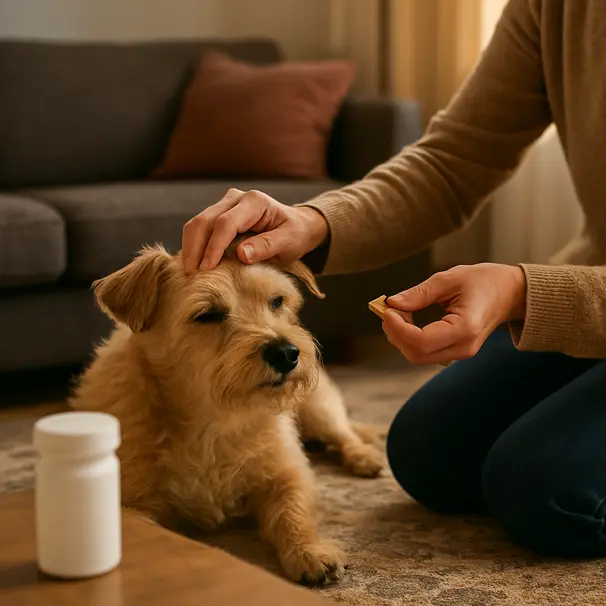
Thanks for taking the time to look after your dog’s health. Small steps like this can make a big difference. If you prefer, share this guide with a fellow floofy friend who might need it, and remember to hang on to that calm, reassuring energy. Your dog picks up on it, and so does your vet.