


How to hold a puppy at every age safely
Bringing a puppy into your life is a little bit of magic and a lot of responsibility. One of the simplest things you can do to keep that magic alive is to hold your puppy in ways that feel safe and reassuring. The way you pick up and support a pup changes as they grow. This guide walks you through practical, gentle techniques from newborn cuddles to confident adolescent handling, with tips for owners and carers.
Why holding properly matters
Good handling helps puppies trust humans. It can make vet visits, grooming, and social time easier. It also lowers the risk of accidental falls or injuries. Puppies are still figuring out their bodies and balance, and a steady pair of hands gives them the reassurance they need. You’ll also build calm habits that carry into adulthood.

Newborns to about eight weeks: extreme gentleness and full support
Newborn puppies are fragile, sleepy, and often covered in floofy warmth. At this stage it is about supporting their whole body and keeping them warm. If you are a carer, or helping a new owner, always check with the breeder or foster first, because some litters need minimal disturbance in the first days.
How to pick up a newborn safely:
- Wash or sanitize your hands, and move slowly. Puppies are sensitive to sudden movements.
- Scoop from underneath. Place one hand under the chest, just behind the front legs. Support the rear with your other hand near the pelvis.
- Keep them horizontal and close to your body. Their spine should be supported, and they should feel snug and secure against your chest.
- Limit handling to short periods. Newborns need lots of sleep and close time with their mother.
Signs a newborn is uncomfortable:
- Trembling or wiggling in an obvious panic.
- Whining, persistent squirming, or trying to crawl away.
If any of those happen, set the puppy down gently on a warm surface and let them nestle back with their littermates. Consider contacting the breeder or a vet if you notice weak breathing, extreme lethargy, or other worrying signs.
Eight to sixteen weeks: building confidence and gentle independence
This window is prime time for socialization. Puppies are curious, learning bite inhibition, and discovering how humans handle them. They may be tiny, but they’re increasingly wiggly. The aim here is to make being picked up a calm, predictable experience.
Techniques to practice:
- Approach calmly, call their name, and let them sniff your hand before you pick them up.
- Use the same scoop method, one hand under the chest, one under the rump. Bring them up smoothly and hold close to your body.
- Short, positive sessions are best. Combine with treats and praise to make handling a good thing.
- Practice different positions: cradling in your arms, sitting on your lap, and letting them stand on a secure table while you support them. This helps them accept vet and grooming handling later.
Handling practice checklist:
- Five minute sessions, two or three times a day.
- Reward calm behavior, use soft words, and end on a positive note.
- Avoid forcibly restraining a fearful puppy. If they panic, take a step back and try slower exposure.

Four to six months: distraction, training, and muscle changes
At about four months puppies have more energy and less patience. They’re also growing quickly, so their body proportions change. You’ll need to adjust your hold to match increasing size and strength.
How to hold a boisterous pup:
- Focus on control and comfort. Use both hands, one supporting chest and the other under the hips.
- If the puppy is fidgety, sit down and let them sit between your legs while you keep a gentle hold. This reduces the chance of falls.
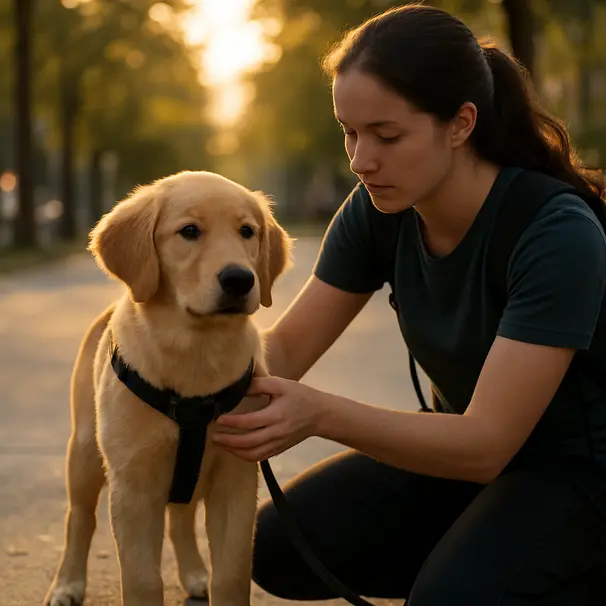
- Practice leash handling and harness fitting while the puppy is calm, so picking them up after a walk is easier.
- Start teaching a “stand still” or “up” cue, so your pup understands when you’re about to lift them.
When to ask for help:
- If your puppy is constantly wriggling free and at risk of injuring themselves.
- When handling is needed for medical reasons and the pup is stressed. A vet or experienced carer can demonstrate safe restraint techniques.
Six months to adult: confident, secure handling
As your pup becomes a teenager and then an adult, holding becomes less about support and more about control and trust. Many adult dogs prefer to be petted rather than held, but there are times when a secure pick-up is necessary, such as entering a car, stepping onto a vet table, or when a nervous dog needs reassurance.
Tips for older puppies and young adults:
- Use your body as a steady anchor. If you lift, keep them close to your chest and lower your center of gravity.
- For larger breeds, support strongly under the chest and use your forearm against their ribcage. It’s fine to lift a front end to guide them, but don’t lift a big dog by the front legs alone.
- Practice cooperative handling: teach your dog to step onto a platform, or into a carrier, and reward calm entry.
Safety note: Always consider the dog’s size and your own physical limits. For heavy puppies, use ramps, steps, or two people to lift.

Special situations: small breeds, giant breeds, puppies with injuries
Small breeds
- Tiny paws and delicate bones need extra care. Support the whole body and avoid hanging them by scruff or single legs.
- Consider a small pet carrier for transport, and let them peek out so they don’t feel boxed in.
Large and giant breeds
- Teach early handling routines, but plan for alternatives to lifting. Use harnesses, ramps, or assistive slings.
- Never try to lift a large pup by yourself if they exceed what you can safely manage.
Puppies with injuries or medical needs
- Follow veterinary guidance closely. A vet may recommend specific holds to keep an injured limb stable.
- Use calm, slow movements and consider a towel or blanket wrap to create a secure feeling during transport.
Holding puppies around children and new carers
Kids often delight in puppies, and that is wonderful. But young hands can be clumsy. To keep everyone safe:
- Supervise every interaction. Never leave a child and a puppy alone.
- Teach a child to sit down and have the puppy on their lap, rather than trying to bear-hold the puppy while standing.
- Show new carers how you usually lift your puppy. Consistency helps the pup feel secure.
If a new carer seems unsure, offer a short demonstration. Model a calm approach, steady support, and patient rewards. Most puppies will warm up quickly to a calm, confident person.
Reading the puppy: signs of comfort and distress
Comfort signs:
- Relaxed body, soft eyes, and a wagging tail that is not stiff.
- Settling into your arms, leaning against you, or licking softly.
Distress signs:
- Stiffening, yelping, or frantic squirming.
- Growling, snapping, or showing teeth, which means back off.
If a puppy shows distress, lower them gently to a safe surface and give them space. Reintroduce handling gradually, with shorter sessions and high-value rewards.
Practical toolkit for safe handling
- A soft towel or blanket for newborns and nervous puppies.
- A lightweight, secure carrier for transport.
- A training harness and leash sized appropriately for the pup.
- Treats for positive reinforcement during handling practice.
- A partner or friend for lifting bigger pups.
When to consult a professional
Consider contacting a vet or experienced behaviourist if:
- Handling causes repeated fear or aggression.
- You suspect an injury, even if it seems minor.
- You need help teaching cooperative handling for grooming or vet visits.
Professionals can show step-by-step techniques that respect a puppy’s body and emotional needs. They can also suggest safe equipment and training strategies.
Final thoughts: patience, practice, and partnership
Holding a puppy is an act of trust. You are teaching them how people make them feel. With slow, thoughtful handling, short practice sessions, and lots of calm praise, most puppies learn to enjoy being held or to accept it as part of normal life. Keep sessions positive, watch their cues, and ask for help when you need it.
If you’re looking for extra hands, Floofy connects you with trusted carers who know how to handle pups safely. Whether it’s a short lift into a car, a vet visit, or help teaching a toddler, there’s someone who can step in with calm confidence.
A final gentle reminder, consult a vet if you have concerns about your puppy’s health or if handling seems painful for them. A little extra care now keeps your floofy friend happy and safe for years to come.