


How to make your cat love you (expert tips)
Cats have a reputation for being aloof. The truth is they’re independent, curious, and can be deeply affectionate when they feel safe and understood. This guide collects warm, practical advice you can use tomorrow to build a trusting relationship that feels natural for both of you. Expect small steps, lots of patience, and delightful little wins.

Read your cat like a friend
Cats speak with posture, eyes, ears, and tails. Learning that language will instantly improve your connection.
Key signals to watch for
- Slow blink: A slow blink back can be a cat-sized kiss. Try blinking slowly when your cat looks at you. It can encourage calm and trust.
- Tail position: A high, upright tail often means a confident, happy cat. A puffed or tucked tail signals fear or stress.
- Ears and whiskers: Forward ears and relaxed whiskers mean interest. Flattened ears or pinched whiskers suggest discomfort.
- Purring and vocalising: Purring often means contentment, though cats may also purr when anxious. Observe context rather than relying on one sound.
Spend quiet time watching your cat’s cues. Respond gently to signs of stress and reward relaxed, curious behavior with soft praise, a treat, or a play session.
Build trust with gentle approaches
Cats appreciate predictability. A few consistent habits will help your cat feel safe and more likely to seek your company.
- Let them come to you: Resist reaching out first. Sit near them and offer a hand for them to sniff.
- Use low, friendly voices: Loud or sudden noises can startle. Speak softly and slowly.
- Offer safe spaces: Provide a quiet hiding spot and a high perch where they can watch the room. A cat that feels secure is more open to affection.
- Be patient with touch: Start with gentle strokes along the cheeks and under the chin. Avoid the belly until you know they enjoy it.
Small, respectful gestures add up. Over time your cat will learn you’re a source of comfort, not a threat.
Make feeding time a bonding ritual
Food is a powerful motivator. Using mealtime to build positive associations can help a wary cat warm up to you.
- Establish a routine: Cats love routine. Regular feeding times reduce stress and build trust.
- Hand-feeding: Offer high-value treats or special wet-food nibbles from your palm. This teaches your cat that you bring good things.
- Positive training: Use treats to reward friendly behavior like approaching, sitting near you, or allowing gentle petting.
Consider food puzzles for slow-feeding enrichment. Feeding methods that encourage your cat to work a little for their meal can build confidence and create fun shared moments.

Play like a cat caretaker
Play is social time for cats. The right toys and timing can turn shy cats into playful companions.
- Use wand toys and feathers: These mimic prey and encourage stalking and pouncing. Let your cat make the catch sometimes so they feel successful.
- Short, frequent sessions: Two to three 5–10 minute playtimes a day usually work well. Cats often prefer short bursts of activity.
- Rotate toys: Keep a toy box and rotate items to maintain novelty.
- End on a good note: Finish play with a small treat or a gentle stroke so your cat links you with positive endings.
Play helps burn energy, reduces boredom, and creates shared laughs. It’s one of the fastest paths to mutual affection.
Create a cat-friendly environment
A comfortable, enriched home supports a relaxed, sociable cat.
- Vertical space: Shelves, cat trees, and window perches let cats feel safe and explore.
- Hiding spots: Cardboard boxes, covered beds, and quiet nooks let your cat retreat when they need privacy.
- Scratching options: Provide several scratching posts in different materials and heights to satisfy natural needs and protect furniture.
- Litter boxes: Keep them clean and in quiet locations. A general rule is one box per cat, plus one extra.
Environmental comfort reduces stress and helps your cat be more open to connecting. Adding small changes, like a sunlit perch, can make a big emotional difference.

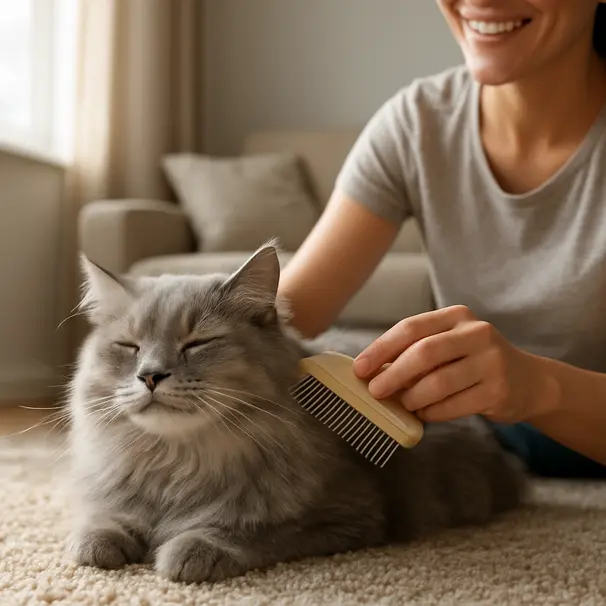
Grooming and touch: learn their preferences
Some cats adore brushing, others tolerate it. Learning how your cat likes to be touched is a caring act that deepens bonds.
- Start slowly: Offer a brush while they’re relaxed, perhaps after a meal or during a nap.
- Follow the fur: Brush in the direction of the coat to keep sessions comfortable.
- Watch for signs: If your cat turns away, twitches the tail, or flattens ears, stop and let them reset.
- Positive associations: Give a calm treat or soft praise after grooming sessions.
Grooming can help with shedding and skin health, and it’s a lovely way to spend quiet time together. If your cat dislikes touch, try short moments and pair them with rewards.
Socializing and introducing new people or pets
Introducing new people or animals needs slow, controlled steps.
- New people: Let your cat approach visitors at their own pace. Ask guests to ignore the cat until they show curiosity.
- New pets: Use scent swapping and short, supervised meetings. Keep introductions gradual and give each pet their own resources.
- Respect boundaries: Don’t force interactions. Cats often choose to bond gradually, and pushing can backfire.
If you’re unsure about multi-pet dynamics, consider asking a cat behaviourist or experienced carer for a plan tailored to your household.
Troubleshooting common issues
Even well-bonded cats have off days. These tips address typical relationship bumps.
- Clinginess suddenly appears: Could be stress, illness, or changes at home. Consider a vet check if the behaviour is new or extreme.
- Avoidance or hiding: Look for environmental changes, new family members, loud noises, or scent changes. Patience and a calm routine help.
- Biting during petting: Cat bites often mean overstimulation. Shorten petting sessions, watch for pre-bite signals like tail flicking, and end interactions before irritation builds.
Always consider a vet visit for sudden behaviour changes. Health issues can impact mood and social behaviour.
Tips for multi-cat households
Bonding in a multi-cat home includes managing relationships between felines and with you.
- Equal attention: Offer individual play and one-on-one time with each cat.
- Multiple resources: Provide separate food bowls, water stations, litter boxes, and sleeping spots.
- Observe interactions: Look for signs of tension like blocking, frequent chases, or over-grooming.
Balanced care helps each cat feel secure, which makes them more likely to enjoy shared affection.
When to ask for professional help
If your cat shows persistent fear, aggression, or sudden changes in appetite, sleep, or litter habits, consider professional help.
- Talk to your vet first: Rule out medical causes.
- Behaviourist support: Certified feline behaviourists can give tailored plans for socialisation, confidence-building, and modifying unwanted behaviours.
Asking for help is a caring choice. Professionals can speed up progress and help both of you feel less stressed.
Little rituals that build love
The day-to-day moments are what cats remember. Try a few rituals to make bonding effortless.
- Greeting routine: A calm hello when you come home. Sit and let your cat approach you.
- Before-bed cuddle: A short, quiet wind-down with soft stroking or a lap nap.
- Window time together: Sit near a sunny window and watch birds. Shared quiet time is bonding time.
- Surprise treats: Small, occasional treats reinforce positive associations.
These rituals require small time investments but pay big emotional dividends.
Final thoughts
Earning a cat’s affection is about respect, patience, and reading tiny signals. Make your home safe, keep interactions predictable, play often, and let your cat make the first move. Celebrate small steps and remember that love with cats often grows slowly and deeply. If you’re a pet carer or owner, these practical steps can turn a wary roommate into a warm, trusting friend.
If you have concerns about behaviour or health, consider a vet consult. A professional can offer reassurance and targeted guidance.
Happy bonding, and enjoy those slow blinks.