

Welcome to indoor cat life
Living with an indoor cat is a gentle, funny, rewarding adventure. Cats can be curious, finicky and utterly charming. For owners and pet carers alike, the goal is simple. Keep them safe, interested, comfortable and emotionally fulfilled. This post gathers practical tips you can use today, whether you’re settling a new cat into a home, covering a few days as a sitter, or building a long-term care routine.
Creating a cat-friendly home
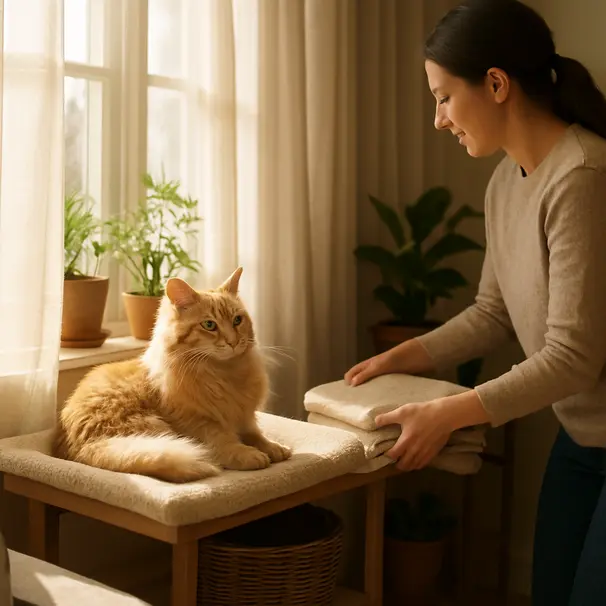
Cats may make a territory out of a single sunny spot, but they benefit from thoughtfully arranged spaces. A few small changes can make the whole home more welcoming.
- Offer vertical space. Shelves, tall cat trees and window perches give cats choices and a sense of safety. High points help them observe without stress.
- Provide hiding spots. Cardboard boxes, soft cubes and covered beds let a cat retreat when they need quiet time.
- Rotate bedding and scent items. Bringing an item of the owner’s worn clothing can help a cat relax when a new carer is present.
Setting up touchpoints for carers
Pet carers should ask for a tour. Find out favorite sleeping spots, feeding areas and where to store food and cleaning supplies. A quick sketch or photo of where things live can save time and keep routines consistent.
Feeding and treats: simple, consistent rules
Food can be the easiest way to build trust. Keep meals predictable and feeding areas clean.
- Match the current diet. Sudden changes may upset digestion. If a change is necessary, transition gradually over several days.
- Mealtime routine. Cats like predictability. Aim for regular meals and set times for wet food to avoid free-feeding confusion.
- Treat strategy. Use treats to reward calm behaviors, and avoid overfeeding. Treats can be split into tiny pieces and used as training rewards.
Consider portion sizes listed on the food packaging, and check with the owner about any allergies or sensitive stomachs. If you notice any prolonged appetite change, consider contacting the owner and suggesting a vet consult.
Litter box basics every carer should know
Litter box care is non-negotiable. Cats can be very particular about their bathroom habits.
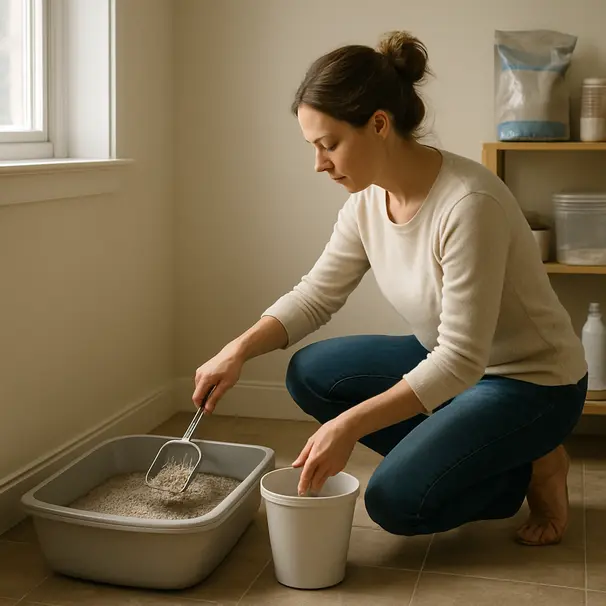
- Clean daily. Scoop at least once a day, twice if possible. Fresh litter encourages consistent use.
- Right box, right place. Many cats prefer an uncovered box in a quiet area. If a box is covered and the cat avoids it, try removing the lid.
- Provide enough boxes. The common rule is one box per cat, plus one extra. For two cats, that means three boxes.
If a cat suddenly avoids the litter box, this can be a sign of stress or a medical issue. Encourage the owner to contact their vet, and note any changes in urine or stool that could help with a diagnosis.
Enrichment and play: the heart of indoor happiness
Boredom is real for indoor cats, but the fix is straightforward. Short, frequent play sessions beat one long session.
- Interactive play. Wand toys, lasers used carefully and food puzzles can get a cat moving and thinking. Aim for two to three play sessions a day, even ten minutes each.
- Foraging feeders. Scatter small portions of dry food in puzzle feeders to encourage natural hunting behaviours.
- Rotate toys. Swap toys every few days to keep novelty, and inspect them for wear and tear.
Gentle training and mental challenges
Clicker training or simple cue training can help a sitter manage a cat calmly. Teach a cat to come for food, sit for grooming or go to a carrier with a cue and reward. Training gives a cat mental stimulation and strengthens the carer bond.
Grooming, claws and handling tips
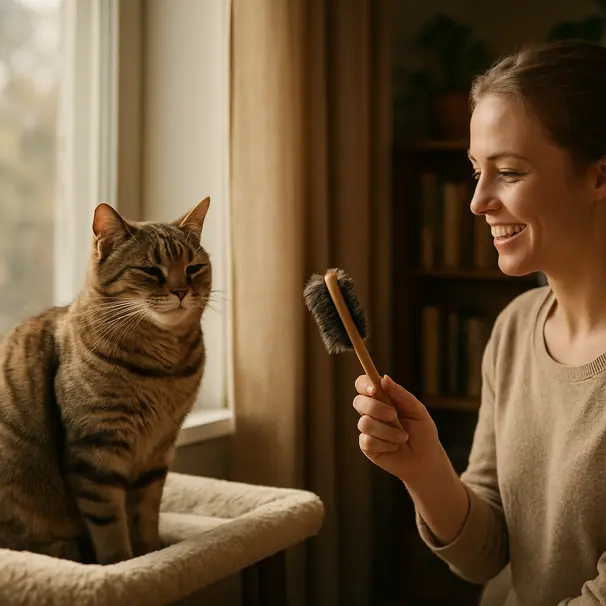
Grooming helps with shedding and bonding. Many cats enjoy a gentle brush, but some have clear preferences.
- Start slow. Let the cat sniff the brush. Begin with short sessions and increase time with positive reinforcement.
- Nail care. Regular claw trimming can prevent damage, but many cats do fine with regular scratching posts. If trimming is needed, ask the owner to demonstrate their technique.
- Watch body language. Ears flat, a swishing tail and dilated pupils often signal stress. Pause and give the cat space.
If you suspect a skin issue or persistent hair loss, encourage contacting the owner and suggest a vet visit for assessment.
Introducing a pet carer, step by step
A new person in the house can be unsettling. Small rituals help a cat accept a carer more quickly.
- Quiet arrival. Avoid loud noises and sudden movements. Let the cat approach on their own terms.
- Offer treats and distance. Sit quietly and place a treat at a distance, letting the cat choose whether to come closer.
- Respect routines. Keep feeding times and cleaning routines consistent with the owner’s instructions to reduce stress.
Carers should ask about the cat’s favorite games, hidden charms and precise medication times if applicable. Consistency is the kindness cats notice most.

Safety at home: hazards and practical fixes
Indoor life is safe, but there are hidden hazards. A quick sweep can reduce risk.
- Plants and toxins. Many houseplants are toxic to cats. Confirm a plant list with the owner, and keep unknown plants out of reach.
- Small hazards. String, rubber bands and small objects should be stored away. Cats can swallow them and may need a vet if ingestion occurs.
- Windows and balconies. Ensure screens are secure. A frightened cat can squeeze through a small gap.
If a cat is injured or shows signs of severe distress, contact the owner immediately and suggest emergency veterinary care. Keep a contact list and clear directions to the nearest clinic.
Travel, carriers and vet visits
Most cats dislike carriers, but a few simple techniques can make travel less stressful.
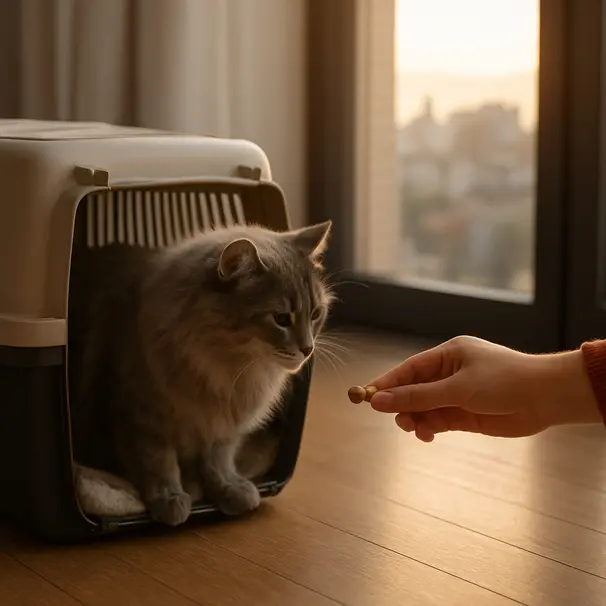
- Make the carrier inviting. Leave it open at home with soft bedding and a treat inside for several days before travel.
- Move calmly. Cover the carrier with a towel for short trips to reduce visual stress.
- Practice short rides. If a carer will need to transport a cat, a few brief practice drives may help the cat adapt.
Always follow the owner’s instructions about vaccine records, microchips and vet preferences. Suggest a vet visit if you notice anything unusual about breathing, movement or eating.
Managing medications and special needs
Some cats require daily medication or special diets. Clarity and documentation are essential.
- Clear instructions. Owners should leave written notes about dose, timing and any possible side effects to watch for.
- Show the owner your plan. If you’re a carer, demonstrate you can handle the medication while the owner watches, if possible.
- Keep a log. Record times given, behaviours observed and any missed doses.
If a cat refuses medication, try hiding pills in a small amount of wet food or using pill pockets, but always confirm with the owner first. If a cat shows an adverse reaction, advise contacting the vet.
Day-to-day checklist for pet carers
A concise checklist helps ensure nothing is missed during a visit.
- Feed according to schedule, note appetite and amount eaten.
- Scoop litter boxes, replace a small amount of litter if needed.
- Spend at least two short play sessions with the cat.
- Brush or groom briefly, depending on preference.
- Check water bowl and refill if low.
- Take photos for the owner, showing the cat relaxed or engaged.
- Note any odd behaviour, changes in elimination, coughing, sneezing or lethargy.
Leaving a friendly note for the owner about how the cat behaved can reassure them and strengthen trust.
Supplies every indoor cat household should keep on hand
- High-quality food and measured scoops.
- At least two litter boxes and an appropriate scoop.
- Multiple scratching posts and vertical perches.
- A sturdy carrier with soft bedding.
- A small first aid kit and the owner’s contact for the vet.
Consider keeping a spare clean blanket that carries the owner’s scent. It can comfort a cat if the owner is away for a few days.
Building emotional trust and long-term wellbeing
Cats respond to calm, predictable interactions. A carer who moves slowly, uses a soft voice and respects boundaries often wins a cat’s trust quicker.
- Respect the cat’s pace. Let them initiate contact and avoid forcing affection.
- Mark progress. Small wins matter, like a cat choosing to sit nearby or respond to a name call.
- Communicate with the owner. Share honest observations and any small wins or concerns.
A cat that feels safe will be more playful, less stressed and easier to care for over time.
Final notes for pet carers and owners
Indoor cat life can be peaceful and joyful with a few thoughtful routines. Owners can make their instructions clear and leave helpful supplies. Carers can be patient, attentive and observant. Together, you can keep indoor cats healthy, stimulated and loved.
If an issue seems medical, suggest the owner consult their vet. Small changes are often solved with routine adjustments, and sometimes a professional opinion is the best next step.
Thank you for caring. A little kindness and consistency can make a big difference to a cat’s day.