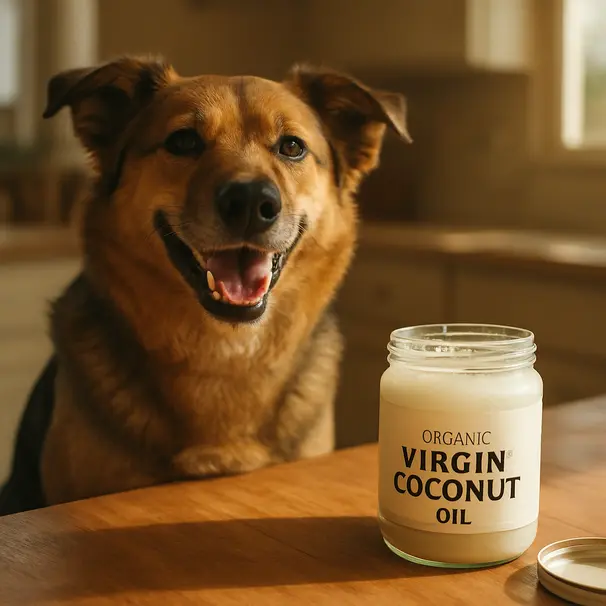
It's a well-known superfood for humans but is coconut oil good for dogs? We asked…
Liam·
3 June 2026
7 min read
Is coconut oil good for dogs? A friendly, practical guide
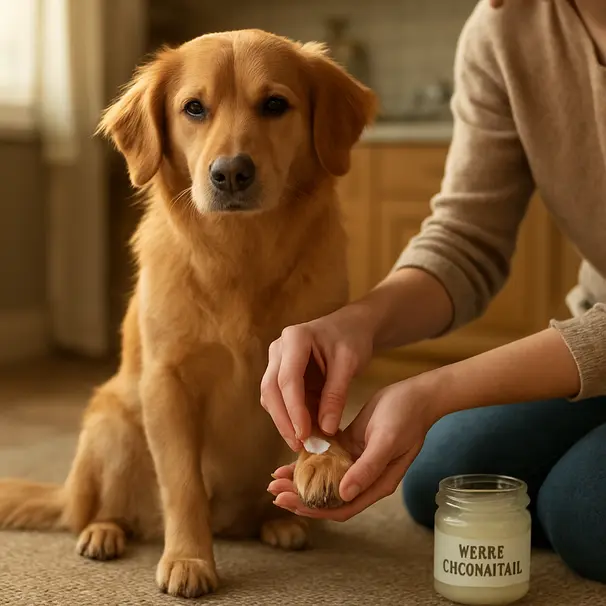
Coconut oil is everywhere these days: on toast, in smoothies, and in beauty cupboards. If you’ve watched a reel or read an article, you might wonder if the same stuff that makes your skin glow can help your pup too. The short answer is: maybe, but with some important caveats. In this guide we’ll look at what coconut oil is, possible benefits, how to use it safely, and when to check in with your vet. We want you to feel confident and calm about trying anything new with your furry friend.Gently massaging coconut oil into a dog’s paw pad.Gently massaging coconut oil into a dog’s paw pad.
What is coconut oil, and why do people rhapsodise about it?
Coconut oil is a plant oil extracted from the meat of coconuts. It’s rich in medium-chain triglycerides (MCTs), especially lauric acid, which is often highlighted for its antimicrobial properties in lab studies. For humans, coconut oil has enjoyed a lot of hype for skin and hair uses, as well as in cooking. With dogs, the conversation usually separates into two categories: topical use (on the skin or paws) and oral use (mixed into food or given as a supplement).
Topical vs oral uses — what pet owners talk about
Topical: People apply coconut oil to dry skin, flaky coats, hot spots, or cracked paws, and sometimes use it as a massage balm. - Oral: Owners add small amounts to food to improve coat shine, help digestion, or freshen breath.
What benefits might coconut oil offer dogs?
There are positive anecdotes and some early research suggesting coconut oil may offer mild benefits. It’s important to use careful language, though — think of these as potential helpful effects rather than guaranteed cures.
Skin and coat
Coconut oil can feel soothing on dry skin, and many dogs show a shinier coat after topical use. The oil acts as an emollient, which means it may help moisturise flaky areas and reduce itchiness for some pets.
Minor antimicrobial action
Lauric acid in coconut oil has antimicrobial properties in laboratory settings. That means it may reduce certain surface bacteria or fungi when applied topically, but lab results don’t always translate into reliable outcomes on real pets with complex skin conditions.
Digestive support and appetite
Some owners report improved digestion, reduced dry flaky skin, or a better appetite after introducing a tiny amount of coconut oil into meals. Medium-chain fats are absorbed differently from other fats, so they may be easier for some dogs to process in small quantities.
Comfort and massage
Rubbing a little coconut oil into your dog’s coat can create a soothing bonding routine. That calming ritual can help dogs relax and is a simple, low-risk way to offer enrichment and attention.A playful dog enjoying a sunny garden afternoon.A playful dog enjoying a sunny garden afternoon.
What the evidence actually says
Scientific evidence is limited and mixed. A few small studies and laboratory findings suggest antimicrobial activity and possible improvements in skin condition for certain cases, but large, rigorous clinical trials are lacking. This means coconut oil may help some dogs, but it’s not a proven treatment for skin disease, infections, or chronic conditions.
So consider coconut oil as a potentially helpful, low-cost home option for mild issues, but don’t rely on it for serious or ongoing health problems. If your dog has persistent skin irritation, hair loss, or other concerns, see a vet.
Safety first: risks and side effects to consider
Before you scoop a spoonful into the food bowl, here are the main safety points to keep in mind.
Extra calories: Coconut oil is calorie-dense. Regular addition can contribute to weight gain, especially in small or sedentary dogs. - Pancreatitis risk: Dogs with a history of pancreatitis or other fat-sensitive conditions may be harmed by added dietary fats. Use extreme caution and check with your vet first. - Gastrointestinal upset: Starting too much at once can cause vomiting or diarrhoea. Introducing gradually helps reduce this risk. - Allergic reaction: True coconut allergy in dogs is rare, but skin irritation or digestive change can happen in sensitive animals.
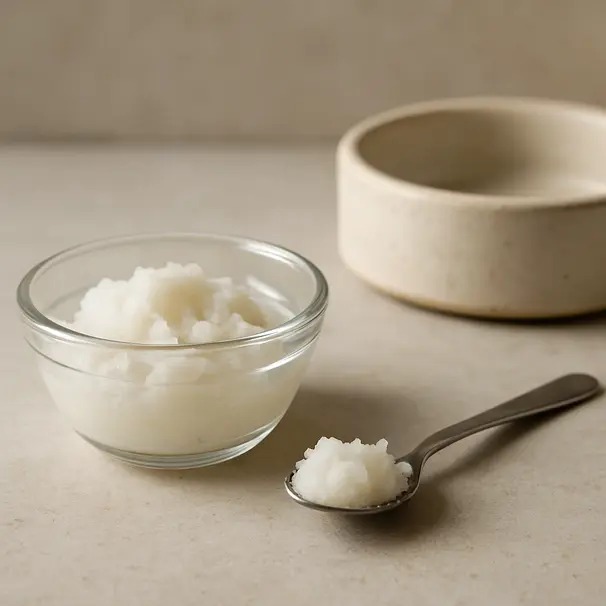
Given those considerations, it’s wise to start slowly, watch for changes, and consult your veterinarian if anything unusual appears.A small spoonful of coconut oil measured for a dog.A small spoonful of coconut oil measured for a dog.
How to use coconut oil safely with your dog
If you decide to try coconut oil, consider the following practical steps to keep things safe and effective.
Choose a suitable product
Look for virgin or extra-virgin coconut oil without added fragrances, preservatives, or flavourings. Avoid products with herbs, essential oils, or sweeteners that could be harmful to dogs.
Topical use: tips and steps
Start with a small amount: a pea-sized dab for small patches, or a teaspoon for larger areas. - Apply to clean, dry fur or paws and gently massage until absorbed. - Use it as a short-term comfort measure for dry skin or to soothe minor scuffs, not as a substitute for veterinary treatment of infections or hotspots. - If your dog licks the area, that’s usually okay in small amounts, but discourage excessive licking.
Oral use: how to introduce coconut oil to food
Introduce coconut oil gradually and account for the extra calories in your dog’s daily intake. Start with a tiny amount for the first week and watch for digestive changes.
Tiny dogs (under 10 lbs): start with 1/4 teaspoon per day. - Small dogs (10–25 lbs): start with 1/2 teaspoon per day. - Medium dogs (25–50 lbs): start with 1 teaspoon per day. - Large dogs (50+ lbs): start with 1–2 teaspoons per day.
Increase slowly only if your dog tolerates it well. These are general suggestions and not medical advice. Consider your dog’s weight, overall diet, and health status before making changes.
DIY and recipe ideas — gentle and practical
Many owners like simple uses rather than fancy homemade treats. Here are a few low-risk, dog-friendly ideas:
Mix a small amount into kibble to moisten food for picky eaters. - Rub a little into dry paws after walks to soothe cracking. - Use as a short-term spot application for dry patches while monitoring the area.
Avoid making frequent high-fat treats or giving large amounts; calorie control matters.
When to avoid coconut oil
Don’t introduce coconut oil without veterinary advice if your dog has any of the following:
A history of pancreatitis or very high blood lipids. - Obesity or metabolic disease such as uncontrolled diabetes. - Severe or spreading skin infections, open wounds, or unexplained hair loss.
In these cases a vet can suggest safer alternatives or run tests to identify underlying issues.
Choosing between coconut oil and other supplements
Coconut oil isn’t the only option for skin and coat support. Fish oil (omega-3 fatty acids), specialised veterinary topical treatments, medicated shampoos, or prescribed diets may be more effective for certain conditions. If your goal is shiny fur or reduced itching, talk with your vet about the best supplement for your dog’s situation.
Common questions from pet carers and owners
Can coconut oil repel fleas?
Coconut oil may have a mild repellent effect in some cases, but it shouldn’t replace proven flea prevention. Use vet-recommended flea and tick control and treat the environment when needed.
Will coconut oil cure skin infections?
No. While it may soothe or reduce superficial microbes in some instances, infections often need veterinary diagnosis and targeted treatment such as topical antimicrobials or antibiotics.
Is coconut oil safe for puppies?
Small, incremental steps and vet approval are important. Puppies have different nutritional needs and more sensitive stomachs, so consult your vet before adding anything new.
Practical checklist before you start
Choose plain virgin coconut oil with minimal processing. - Talk to your veterinarian, especially if your dog has medical issues. - Begin with a tiny amount and increase slowly while watching behaviour and stool. - Remember the calories—adjust meal portions if you add oil regularly. - Stop use and call your vet if you notice vomiting, diarrhoea, increased itchiness, or other worrying signs.
Wrapping up: should you try coconut oil for your dog?
Coconut oil may help some dogs with dry skin or coat dullness and can be a soothing addition to grooming routines. However, it’s not a miracle cure and carries real considerations like added calories and potential digestive upset. Use small amounts, pick a simple product, and speak to your veterinarian about your dog’s individual needs. If you’d like practical help, Floofy carers can assist with application, monitoring, and simple grooming routines while you check with your vet.
If you try coconut oil, treat it like an experiment: observe, be patient, and prioritise your dog’s comfort and health above trends. Your pup will appreciate the gentle attention, and you’ll learn what works best for them.
Share
It's a well-known superfood for humans but is coconut oil good for dogs? We asked…
Floofy uses cookies and similar technologies to personalise content, measure ads, analyse traffic, and provide you with the best possible experience. Some cookies are essential for the site to function and cannot be turned off. By accepting, you agree to our
Cookie Policy. You can update your preferences at any time.
Cookie Settings
When you visit Floofy, we may store or access information on your browser, often through cookies. This data helps us provide a smoother, more tailored experience based on your preferences or device settings. While the information doesn’t usually identify you personally, it enhances your time with us. We respect your privacy choices, so feel free to manage your cookie preferences by exploring each category. Keep in mind, however, that limiting certain cookies may affect the performance of the site and the services we can deliver.
Cookie Policy