


Managing multi-cat households: cat care tips for harmony
Living with more than one cat is like hosting a tiny, fluffy diplomacy summit. There are naps, sunbeams, the occasional hiss, and a surprising amount of ceremony over the best patch of couch. With some thoughtful setup and daily habits, you can help those personalities coexist peacefully, and even thrive.
Why cats sometimes clash
Cats are both social and territorial. Some enjoy company, others are choosy about companions. Conflicts often start from stress, competition for resources, or unclear boundaries. Your role is to reduce pressure points, provide choice, and give every cat its own safe options.
Setting up the home for success
Clear, consistent resources are the foundation of harmony. Think of each resource as a separate lane on a busy road. If lanes overlap, traffic jams happen.
Food and water
- Offer multiple feeding stations spaced across the home. Cats prefer not to eat right next to each other, so distance helps.
- Provide shallow dishes and consider puzzle feeders for mental stimulation.
- Keep water bowls away from litter boxes; some cats dislike drinking near their bathroom.
Litter boxes
- Follow the basic rule: provide one litter box per cat, plus one extra. So, three cats means four boxes.
- Place boxes in quiet, low-traffic spots, not all in the same room.
- Scoop daily and fully clean each box weekly. Some cats prefer covered boxes, others like open ones. A mix can be useful.
Vertical space and retreats
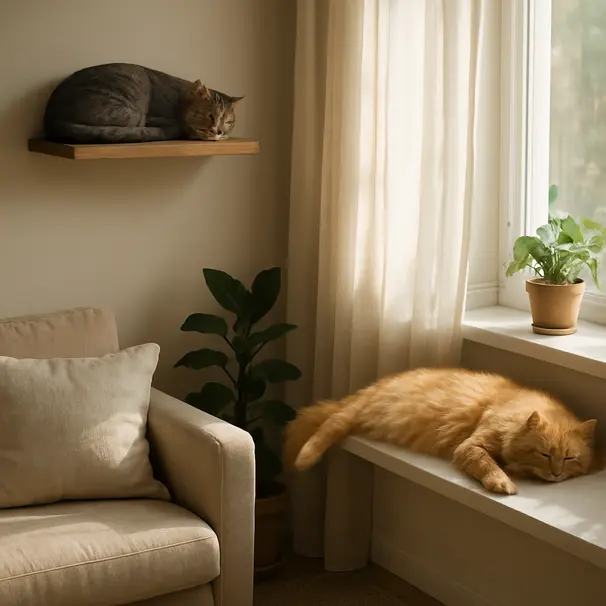
- Cats feel safer with vertical escapes. Install shelves, cat trees, and windowsill perches at different heights.
- Offer hiding spots like covered beds, cardboard boxes, or a quiet closet with the door left slightly open.
- Make sure every cat has at least one reliable hideaway of their own.
Territory and scent
- Use soft, consistent routines to help scent marking feel normal. Gentle brushing and play time can redistribute friendly scents.
- Consider synthetic feline pheromone diffusers in common areas to help reduce stress. These can help, and are worth trying alongside environmental changes.
Daily routines that calm the household
Cats are creatures of habit. A stable routine gives them predictability and reduces anxiety.
- Keep feeding and play times consistent. Predictability helps reduce resource guarding.
- Schedule short, focused play sessions for each cat. Even five to ten minutes of active play can lower tension.
- Rotate toys and introduce new textures slowly. Novelty keeps minds sharp, but sudden big changes can stress shy cats.
Enrichment and mental work
- Provide foraging toys and puzzle feeders to slow down fast eaters and engage curious minds.
- Window perches, bird feeders outside, or a safe balcony with netting can offer hours of entertainment.
- Group play sessions can build positive associations, but also give solo playtime so introverts can recharge.

Introducing a new cat to resident cats
A proper introduction can change the whole story. Take it slow and be patient.
Step-by-step gradual introductions
- Give the newcomer their own safe room with food, water, litter, hiding spots, and a bed.
- Swap bedding between the new cat and residents so everyone becomes familiar with scents.
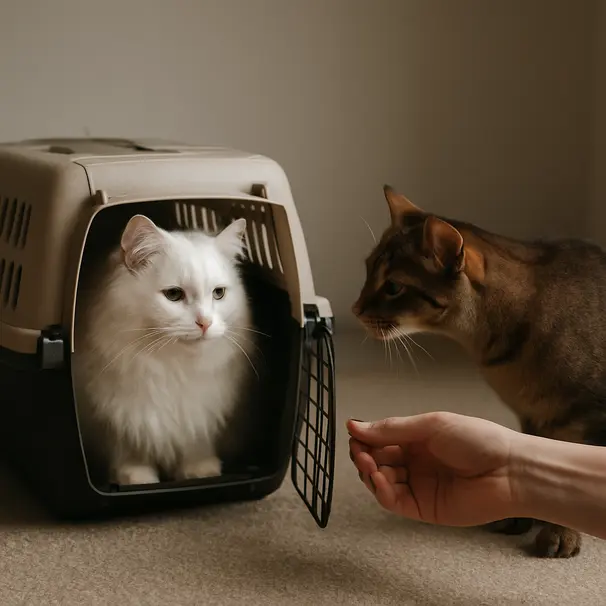
- After a few days, allow visual contact through a cracked door, baby gate, or pet carrier. Short, calm sessions are best.
- Move to supervised, short face-to-face meetings in a neutral space. Keep treats and toys on hand to create positive associations.
- Gradually extend time together and reduce barriers, always watching body language closely.
Watch for signs of progress and stress
- Good signs: relaxed posture, tail held naturally, grooming near each other, or shared sleeping spaces.
- Warning signs: prolonged staring, flattened ears, hissing that escalates to swatting, or one cat blocking another from resources. If you see intense aggression, pause and return to an earlier step.
Recognizing and managing tension
Some friction is normal, but persistent stress hurts a cat’s wellbeing. Keep an eye on subtle changes and act early.
Behavioral red flags
- Changes in appetite or litter box use.
- Hiding more than usual or suddenly avoiding favorite spots.
- Over-grooming or bald patches.
- Increased aggression or excessive clinginess.
If you notice these, consider environmental tweaks first. Increasing the number of resources, adding new hiding spaces, or boosting daily playtime can help. You may also want to consult a vet or certified behaviorist, who can offer tailored strategies and rule out health causes.
Practical training and positive reinforcement
Shaping good habits with rewards helps all cats feel safe.
- Use treats to reward calm behavior, like approaching a shared space without tension.
- Clicker training can teach basic cues that help manage interactions; for example, recall or target training for gentle redirection.
- Never punish cats for hissing or swatting. These are communication signals. Instead, reduce triggers and reward calmer choices.
Working with pet carers and sitters
When you need help, choose carers who understand multi-cat dynamics.
- Share a clear routine sheet: feeding times, favorite hiding spots, medical needs, and any inter-cat tensions.
- Ask carers to feed cats in separate areas, at least at first, and avoid forcing interactions.
- Encourage carers to follow your enrichment plan, including play sessions for each cat and consistent bedding or scents.
- If a carer notices worrying behavior, ask them to contact you promptly. Being reachable reassures both the carer and the cats.

Managing special situations
Introducing a new baby or pet into the household
Additions can be stressful. Keep routines predictable, gradually introduce new scents, and give each cat one-on-one attention. Use baby gates or separate rooms to give cats control over interactions.
Moving house
Pack and set up a quiet room first, with familiar bedding and toys. Let cats explore the new space at their own pace, and keep feeding and play routines steady to limit stress.
Health and vet visits
Regular checkups can spot stress-related health issues early. If a cat shows sudden behavior or litter box changes, consider a vet visit. A professional can rule out medical causes and advise on next steps.
Troubleshooting common problems
- One cat monopolizes the best windowsill: Provide multiple perches at different heights and rotate who gets the sunny spot by offering tasty treats elsewhere.
- Frequent scuffles over toys: Offer duplicate toys and supervise high-energy play. Remove toys if play becomes aggressive and reintroduce them in calmer moments.
- Scent marking or spraying: Increase vertical space and litter boxes, and consider pheromone products. If spraying persists, consult your vet.
When to seek professional help
If tensions continue despite thoughtful changes, a behaviorist can help. Look for someone certified and experienced with cats, and share detailed notes about household routines, triggers, and previous steps you tried. A behaviorist may suggest behavior modification plans, environmental adjustments, or work alongside your vet for medical evaluation.
Final tips for a happier home
- Be patient. Building trust between cats can take weeks or months.
- Celebrate small wins, like a nap in the same room or a peaceful shared window watch.
- Rotate resources and enrichment regularly to keep things interesting, and tailor approaches to each cat’s personality.
A multi-cat household is a living, breathing puzzle. With careful planning, consistent routines, and small daily acts of kindness, the pieces tend to fit together. Your home will have its own rhythm, full of soft paws, shared sunlight, and the unique harmony only a feline family can create.
Quick checklist to get started
- Ensure one litter box per cat, plus one extra.
- Create multiple vertical routes and hiding spots.
- Space out feeding stations and water bowls.
- Introduce newcomers slowly, use scent swaps.
- Schedule short, daily individual play sessions.
- Share a clear routine with any carers.
Good luck, and enjoy the little moments. Those first peaceful minutes when everyone naps together are worth the effort.