


Moving house with cats: stress-free guide
Moving home is a big deal for us humans, and it is a big deal for cats too. They like predictable routines, familiar smells, and known territories. If you’re planning a move, or you’re a pet carer helping someone relocate, this guide will help you plan, prepare, and settle your cat with as little stress as possible.
In this post you’ll find a clear timeline, practical checklists, calming strategies, and tips for handling the moving day and the first few weeks in your new home. There are suggestions for both single cats and multi-cat households, plus ideas carers can use to support owners. Let’s get started.
Before the move: plan ahead
Start early, ideally six to eight weeks before moving day. Cats benefit from consistency, so gradual preparation helps them adapt.
- Create a schedule. Note important dates like the packing start, removal day, and any transitional stays. Share this with pet carers or sitters.
- Update records. Confirm microchip details, and make sure the contact info is current. Consider printing a copy of vaccination and medical records and saving digital backups.
- Choose a safe room. Pick a quiet room in both the old and new homes that will serve as a temporary sanctuary on moving day. This should be a place the cat already feels comfortable in, or can be made comfortable easily.
- Visit the vet if needed. If your cat seems particularly anxious or has health issues, consider a pre-move checkup. A vet may recommend strategies, and can advise on travel safety. Use cautious language such as ‘‘consider’’ if discussing medication.
Supplies to gather
- A secure carrier your cat already uses, or one you introduce well before the move.
- A familiar blanket or bedding that smells like home.
- Portable litter tray and a small supply of litter.
- Food, treats, and a travel water bowl.
- Calming aids you trust, such as pheromone sprays, a calming collar, or herbal supplements. Consider discussing options with your vet.
- A harness and leash if your cat tolerates them for safe supervised exploration.
Preparing your cat in the weeks before moving
Cats take time to accept changes. Spend a few weeks helping your cat adjust to the idea of the carrier, new sounds, and short car rides.
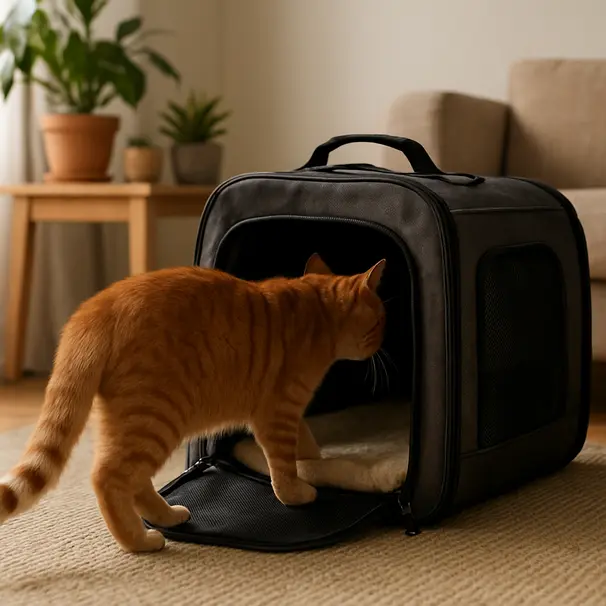
- Carrier conditioning. Leave the carrier out with the door open, place treats or a comfy blanket inside, and feed meals nearby. Make the carrier a positive, safe place.
- Short practice trips. Do a few short drives, increasing length gradually. Reward calm behavior with treats and praise.
- Maintain routines. Keep feeding times, play sessions, and sleep routines as stable as you can. Familiarity reduces anxiety.
- Explore the new home. If possible, bring your cat on short supervised visits to the new house, or bring items that smell like the new place back home so the cat can sniff them in a safe environment.
Moving day: practical steps to reduce stress
Moving day is busy and noisy. Minimizing the number of people in your cat’s safe room and shielding them from commotion will help.
- Set up the safe room before movers arrive. Place the carrier, litter tray, food, water, and familiar bedding inside. Add a few quiet toys.
- Keep the door closed and put a sign on it. Ask movers and family to avoid opening that room. A do-not-disturb sign can be surprisingly effective.
- Transport the cat in a secure carrier. Use a towel or blanket over the carrier to reduce visual stimulation. Keep the carrier stable in the car, and never leave a cat unattended in a parked vehicle.
- If you have a long drive, plan breaks in quiet locations. Offer water and check on your cat without opening the carrier unless necessary.
Tips for carers helping on moving day
- Communicate clearly. Know the owner’s plan and responsibilities, and confirm who will handle the cat at each stage.
- Bring backup supplies. Carers should bring extra blankets, a spare carrier if possible, and snacks that the cat likes.
- Stay calm. Cats pick up on anxiety. Speak softly, move slowly, and keep interactions brief and predictable.

Arriving at the new home: first few hours
The first impression matters. A quiet, consistent sanctuary will help your cat begin to settle.
- Set up the safe room in the new home first. Place the carrier, litter tray, water, familiar bedding, and a few toys inside. Add a low light source and close curtains to reduce overwhelming sights.
- Let the cat come out on their own terms. Open the carrier door and allow exploration, but don’t force interaction. Offer treats and gentle praise when they show curiosity.
- Keep the rest of the house closed off. Let the cat explore more rooms gradually, one at a time, while supervised.
- Maintain routines. Stick to usual feeding and play times. Familiar rhythms reassure cats and help them regain confidence.
First week: help your cat adjust
Adjustment can take days or weeks. Be patient and celebrate small wins.
- Provide vertical space. Cat trees, shelves, and window perches offer vantage points and security. These help cats feel in control.
- Use scent to comfort. Place familiar blankets or unwashed items around the home. Consider swapping small items between rooms to blend scents gradually.
- Play and enrichment. Short play sessions and puzzle feeders can reduce stress and encourage exploratory behavior.
- Supervised outdoor time. If your cat is used to going outside, wait several weeks before letting them roam freely. Start with supervised outings, and consider a harness and leash for safe exploration.
- Observe appetite and litter habits. Changes are normal for a little while. If your cat stops eating, shows persistent hiding, or has litter box changes for several days, consider contacting a vet.

Handling multi-cat households
Moving multiple cats adds complexity, because group dynamics can shift under stress.
- Move one cat at a time into the new home’s safe room, then introduce the others gradually.
- Keep scent swapping up front. Exchange bedding between cats so they become familiar with each other’s current scent.
- Provide separate resources. Multiple litter boxes, food bowls, and resting spots reduce competition and tension.
- Watch for signs of stress or aggression. Redirect with toys and treats, and separate cats if conflicts occur. If problems persist, consult an experienced behaviourist.
Common challenges and how to handle them
- Hiding. Cats often hide when stressed. Give them time, avoid forcing interaction, and provide quiet, accessible hiding spots.
- Spraying. If a cat marks territory indoors, increase litter cleaning and reduce stressors. Consider consulting a vet for long-term solutions.
- Loss of appetite. Tempt with strong-smelling wet food, warm meals slightly, and keep feeding routines steady. If appetite loss continues beyond a few days, seek veterinary advice.
- Escape attempts. Ensure doors and windows are secure, especially during comings and goings. Keep cats contained while movers are in and out.
Checklist: moving with a cat
- Update microchip and ID tag information.
- Collect medical records and vaccination history.
- Prepare carrier, bedding, and comfort items.
- Pack a cat essentials kit for moving day: food, litter, tray, toys, towel, and records.
- Designate and prepare a safe room in both homes.
- Practice short car journeys and carrier time in advance.
- Plan supervised introductions to the new home and outdoor areas.
- Keep routines for feeding, play, and sleep as consistent as possible.
Tips for pet carers and sitters
- Ask questions up front. Know the cat’s feeding schedule, dispersion of litter boxes, preferred toys, and any health concerns.
- Respect owner preferences. Use the same cues, commands, and routines when possible.
- Communicate throughout the move. Send photos and updates to reassure the owner that their cat is safe and settling.
- Offer to help with logistics. Helping label boxes, carry the safe-room setup, or give short supervised walks can be invaluable.
Settling in for the long term
Many cats will take a few weeks to feel confident in their new home. You can support them with small, consistent actions.
- Create predictable routines. Feed, play, and groom at similar times each day.
- Encourage exploration gradually. Open new rooms slowly and provide clear escape routes and perches.
- Keep exposure to new people and pets controlled. Let your cat set the pace for interactions.
- Monitor health and behaviour. Subtle changes can indicate stress. If you notice persistent anxiety, aggression, or health issues, consider professional help.
Final thoughts
Moving is a shared adventure for you and your cat. With planning, patience, and a few comforting touches, you can reduce stress and help your feline friend settle more quickly. If you’re a pet carer, your calm presence and thoughtful preparation can make all the difference.
Keep in mind small wins matter. A short play session, a nap in a sunny spot, or a curious sniff around a new corner are signs your cat is finding their feet.
If you need additional support, trusted carers and sitters on Floofy can step in to help with everything from carrier training to supervised settling visits. Take it one step at a time, and give your cat plenty of love along the way.
Happy moving, from one cat lover to another.