

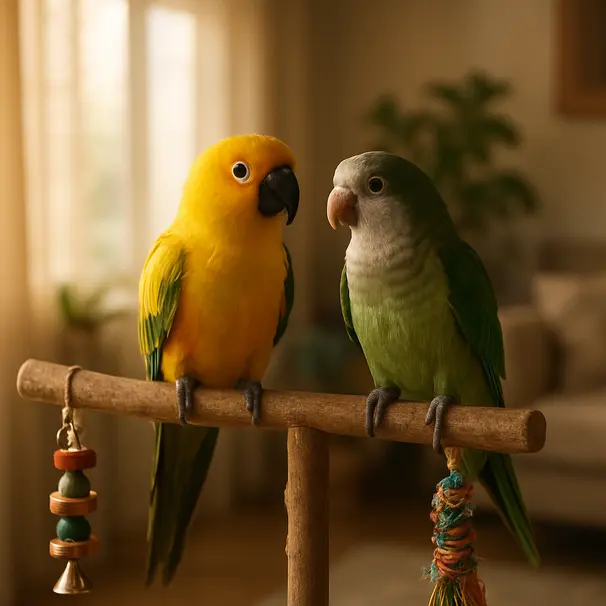
Welcome to the flock
Sharing a home with more than one bird is a delight. Birds are social, curious, and full of personality. But a multi-bird household brings extra layers of responsibility for pet carers and owners. This guide is written for carers who look after two or more pet birds, and for owners who want to make sure their flock receives consistent, loving care.
You’ll find practical tips on reading flock dynamics, setting up housing, feeding multiple birds, keeping things clean, handling introductions, and planning for travel or emergencies. The goal is simple: help birds feel safe, engaged, and well cared for, while making day-to-day routines manageable for carers.
Understanding flock dynamics
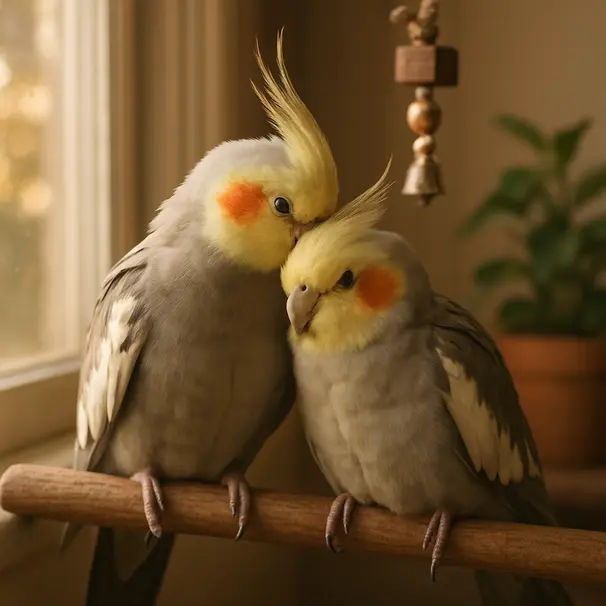
Birds form relationships. They bond with people and with other birds. Observing those bonds is the first skill a good carer learns. Small changes in behaviour often tell you how the flock is feeling.
Species and personalities matter
Different species have different social styles. Budgies and cockatiels are usually very social and enjoy flocking. African greys and amazons may be more selective with their friendships. Even within one species, personalities vary. One cockatiel might welcome company, while another prefers quieter corners.
Watch for body language. A relaxed bird will puff up slightly, preen, and sing. A tense bird may hold feathers tight, avoid eye contact, or chatter in alarm. Learning each bird’s baseline behaviour makes it easier to notice when something changes.
Social hierarchy and conflict
Like many animals, birds may establish pecking orders. This isn’t always aggressive. It can be subtle: which bird gets the highest perch, who eats first, and who moves away from an approaching hand. Some competition is normal, but it should not escalate into persistent bullying.
Signs of problematic conflict include repeated chasing, feather plucking, or clear avoidance of a certain cage area. If you see this, separate the birds temporarily and consult the owner and, if needed, a vet or avian behaviourist.
Housing and cage setup
Good housing reduces stress and prevents many problems. In a multi-bird home, space and structure are everything.
Cage size and layout
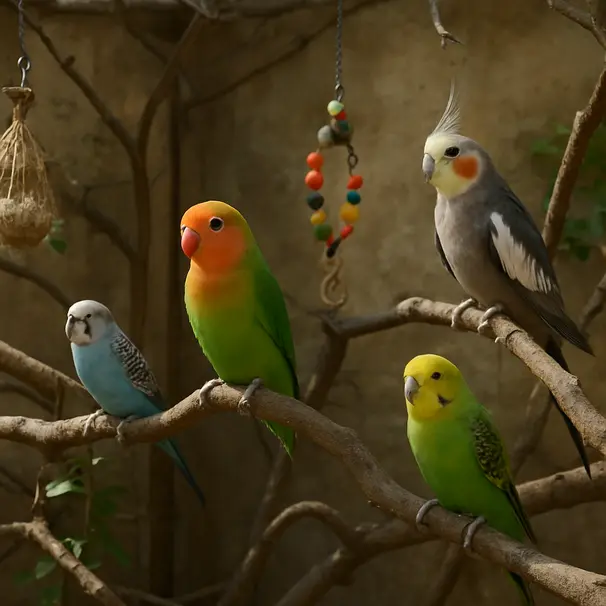
Pick a cage large enough for every bird to stretch wings and move freely. Birds should be able to fly short distances inside the aviary or between perches. As a general rule, larger is always better. If you can provide an aviary, even a modest sized one, it gives birds more variety and flight space.
Arrange perches of different diameters and materials, place feeding stations apart to reduce competition, and include quiet corners for birds that prefer solitude. Avoid overcrowding perches. Multiple birds should be able to sit without jostling.
Perches, toys, and enrichment
Vary perches: natural wood, rope, and dowels help exercise different foot muscles. Rotate toys regularly to keep interest high. Foraging toys, puzzle feeders, and shreddable items are great for mental stimulation.
Provide bathing opportunities, either with a shallow dish or a misting bottle, depending on what each bird prefers. Place mirrors or bells sparingly. For some birds, mirrors cause excitement or frustration, so monitor responses and remove if needed.
Feeding multiple birds
Feeding time can be a peaceful ritual or a source of tension. Plan ahead and keep nutrition consistent.
Diet basics
Offer a base of high-quality pellets, supplemented with fresh vegetables, fruits, and occasional seeds. Different species have different needs. Budgies thrive on mixes tailored for them, while larger parrots may need a broader vegetable selection.
Avoid sudden dietary changes. If you need to introduce new foods, do it slowly and observe each bird’s acceptance.
Reducing competition at mealtimes
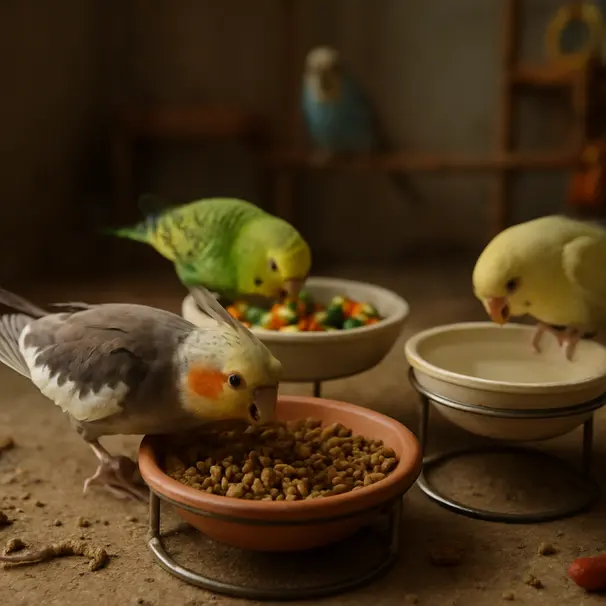
Set up multiple feeding stations spaced out around the cage or aviary. This prevents dominant birds from guarding a single bowl. Use different bowl heights so birds can eat comfortably without crowding.
For messier eaters, put fresh greens on a clip-on foraging station instead of a shared bowl. Offer high-value treats in separate areas for birds who need extra encouragement to eat.
Treats and portion control
Treats are useful for training and bonding, but they should be modest. Use small pieces of fruit or unsalted nuts as rewards. If one bird tends to overeat, offer treats only during supervised sessions to control portions.
Health, hygiene, and preventative care
Keeping a multi-bird household healthy is about routine, observation, and quick action when things look off.
Daily checks
A quick daily health check goes a long way. Observe droppings, appetite, activity level, breathing, and feather condition. Note any runny eyes, sneezing, fluffed feathers, or changes in vocalisation.
Keep a simple checklist for carers to sign each visit. That creates accountability and a record that can help track trends over time.
Cleaning routines
Clean food and water bowls daily. Remove uneaten fresh food after a few hours to prevent spoilage. Do a light spot-clean each day and a deeper clean weekly, including perches, toys, and cage trays.
Use bird-safe disinfectants and avoid harsh chemicals. Rinse surfaces thoroughly after cleaning. Consider disposable liners for quick tray changes.
Quarantine and illness precautions
If a new bird arrives or one shows signs of illness, separate them from the flock. Quarantine for a few weeks may be advisable, and a vet check can help rule out infectious diseases.
If you suspect illness, encourage the owner to contact an avian vet promptly. Use gentle language and suggest a vet consult, since early attention can help recovery.
Socialisation, training, and introductions
Helping birds form healthy relationships is a core part of caring for a multi-bird household.
Introducing new birds
Introduce birds gradually. Begin with visual and scent exposure through separate cages placed nearby. Swap perches or toys so each bird gets familiar scents.
After a few days, allow supervised short in-person sessions in neutral space. Watch body language closely. If birds relax and preen, that’s a good sign. If there is aggressive chasing or biting, separate them and try slower steps.
Encouraging positive interactions
Encourage shared activities, like group foraging or supervised out-of-cage time with multiple perches. Offer treats from different areas to reduce competition. Praise calm behaviour and reward birds individually to reinforce positive habits.
Gentle training techniques
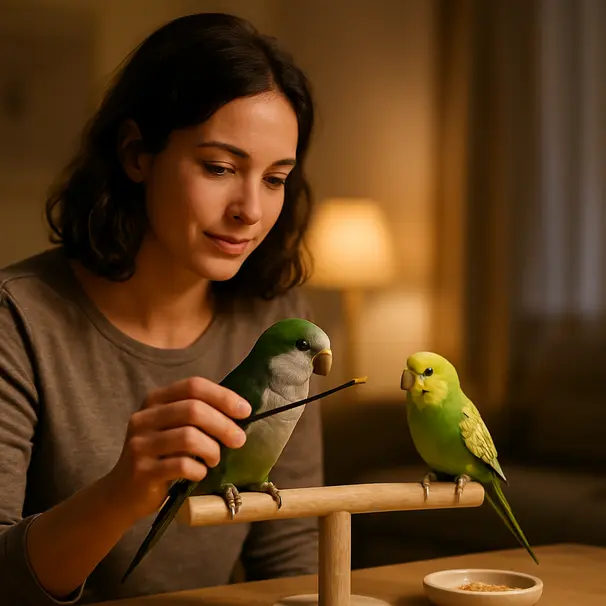
Short, consistent training sessions work best. Use positive reinforcement with small treats and calm verbal cues. Teaching recall, stepping up, and simple target training can reduce stress during handling and vet visits. Keep sessions brief and upbeat to maintain interest.
Handling logistics as a carer
Routine, clear communication, and preparedness keep care running smoothly for owners and birds.
Daily schedule and record keeping
Stick to routines. Birds thrive on predictable meal times, cleaning, and play. Keep a log of feeding, behaviours, and any notable events. Share this with the owner at the end of each visit to ensure everyone stays informed.
Include notes about mood, appetite, droppings, and enrichment provided. Small observations can flag slow-developing issues.
Travel and temporary care
If birds travel or are in a sitter’s home, use familiar carriers and bring favorite toys or perches. Minimise loud noises and bright lights during transit. Offer a calm, quiet environment at the destination to help birds settle.
When transporting multiple birds, use separate carriers unless the owner is comfortable with co-carriage. Make sure carriers are well-ventilated, secure, and lined with absorbent material.
Emergency planning
Know the nearest avian vet clinic and have emergency contact info for the owner. Keep a basic first-aid kit suited for birds, and understand what to do for common emergencies, such as bleeding or breathing difficulties. Always encourage owners to seek professional vet care in urgent situations.
Troubleshooting common challenges
Even with the best planning, problems can pop up. Here are practical fixes.
- Bullying bird: Create escape routes and multiple high perches, offer separate feeding times if needed, and consult owners about permanent rehoming if aggression persists.
- Picky eaters: Offer warm, steamed vegetables, finely chop favorites, and try different textures. Patience and repeated low-pressure exposure can help.
- Feather plucking: Reduce stressors, increase enrichment, and discuss vet evaluation. Avoid scolding the bird; it may increase anxiety.
A carer’s checklist: quick reference
- Confirm feeding plan and portion sizes with the owner.
- Do a daily visual health check and record observations.
- Refresh water and food, clean bowls.
- Rotate toys and provide foraging opportunities.
- Supervise out-of-cage time and introductions.
- Keep the environment calm and consistent.
Closing thoughts
Caring for multiple birds is rewarding. It asks for observation, patience, and a bit of creativity. A good carer listens to birds, adapts routines to their needs, and communicates clearly with owners. Flocks can be lively, hilarious, and deeply affectionate. With thoughtful care, they flourish.
If you’re ever unsure about a behavioural change or health concern, suggest a vet consultation. Small steps early on often make the biggest difference. Happy caring, and enjoy the company of your feathered friends.