

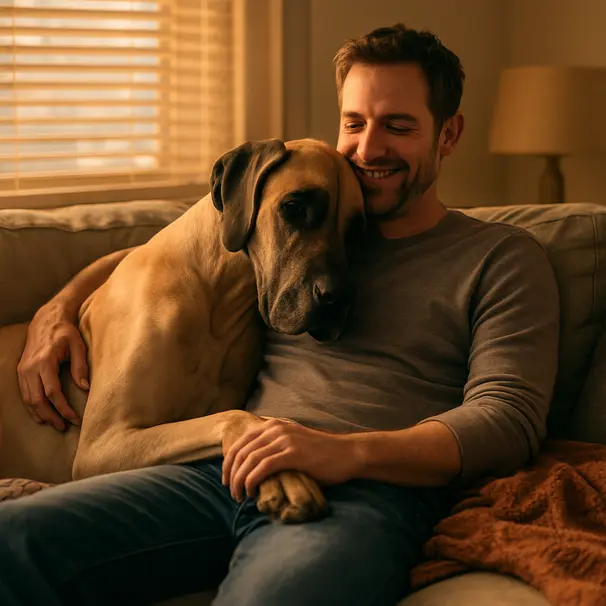
Nothing beats cuddling up with your dog, and it’s especially sweet when they’re a big one
Some dogs curl into a tiny loaf on your lap. Others need half the couch and a gentle elbow nudging your phone away. Big dogs have a special kind of cuddle: heavy, earnest, and sometimes hilariously awkward. They also ask for a little extra thought to keep snuggling safe, comfortable and relaxed for both of you.
This guide is written for pet owners and carers who love large breeds and want practical, friendly tips for enjoying those full-body hugs without the stress. We’ll cover how to build trust, cuddle safely, manage space, address behaviour, and prepare guest carers for big-dog cuddles.
Why big-dog cuddles feel so different
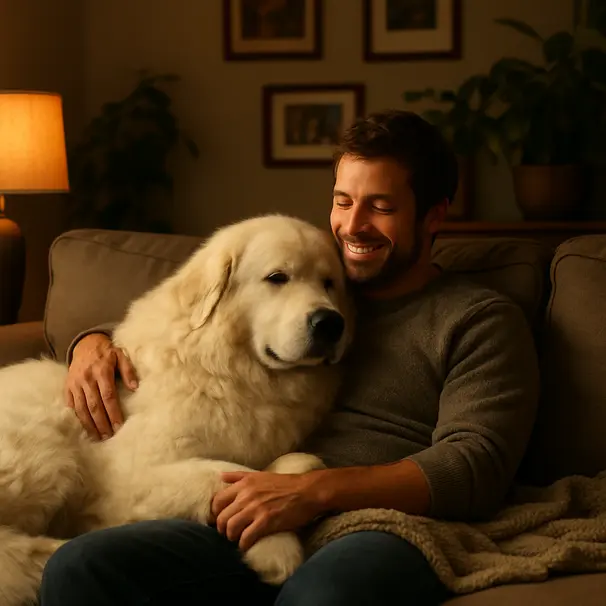
Large dogs carry more weight, louder snores and bigger personalities. But that size brings benefits beyond the obvious warmth. Physically, a large dog’s presence can feel grounding. Emotionally, many big breeds are gentle giants who enjoy leaning into people as a sign of trust.
Think of it like this: a small dog’s lap cuddle is a delicate exchange. A big dog’s cuddle is communal — you’re sharing the couch, the blanket and the moment. That togetherness can deepen bonds, reduce anxiety for some people and make downtime feel truly restful.
A few points to remember:
- Big dogs may prefer leaning against you rather than curling up. That’s normal and usually affectionate.
- Weight distribution matters. If your dog rests across your chest, you may need to adjust posture to breathe easily.
- Not every big dog likes full-on cuddles. Respect their body language and choose calmer moments for close contact.
Small signals that mean “I want to cuddle”
- Soft body weight against your leg or shoulder.
- Gentle head nudges or slow blinks.
- Settling down near you rather than across the room.
Safe snuggle practices for owners and carers
Safety and comfort are the heart of a good cuddle session. With large dogs, the stakes are mostly practical rather than dangerous. Use these simple habits to keep cuddling enjoyable.
- Choose the right space: A sturdy couch, a large dog bed or the floor are often better than a small armchair. If you’re on a bed, sit near the edge with room to move.
- Position thoughtfully: Sitting sideways lets a large dog lean against your torso without pinning you. Placing a pillow behind your back can stop them from leaning too hard.
- Keep your face safe: Oversized dogs sometimes get exuberant. If your dog tends to smother with kisses, teach a soft-mouth cue and reward gentle behavior.
- Monitor breathing and circulation: If a dog’s weight presses on your chest or neck, ask them to shift. Teach a reliable off or back-up cue to make this easy.
If you’re a pet carer or sitter, arrive ready with these cues and a calm voice. Big dogs read confidence. A relaxed, steady approach sets the tone.
Teaching polite cuddle habits
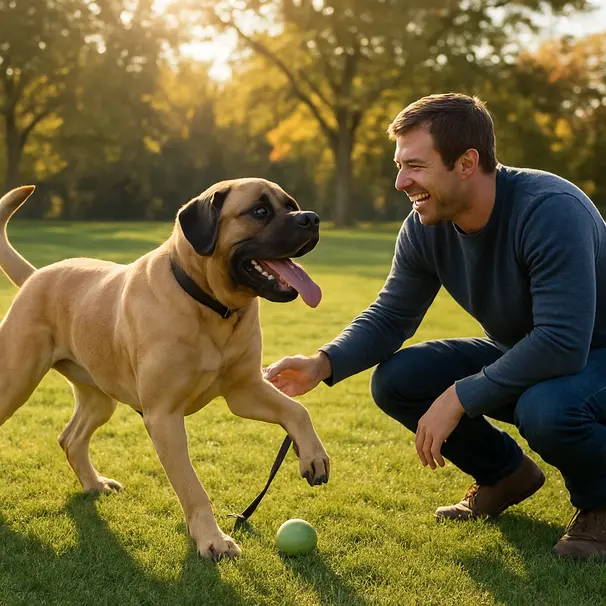
It helps to train a few basic manners so cuddles happen on your terms. Try short, positive training sessions to shape behavior.
- “Settle” on a mat: Teach your dog to lie on a designated mat or bed near you. Reward staying calm for a few breaths, then gradually increase time.
- “Off” for heavy leaning: Reward your dog when they back off gently. Use treats and praise to reinforce the behaviour you want.
- “Target” to redirect: A hand-targeting cue can guide a dog away from your lap when they get too enthusiastic.
Training tips:
- Keep sessions short and fun, especially with big breeds that can tire quickly.
- Use high-value treats, gentle praise and a soft voice.
- Practice cuddle manners in different rooms so your dog generalises the behaviour.
When size poses practical challenges
Large dogs bring practical realities that influence cuddling. Consider these points and plan around them.
- Space: A large dog may take up a whole sofa. If space is tight, create cozy zones like a big floor cushion or a bench with a dog bed.
- Furniture wear: Fluffy coats and big paws can show signs of use. Use washable throws or a dedicated dog blanket to protect upholstery.
- Allergies and cleaning: If someone visiting is sensitive to fur, offer a pet-free seating area or use a lint roller and an air purifier.
Health and comfort considerations
Cuddling with your dog can be soothing, but pay attention to comfort and wellbeing.
- Joint pain: Older large-breed dogs may have hip or elbow discomfort. Soft beds and gentle handling can help. Consider talking to a vet if stiffness limits cuddling.
- Heat: Big dogs can be warm. If your dog is panting during cuddles, give them space and water. Cooling mats can help in hot weather.
- Behaviour change: If your dog suddenly avoids cuddles, seems unusually clingy, or shows signs of pain, consider scheduling a vet check. Small behaviour shifts can sometimes reflect health changes.
Avoid making medical conclusions. Instead, consider these issues signals that it may be time to see a professional.
Bond-building activities that lead to better cuddles
Cuddles tend to be more sincere when your dog trusts you. Bonding takes time and happens through everyday moments.
- Gentle grooming: Brushing, ear rubs and slow massage sessions can create calm associations with touch.
- Low-key play: Short, predictable play sessions followed by quiet time make falling into cuddle mode natural.
- Shared routines: Feeding, short walks and training create reliable structure. Dogs often relax best when they know what’s coming next.
Try ending a training session with a few minutes of calm petting and a soft word. That helps your dog connect obedience with affection rather than pressure.
Choosing a big dog if cuddles are your goal
If you’re thinking of adopting a large breed because you love big cuddles, there are things to consider beyond size.
- Temperament: Breeds vary. Some large dogs are naturally more independent and prefer personal space. Research breed tendencies and meet individual dogs before deciding.
- Activity level: A high-energy big dog may need more exercise before they settle down. If your day is busy, consider a calmer large breed or ensure a dog walker or sitter can help.
- Living situation: Apartments can work for big dogs if you commit to regular outdoor time and training.
Adoption tip: Spend time with the dog in different settings—quiet afternoons, after a walk, and during mealtime—to see how they relax and whether they like close contact.
Preparing carers and sitters for big-dog cuddles
If you use a pet carer, sitter or a walking service, a little information goes a long way. Carers who understand a dog’s cuddle style will create better experiences and avoid mishaps.
Share these details with them:
- Your dog’s cuddle cues and how they like to be approached.
- Commands your dog listens to (for example, settle, off, or back-up).
- Any health issues, joint pain or food sensitivities.
- Preferred places to cuddle and where the dog should not be allowed, like certain pieces of furniture.
Invite your carer to do a short meet-and-greet at home. Observing your dog’s behaviour in a familiar environment makes a carer’s first cuddle attempt much smoother.
Cuddle-friendly gear and home setup
A few practical items make snuggle time cleaner and comfier.
- Large, washable throws: Protect upholstery and make cleanup simple.
- Oversized dog beds or floor cushions: These let your dog settle close without crowding you.
- Non-slip rugs and ramps: For older or giant breeds, ramps help them get onto beds or couches safely.
- Lightweight blankets: If your dog gets warm, breathable fabrics are best.
If guests are coming over, have a separate seat they can use and show how your dog likes to greet people. Clear routines keep everyone comfortable.
Troubleshooting common cuddling problems
Even calm big dogs can cause odd hiccups. Here’s how to handle a few familiar scenarios.
- Too heavy or smothering: Gently ask your dog to move to a mat, reward when they comply, and practise this cue regularly.
- Overexcited jumping: Turn away and wait for four paws on the floor before giving attention.
- Resource guarding while on your lap: Avoid reaching for objects near a dog’s mouth or bed. Work with a trainer if guarding continues.
Consistency and patiently reinforcing calm behaviour usually help most issues. If a behaviour feels risky or worrying, consider consulting a professional trainer or behaviourist.
Final thoughts: make cuddling a mutual joy
Big dogs give big love, but they need clear boundaries and thoughtful handling to make cuddles comfortable for everyone. Keep sessions positive, watch your dog’s signals, and ask for help if something changes. With a little planning, those giant, warm snuggles can be the sweetest part of your day.
If you’re a carer, bring calm confidence and clear notes from the owner. If you’re an owner, equip your dog with gentle cues and comfy spaces. In the end, cuddling is about connection. When a big dog leans into you, that trust is a small miracle worth protecting.
Happy snuggling — and may your couch always have enough room.