

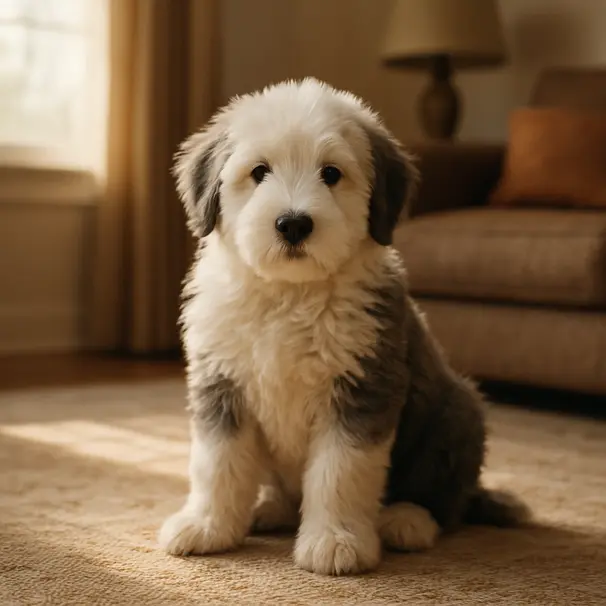
Old English Sheepdog puppy guide
Welcoming an Old English Sheepdog puppy into your life is like inviting a walking cloud of love and curiosity. These pups are big, bouncy, and endlessly affectionate. They also come with a few special needs, especially around grooming, training, and energy management. This guide is written for pet owners and carers who want warm, practical advice to raise a confident, healthy OES pup.
Meet the Old English Sheepdog puppy
The Old English Sheepdog, often called an OES, is known for its shaggy coat and sweet temperament. Puppies are playful and affectionate, and they tend to form strong bonds with people. Their intelligence makes them quick learners, but their puppy energy and large size can mean training should start early.
Personality at a glance:
- Friendly and people-oriented
- Playful but sometimes stubborn
- Intelligent and eager to please when motivated
- Good with families, can be protective of their people
Because OES pups grow into large dogs, early handling, socialization, and structure will help them become well-mannered adults.
Preparing your home
Before your puppy arrives, set up a safe, comfortable space. A well-defined zone helps puppies learn house rules and gives them a secure place to rest.
Essentials to prepare:
- A sturdy crate or gated area for naps and overnight sleeping
- Soft bedding that can be washed frequently
- Durable chew toys and puzzle toys to keep them busy
- Food and water bowls that won’t tip easily
- A grooming station or corner with brushes and supplies
Puppies explore with their mouths, so puppy-proofing is a must. Hide electrical cords, secure low furniture, and remove small objects that might be swallowed. Consider baby gates to block off stairs or areas you want to keep pup-free for now.
Feeding and nutrition
OES puppies grow quickly and need balanced nutrition to support healthy bones, joints, and coat. Look for high-quality puppy food formulated for large-breed puppies, as the calorie and calcium balance can affect growth rate.
Feeding tips:
- Feed measured portions on a regular schedule, usually three meals a day for young puppies, shifting to two meals as they mature
- Avoid overfeeding to reduce stress on developing joints
- Consider food with omega fatty acids to support skin and coat health
- Introduce new foods gradually to avoid upset tummies
Always consider consulting your veterinarian about the best diet for your pup, and discuss any supplements before you start them.
Grooming: a regular commitment
One of the best things about OES is their plush coat, and one of the trickiest parts is keeping it tangle-free. Regular grooming helps prevent mats and keeps your puppy comfortable.
Grooming basics:
- Brush at least three times a week to prevent tangles and mats, more often during coat changes
- Start handling the puppy’s paws, ears, and mouth early so they get used to grooming
- Introduce bathing gradually, using puppy-friendly shampoo, and make it a calm, positive experience
- Have professional grooming scheduled when the coat becomes too much to manage at home
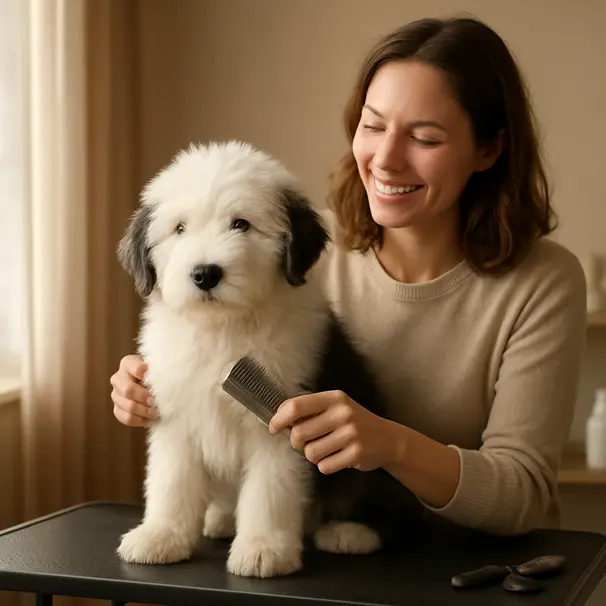
Tools and techniques
Use a slicker brush, a wide-tooth comb, and a detangling spray for spot treatment. Work patiently in small sections, praising and rewarding your pup for calm behavior. If a mat is too tight, it may be safer to have a professional groomer handle it rather than risk hurting the puppy.
Grooming time is also bonding time. With patience, many OES puppies learn to enjoy gentle brushing and the attention that comes with it.
Exercise and mental stimulation
OES puppies need both physical activity and mental challenges. Too little exercise can lead to boredom and unwanted behaviors, while too much high-impact activity can stress growing joints.
Exercise tips:
- Short, frequent walks rather than long, strenuous sessions for young pups
- Play sessions in a secure yard or indoor fetch for controlled energy release
- Puzzle toys, scent games, and basic training drills to work the brain
- Rotate toys regularly to keep interest high
Remember to watch for signs of tiredness. Puppies often play in bursts and then crash. Rest is as important as activity for healthy development.

Training and socialization
Early training sets your OES puppy up for a lifetime of good behavior. Start with gentle, consistent routines and keep training sessions short and fun.
Foundational training:
- Name recognition and recall using high-value treats and praise
- Crate training and settling cues to help with confidence
- Basic commands: sit, stay, down, and leave it
- Loose-leash walking from the first walks
Socialization is equally important. Introduce your puppy to varied people, dogs, sounds, and places. Make new experiences positive and gradual. Positive reinforcement works best with OES puppies; they respond well to praise and treats.
Consider puppy classes or working with an experienced trainer to get tailored help. If any behavior concerns arise, consider consulting a professional sooner rather than later.
Health, vet care, and what to watch for
Old English Sheepdogs are generally healthy, but like all breeds they may be prone to specific conditions. Regular checkups, vaccinations, and parasite prevention help keep your pup on track.
Health reminders:
- Schedule regular veterinary visits and keep vaccinations current
- Discuss large-breed growth and joint health with your vet, and consider appropriate exercise limits
- Keep an eye on ears and skin for irritation, especially in a thick coat
- Monitor weight and body condition to avoid excess strain on developing bones
Avoid making medical decisions without professional advice. If you notice unusual behavior, persistent limping, loss of appetite, or skin issues, consider contacting your vet promptly.
Crate training and house training
A crate, when introduced kindly, can become a puppy’s safe place and a helpful tool for house training.
Crate training steps:
- Make the crate comfortable with bedding and a safe chew toy
- Feed meals near the crate, then gradually move them inside
- Keep crate sessions short at first, increasing length as the puppy settles
- Never use the crate for punishment
House training is a combination of supervision, schedule, and positive reinforcement. Take your puppy out after meals, naps, and play sessions. Praise and reward immediately after they go in the right spot.
Patience and consistency are key. Expect accidents and stay calm; puppies learn over time.
Choosing a breeder or rescue
If you’re looking for a puppy, research is crucial. Responsible breeders focus on health testing and temperament. Rescues and shelters may also have OES mixes or adults in need of homes.
Questions to ask breeders or rescues:
- Can you see health clearances for parents?
- What socialization have the puppies received?
- How do you transition puppies to new homes?
- Can I meet at least one parent, and see the living conditions?
A trustworthy breeder or rescue will welcome your questions and provide clear, honest answers. If anything feels off, trust your instincts and keep looking.
Working with pet carers and sitters
On Floofy, you can find carers who understand the specific needs of fluffy breeds like OES. When choosing a carer, look for experience with large, long-coated dogs and clear communication about grooming, exercise, and feeding routines.
Tips for a great match:
- Share a written routine with feeding times, exercise levels, and grooming needs
- Introduce the carer to your puppy before a long stay, if possible
- Provide clear instructions about diet, medications, and emergency contacts
- Ask carers about their handling of grooming, brushing, and mat prevention
A good carer becomes part of your puppy’s extended family. Meet them, ask for references, and arrange a short trial visit to build comfort on both sides.
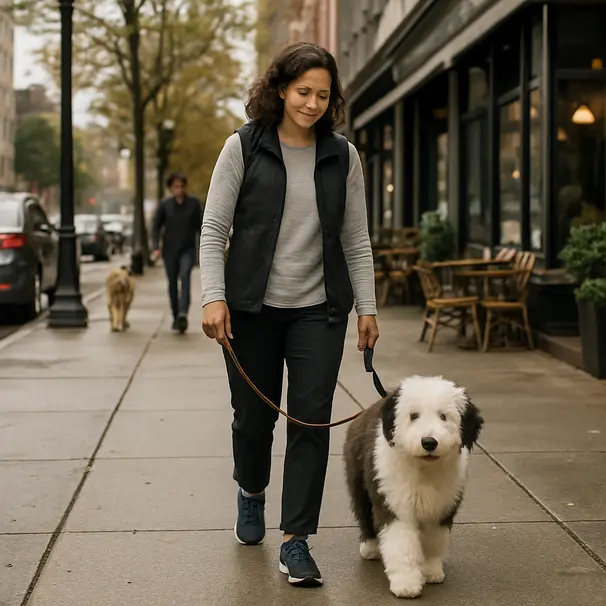
Common puppy challenges and gentle solutions
Chewing: Redirect to approved chew toys, rotate toys to keep interest, and supervise closely.
Jumping: Teach an alternate greeting, like sitting, and reward calm approaches.
Separation anxiety: Build short departures gradually, leave comforting items, and consider crate or enrichment toys to ease alone time.
Mats and tangles: Tackle small tangles quickly, use detangling spray, and schedule professional grooming if needed.
Each puppy is unique. If a challenge feels overwhelming, a trainer or behaviorist can offer tailored strategies.
Practical checklist for the first three months
- Schedule first vet visit and vaccination plan
- Start crate and house training routines
- Begin gentle grooming habits and weekly brushing
- Enroll in a puppy socialization class or arrange controlled meetups
- Rotate toys and introduce basic training games
- Meet a trusted pet carer and leave a short trial stay
Final thoughts
Old English Sheepdog puppies bring warmth, charm, and a lot of fur into a home. With patience, consistent training, and regular grooming, they become loyal, playful companions. Celebrate small wins, ask for help when you need it, and enjoy the silly, fluffy moments.
If you ever have concerns about health or behavior, consider contacting your veterinarian or a qualified trainer for personalized guidance. With love and a little planning, your OES pup will thrive as a calm, confident family member.