

Introduction
Leaving your pet with a new carer can feel like a leap of faith. A thoughtful checklist makes that leap smaller, calmer, and a lot more predictable for everyone. This post is for pet owners and carers. It covers the practical bits, the comforting extras, and small details that help pets settle quickly. Use it to prepare, to communicate clearly, and to make the stay feel like a little home away from home.
Before You Book: Essentials to Confirm
Start early. Confirm the basics with your chosen carer at least a week before the stay. That gives both of you time to ask questions and adjust plans if needed.
- Identification and contact details: Provide your phone numbers, email, home address, and an emergency contact who can make decisions if you cannot. Make sure the carer has permission to seek veterinary care.
- Vaccinations and health proof: Ask the carer what records they need. Many carers prefer up-to-date vaccinations and proof of parasite prevention. If unsure, consider checking with your vet and the carer for their preferences.
- Insurance and liability: Clarify who is responsible for vet bills in non-emergency situations. This avoids awkward conversations later.

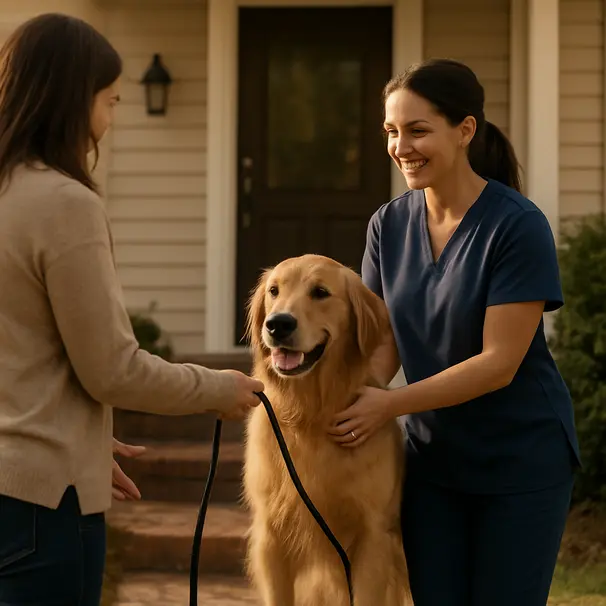
Image context
Caption: A warm handoff at the doorstep builds trust and calm. Place this image after confirming basics to show a friendly meet and greet.
Packing Checklist: What to Bring
Think of packing as curating a tiny comfort kit. Bring items that carry scent, maintain routine, and simplify care for your carer. Label everything with your pet’s name.
Food and feeding
- Food supply: Pack enough food for the entire stay plus a small extra. Keep it in its original packaging or in sealed containers with clear feeding instructions and portion sizes.
- Treats and preferences: Note any favorite treats or foods to help with training and rewards. Mention any food sensitivities or allergies.
- Feeding schedule: Write a clear schedule including meal times, portion sizes, and any slow-feeding instructions.
Medication and health
- Medications in labeled containers: Leave medications in original packaging when possible, with dosage instructions on paper. If your pet needs injections, show the carer how to administer them in advance and consider a practice run.
- Medical summary: Include a brief health summary with chronic conditions, past surgeries, and current concerns. Use simple language so the carer can follow quickly.
- Vet contact info and authorization: Provide your veterinarian’s number and a signed note authorizing the carer to seek treatment if necessary. Consider including a secondary veterinary clinic near the carer, just in case.
- Ask a vet when uncertain: If your pet has complex medical needs, consider consulting your vet so the carer can confidently provide care.
Comfort and safety items
- Favorite bed or blanket: A scent-rich item helps pets settle faster. If space is limited, a smaller towel or toy that smells like home can work equally well.
- Collar, ID, and leash: Pack a sturdy leash and a collar with an ID tag. If your pet normally wears a harness, bring that too.
- Crate or carrier: If your pet is crate-trained, bring their familiar crate. Label it with their name and your contact details.
- Toys and enrichment: Pack a few toys, especially ones that keep your pet busy. Puzzle toys are great for mental stimulation while you are away.
Preparing Clear Written Instructions
Even the friendliest carers appreciate a one-page cheat sheet. Keep it short, direct, and easy to find.
- Daily routine summary: Wake time, walks, meals, playtime, and bedtime routines. Include how long walks should be and if leash recall is reliable.
- Behavior notes: Mention any triggers, fears, or quirks. For example, does your dog bark at the mail carrier, or does your cat hide when visitors arrive?
- Discipline and rewards: Explain how you handle misbehavior and what positive rewards work best. Consistency is helpful for both the pet and the carer.
- Emergency steps: Outline what to do in non-life-threatening scenarios, who to contact, and any limitations on treatments you will allow.

Image context
Caption: A carer reviews a clear care plan before the stay begins. Place this image near the written instructions section to illustrate preparation.
Introduce Your Pet Ahead of Time
First impressions matter. A short meet-and-greet visit can reduce stress on drop-off day.
- Two-way introductions: Let your pet explore the carer’s home or let the carer visit your home. Keep it short, relaxed, and positive.
- Practice the routine: Have the carer do a short walk or feeding during the meet-up. That helps build confidence for both sides.
- Watch body language: Teach the carer signs of stress and comfort for your pet so they can respond appropriately.
Drop-Off Day: Tips to Keep Things Calm
Drop-off is often more emotional for the owner than the pet. Stay calm and straightforward. Pets pick up on your energy, so a composed goodbye helps them settle.
- Stick to routine: Try to keep feeding and walking times as usual on drop-off day. Familiar patterns soothe pets.
- Bring a comfort item: Leave that favorite blanket or toy with the carer so your pet has a piece of home nearby.
- Short goodbyes: Lingering farewells can raise anxiety. Give a brief hug or treat and leave confidently.
- Confirm arrival check-in: Ask the carer to send a quick message after the pet has settled or at a predictable time each day.

Image context
Caption: A relaxed pet rests after settling into their temporary home. Place this image near drop-off tips to show a calm outcome.
During the Stay: Communication and Updates
Agree on check-in frequency before you leave. Some owners prefer a daily photo, others want a quick text every couple of days. Set expectations early.
- Photos and messages: Decide what comforts you. Photos can reassure, but respect the carer’s time by setting a realistic cadence.
- Health monitoring: Ask the carer to watch for appetite, bowel movements, and energy changes. These are good early indicators of how your pet is adjusting.
- Behavior notes: If unusual behaviors appear, ask for notes on what preceded them. This detail can help identify triggers or medical issues.
Special Considerations by Species and Personality
Every pet is an individual. A social golden retriever will need different handling than a shy senior cat.
Dogs
- Exercise needs: Be clear about walk frequency, off-leash privileges, and playgroup suitability.
- Training cues: Share key commands and reward methods. A unified approach prevents confusion.
Cats
- Litter preferences: Note type of litter, cleaning schedule, and box location.
- Territory and hiding spaces: Tell the carer where the cat prefers to be left alone and how to coax them out for interaction.
Small pets and exotics
- Habitat care: Provide setup instructions for temperature, substrate, and feeding routines. Small changes can stress sensitive animals.
- Handling notes: Explain safe handling steps and when to avoid picking up the pet.
Preparing Your Home and Belongings
Leave a safe, tidy environment for both your pet and the carer. Clear instructions reduce questions and help the stay go smoothly.
- Clean up hazards: Remove breakables, secure trash, and lock cabinets if needed.
- Access and keys: Provide clear instructions for alarm systems, gates, or garage access. Leave spare keys with the carer only if necessary.
- House rules: Note any off-limit rooms or furniture preferences.
Returning Home: Easing the Transition Back
After time away, your pet may be excited, tired, or a mix of both. Give them space to reacquaint with you and the house.
- Check for changes: Ask the carer about any behavior shifts, appetite changes, or health notes. This helps spot issues early.
- Gradual reintroduction: Stick to normal routines but allow a few days for your pet to readjust. Keep walks and interactions patient and predictable.
- Thank your carer: A thoughtful review or a small thank you helps build relationships for future care.
Tips for Pet Carers: What to Ask and Confirm
If you care for pets professionally or occasionally, clear communication sets expectations and earns trust.
- Ask for clarifications: If something is unclear, request a photo or video example. Owners often appreciate the attention to detail.
- Document changes: Keep a short daily log of meals, walks, and notable behaviors. This is helpful for owners and for your own records.
- Emergency preparedness: Have a plan for transportation to the vet and a backup contact for owners. Keep vet forms and permissions on hand.
Sample Printable Checklist
To make life easier, here is a condensed checklist you can copy and use.
- Owner contact and emergency contact
- Vet name and phone number, authorization for care
- Food and feeding schedule, labeled containers
- Medications with dosages and instructions
- Favorite bed, blanket, or carrier
- Leash, collar, ID tag, harness
- Crate, toys, puzzle feeders
- Written routine and behavior notes
- Keys, alarm instructions, house rules
Final Thoughts
Preparing for pet boarding is about the small choices that add up to comfort and clarity. A few familiar scents, clear instructions, and open communication help pets settle and give owners peace of mind. Carers who receive thoughtful information can provide better care. If your pet has medical needs, consider consulting your veterinarian for additional advice. With preparation and kindness, a stay with a trusted carer can be a positive adventure for your furry friend.