

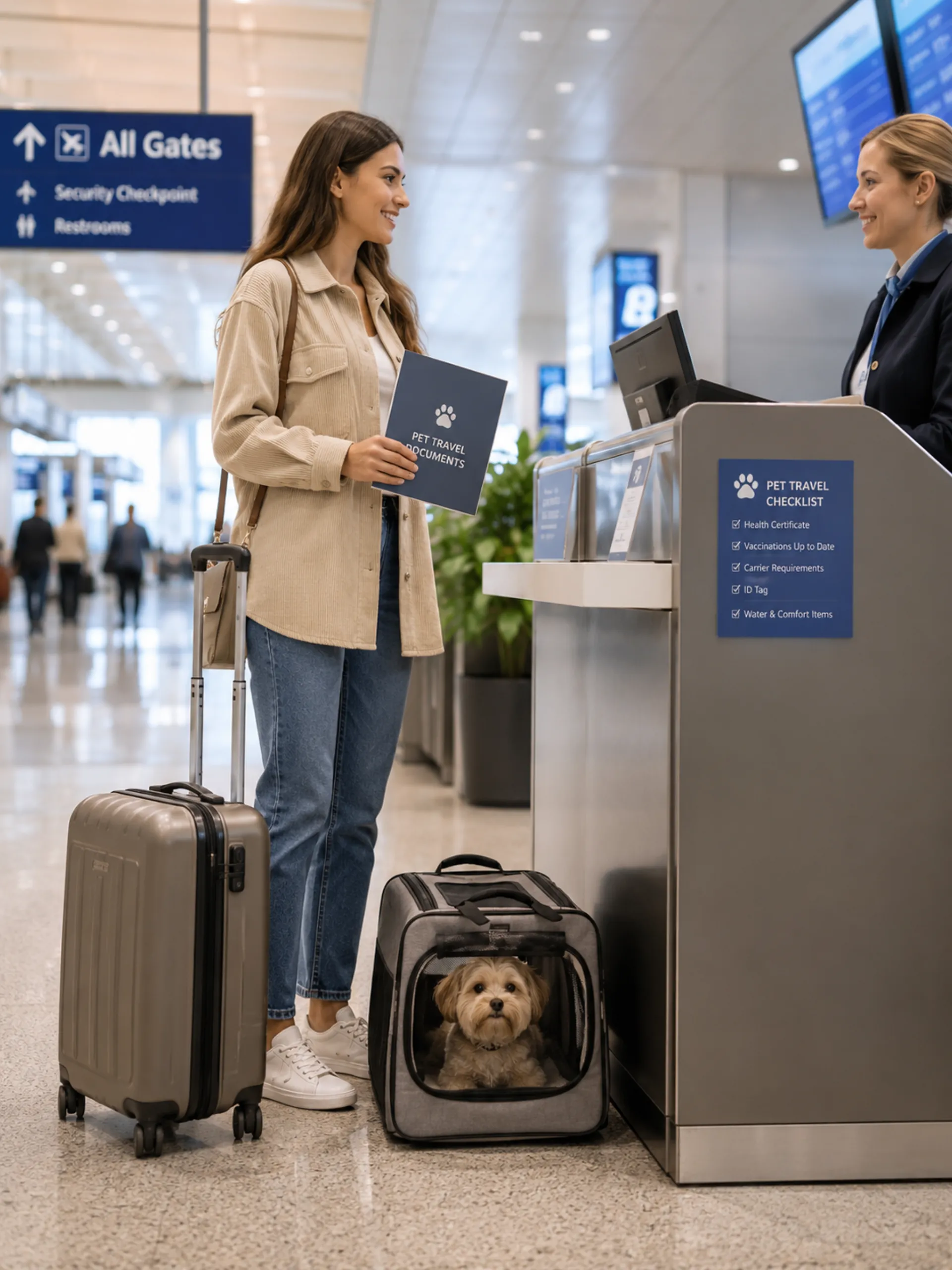
Flying with a pet can feel overwhelming, but with the right preparation it doesn’t have to be stressful — for you or your furry companion. Whether you’re relocating, going on holiday, or bringing your pet along for a family visit, this guide covers everything you need to know about air travel with pets.
Cabin vs. Cargo: What Are Your Options?
Most airlines offer two ways to fly with a pet:
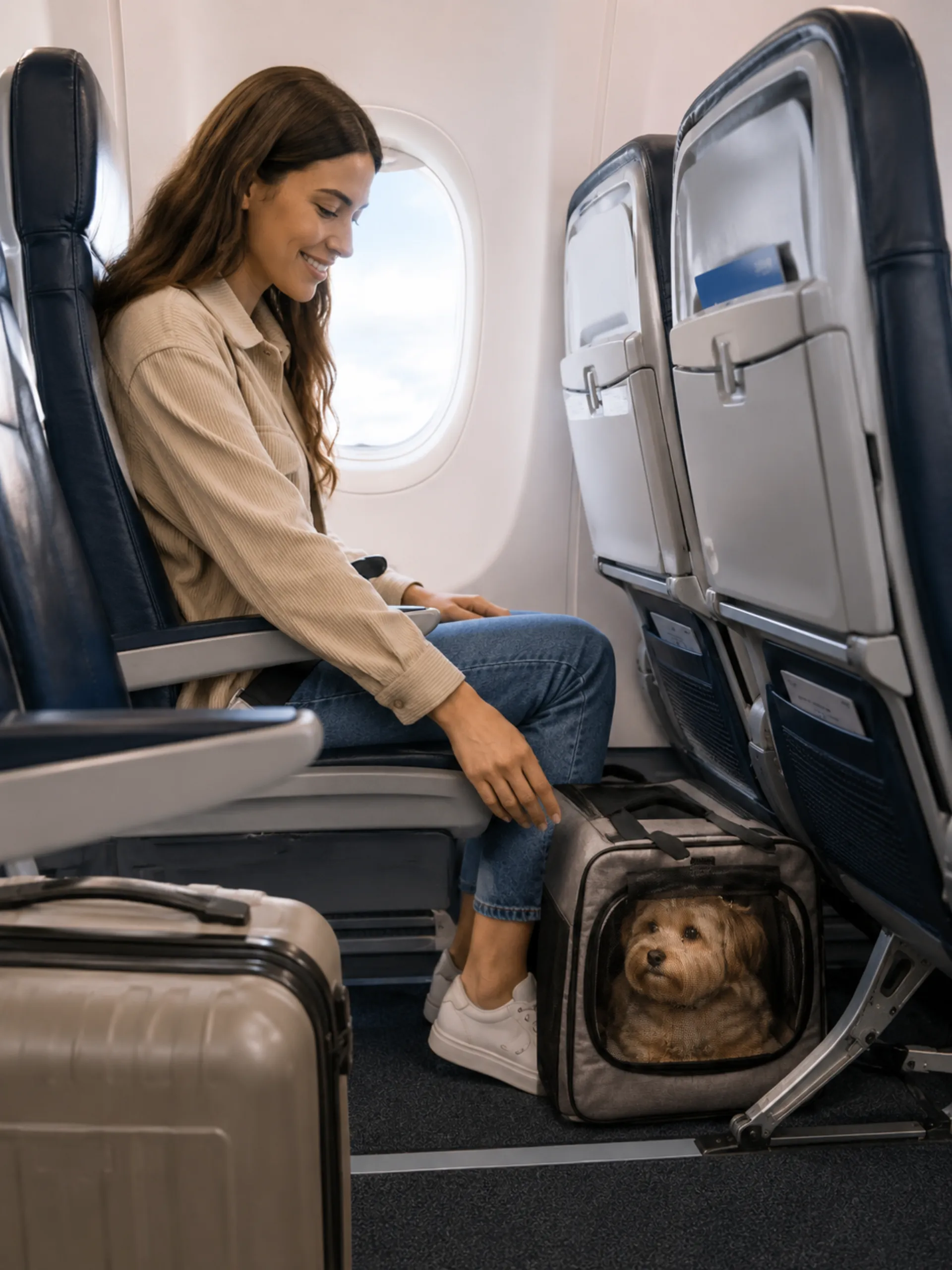
- In-cabin — Small pets (usually under 8 kg including the carrier) can travel under the seat in front of you.
- Cargo hold — Larger pets travel in a pressurised, temperature-controlled section of the aircraft.
Some airlines also offer a third option for snub-nosed breeds or oversized carriers: dedicated pet transport services. Always check your airline’s specific policy well in advance.
Airline Requirements You Should Know
Every airline has its own rules, but here are the most common requirements:
- A health certificate issued by a vet (usually within 10 days of travel).
- Up-to-date vaccinations, especially rabies.
- An airline-approved carrier or crate with proper ventilation.
- Microchip identification.
- For international flights: import permits, quarantine rules, and additional documentation depending on the destination country.
Book your pet’s spot early — most airlines limit the number of animals per flight.
Choosing the Right Carrier
Your pet’s carrier is their safe space during the flight. Make sure it meets these criteria:
- Large enough for your pet to stand, turn around, and lie down comfortably.
- Sturdy, leak-proof bottom with absorbent lining.
- Proper ventilation on at least two sides.
- Secure latches that won’t pop open.
- Labelled with your contact information and a “Live Animal” sticker for cargo travel.
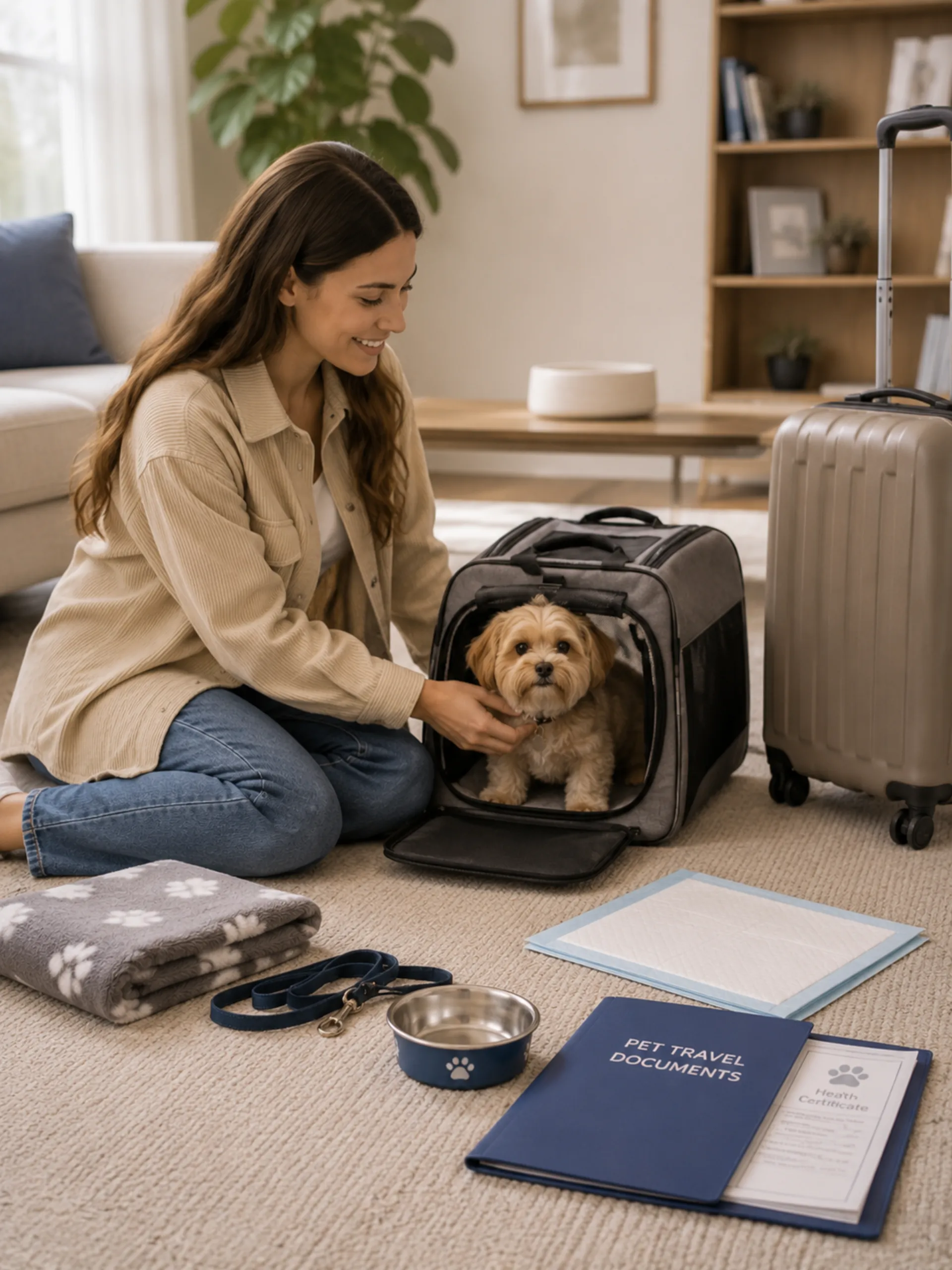
Let your pet get used to the carrier weeks before the trip. Leave it open at home with treats and a familiar blanket inside.
Preparing Your Pet for the Flight
A calm pet makes for a smoother journey. Here’s how to prepare:
- Visit the vet — Get a health check and ask whether mild calming aids are appropriate for your pet.
- Stick to routine — Keep feeding and walking schedules normal in the days before travel.
- Exercise before departure — A tired pet is a calmer pet. Give them a good walk or play session before heading to the airport.
- Limit food — Feed a light meal 4–6 hours before the flight to reduce the risk of nausea.
- Hydrate — Offer water up until departure. Attach a small water dish to the crate for cargo travel.
At the Airport
Arrive early to handle pet check-in procedures without rushing. Keep these tips in mind:
- Have all documents easily accessible.
- Keep your pet in the carrier at all times in the terminal (unless asked to remove them at security).
- Stay calm — pets pick up on your stress.
- For cargo pets, confirm with airline staff that your animal has been loaded before boarding.
During the Flight
If your pet is in the cabin:
- Keep the carrier under the seat in front of you.
- Avoid opening the carrier during the flight.
- Offer quiet reassurance — a calm voice or a finger through the mesh can help.
If your pet is in cargo:
- Trust the process. Cargo holds on modern aircraft are climate-controlled.
- Ask the crew to confirm your pet is on board if you’re anxious.
After Landing
Once you’ve arrived:
- Retrieve your pet as quickly as possible.
- Offer water and a small amount of food.
- Give them time to decompress — a quiet space and familiar items help.
- Watch for signs of stress (excessive panting, hiding, loss of appetite) in the following hours.
When Flying Isn’t the Best Option
Air travel isn’t suitable for every pet. Consider alternatives if your pet:
- Is a brachycephalic (flat-faced) breed — they’re at higher risk of breathing issues.
- Is very elderly or has a health condition.
- Becomes extremely anxious despite preparation.
In these cases, a trusted pet carer at home may be the better choice. Platforms like Floofy make it easy to find verified carers near you who can look after your pet while you travel.
FAQ
Can all pets fly?
Most cats and dogs can fly, but some breeds (especially brachycephalic ones) face restrictions. Exotic pets, birds, and rabbits depend on the airline.
How much does it cost to fly with a pet?
In-cabin fees typically range from €50–€200 per flight. Cargo transport can cost €200–€800+ depending on the route and pet size.
Should I sedate my pet for the flight?
Most vets advise against sedation because it can affect breathing and balance at altitude. Ask your vet about natural calming alternatives instead.
What if my pet has never been in a carrier?
Start crate training at least 2–3 weeks before your trip. Make the carrier a positive space with treats, meals, and short practice sessions.