

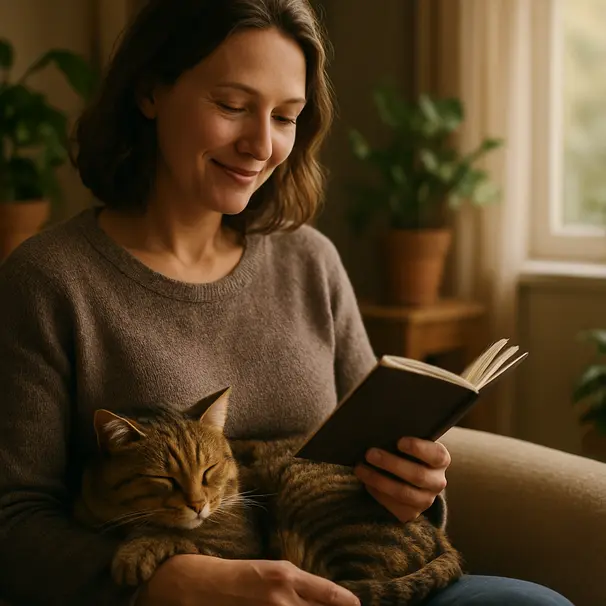
Understanding Cat Anxiety and Stress
Cats express worry in subtle and obvious ways. Some will hide, hiss, or suddenly refuse food. Others overgroom, cry at the door, or become clingy. First, notice the signals your cat gives, and try to read their body language: flattened ears, wide pupils, a tucked tail, or repeated pacing are all clues.
Stress in cats can come from many sources. Changes in household routine, new people or pets, loud noises, and unfamiliar smells may unsettle them. Even things humans consider small, like moving furniture or a new visitor, can tip a sensitive cat into anxiety. Keep in mind that each cat is an individual. What rattles one may be barely noticeable to another.
The goal isn’t to eliminate every stressor. That would be unrealistic. Instead, aim to reduce triggers and provide steady, reassuring supports that help your cat cope day to day. Below are practical steps you can take at home, many of which carers can use when caring for other people’s pets.
Create Calm Spaces
Cats need safe retreats. A quiet, cozy hideaway gives a nervous cat power over their environment. That control helps reduce stress.
- Offer multiple hiding spots. Use a covered bed, a box with a blanket, or a high shelf. Spread these around the home so your cat can escape to a different area if one space becomes busy.
- Place beds near sunny windows. Sun patches are naturally soothing. If windows are scarce, provide a warm blanket or a low-heat mat.
- Keep a low-traffic room as a sanctuary. A small bedroom or spare office can work well. Leave a litter tray, food, water, and toys there so the cat has everything it needs without pressure to interact.
Consider soft, washable fabrics for bedding. Familiar textures can become reassuring cues. If a cat has moved house or had a vet visit, bringing a familiar blanket back out often helps them re-establish comfort.
Use Predictable Routines
Cats are creatures of habit. A consistent daily routine for feeding, play, and quiet time can reduce anxiety by making the world more predictable.
- Feed at roughly the same times each day. Scheduled feeding builds trust and structure.
- Keep play sessions brief and regular. Two or three short sessions daily often work better than one long burst.
- Stick to a bedtime and wake-up rhythm. Cats may adapt more quickly to humans who follow a steady rhythm rather than a constantly changing schedule.
If you’re a pet carer, ask the owner about the cat’s usual routine and try to match it. Small differences in timing can make an anxious cat feel off balance.
Enrichment and Meaningful Play
Mental stimulation helps reduce excess energy and distracts a worried mind. Enrichment can be as simple as hiding food in a puzzle feeder or rotating toys so things feel novel.
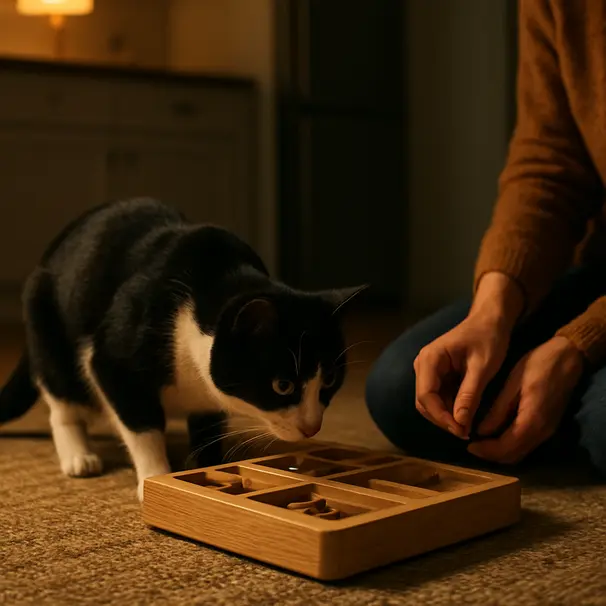
- Use puzzle feeders and slow feeders. They encourage natural foraging behavior and can slow down fast eaters.
- Rotate toys weekly. Fresh toys spark curiosity and engagement.
- Try wand toys with gentle, unpredictable movements. These simulate hunting and often provide satisfying, non-threatening interaction.
Play sessions should end before the cat is exhausted. Leave them wanting a little more. That positive ending keeps play inviting rather than frustrating.
Scent and Sound: Subtle Calming Tools
Cats rely heavily on scent and sound. Small, targeted changes in these areas may promote calm.
- Use familiar smells. Keeping a worn shirt or blanket nearby can be comforting. You might also try synthetic pheromone diffusers, which some cats find soothing. Consider them as one part of a wider plan.
- Keep noise levels steady. Sudden, loud noises are upsetting. If you need to host guests or do noisy chores, give your cat access to their peaceful room.
- Play soft, steady music or nature sounds. Low-volume piano or classical music has been reported to soothe some cats. Observe how your cat responds and adjust accordingly.
If your cat reacts badly to any scent or sound product, stop using it and consult the owner or a veterinarian.
Gentle Handling and Positive Interactions
How we approach and touch a worried cat matters. Slow, calm gestures build trust.
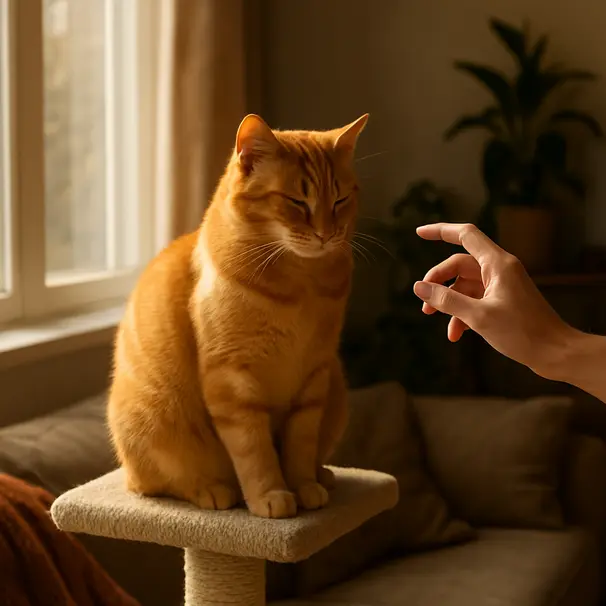
- Let the cat come to you. Sit quietly and offer a hand for a sniff. Avoid looming over the cat.
- Use slow blinks to communicate calm. Many cats recognize this as a friendly signal.
- Learn each cat’s tolerance. Some love belly rubs, many do not. Pet along preferred areas like behind the ears or at the base of the tail.
If you’re a carer meeting a new cat, introduce yourself slowly and let the cat set the pace. Speak in a soft voice. Treats handed gently can speed up bonding, but don’t force interactions.
Slow Introductions for New Pets and People
New faces can be major stressors. Introduce changes gradually.
- For a new pet, start with scent swapping. Exchange bedding so each pet gets used to the other’s smell before meeting face to face.
- Allow visual but not direct contact at first. Use a baby gate or cracked door so they can see and smell but not touch.
- Reward calm behavior. Give treats for relaxed postures and quiet exploration.
The timeline varies. Some pairs click quickly. Others need weeks or months. Patience is key.
Managing Visitors and Routine Disruptions
Parties, renovations, or guests can be chaotic. Plan ahead to help your cat cope.
- Create a clear sanctuary for the cat during busy times. Close the door and place a sign so visitors know not to disturb them.
- Use calming rituals before and after the event. A short play session, then a favorite treat, can help the cat decompress.
- If your cat reacts to strangers at the door, practice low-stress handling of arrivals. Ask guests to ignore the cat initially, then slowly offer treats while everyone remains calm.
When to Adjust Environment for Specific Fears
If your cat fears specific triggers like vacuum cleaners, storms, or vet carriers, targeted steps can help.
- For storm anxiety, create a den in an inner room and close windows and curtains to muffle noise. Offer hiding places and a piece of your clothing for comfort.
- For carrier stress, leave the carrier out with the door open and a soft bed inside. Feed meals nearby so the carrier becomes associated with pleasant things.
- For noise sensitivity, try short, controlled exposure paired with treats, gradually increasing time. This is a form of desensitization. Consider consulting a behaviorist for structured plans.
Remember to consult your veterinarian before attempting behavior modification for severe fears. They can advise on safe steps and whether additional support is advisable.

When to Seek Professional Help
Mild anxiety often responds to adjustments at home. However, if your cat shows persistent changes—refuses food for several days, starts injuring themselves through overgrooming, or becomes aggressive—talk to a vet. A professional can check for medical causes and suggest behavior therapy or safe interventions.
A veterinary behaviorist or certified cat behavior consultant can lay out a step-by-step plan. They may recommend targeted enrichment, desensitization techniques, or environmental adjustments beyond what most owners try alone. Medication might be considered in some cases, but that’s something to discuss with your veterinarian carefully.
Tips for Pet Carers and Sitters
Carers visiting another person’s home can make a big difference. Here are practical habits that help anxious cats thrive under your care.
- Follow the owner’s routine closely. Matching feeding times and play habits reduces confusion.
- Keep visits calm. Move slowly and avoid loud talking. Sit quietly for a few minutes before trying to interact.
- Leave notes about subtle changes. Tell the owner if the cat ate a little less, used the litter as usual, or sought extra hiding time. Small observations add up.
- Offer positive reinforcement. Use the owner-approved treats and toys. Respect the cat’s boundaries.
Good communication between carers and owners builds trust. Owners appreciate vigilant, empathetic notes that show you paid attention.
Small Things That Add Up
Tiny changes can produce big benefits over time.
- Keep litter trays clean and in quiet spots.
- Offer vertical spaces like cat trees or shelves for climbing and observation.
- Rotate toys and try new textures slowly.
- Carry a small pouch of the cat’s favorite treats for friendly, low-pressure interactions.
Consistency helps nervous cats learn that the world is steady. Over time, these small comforts can lower baseline stress and improve wellbeing.
Final Thoughts and Gentle Reminders
Helping a cat feel safe is about patience, observation, and kindness. Try different ideas and watch how your cat responds. Some cats will improve within days, others need longer adjustments. If you have any concerns about a cat’s health or behaviour, consider a vet visit or professional behaviour support. A thoughtful approach from owners and carers alike can make a meaningful difference in a cat’s life.
If you care for someone else’s cat through Floofy, take notes, ask questions, and create a calm, consistent environment. Your small acts of care can help a worried cat breathe easier and enjoy their home more.