

Why temperature and lighting matter
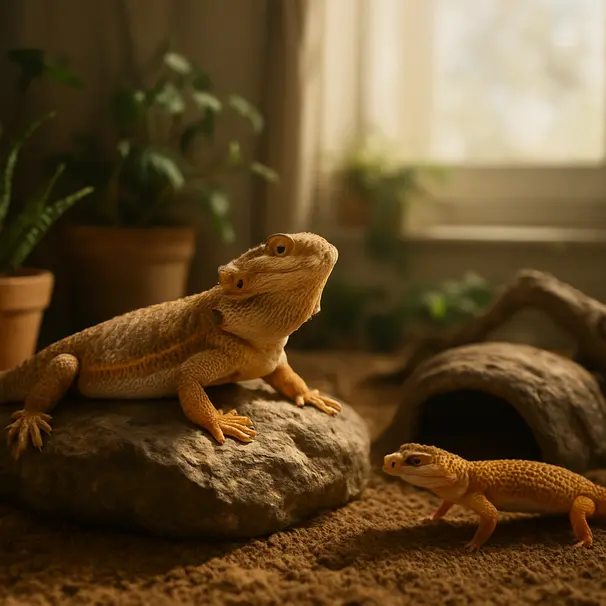
Reptiles rely on their environment to regulate body temperature, find food, digest meals, and stay active. Good temperature and lighting setups can help a reptile show natural behavior, maintain appetite, and feel secure. Poor setups can cause stress and make routine care harder. This guide offers warm, practical advice for both pet owners and carers who look after reptiles regularly or for short stays.
What this guide covers
- Basic thermoregulation principles
- Heat sources and safety tips
- UVB and visible light essentials
- Species-specific ranges and examples
- Tools for monitoring and troubleshooting
- Daily routines and tips for pet carers
Understanding thermoregulation
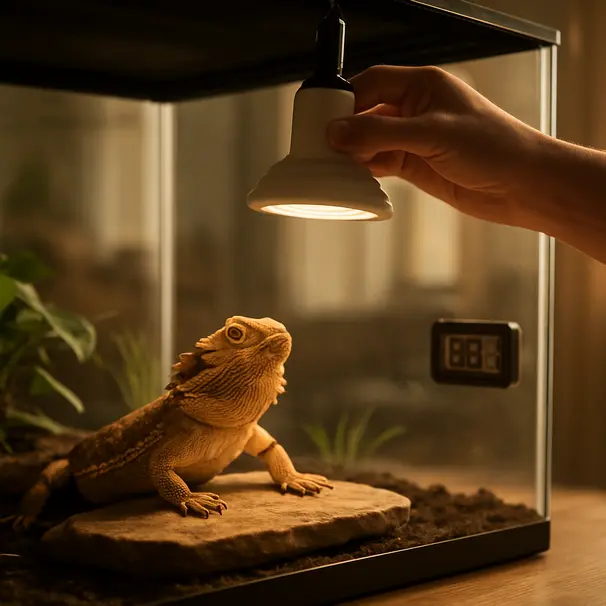
Reptiles are ectotherms. They use external heat to warm their bodies, and they move between warmer and cooler spots to manage body temperature. Creating a thermal gradient in the enclosure lets a reptile choose the right temperature for resting, digesting, or escaping heat.
Key terms to know:
- Basking spot: the warmest area, often under a lamp or heat emitter.
- Ambient temperature: the general air temperature in the enclosure.
- Cool hide: a shaded or sheltered area where the reptile can cool down.
- Temperature gradient: the range from the warmest to the coolest area available.
Consider each animal’s natural habitat. Desert species often need higher basking temperatures and strong daytime heating, while forest species may prefer lower, more humid conditions and gentler heat.
Heat sources and how to use them safely
Common heat sources include:
- Ceramic heat emitters: provide radiant heat without light, useful for night heating.
- Heat bulbs (incandescent or halogen): produce visible light and heat, good for daytime basking.
- Under-tank heaters (UTH): deliver heat from below, often used for snakes and some geckos.
- Heat mats and pads: convenient for spot heating, but should be thermostat-controlled.
Safety tips:
- Always use a thermostat to prevent overheating. A thermostat can turn a heater on or off to keep temperatures within a safe range.
- Secure bulbs and emitters with fixtures made for reptile enclosures. Avoid makeshift mounts.
- Provide physical barriers or guards so the reptile cannot touch hot surfaces directly.
- Use ceramic or low-glare options for night heat to avoid disturbing a nocturnal species.
Creating a thermal gradient
A reliable gradient usually means a warm basking zone on one side and a cooler area on the other. Aim for a difference that matches the species needs, typically 10 to 15 degrees Celsius between the warmest and coolest regions for many reptiles, though specifics vary by species.
Practical setup steps:
- Place the primary heat source at one end of the enclosure.
- Measure temperatures at the basking spot, mid-area, and the cool end.
- Adjust the height or wattage of the heat source to reach the target basking temperature.
- Add hides on both warm and cool sides so your reptile can retreat.
Measure at least three points, and check during different times of day. If the animal basks too long or avoids the basking area, you may need to tweak the gradient.
Lighting and UVB basics
Many diurnal reptiles, like bearded dragons and many turtles, benefit from UVB light. UVB helps them make vitamin D3, which can help with calcium absorption and bone health. A lack of adequate UVB may contribute to metabolic bone issues over time.
Notes about UVB:
- Choose bulbs appropriate for the species and enclosure size. Low-output bulbs usually suit forest dwellers, while higher output bulbs fit desert species.
- Position the UVB so the reptile can get exposure without glass or thick plastic blocking the rays. Some enclosures allow UVB to pass through mesh but not through solid glass.
- Replace UVB bulbs according to manufacturer guidance, often every 6 to 12 months, even if they still look bright. UV output declines over time.
Visible light matters too. A regular day-night light cycle helps set the animal’s rhythm. Aim for about 10 to 14 hours of light in summer months and slightly shorter in winter to mimic seasonal change.
Species-specific temperature and lighting examples
Below are practical ranges to consider. These are starting points. Always verify with species-specific resources and consult a reptile vet if in doubt.
Bearded dragon (Pogona vitticeps): basking 38 to 42 C, cool side 24 to 30 C. UVB: moderate to high, a quality tube or dome type.
Leopard gecko (Eublepharis macularius): basking 30 to 32 C, cool side 22 to 26 C. No strong UVB requirement, but low-level UVB may be beneficial.
Ball python (Python regius): basking spot 30 to 32 C, ambient 26 to 29 C, cool side 22 to 26 C. Low UVB needs; focus on humidity and hides.
Corn snake (Pantherophis guttatus): warm spot 29 to 32 C, cool side 21 to 24 C. Light not as critical for UVB, but a day-night cycle helps.
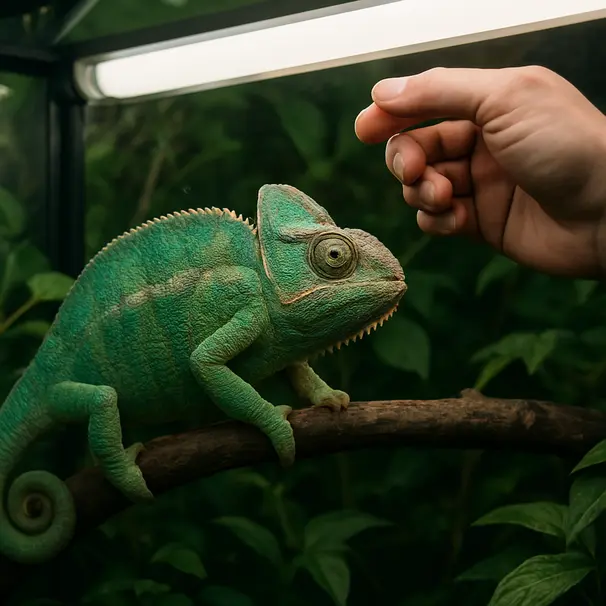
Chameleon (varies by species): many prefer a strong thermal gradient, with basking spots 32 to 38 C and cooler shady areas below 24 C. UVB is important for most diurnal chameleons, and they often benefit from naturalistic setups with tall vertical space.
Aquatic and semi-aquatic turtles: need hot basking spots 30 to 35 C, water temperatures dependent on species, plus moderate UVB for shell and bone health.
Remember: ages and health affect preferences. Juveniles may need slightly higher temps for digestion and growth, while older animals may need gentler conditions.
Measuring and monitoring: tools you should have
Good tools make care easier and safer. Essentials include:
- Digital probe thermometers for basking spots and substrate.
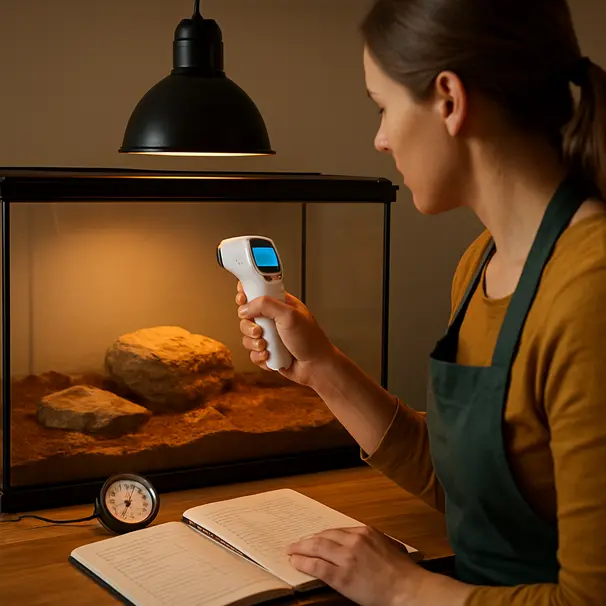
- Infrared thermometers for quick surface checks.
- Ambient thermometers placed at different heights.
- Hygrometers to monitor humidity where needed.
- Timers for lights and thermostats for heat devices.
Tips for using tools:
- Calibrate or check new instruments against known references if possible.
- Take readings at consistent spots and times, then log them for a few days.
- Avoid relying on a single thermometer stuck to a wall. Use multiple sensors to get the full picture.
Troubleshooting common temperature and lighting problems
Problem: Enclosure gets too hot during the day
- Check if a bulb wattage is too high, or if sunlight is adding heat.
- Lower bulb wattage, move the fixture higher, or add ventilation.
- Ensure hides and cool zones remain available.
Problem: Reptile refuses to bask
- Check basking temperature with a probe thermometer; it may be too low.
- Verify the animal has a clear path to the warm spot and that hides are not blocking it.
- If the animal is lethargic or off food, consult a reptile vet.
Problem: UVB bulb seems bright but behavior shows little interest
- Remember brightness is not the same as UV output. Bulbs lose UVB over time.
- Replace bulbs on the recommended schedule and ensure there is proper distance to the animal.
Problem: Nighttime temperatures drop too low
- Use ceramic heat emitters or thermostat-controlled heating. Avoid bright lights overnight that disrupt rhythms.
- For species sensitive to cold, consider temporary housing or additional insulation during cold spells.
Daily and weekly routines for pet carers
If you are a pet carer looking after someone else’s reptile, consistency matters. Build a short but thorough routine you can follow each day.
Daily checklist:
- Check daytime basking and ambient temperatures.
- Ensure UVB and light timers are working.
- Observe the animal for normal posture, appetite, and stool.
- Refill water and spot clean droppings.
Weekly checklist:
- Record temperature and humidity trends in a simple log.
- Inspect bulbs and heating equipment for wear.
- Clean water dishes and check for any substrate issues.
When stepping in for a short sit, ask the owner for a printed or digital care sheet with target temperatures, bulb types, feeding times, and emergency contacts. If you notice anything unusual, take photos of readings and the enclosure and contact the owner or a vet.
Travel, temporary housing, and emergency care
Short trips or temporary boarding require thoughtful planning. Keep setups as similar to the usual environment as possible.
Tips for temporary stays:
- Bring the reptile’s usual hides, substrate, and a trusted heat source.
- Maintain the same day-night cycle and feeding routine.
- Check temperatures multiple times daily and note any changes.
- For long trips, consider a travel-friendly heating solution and frequent checks.
If a reptile appears very cold, slow, or unresponsive, warm it gradually and seek veterinary advice. Avoid rapid warming or direct contact with very hot surfaces.
Practical checklist for safe setups
- Use a thermostat on every heater.
- Provide both warm and cool hides.
- Measure temperatures at multiple points and at different heights.
- Replace UVB bulbs on schedule.
- Keep a care sheet with target ranges and emergency contacts visible.
- Log readings and behaviors for the owner and vet review.
Final thoughts for carers and owners
Good temperature and lighting are not a one-off setup. They are an ongoing practice that responds to seasons, bulb life, and the reptile’s age and condition. Small, consistent checks, combined with proper equipment, can make a big difference to a reptile’s wellbeing.
If you ever feel unsure, take photos, note readings, and reach out to the owner or a reptile-savvy vet. A quick consult can help prevent small problems from becoming big ones. You can keep reptiles happy and healthy, and with a little care, they will show you plenty of personality in return.
For more Floofy tips on species profiles and care checklists, explore other guides or connect with experienced carers through the platform. Happy basking and safe handling!