

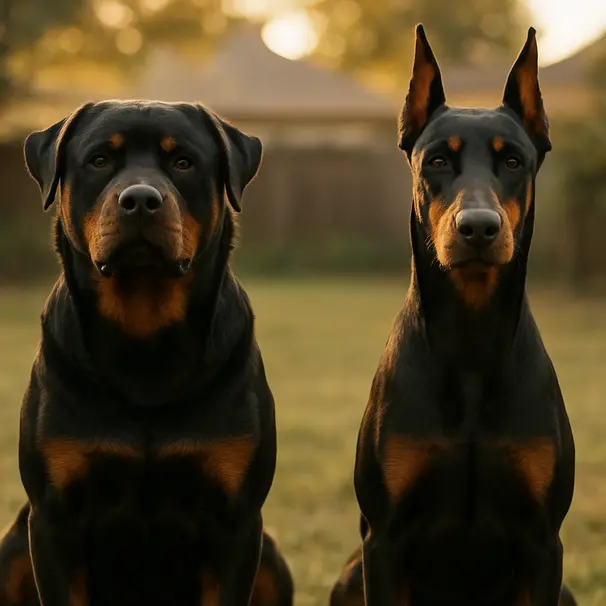
Rottweiler vs Doberman: which wins your heart
Love at first woof? Picking a large, loyal dog can feel romantic and practical all at once. Rottweilers and Dobermans are two breeds that often top people’s lists for confidence, devotion, and presence. This guide walks you through what makes each one unique, with practical tips for pet owners and carers who want a happy match between dog and home.

A quick snapshot
- Lifespan and size: Both breeds are muscular and medium-large. Rottweilers often weigh a bit more, with males commonly between 95 and 135 pounds, while male Dobermans usually range from 75 to 100 pounds. Lifespans overlap, generally around 9 to 13 years for both, depending on care and genetics.
- Temperament: Both breeds are loyal and protective. Rottweilers are often steady and calm, Dobermans are frequently alert and fast-moving. Individual personalities vary a lot.
- Grooming and upkeep: Dobermans have a sleeker coat that’s easier to groom, while Rottweilers have a thicker double coat that sheds seasonally.
These are broad strokes, but they help set expectations before you meet a dog in person.
A little history and why it matters
Rottweiler roots
Rottweilers trace back to Roman drover dogs who traveled with cattle. Over centuries they became reliable farm and cart dogs, prized for strength and a steady temperament. That history explains their calm working style and willingness to shoulder heavy tasks.
Doberman origin story
Dobermans are a newer breed, developed in the late 19th century by Karl Friedrich Louis Dobermann. The goal was a loyal personal protection dog with intelligence and agility. Many traits—speed, alertness, and close human focus—reflect those origins.
Knowing a breed’s background doesn’t decide everything, but it helps explain energy levels, instincts, and what activities make them happiest.
Personality and temperament: heart over hype
Both breeds are deeply loyal, but they show it differently.
Rottweiler personality
Rottweilers are often steady, confident, and calm. They can be very affectionate with family, sometimes displaying a goofy, gentle side with children they trust. They may be reserved with strangers but rarely nervous. A Rottie that’s well socialized becomes a predictable, reliable companion.
Doberman personality
Dobermans tend to be alert, energetic, and intensely people-oriented. They often want to be close to their humans and can be extremely responsive to cues. That eagerness makes them excellent in active homes, and in handlers who provide clear leadership and mental stimulation.
Socialization matters
Both breeds benefit from early, consistent socialization. Introduce puppies and adolescents to a variety of people, pets, sounds, and places. Positive experiences can help a confident dog become a relaxed adult. If you’re a pet carer, prioritize short, pleasant exposures rather than overwhelming a dog with too much at once.

Training, intelligence, and learning styles
Rottweilers and Dobermans are bright and trainable, but their approaches differ.
- Rottweilers may take fewer repetitions to learn a new skill when it’s meaningful to them. They appreciate calm, consistent leadership and clear routines.
- Dobermans are often fast learners, eager to please, and can thrive with high-value rewards and varied training games.
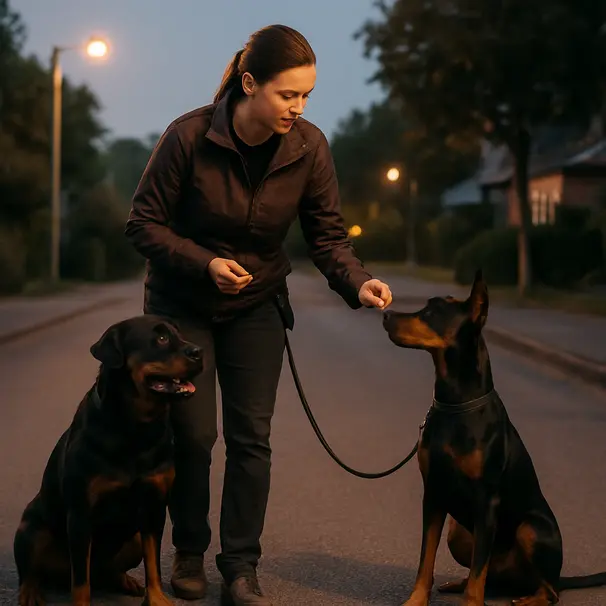
Both breeds respond best to positive reinforcement. Use praise, treats, and short, engaging sessions. Consider mental enrichment like puzzle toys and scent work which can help prevent boredom-related behaviors.
For households with inexperienced owners, a structured training class or a professional trainer familiar with large breeds can help create a strong foundation.
Exercise and play: energy explained
A Doberman may look like it never stops moving, while a Rottweiler can surprise you with bursts of playfulness. Both need regular exercise to stay healthy and well-behaved.
- Daily walks: Aim for at least 45 to 90 minutes of combined activity, broken into two or three sessions. The exact amount depends on age, health, and individual energy.
- Play and jobs: Fetch, tug, agility, and scent games are great. Rottweilers often enjoy weight-pulling or carrying light packs on hikes. Dobermans usually excel at agility and fast-paced games.
- Mental exercise: Training drills, puzzle feeders, and interactive play can tire a smart dog more effectively than long physical sessions alone.
If your schedule is busy, consider a trusted dog walker or carer who can provide exercise bursts and enrichment during the day.
Living situation and family fit
Thinking about your home life helps choose a breed that will thrive.
- Apartment life: Neither breed is ideal for a tiny apartment unless you’re committed to frequent, energetic outings and mental stimulation. Dobermans might adapt slightly better to smaller spaces if their activity needs are met.
- Homes with yards: Both breeds appreciate secure, fenced outdoor space where they can run and explore safely.
- Households with children: Both can be excellent family dogs. Early socialization, clear rules, and supervised interactions are key. Teach kids to respect a dog’s space and signals.
- Multi-pet households: Both breeds can live with other pets when properly socialized early. Take introductions slowly and monitor body language.
Grooming and care
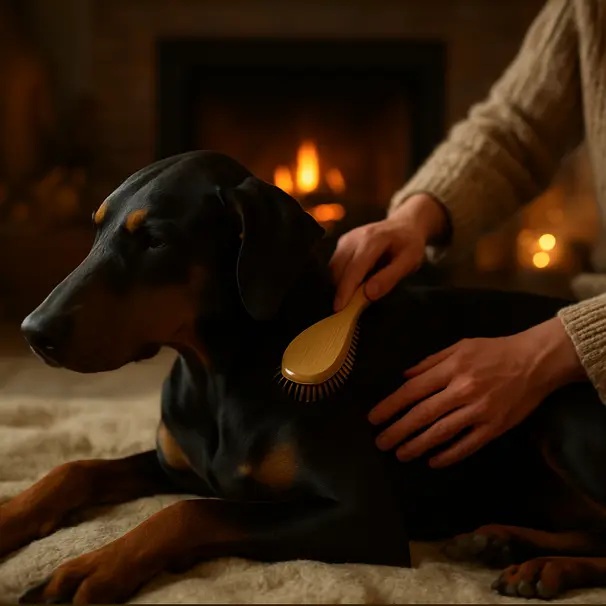
- Rottweilers: A thicker coat means more seasonal shedding. Weekly brushing helps reduce loose hair and keeps the coat healthy. Baths can be occasional, and routine ear, nail, and dental care are important.
- Dobermans: Short, sleek coat needs minimal brushing. They still require regular ear checks, nail trims, and dental care.
Grooming sessions are also bonding opportunities. If you’re a pet carer, use grooming time to reinforce calm behavior and trust.
Health considerations to keep in mind
Both breeds have some breed-specific health tendencies. It’s useful to be aware while avoiding alarmism.
- Joint issues: Larger breeds can be prone to hip or elbow issues. Consider joint-friendly nutrition and avoid excessive jumping for puppies.
- Heart and breed-related conditions: Some lines are predisposed to certain cardiac concerns. Regular vet checkups can help monitor heart health.
- Weight management: Keeping a healthy weight supports joints and overall well-being.
Whenever in doubt, consult your veterinarian. They can offer breed-specific guidance, screening recommendations, and preventative care advice.
Cost and commitment
Owning a large, well-cared-for dog involves ongoing costs:
- Food and supplies: Larger dogs eat more, and quality nutrition matters.
- Veterinary care: Regular checkups, vaccinations, parasite prevention, and occasional emergency care.
- Training and enrichment: Classes, toys, and possibly professional training packages.
- Pet insurance or savings: Considering insurance can help manage unexpected medical costs.
Budget realistically, and remember that a consistent routine and preventive care can help reduce long-term expenses.
Choosing between a Rottweiler and a Doberman: practical questions to ask
Ask yourself these things before deciding:
- How active am I daily, and can I commit time to exercise and mental games?
- Do I have experience with large dogs or access to training help?
- Is my home environment suitable, with space and a secure yard if needed?
- Are there children, elderly family members, or other pets to consider?
- Do I prefer a dog that’s calm and steady, or one that’s highly alert and energetic?
Answering honestly will point you to the better match.
Meeting dogs and trying them out
If possible, spend time with adult dogs of each breed as well as puppies. Pay attention to how the dog greets you, handles new environments, and responds to gentle handling. A trial stay, foster period, or borrowing time with a trusted carer can reveal daily needs and compatibility.
If you use Floofy, look for carers who have experience with large breeds and can provide references, trial walks, or supervised visits. A short trial helps both you and the dog settle into a routine before making a permanent commitment.
Tips for pet carers working with either breed
- Communicate clearly: Share routines, commands, and favorite rewards with the owner.
- Keep sessions short and engaging: Burnout can happen to smart dogs during long, repetitive sessions.
- Safety first: Use secure leads, harnesses, and gates as appropriate. Know basic canine body language to read stress or discomfort.
- Enrichment matters: Rotate toys, include foraging games, and vary walking routes to keep life interesting.
Consistency between owner and carer builds trust and smoother behavior.
Final thoughts: which wins your heart?
There’s no universal winner. A Rottweiler might win your heart with a calm, affectionate presence and a willingness to sit quietly by your side. A Doberman might steal it with speed, loyalty, and an unbeatable desire to be near you. Both breeds offer devotion and purpose when given kind leadership, mental exercise, and consistent care.
If you love a calm, steady companion who can be surprisingly playful, lean toward a Rottweiler. If you want a highly alert, energetic partner who thrives on close teamwork, a Doberman could be your match.
Whichever path you choose, take time to meet dogs in real life, ask lots of questions, and consider short trial periods with trusted carers. A little patience and the right match can create a lifelong friendship that truly wins your heart.
For help finding experienced carers, local trainers, or trusted breeders and rescues, explore Floofy and connect with people who have real experience with these breeds. A great match starts with good information and kind people.
- Want a checklist to bring to meet-and-greets? Ask a Floofy carer for a printable list to help you compare dogs fairly.
- Unsure about lifestyle fit? Arrange a short trial with a trusted carer and see how your day changes with a Rottie or a Doberman in it.
Both breeds have so much love to give. With sensible preparation and caring hands, you’ll find the one that makes your home feel complete.