


Should dogs take human vitamins? No!
Every pet parent wants the best for their furry friend. It’s tempting to reach into your medicine cabinet and offer a vitamin tablet to your dog, especially if you think it could boost their energy, coat, or overall health. But human vitamins aren’t built for canine bodies, and handing them out without thinking can cause problems. Let’s walk through why, what to watch for, and safer ways to support your dog’s wellbeing.

Quick answer: Why the short “no”
Human vitamins are formulated for people. Dogs have different nutritional needs, different metabolisms, and different tolerances for certain ingredients. A tablet that’s perfectly harmless for you could be too strong, not absorb the right way, or contain something that’s toxic to dogs. Use your vet as your compass; they can help you decide if a supplement is useful and which one is appropriate.
Why human vitamins can be risky for dogs
- Dosing differences: A human multivitamin dose is based on human body weight and metabolism. Dogs come in many sizes, and their nutrient needs don’t scale linearly with weight. Too much of some vitamins can build up and cause harm.
- Toxic ingredients: Some vitamins and minerals that are safe for humans can be dangerous for dogs. For instance, certain forms of iron, and high doses of vitamins A and D, may be harmful over time.
- Added extras: Human supplements often include ingredients like xylitol for sweetening, or herbal extracts and essential oils that dogs might not tolerate. Xylitol is extremely dangerous for dogs.
- Interactions: Vitamins can interact with medications your dog may already be taking. That can change how drugs work or raise the risk of side effects.
This isn’t to say every human vitamin will hurt every dog. Still, it’s safer to avoid guessing and to consult a vet before giving anything not formulated for dogs.
Common human vitamin ingredients to watch for
Below are ingredients that may be problematic for dogs. Consider this a simple checklist when you’re scanning labels.
Vitamins A and D
Both are fat-soluble, which means the body stores them. In large amounts over time, they can build up and cause toxicity. Dogs sometimes show subtle signs at first, so it can be easy to miss until it’s more serious.
Iron
Too much iron can cause stomach upset, organ damage, and more. Kids’ iron supplements and prenatal vitamins often have amounts far higher than a dog would need.
Calcium
Popped into many bone-and-joint formulas and multivitamins, excess calcium can be an issue, especially for growing large-breed puppies. It may affect bone development.
Xylitol and artificial sweeteners
Xylitol is common in sugar-free gums and some vitamins. It causes a rapid insulin release in dogs and can lead to dangerous drops in blood sugar, plus liver damage.
Herbal extracts and essential oils
Many human supplements include botanicals that may be safe for people but irritating or toxic to dogs. Dogs can be more sensitive to certain plant compounds.
High-dose B vitamins
Though many B vitamins are water-soluble and excess amounts are often excreted, very high doses can still cause problems or interact with medications.
When might supplements be appropriate for a dog?
There are legitimate reasons to give a dog a supplement, but these choices are best made with veterinary input. Consider these scenarios where a vet might recommend a supplement:
- Nutritional gaps: If a dog is on a homemade diet or has special dietary needs, a vet or veterinary nutritionist may recommend specific supplements. Commercial dog food is usually balanced, so added vitamins may not be necessary.
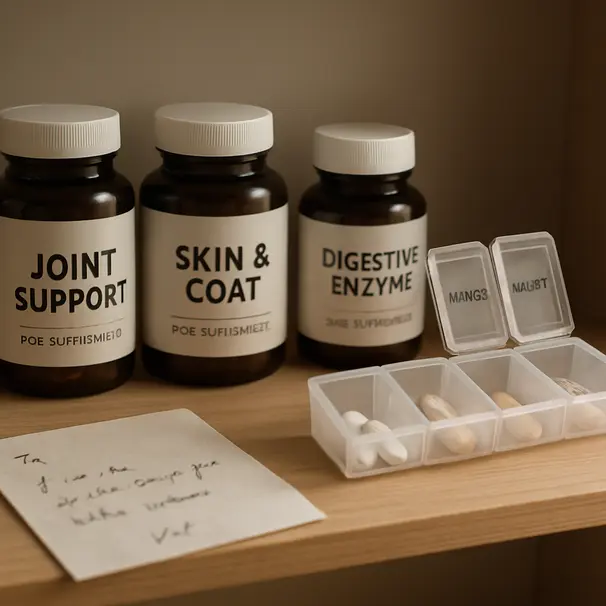
- Joint support: Dogs with arthritis or hip dysplasia may benefit from glucosamine, chondroitin, or omega-3 fatty acids. A vet can suggest the right product and dose.
- Skin and coat issues: Omega-3 supplements, like fish oil, can help some dogs with dull coats or mild skin inflammation. The product quality and dose matter.
- Specific deficiencies: If bloodwork shows a deficiency, your vet may prescribe a tailored supplement to correct it.
Always consider the dog’s age, breed, weight, medical history, and current medications when discussing supplements.

Safe alternatives to human vitamins
If you want to support your dog’s health, here are safer options to consider instead of human vitamins.
- Vet-recommended canine supplements: These are formulated with canine nutrient requirements in mind and dosed appropriately.
- High-quality commercial dog food: Many complete and balanced diets provide all the vitamins and minerals a healthy dog needs.
- Whole-food options: Lean meats, certain vegetables, and controlled additions like pumpkin or cooked sweet potato can add nutrients naturally. Always check which human foods are safe.
- Targeted supplements: If your vet recommends fish oil, joint supplements, or probiotics, use products specified for dogs and follow dosing instructions.
Remember, “natural” doesn’t always mean safe. Some human foods and herbs are toxic to dogs, so double-check before sharing.
Practical tips for giving supplements safely
If your vet approves a supplement, keep these tips in mind to make it easier and safer.
- Use dog-specific formulations: These account for size and metabolism. Look for clear dosing guidelines for your dog’s weight.
- Start with the vet’s plan: Follow the recommended dose and duration. Recheck with your vet if you notice changes in appetite, behavior, or stool.
- Read labels carefully: Avoid products with xylitol, certain essential oils, or unclear ingredient lists.
- Introduce one supplement at a time: That way you can spot side effects and know which product might be responsible.
- Use treats or pill pockets for taste: Many supplements are available in chewable forms made for dogs to make administration easier.
- Monitor and record: Keep a small log of what you give, when, and any reactions. It helps your vet if something comes up.
What to do if your dog accidentally gets human vitamins
Accidents happen. If your dog finds and eats human vitamins:
- Stay calm and check the label. Note the ingredient list, dosage per tablet, and how many were consumed.
- Call your veterinarian or an emergency clinic right away. They’ll want the label details and your dog’s weight.
- If the product contains xylitol or a very high dose of iron, prompt treatment may be necessary.
- Follow instructions from the vet or poison control. They may recommend monitoring at home or bringing your dog in for examination.
Time can matter, so don’t wait to seek guidance.

Special considerations for puppies and senior dogs
- Puppies: Growing dogs have different calcium and nutrient needs. Excessive vitamin or mineral supplementation can impact bone development. Be cautious with any extra nutrients unless a vet recommends them.
- Seniors: Older dogs may have health conditions that affect absorption, liver, or kidney function. Supplements meant to support joints or cognition can help, but dosing adjustments may be needed.
In both cases, regular veterinary check-ups and bloodwork can guide safe choices.
Reading labels like a pro
Labels can be confusing, so here are quick pointers:
- Serving size and dosage: Compare tablet strength to your dog’s weight. Don’t assume a smaller dog can take half a human tablet safely.
- Ingredient list order: Ingredients listed earlier are present in greater amounts. Watch for added sweeteners or herbs.
- Manufacturer claims: Statements like “supports health” are marketing. Look for third-party testing, quality seals, and vet endorsements.
- Expiration date and storage: Supplements can degrade over time. Keep them in a cool, dry place and respect expiry dates.
If the label isn’t clear, ask your vet or pharmacist for help.
Final thoughts: Love, common sense, and your vet
You love your dog and want to help them thrive. That intention matters. But human vitamins are not a one-size-fits-all fix. They may introduce risk, especially without professional guidance. Instead, focus on high-quality dog food, regular vet care, safe dog-specific supplements when needed, and small lifestyle choices like play, gentle exercise, and a balanced diet.
If you ever wonder whether a supplement is right for your dog, put that question to your veterinarian. They can weigh the pros and cons for your dog’s particular health story, and help you pick safe products and doses. A thoughtful plan will keep your pup wagging, healthy, and by your side for many happy years.
- Quick checklist before giving any supplement:
- Did my vet recommend it? If not, ask first.
- Is the product made for dogs and labeled with canine dosing?
- Does the label contain xylitol or other red-flag ingredients?
- Am I monitoring for side effects and keeping a record?
Thanks for reading, fellow pet lover. Stay curious, stay cautious, and keep those tails wagging.