


Small Pets Guide: Essential Hamster Care Tips for Pet Carers
Hamsters are tiny bundles of personality. They can be lively, curious and surprisingly expressive. For pet carers, that means a mix of gentle handling, careful habitat setup and thoughtful routines. This guide walks through the practical steps and small details that make a big difference for a hamster’s comfort and wellbeing while they’re with you.
A warm welcome and a little patience
When a hamster arrives, give them time to settle. New sights, smells and sounds can be overwhelming. Start by letting them stay in their closed cage in a quiet room for a day or two. Keep conversations low and movement gentle. Observe more than you intervene at first, and use soft voices during initial checks.
Getting to know your hamster
Hamsters are often lumped together, but different types have different needs and temperaments. Spend some time learning the specific species you care for and their personality.
Common hamster types and temperaments
- Syrian hamsters tend to be larger and often prefer solitary living. They can become quite tame with regular, gentle handling.
- Dwarf hamsters, including Roborovski, Campbell, and Winter White varieties, are smaller, quicker and sometimes more skittish. They can be social with their own species, but introductions must be managed carefully.
- Chinese hamsters fall somewhere in between and may be more cautious.
Observe how active the hamster is during your first days. Some are daytime stirrers, many are crepuscular or nocturnal. Match your interaction times to moments when the hamster is calm and awake.
Setting up the perfect habitat
A comfortable, safe habitat is the foundation of good care. You don’t need a designer set-up, but you do need to cover space, bedding, hiding spots and enrichment.
Cage size and layout
Provide as much floor space as you can. Hamsters need room to run and explore horizontally. For Syrians, many carers recommend cages with at least 80 x 50 cm of floor space. Wire cages, glass tanks and modular plastic systems each have pros and cons: wire cages provide ventilation, tanks can be more secure against escapes, and modular systems offer tunnels but need careful cleaning.
Plan the layout with distinct zones: a sleeping nest, a feeding area, a toilet corner and a play area. Rotate toys and move low-risk items occasionally to keep the environment interesting.
Bedding, nesting and substrate
Use absorbent, dust-free bedding. Paper-based substrates are widely liked for their absorbency and low dust. Avoid pine and cedar shavings, which may contain oils that can irritate small pets. Provide soft nesting material so the hamster can burrow and make a snug nest.
Make a cosy hideout using a wooden or ceramic house and add shredded paper or hay. Hamsters love to rearrange their nesting material, and giving them choices lets them feel secure.

Exercise gear and enrichment
Hamsters are natural runners. A solid-surface wheel sized for the species is a must. For Syrians, choose a wheel at least 28 cm across to prevent spinal arching. Solid surfaces avoid tail or foot injuries that wire wheels might cause.
Include tunnels, chew blocks and changeable foraging stations. Hamsters are smart and curious; simple nose-work games with hidden treats can keep them stimulated.
Safety in the habitat
Check for escape routes: gaps in wire cages, loose connectors in modular setups, and chew-through spots are common. Secure any electrical cords and avoid placing the cage in direct drafts or very bright, hot sunlight. Maintain room temperatures in a comfortable range, often between 18–24°C, and consider relocating the cage if the room feels too hot or cold to you.
Feeding and nutrition
A balanced diet supports energy, coat condition and general health. Keep feeding straightforward and consistent.
Base diet and daily feeding
A good-quality hamster mix or pellet can form the foundation of daily feeding. These provide a range of seeds, grains and nutrients. Offer a measured portion once a day and adjust based on the hamster’s body condition. Hamsters that are gaining too much weight may need portion control.
Fresh vegetables can be offered in small amounts a few times per week. Safe choices often include small pieces of carrot, cucumber, broccoli and leafy greens like kale or spinach. Introduce new foods slowly and watch for digestive upset.
Treats and occasional foods
Treats are best used sparingly. Small pieces of cooked egg, tiny bits of lean cooked chicken or commercial hamster treats can be rewarding during handling and training. Avoid sugary human snacks, chocolate, caffeine and citrus fruits. Some seeds and nuts are high in fat and should be occasional treats rather than staples.
Always provide fresh water in a drip bottle or shallow dish. Check water daily and clean bottles regularly to prevent bacterial build-up.
Handling, socialisation and enrichment outside the cage
Handling can be one of the most rewarding parts of caring for a hamster, but it should be done with care.
Safe handling tips
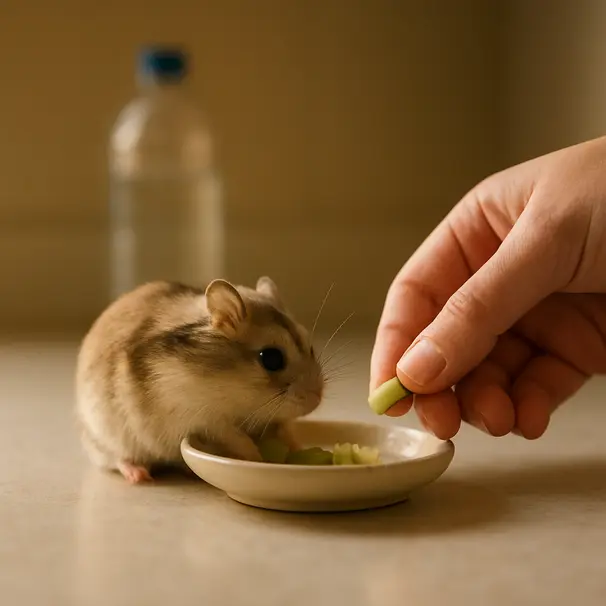
Start by letting the hamster smell your hand. Sit low to the ground and cup your hand to make a little ramp or hollow; coax the hamster into your palm with a tiny treat. Avoid sudden movements or squeezing. When moving a hamster between places, support their whole body and keep them close to a surface in case they wiggle free.
Never wake a hamster by grabbing them. If they are asleep, let them wake naturally and then try gentle interaction.
Playtime and supervised exploration
Hamsters enjoy short, supervised play sessions in escape-proof playpens or on a secure table with low edges. Offer tunnels, small boxes and foraging toys. Rotate items to keep novelty high. Always supervise exploration to prevent falls, drafts or predation by other household pets.

Health checks and knowing when to consult a vet
Regular, simple checks can help you spot changes early. During routine care watch for these signs:
- Dull or ruffled coat for more than a couple of days
- Changes in eating or drinking habits
- Lethargy or increased sleepiness during usual active times
- Weight loss or noticeable swelling
- Sneezing, discharge from eyes or nose, or laboured breathing
- Changes in droppings
These signs don’t always mean something serious, but they may suggest the hamster needs attention. Consider advising the owner and recommending a vet visit if anything seems off. Use cautious language like “may indicate” and “consider contacting a vet”.
Preventative health habits
Keep nails trimmed if they become long. Check teeth visually; overgrown teeth may require professional care. Keep the habitat clean and dry, and monitor humidity levels if the room is damp, as damp bedding can encourage skin irritation.
Cleaning routines and hygiene
A clean environment reduces stress and illness. Establish a cleaning routine that balances freshness with preserving scent cues hamsters use to feel safe.
- Spot clean daily: remove soiled bedding, uneaten fresh food and droppings.
- Full clean weekly or every two weeks: move the hamster to a secure temporary housing, discard old bedding, wash the cage with warm water and pet-safe cleaner, and dry thoroughly before adding fresh bedding.
- Clean food bowls and water bottles regularly.
Avoid harsh chemical cleaners. A mild soap and hot water or pet-safe disinfectant rinsed well is usually enough.
Working with owners and being a trusted carer
Clear communication is essential. Before caring for a hamster, get written or recorded details of routines, feeding quantities, known preferences, allergies and the name and number of the hamster’s vet.
Handovers and daily updates
Provide owners with short daily updates: simple notes about what the hamster ate, any unusual behaviour and how playtime went. Photos or short videos can be reassuring and help the owner see their pet relaxing.
If anything unusual occurs, contact the owner promptly and suggest a vet consultation when relevant. Keep records of weight, appetite, and notable behaviours during the care period.
Emergency planning
Have a basic plan: know the nearest exotic or small-animal vet, have carrier options ready and understand the owner’s preferences for veterinary care. A little preparation reduces stress should an unexpected issue arise.
Quick checklist for hamster carers
- Meet and note the hamster’s daily routine and preferences
- Provide a secure cage with plenty of floor space
- Use dust-free, absorbent bedding and a snug nesting option
- Offer a solid-surface wheel sized for the species
- Feed a measured, balanced pellet or mix with occasional fresh veg
- Provide fresh water daily and change bottles or bowls regularly
- Schedule short supervised playtimes and enrichment sessions
- Clean properly: spot clean daily, full clean weekly or biweekly
- Monitor health daily and consult the owner or a vet if things change
Final tips and parting thoughts
Being a hamster carer is rewarding. Small, consistent actions build trust and help a hamster feel secure. Keep your approach patient and observant, and try to add tiny comforts: a familiar-smelling nesting corner, a favourite chew toy, or a predictable lighting routine. Those small touches make a big difference.
If you ever feel unsure about a health or behavioural change, recommend the owner speak with a vet. You can be the calm, knowledgeable presence the hamster needs, and the owner will appreciate the care and attention you provide.
Happy caring! With kindness, a little patience and a few practical routines, you can give hamsters a safe, stimulating and cozy stay while they’re in your care.