


There’s no denying the appeal of an Old English Sheepdog puppy
Pull up a chair, pour a cuppa, and imagine a fluffy tumble of fur, big dark eyes peeking through a mop of hair. Old English Sheepdog (OES) puppies have a knack for turning even the busiest day into something softer. But beyond the cuteness is a clever, affectionate dog that needs thoughtful care, time, and patience to grow into a well-mannered adult.
This guide covers what to expect from an OES puppy, how to care for them, common health and grooming considerations, and practical tips to help you find trusted carers through Floofy. I wrote this for busy pet owners and pet carers who want warm, realistic advice with a sprinkling of helpful detail.
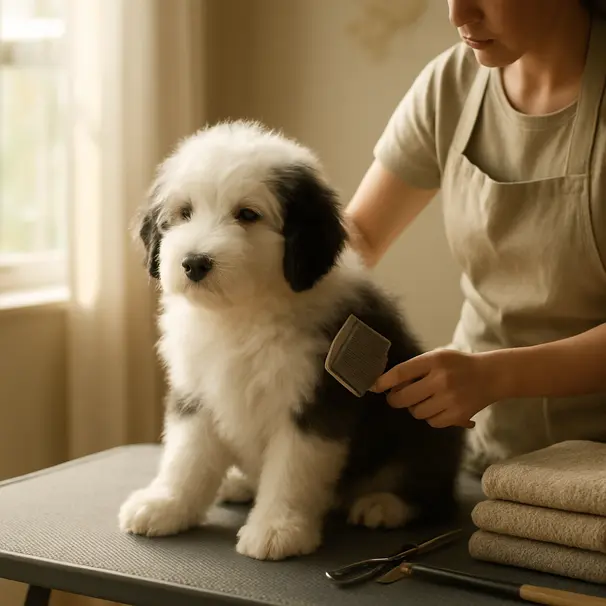
A gentle grooming session builds trust and calm.
Breed snapshot: quick facts
- Size: Medium to large as adults, often 60 to 100 pounds.
- Coat: Thick, shaggy double coat that can be long and requires regular grooming.
- Temperament: Gentle, playful, intelligent, and people-oriented.
- Energy level: Moderate to high—puppies are bouncy and curious.
- Life expectancy: Commonly 10 to 12 years.
Temperament and personality
OES puppies are innately friendly. They usually adore family life, and many form strong bonds with their humans. Most are playful and somewhat clownish, which makes them delightful companions for families and carers who enjoy energetic play and lots of affection.
They tend to be gentle with children, though their size means supervision is important until both pup and child understand gentle interactions. Early socialisation can help them stay confident around people, other dogs, and household noises.
Smart, but sometimes stubborn
These pups are quick learners and often figure out routines fast. At the same time, Old English Sheepdogs can show independence. Short, consistent training sessions and positive reinforcement usually work best. Keep lessons fun and varied to hold their attention.
Bringing a puppy home: preparing your space
Before your new pup arrives, set up a safe, comfortable corner where they can nap, chew toys, and learn house rules. Puppy-proofing is essential: tuck away cords, secure trash bins, and remove anything easily swallowed.
- Designate a crate or bed area for quiet time.
- Collect a variety of chew toys to manage teething.
- Plan short play and nap schedules to avoid overstimulation.
Because OES puppies grow quickly, plan for the space they will need as adults. They enjoy room to roll and play, and while they can adapt to apartment life with sufficient exercise, a yard or regular outdoor activity suits them well.
Feeding and nutrition
Puppies need nutrient-dense food to support growth. Choose a high-quality puppy formula from a reputable brand or vet-recommended source. Feeding amounts will change as your pup matures, so check package guidelines and weigh portions to avoid overfeeding.
Practical tips:
- Split daily calories into three or four meals during early months, moving to two meals by adulthood.
- Introduce any new food gradually over a week to reduce tummy upsets.
- Consider feeding measured portions and monitoring weight to keep growth steady.
If you have questions about diet, consider consulting your veterinarian for tailored guidance.
Exercise, play, and mental stimulation
OES puppies have lively bursts of energy and need opportunities to run, play, and think. Mental stimulation can be just as tiring as physical exercise—puzzle toys, short training drills, and scent games are great.
- Start with multiple short walks and play sessions each day.
- Use gentle fetch, tug, and hide-and-seek games to build recall and impulse control.
- Rotate toys to keep interest high.
A tired pup is a happy pup. If you notice destructive chewing or noisy antics, they may be bored or under-exercised. Adding a structured play routine can help channel their energy positively.

Playful outdoor exercise keeps puppies happy and healthy.
Grooming: the part that takes time (and patience)
One of the biggest realities of OES ownership is coat care. Their dense, sometimes long fur can mat if unattended. The good news is that grooming sessions are perfect bonding time.
Daily and weekly care
- Brush frequently to prevent tangles. Aim for at least several times per week, more during shedding seasons.
- Check ears and clean them gently to avoid wax build-up.
- Trim nails regularly, or have a groomer or carer handle it if you’re unsure.
Many owners choose a professional groomer every 6 to 10 weeks. If you plan to groom at home, invest in a slicker brush, a wide-tooth comb, and finishing scissors. Start grooming routines early so puppies see brushing as normal.
Training basics
Positive reinforcement works wonders with OES puppies. They respond well to praise, treats, and games. Keep training sessions short—five to ten minutes—so they stay engaged.
- Focus first on name recognition, recall, sit, and staying calm around distractions.
- Crate training can offer a safe place and help with house training.
- Socialise with friendly dogs and varied environments to build confidence.
Professional puppy classes can be a friendly environment for socialisation and building basic obedience skills. If your pup shows signs of fear or strong reactivity, consider consulting a trainer or behaviourist for tailored help.
Health considerations and vet care
OES dogs may be predisposed to certain conditions like hip dysplasia, eye issues, and skin sensitivities, so it’s wise to stay on top of regular check-ups. Use safe language around health: consider routine screenings, and remember a vet can advise on testing and preventative care.
- Schedule vaccinations and parasite prevention with your veterinarian.
- Monitor weight and joint health as your pup grows.
- Watch for unusual behaviours or changes in appetite, and contact your vet if concerned.
Early detection can help manage many issues. If you adopt from a breeder, ask about health clearances and the parents’ medical histories.
Finding trusted carers and sitters on Floofy
Life gets busy. Maybe you need someone to walk your pup during workdays, or a trusted sitter for a weekend away. Floofy connects pet owners with carers who understand breed needs, including special grooming schedules and exercise plans.
Tips for choosing a carer:
- Look for carers with experience handling medium to large breeds and pups with grooming needs.
- Read recent reviews and look for references or accreditation.
- Arrange a meet-and-greet so your puppy can get comfortable with a new person.
Make a short written guide for any carer: feeding amounts, favourite toys, potty routine, and emergency contact info. Clear communication makes transitions smoother for your pup and the carer.
Preparing for a carer visit or overnight stay
A calm, predictable hand-off makes both you and your puppy feel better. Pack a small overnight bag for your pup: a familiar blanket, favourite treats, a few toys, and clear feeding instructions. If your pup has a grooming appointment while you’re away, note any special tools or product sensitivities.
Leave a contact list including your vet, an emergency phone number, and any behaviour notes the carer should know about. A good carer will appreciate the clarity and will keep you updated with photos and short messages.
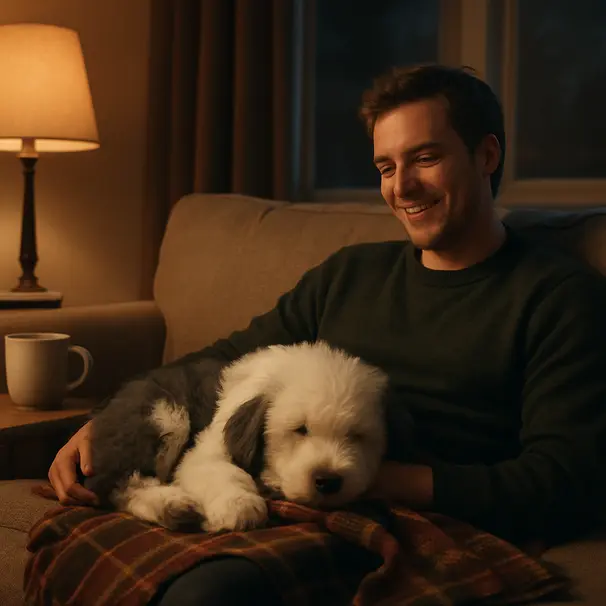
A quiet evening cuddle after a big day outside.
Preparing kids and family members
Introduce rules gently. Set expectations around gentle touching, no rough play, and how to read puppy body language. Teach children to respect nap times. When everyone understands the routine, puppies settle faster and family life flows better.
Common puppy challenges and fixes
- Chewing: Puppies explore with their mouths. Provide safe chew toys and swap inappropriate items for approved ones.
- Separation anxiety: Practice short absences, build up time apart gradually, and leave comforting items like a worn shirt or a special toy.
- Housetraining setbacks: Reinforce potty routines, praise successes, and clean accidents thoroughly to remove smells.
Consistency and patience are your best tools. If issues persist, a behaviourist or trainer can suggest safe, practical strategies.
Checklist before you bring one home
- Reserve a vet and schedule initial check-ups.
- Order quality puppy food and appropriate-sized bowls.
- Buy a secure collar, ID tag, and consider microchipping.
- Set up a crate or comfy bed area with washable bedding.
- Assemble grooming tools: brush, comb, nail clippers, and dog-safe shampoo.
- Download Floofy and pre-screen local carers if you anticipate needing help.
Final thoughts: the rewards are worth the effort
Old English Sheepdog puppies bring a lot of heart into a home. Yes, there’s grooming and puppy energy to manage, but there’s also loyalty, laughter, and those unforgettable cuddle sessions. With time, consistent training, and good carers from Floofy if you need them, an OES can become a wonderfully steady companion.
Take it one day at a time, celebrate the small wins, and remember that many pet owners and carers have walked this path before you. Join the Floofy community to find support, recommendations, and trusted people to help your pup grow into the best dog they can be.
Happy puppy days, and may your floors handle a little extra fluff for a while.