

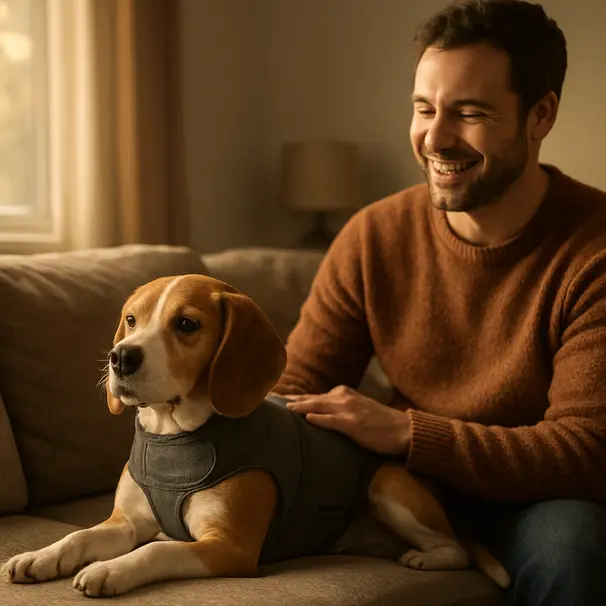
Quick snapshot
ThunderShirts are one of the most talked-about tools for helping anxious dogs stay calmer in stressful situations, like thunderstorms, fireworks, travel, or vet trips. They’re easy to try, generally affordable, and many pet owners report noticeable improvements. But they’re not a miracle cure, and results vary by dog.

What is a ThunderShirt?
A ThunderShirt is a snug, wrap-style garment that applies gentle, constant pressure to a dog’s torso. The idea is similar to swaddling a baby or using pressure therapy for humans, where light, evenly distributed pressure can create a sense of security. People use them for noise phobia, travel anxiety, separation stress, and sometimes for general nervousness.
How might they help?
- Gentle pressure can provide a calming sensation for some dogs, possibly by reducing arousal.
- The predictable feel of the wrap may give dogs a consistent physical cue that something calming is happening.
- Wearing one can become part of a positive routine, especially when associated with treats, walks, or quiet time.
Use cautious language here: ThunderShirts may help some dogs feel calmer. They can be part of a broader plan, alongside training and environmental changes.
What does the research say?
Scientific studies on pressure vests show mixed but often promising results. Some controlled studies and owner surveys suggest reduced signs of anxiety during noise events, while others show modest or no measurable change. In practice, some dogs show immediate improvement, and others barely notice.
That means you should consider a ThunderShirt as a low-risk option worth trying, rather than a guaranteed fix. If your dog has severe phobias or panic-level reactions, consult your veterinarian or a certified behaviourist. They may suggest behaviour modification, medication, or a combination of approaches.

How to introduce a ThunderShirt the right way
Introducing a ThunderShirt carefully increases the chance your dog will accept it, and may turn it into a calming cue. Here’s a gentle step-by-step approach:
- Let your dog sniff and explore the shirt while it’s off. Give calm praise and treats.
- Put it on for a minute or two, then remove it and reward. Repeat, gradually increasing time.
- Pair wearing the shirt with pleasant activities: short walks, treats, a cosy nap spot, or gentle petting.
- Practice during quiet times first, not in the middle of a storm or fireworks show.
Keep sessions short and positive. If your dog shows increased stress while being fitted, pause and try slower desensitisation or seek professional advice. Never force the garment on a terrified dog.
Fitting, sizing and comfort
A good fit is key. The ThunderShirt should feel snug but allow full movement of legs and shoulders. It sits across the chest and wraps around the ribcage. Most brands provide sizing charts—measure your dog’s girth around the widest part of the ribcage.
Tips for fit and comfort:
- Follow the maker’s measuring guide precisely.
- Check for rubbing points, especially around the armpits and underbelly.
- Watch how your dog moves: if walking becomes awkward or they try to bite the garment, reassess fit.
- Expect an adjustment period; some dogs need a few days to get used to the feel.
If you’re between sizes, choose the larger one and add a snug layer underneath, rather than forcing a tight fit.
Real-world results: what owners and carers report
- Some dogs seem visibly calmer: lying down sooner, reduced pacing, less panting.
- Others show small improvements, like decreased trembling but still remain alert or reactive.
- A handful of dogs don’t respond; for them, the ThunderShirt is neutral.
Pet carers often find it helpful during short stays, transport, or vet visits, because it’s quick to put on and can reduce overall arousal. Still, consistent behaviour support and a predictable routine usually make the biggest difference.
Practical scenarios: when to try one
Consider trying a ThunderShirt for:
- Mild to moderate noise sensitivity, such as fireworks or distant thunder.
- Travel stress: car rides, ferry trips, or public transport.
- Short-term situations like a vet visit or grooming appointment.
Think twice and seek professional input for:
- Severe noise phobia that leads to frantic escape attempts, destructive behaviour, or self-injury.
- Dogs with respiratory issues where pressure on the chest could be risky.
When in doubt, check with your vet. They can help rule out medical contributors to anxiety and advise on safe options.
Combining a ThunderShirt with training and environmental changes
A garment is rarely enough on its own. Combining it with simple, evidence-based strategies can improve outcomes:
- Counterconditioning: Pair the shirt and the stressful trigger with high-value treats to change the dog’s emotional response.
- Desensitisation: Gradually expose the dog to low levels of a sound, increasing intensity over time while paired with rewards.
- Environmental management: Close curtains during storms, use white noise, or provide a safe den-like crate with familiar bedding.
- Calm handling: For pet carers, moving slowly, speaking softly, and giving space can be more effective than trying to soothe frantically.
Medication may be appropriate for severe cases, and a vet can discuss short-term or long-term options. If you try medication, pairing it with behaviour work helps ensure lasting improvement.
Alternatives and complementary tools
If a ThunderShirt isn’t right for your dog, try these options:
- Other pressure vests: different brands may fit your dog better.
- Calming pheromone diffusers or sprays, which can create a subtle, reassuring scent.
- Anxiety wraps with different closure styles if your dog dislikes pullover designs.
- Training-based approaches, including reward-focused counterconditioning.
- Professional help from a behaviourist for tailored plans.
Mixing gentle physical tools with training usually gives the best, most humane results.
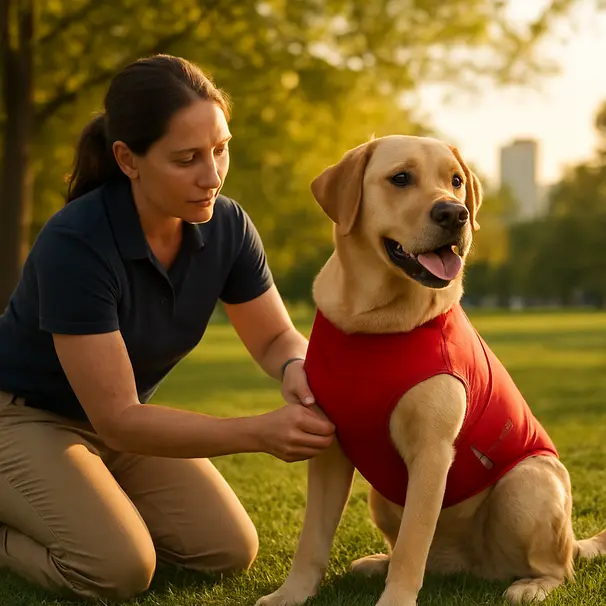
Troubleshooting common issues
My dog seems uncomfortable: Check fit and introduce more gradually. If discomfort continues, stop and consult a professional.
The shirt doesn’t help: Try pairing it with positive experiences and training. If there’s no change after consistent use, consider alternatives.
My dog chews the shirt: Supervise initial sessions. Use chew-resistant models or give durable distractions while they wear it. Never leave a dog unsupervised with a garment that they can rip off and swallow.
The shirt falls off during activity: Recheck size and fastening. Some dogs need a different style or extra adjustments.
Tips for pet carers and sitters
- Ask owners about prior use and the dog’s reaction to the ThunderShirt.
- Practice putting it on before stressors happen, so it becomes a routine.
- Respect the dog’s comfort level; offer treats when the shirt goes on, and avoid forcing it.
- Communicate with the owner about what you observe: time worn, behaviours during stress, and any fitting problems.
Carers who use consistent, calm handling and follow the owner’s plan often help dogs feel safer fast.
Final thoughts: give it a try, but keep a realistic mindset
ThunderShirts can be a helpful tool in a pet owner’s toolkit. They’re low-risk and easy to test, and many dogs do seem to benefit. At the same time, they’re rarely a standalone solution for strong phobias.
If your dog struggles with anxiety, consider a combined approach: gentle pressure plus training, environmental tweaks, and professional guidance when needed. Above all, listen to your dog, track what helps, and be patient. Small, consistent steps often lead to the biggest changes.
If you’re unsure about your dog’s anxiety level or if there are health concerns, consult your veterinarian or a certified behaviourist for tailored advice.
Thanks for caring so much about your pup’s comfort. If you try a ThunderShirt, share what worked — we love hearing real stories from owners and carers on Floofy.