

Help your dog chill: an honest guide to cooling mats
Summer brings long walks, frozen treats, and an extra layer of responsibility for pet parents. A cooling mat can be a simple, effective tool to help your dog feel comfortable on warm days. This guide walks through why mats can help, the main types, how to choose the right one for your pup, care tips, and a few smart alternatives for budget-conscious households.
Cooling mats aren’t a magic cure for overheating. They can help your dog feel more comfortable, especially during mild-to-moderate heat. If your dog shows signs of heatstroke, like extreme panting, drooling, confusion, or collapse, contact your vet right away. Use mats as part of a wider strategy: shade, fresh water, shorter walks during peak heat, and plenty of supervision.
Why a cooling mat can be a helpful tool
Cooling mats are popular because they’re low-effort and easy to use. Here’s what they may do for your dog:
- Provide a cool surface that can help reduce surface body temperature.
- Offer a familiar, comfortable spot that can encourage rest rather than frantic movement.
- Help dogs who dislike air conditioning stay comfortable when you’re out of the house.
Keep expectations realistic. Mats often cool by absorbing or dispersing heat rather than super-chilling the dog. For older pups, brachycephalic breeds, or dogs with medical conditions, mats can be a useful comfort tool, but you may want to check with your veterinarian first.
Types of cooling mats and who they suit best
Different mats work in different ways. Understanding the main types makes it easier to pick one that fits your dog’s size, coat, and habits.
Gel-based mats
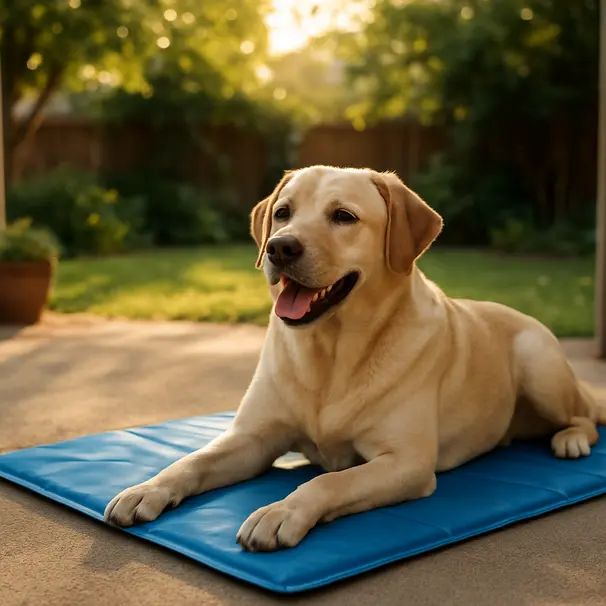
Gel mats contain a sealed gel layer that remains cool to the touch. They typically don’t require refrigeration and start cooling as soon as your dog lies on them.
Pros:
- Instant cool surface without prep
- Lightweight and portable
- Often comfortable for older dogs who need joint relief
Cons:
- Can be punctured by chewers
- Cooling effect diminishes if the mat gets sun-warmed
Best for: calm medium-to-large dogs, older dogs with joint stiffness, indoor use.
Water-filled mats
These mats hold water in a sealed bladder. You can cool them in the fridge, or leave them at room temperature for a gentle cooling effect.
Pros:
- Adjustable temperature if chilled briefly
- Heavier, so they stay put
Cons:
- Risk of leaks, especially with curious chewers
- Can be awkward to refill for some owners
Best for: owners who like to control how cool the mat gets and dogs who don’t chew.
Self-cooling mats (phase change or pressure-activated)
These mats contain materials that absorb heat when pressed, often without any external chilling needed. They may be called pressure-activated or phase-change mats.
Pros:
- No external power or refrigeration required
- Lightweight and travel-friendly
Cons:
- Cooling effect often limited in duration
- Performance can vary between brands
Best for: travel, short-term relief, dogs who move around a lot.
Breathable mesh and airflow mats
These designs don’t rely on special materials. Instead they use raised mesh or slatted platforms to increase airflow beneath the dog.
Pros:
- Great for dogs who overheat quickly, especially long-haired breeds
- Durable and often chew-resistant
Cons:
- Not as cool to the touch as gel or water mats
- Requires airflow in the environment to be effective
Best for: long-haired dogs, outdoors on shaded patios, or for dogs that prefer a firmer surface.
Size, thickness, and durability: fit matters
A mat that’s too small won’t let your dog stretch out, and one that’s too thin may not be comfortable. Here are practical sizing tips:
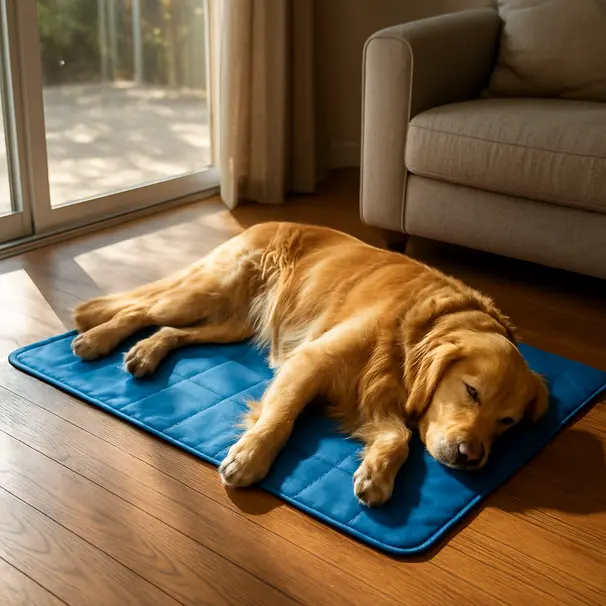
- Measure your dog lying in their usual relaxed pose. Add 8 to 12 inches so they can sprawl.
- For long-haired or thick-coated dogs, look for mats that emphasize airflow or stronger heat transfer. The surface temperature might feel warmer, but the airflow helps evaporative cooling.
- If your dog has arthritis, pick a mat with some padding or a gel layer for pressure relief.
Durability notes:
- If your dog is a chewer, prioritize reinforced seams and chew-resistant fabrics. Some mats come with a warranty for punctures.
- Outdoor mats should have mildew-resistant material and slip-proof bases.
Using cooling mats safely and effectively
A mat works best as part of a simple routine.
Placement
- Put the mat in a shaded, well-ventilated spot. Direct sun can warm a mat quickly.
- Avoid placing mats on surfaces that retain heat, like dark asphalt or sun-baked concrete.
Introducing a mat
- Let your dog explore the mat on their terms. Treats and praise help create a positive association.
- Some dogs may be suspicious at first. Give them time, and place a familiar blanket or toy on the mat to encourage use.
Combining strategies
- Pair the mat with fresh water and shade. For maximum comfort, make sure your pup has access to their regular bed, too.
- On very hot days, keep activities short and schedule walks for early morning or late evening.
Monitoring and signs to watch for
- Check your dog regularly. If they’re excessively panting, drooling, or seem disoriented, cooling mats alone may not be enough. Contact a vet promptly.
- If the mat becomes very warm, move your dog to a cooler area or offer chilled water.
Cleaning and hygiene
- Wipe down gel mats with a mild pet-safe cleaner and air dry.
- For fabric covers, unzip and wash according to the manufacturer’s instructions.
- Inspect mats frequently for leaks, tears, and worn seams.
Care and cleaning by mat type
A little routine maintenance will extend your mat’s lifespan.
Gel mats
- Wipe with a damp cloth and a mild soap. Avoid harsh chemicals that can degrade the gel.
- Don’t puncture or bend the mat sharply. If a leak occurs, dry the area and replace the mat.
Water mats
- Follow the refill and drainage steps provided by the maker.
- Flush and replace water periodically, especially if you notice odors.
- Disinfect seams gently if mildew appears, and rinse thoroughly.
Self-cooling mats
- Most simply wipe clean with a damp cloth. Check the label before applying any soap.
- Store them flat to avoid creasing the internal materials.
Mesh and airflow mats
- Brush or vacuum loose fur from the mesh. For removable covers, machine wash on a gentle cycle.
- Dry completely before storing to prevent mold.
General tip: always let a mat dry fully before folding or storing. Moisture trapped inside can shorten the mat’s useful life.
DIY and budget-friendly cooling ideas
If you’re waiting to buy a mat, or your dog chews everything in sight, try these low-cost options.
- Tile breaks: Let your dog lie on a cool tile or ceramic surface. Tile floors often stay cool and are easy to clean.
- Frozen water bottle pillow: Fill a plastic bottle with water and wrap it in a thin towel. Place it under a blanket or dog bed corner. This adds a cold spot without a special mat.
- Cooling bandana or vest: Wet a bandana and wring it slightly. The evaporative cooling can help, especially for short outings.
- Elevated bed with airflow: An elevated bed lifts your dog off hot floors and increases air circulation.
DIY caution: avoid direct ice-pack contact on your dog’s skin for long periods. Use a cloth barrier and monitor their comfort.
Questions to ask before you buy or ask a carer to use one
If you’re shopping for a mat or leaving instructions for a pet carer, these quick checks help everyone stay comfortable.
- What is the mat filled with? Gel, water, or materials that activate with pressure?
- Is the mat chew-resistant, and is there a warranty for punctures?
- How easy is it to clean or replace covers?
- What size fits my dog’s sleeping posture?
- If using with a dog sitter or carer, ask how they’ll place the mat and whether they’ll check on the dog during hot periods.
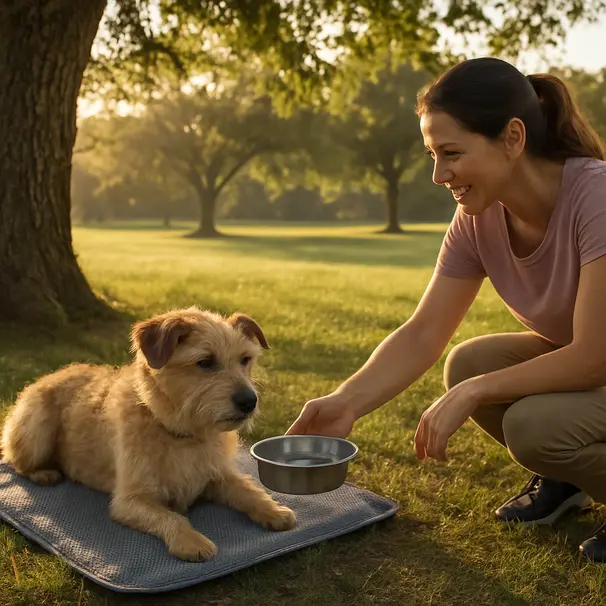
As a pet owner, leaving clear notes and a spare water bowl can make sure your sitter knows how to use the mat safely.
Quick shopping checklist: what to look for
Before you click buy, tick off these essentials:
- Size that allows full stretch
- Durable outer fabric and reinforced seams
- Non-slip base for tiled or hardwood floors
- Easy-to-clean surface or removable cover
- Comfortable padding if your dog has joint issues
- Chew-resistant build if your dog is a nibbler
- Warranty or replaceable parts for peace of mind
Final roundup: making a cooling mat part of summer care
A cooling mat can be a quiet hero in your dog-care toolkit. It helps create a cool spot, encourages rest, and adds comfort without much fuss. Pick a mat suited to your dog’s size, coat, and habits, and treat it like one part of a broader cooling plan. Keep shade, water, and careful monitoring in the mix. If your dog has health concerns or struggles in heat, check with your vet for tailored advice.
Whether you get a gel mat for instant relief, a heavy-duty mat for a chewer, or a simple airflow bed for long-haired pups, the goal is the same: a safe, comfortable place for your dog to relax. Stay cool, enjoy the sun safely, and give your floofy friend extra pats and watery treats on warm days.
Happy cooling.