

Quick note before you pack
Leaving your pet with someone else can tug at your heartstrings. A little planning makes a big difference. This guide walks through practical steps to get your pet ready for a stay with a trusted pet carer, and helps carers understand what owners should prepare. Think of it as a friendly checklist you can follow the week before travel, the day before drop-off, and on pick-up.
Before you book: making the right match
- Start with profiles. Look at experience, reviews and any specialisms like handling anxious dogs or caring for senior cats.
- Ask for references if you want extra reassurance.
- Check availability for a short trial stay or a meet-and-greet. Even 30 minutes can say a lot.
- Confirm location and routine. Does the carer have a home setup, or do they offer in-home boarding? Consider what fits your pet’s personality.
A good match reduces stress for everyone. If your pet thrives on quiet, a busy home might not be right. If they adore company, a carer who shares lots of active time will shine.
Paperwork and practical essentials
Make a folder or envelope with the following. Keep a copy with you and leave one with the carer.
- Contact details. Your phone numbers, emergency contacts, and the carer’s contact info.
- Veterinary records. Up-to-date vaccination history if required, and a recent copy of any health concerns.
- Medication instructions. Exact dosages, timings, and any administration notes. Write these clearly, and label medication containers.
- Feeding notes. Brand, portion sizes, meal times, treats allowed and treats to avoid.
- Behaviour notes. Any triggers, calming cues, or commands your pet responds to.
- Permission and emergency consent. A signed note authorizing the carer to seek veterinary care if needed can save time in an emergency.
Label everything. A simple sticky note with your pet’s name and a short instruction attached to the carrier or food container helps prevent mistakes.
What to pack: comfort, routine, and safety
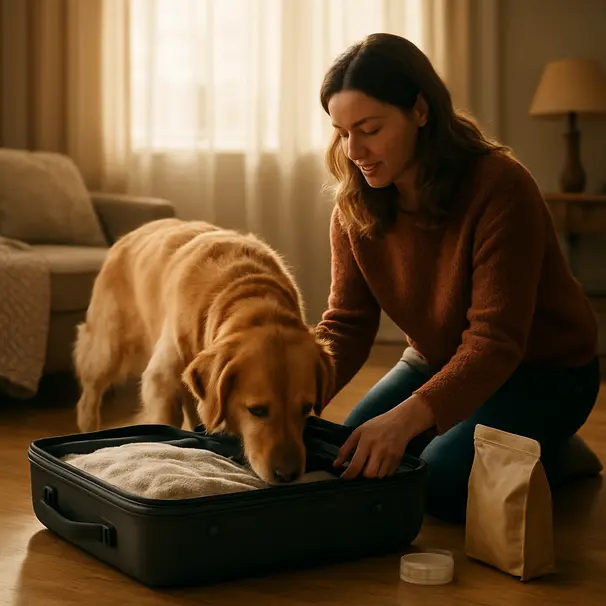
Packing is partly practical and partly about preserving familiarity. Aim to recreate the comforts of home.
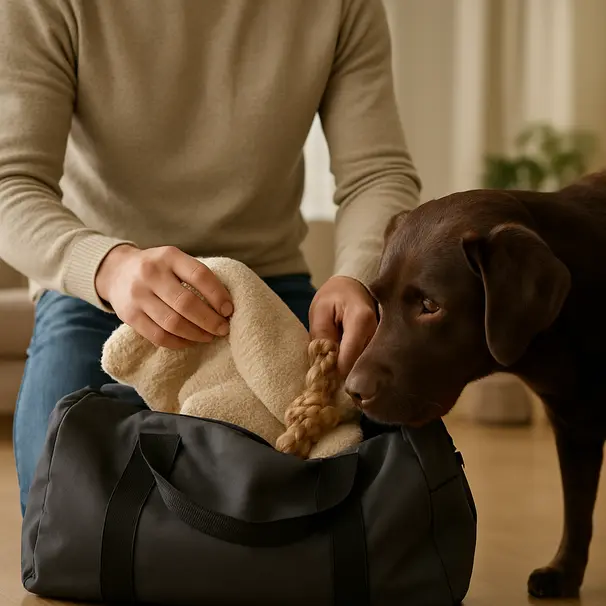
- Bedding and a favourite blanket. Familiar smells help pets settle faster.
- A few favourite toys. Rotate them so the carer can offer familiar play as needed.
- Food and measured portions. Staying on the same diet avoids tummy upsets.
- Feeding bowls, leash, harness and collar with ID tag.
- Treats, calming chews if you already use them, and instructions for use.
- Medication, pre-measured and labelled with administration instructions and your vet’s contact.
- A recent photo of your pet. Helpful if you need to describe them quickly.
Feeding and medication: clarity matters
Food is a routine anchor. If you normally free-feed, consider switching to measured meals for clarity during boarding. Include a clear feeding schedule: times, quantities and whether food is left down between meals.
For medication:
- Label each container with name, dose and time.
- Note any side effects the carer should watch for.
- Where possible, practise giving medication before the stay so your pet and the carer know what to expect.
Encourage carers to confirm each dose when given. A simple checklist or photo confirmation can reassure owners and reduce mistakes.
Introductions and trial stays
A meet-and-greet is priceless. It lets your pet sniff around, meet the carer, and learn voice tones and handling styles.
- Keep the first meeting calm and short, about 15 to 30 minutes.
- Bring a familiar item like a blanket, and let your pet approach at their own pace.
- Watch body language. If your pet appears stiff, growly or hides, give them time and space.
- Ask the carer to offer a short practice walk or playtime, depending on your pet’s routine.
A short trial stay of a few hours to an overnight can reveal how your pet adjusts. It also helps the carer understand your pet’s needs and personality.

Day-of drop-off: routines and handover
On the day you leave, routines help your pet feel grounded.
- Feed as usual, or follow the carer’s plan if you agreed on a change.
- Offer a final walk or play session to burn off energy.
- Keep the goodbye short and upbeat. Long, drawn-out goodbyes can raise anxiety.
- Walk the carer through the documents, medication and any quirks your pet has. Repeat any critical information aloud.
- Share a simple written schedule: morning walk, medication times, evening wind-down. A printable sheet works well.
If your pet takes a while to settle, leave something with your scent. A worn t-shirt in the bed can be comforting.
Settling in and calming strategies
Some pets adjust immediately, others take time. Carers often use a mix of familiar items, structure and gentle reassurance.
- Keep a steady routine. Regular walks, feeding times and quiet hours make a big difference.
- Use enrichment. Puzzle feeders and short training games keep the mind busy.
- Provide safe spaces. A quiet room, a raised bed or a crate with an open door can be a sanctuary.
- Consider soothing sounds. A soft radio, a white-noise machine or calming playlists may help some pets.
If your pet has severe anxiety, consider consulting a vet before boarding. A carer and owner should discuss options and any previous strategies that worked.
Special notes for different pets
Dogs
- Bring a leash and a familiar harness.
- Note recall ability and how they behave around other dogs.
- Share any training cues you use for calming or commands.
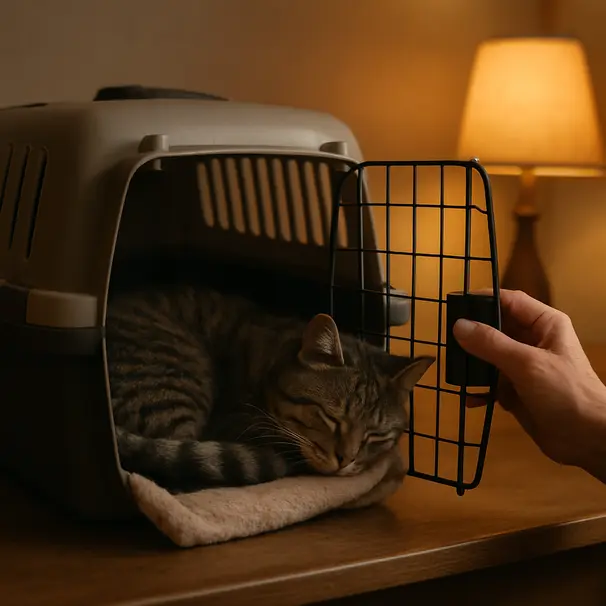
Cats
- Pack the litter box or a sample of the litter you use if possible.
- Provide hiding spots, and warn the carer if the cat is skittish around hands or strangers.
- Include favourite toys and a scratching post if the stay is long.
Small mammals, birds and reptiles
- Explain temperature needs, feeding schedules and handling preferences.
- Pack specialized bedding and any habitat-specific supplies.
- Leave clear cleaning and feeding instructions.
No matter the species, highlight any health conditions and how they’re managed. Small details can change a stay from rocky to relaxed.
Communication: updates and boundaries
Agree on how often you want updates. Some owners like a daily photo and a short message. Others prefer less frequent check-ins.
- Set expectations for photos, texts and emergency calls.
- Ask how the carer prefers to be reached. Carers may have limited phone access during walks or busy times.
- Discuss payments and cancellation policies ahead of time to avoid surprises.
Clear communication builds trust. A short text at bedtime saying your pet is ok can calm nerves on both sides.
Emergency plan and vet care
Make sure both parties understand the plan for emergencies.
- Leave the name and number of your regular vet. If you use an emergency clinic, include that too.
- Discuss what constitutes an emergency and when the carer should call you.
- If you are comfortable, give the carer written consent to seek veterinary care and make decisions up to an agreed cost limit. This can speed care if you are unreachable.
- Consider travel insurance that covers pet emergencies if you travel far.
Encourage carers to call immediately if they see signs of illness or injury. Trust their instincts, but ask them to check with you before any non-urgent treatment.
Behavioural tips and training reminders
If your pet has ongoing training or behaviour plans, leave clear notes.
- Include simple cues and rewards you use.
- Explain any situations that trigger reactivity and ways to avoid them.
- Ask carers to use consistent language and to avoid punishment-based methods.
A little continuity with commands and rewards helps your pet keep progress while you’re away.
Pick-up day: easing the transition home
After you collect your pet, expect a period of readjustment.
- Give your pet time to settle back in. They might be tired or a bit different after a change of routine.
- Keep the first day back calm. Resume favourite routines gradually.
- Ask the carer for notes on behaviour, appetite and any changes they noticed.
- If you see anything worrying, check with the carer and consider a vet visit if needed.
A positive reunion is lovely, but try to keep emotions calm so your pet doesn’t feel overwhelmed.
Simple packing checklist (print this)
- Food, measured for the entire stay
- Feeding bowls and any special utensils
- Medication, labeled with instructions
- Favourite bedding and one scent item with your smell
- 2-3 toys and enrichment items
- Collar, leash and spare ID tag
- Recent photo and medical/vaccination records
- Written emergency consent and vet contacts
- Waste bags and cleaning supplies if relevant
Final comforts and reassurance
Trust is the best carry-on. Choose a carer who asks good questions, listens to your pet’s needs and shares a love of animals. A well-prepared handover makes every stay calmer and more enjoyable. You’ll travel better knowing your companion has a clear routine, the people caring for them have the right information, and familiar items are close at hand.
If your pet has health issues or high anxiety, consider a short practice stay and talk to your vet before travel. Small steps and clear communication help create a stress-free experience for pets, owners and carers.
Have a great trip, and know your furry or feathered friend is in caring hands. If you want, save this checklist and use it as a template for future trips. Little rituals make big differences, and your pet will thank you in their own way when you’re back.