

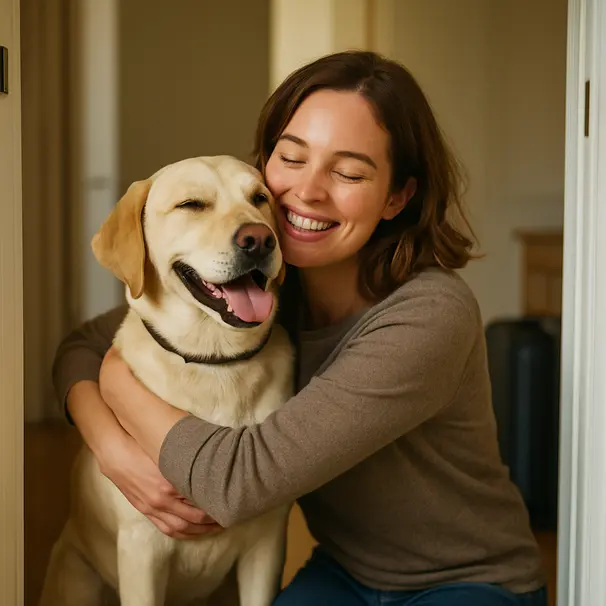
Travel tips for leaving your pet with a trusted pet carer
Heading out of town is exciting, but leaving a beloved pet behind can feel a little heavy. With a thoughtful plan, clear communication and a caring pet carer, you can travel with more peace of mind, and your pet can have a comfortable, predictable stay. This guide walks through the practical steps to prepare, what to pack, ways to introduce your pet to a carer, how to handle meds and emergencies, and how to make the trip easier for everyone.
Before you book: choosing a trusted pet carer
Start early. Reach out to potential carers well before your trip so you can compare availability, ask questions and arrange a meet-and-greet. Look for carers who have clear profiles, references and a style that matches your pet’s needs.
- Ask for references or reviews from other pet owners.
- Confirm experience with your pet’s species and any special needs.
- Clarify whether the carer will come to your home, host your pet, or use a boarding facility.
- Discuss availability, daily routines and how often you’ll receive updates.
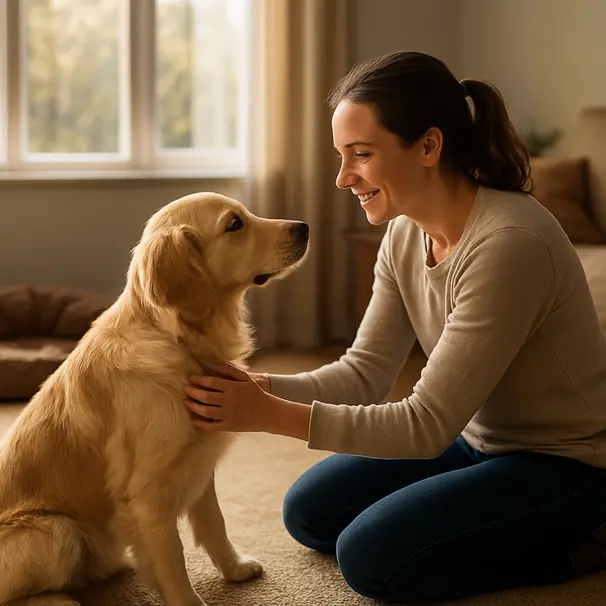
During the meet-and-greet, observe how your pet responds. Some pets warm up right away, others need more time. A good carer will be patient, ask thoughtful questions and demonstrate practical skills like leash handling or administering simple medications.
Preparing your pet and home
A calm, familiar environment helps pets adjust. Spend a few days before travel reinforcing routine; pets pick up on your energy, so try to keep things steady.
- Keep feeding and walk times consistent.
- Do a dry run if possible: have the carer visit a couple of times so your pet can get used to them.
- Declutter any areas the carer will use, and make spaces safe by securing cords, plants and tempting small items.
Create a clear, written care plan. Put everything the carer needs in one folder or digital file so they can find it quickly.
Must-have info for the care plan:
- Emergency contact numbers, including your own, a local emergency contact, and your vet.
- Pet’s full name, age, breed and microchip number if applicable.
- Feeding schedule, portion sizes and any dietary restrictions.
- Daily routine: walks, playtime, favourite games and calming rituals.
- Location of supplies: food, treats, leash, litter, toys, first aid kit and cleaning supplies.
- Medication details, with dosage, timing and administration notes.
The essentials to pack for your pet
Packing for your pet is more than food and a favourite toy. Think of it as sending comfort and continuity.
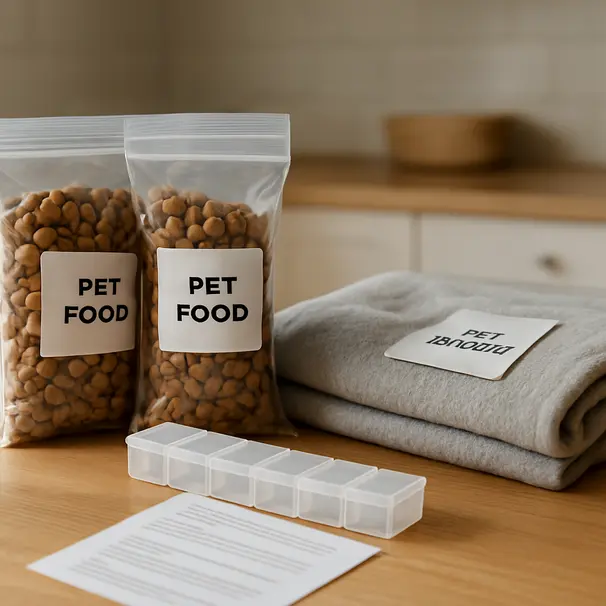
- Food: bring enough for the whole trip plus an extra few days in case of travel delays.
- Food storage: sealable containers or labelled bags so the carer can keep portions accurate.
- Medication: clearly labelled with instructions. Consider an organiser for daily pills.
- Favourite bedding and toys: familiar scents can reduce stress.
- A recent photo of your pet: useful for identification if needed.
- Waste bags, grooming tools and cleaning supplies.
- Comfort items: a worn T-shirt of yours can help some pets settle.
Label everything. A small bit of effort keeps confusion low and helps the carer act quickly.
The handover: making day one smooth
Plan for a calm handover. A rushed exchange can spike your pet’s anxiety and leave key details out.
- Walk your dog or give your cat some playtime before the carer arrives so they’re less energetic.
- Show the carer where everything lives and run through the written care plan together.
- Demonstrate any tricky parts: how to use the automatic feeder, gate closures or calming wraps.
- Share behavioural notes: what calms your pet, what triggers anxiety and how they like to be handled.
- Agree on daily check-in times and the method of updates, for example photos, short videos or text messages.
If your pet is nervous, consider a gradual departure. Stay nearby for a short while after the carer arrives, then step out for short errands to build your pet’s confidence.
Communication while you’re away
Regular updates help you relax, but too many messages can feel like micromanaging. Set expectations upfront.
- Agree on a frequency: once or twice daily updates are common for shorter trips, less often for longer stays.
- Ask for quick photo updates and short notes on appetite, bathroom habits and mood.
- Use video calls for a live check-in if your pet responds well to seeing your face.
- Keep instructions handy for small changes, but try not to make major routine changes mid-trip unless necessary.
Be clear about how involved you want to be. Some owners prefer to leave all decisions to the carer, while others want to be consulted. Set those boundaries before you go.

Medications, health and emergencies
If your pet needs medication or has health concerns, plan carefully.
- Write out a clear schedule: time of day, exact dose and how it is given.
- Prepare an emergency contact sheet that includes your vet’s number, the nearest 24-hour clinic and any specialist if relevant.
- Leave written consent for emergency treatment, and consider a signed form authorising the carer to seek veterinary care if you cannot be reached.
- Consider a pre-trip vet check to ensure vaccines are up to date and to discuss any behavioural or health concerns.
Use cautious language in instructions: consider noting potential signs of problems and advising the carer to contact you or the vet if they notice changes. Avoid making medical promises. Encourage carers to consult a vet when relevant.
Special tips for different pets
Dogs
- Keep the routine close to home: similar walks, playtimes and bedtime.
- Leave a backup harness and leash in case one is damaged.
- Note how reactive or dog-friendly yours is, and any leash sensitivities.
Cats
- Cats often appreciate less change. A carer who visits your home can be less disruptive than boarding.
- Show where the litter and spare litter are kept, and whether your cat prefers covered or open boxes.
- Describe favourite hiding spots and safe ways to coax your cat out, such as treats or a toy on a string.
Small mammals, birds and reptiles
- Give very detailed husbandry instructions, including temperature, lighting and handling notes.
- Show how to clean enclosures safely, and where spare supplies are kept.
- These pets may be especially sensitive to routine changes; consider shorter stays or a carer experienced with the species.
Behavioural issues and enrichment
Separation can trigger behaviours like excessive barking, pacing or hiding. Share strategies that help your pet feel secure.
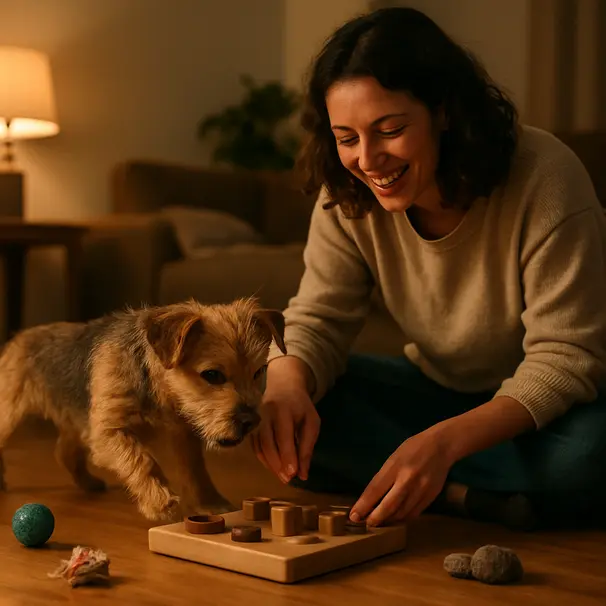
- Enrichment: puzzles, treat-dispensing toys and scent games can keep minds busy.
- Exercise: ensure dogs get appropriate walks for their energy level.
- Calming aids: familiar toys, compression wraps or pheromone diffusers may help. Consider these as optional tools to try, and consult a vet or behaviourist for persistent issues.
If your pet has separation anxiety, leaving them in a very different environment might worsen stress. Talk to your carer about gradual departures and keeping the environment predictable.
Handling problems while you’re away
Even with the best plan, surprises happen. Talk through how the carer should handle common issues ahead of time.
- If your pet refuses food: wait one meal and then try the carer’s suggested high-value treats. If appetite loss continues, contact the vet.
- If your pet becomes aggressive or fearful: prioritise safety and seek professional advice.
- If there’s an accident at home: the carer should clean up safely, document the incident and inform you.
Agree on a decision-making threshold: for example, call the owner for anything outside routine care, or only for emergencies. Make sure the carer has a signed authorisation to access veterinary care if needed.
Coming home: reintroducing yourself to your pet
Returning can be as emotional for you as for your pet. Expect a full welcome, but also allow time for readjustment.
- Keep your first day low-key: stick to routine and avoid intense play immediately.
- Let your pet come to you for affection at their own pace.
- Check for any changes: skin issues, appetite shifts or behaviour differences, and mention anything unusual to your vet if it persists.
- Thank your carer with a thoughtful note, review or tip, and share highlights about how your pet did while you were away.
Final checklist before you travel
- Confirm carer’s arrival and contact details.
- Leave written care plan and emergency authorisations.
- Pack and label food, meds and comfort items.
- Do a final safety sweep of your home.
- Let trusted neighbours know you’ll be away and how to reach you.
Closing thoughts
Travel is easier when your pet is in good hands. A reliable carer, clear instructions and a few comfort items go a long way. Most importantly, trust your instincts. If a carer feels right during the meet-and-greet, that calm usually carries over to your pet. Safe travels, and enjoy your getaway knowing your furry, feathered or scaly friend is looked after with care.